It Can Never Be The Same
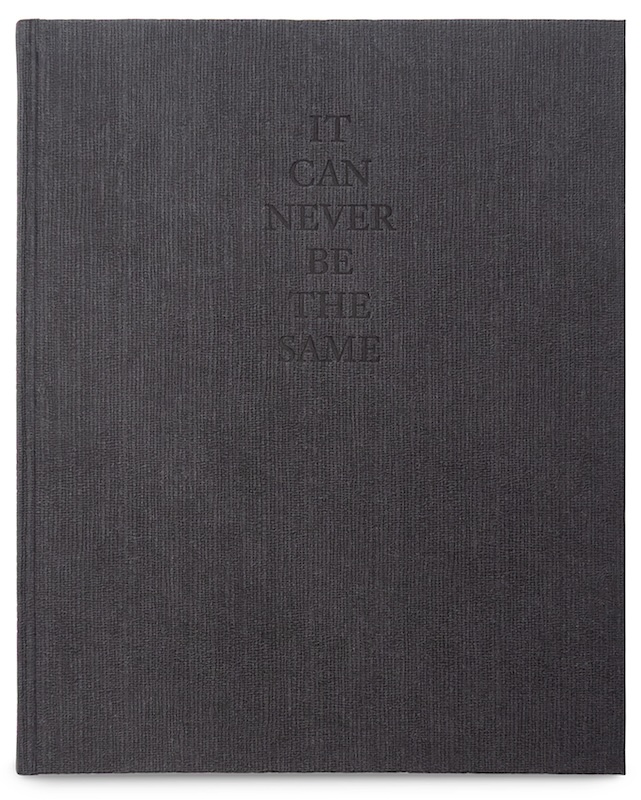
The photographs in It Can Never Be The Same were made by Lorenzo Tugnoli in Afghanistan between 2019-2023— a pivotal time of transition and upheaval. Rather than traditional reportage, the collection of images in the book form a reflective journey. Tugnoli’s approach aims to question how visual representations can shape external perceptions of a complex country and the distance between those who get to tell the story and those who live it.
The photographs in the book are cinematic with dramatic light and shadow, depicting both sweeping landscapes and the details of the everyday—grenades and guns interspersed with domesticity. The formal choice of black and white imagery aims to question the historical authenticity attributed to this traditional medium of
photojournalism, whilst simultaneously making the images difficult to place in a particular time period. Aerial landscape photographs reference the way foreign armies have mostly seen the country from the safety of air reconnaissance—disconnected from the life on the ground.
Tugnoli intentionally sought out sequences which were ambiguous and lacked clarity. These fragments of places and events with no formal narrative encourage the viewer to look for clues and invite multiple interpretations. The photographer made the decision to place the captions only at the very end of the book—his intent for the
viewer to wander through the ‘world’ of the book, reflecting his own experiences in the country.
The book is accompanied by a text centred on everyday family life in Afghanistan by journalist and writer Habib Zahori. This text counters traditional media approaches which can remove focus away from the individual. The concluding essay is by author and researcher Francesca Recchia.


.svg)


.svg)
.svg)


