We Eat the Earth
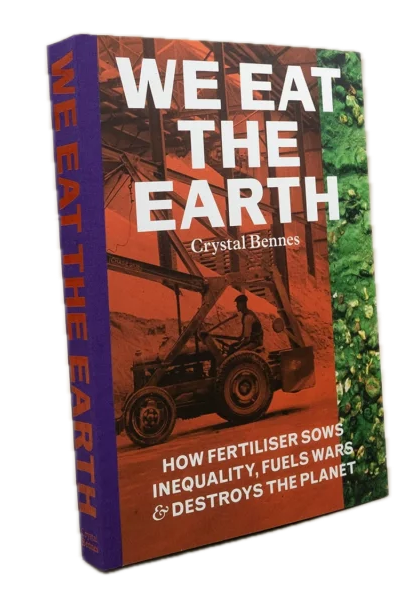
We Eat the Earth explores the ways in which our collective appetite reshapes the Earth and how the production of nutrients required for industrial agriculture impacts our political and physical environments.
From Sweden to Western Sahara, England to occupied Palestine, Germany to the Netherlands, Crystal Bennes (US) maps the material flows of nitrogen, potassium and phosphate fertiliser between eight key sites. It investigates the reliance of industrial food production on fertiliser – extracted, deployed and disposed of through systems which contribute to catastrophic results for people and the planet.
By looking reciprocally, pairing each mineral with two or more geographic sites of relation – from sites of extraction to sites of disposal and every stage in between – this book shows how fertiliser sows inequality, fuels wars and destroys the planet. It also encourages other ways of being in solidarity with the people and places most impacted by fertiliser production and misuse.
Phosphate links the dispossession of indigenous people in Western Sahara to an artificial island in Sweden, fabricated entirely with the radioactive ‘waste’ byproduct of fertiliser production. Potassium shows how a mine in Yorkshire, England, marketing itself as a low-carbon fertiliser of the future, is inextricably connected to Israel’s long history of occupation and apartheid in Palestine. Nitrogen explores how the 19th-century wonder invention of synthetic nitrogen fertiliser destabilises contemporary Dutch politics – as evidenced by the rising popularity of the right-wing populist farmers’ party, angered by environmental measures to curb fertiliser-related water pollution.
Today, much attention is given to the role of fossil fuel companies in the climate crisis and planetary devastation. Yet, nitrogen fertiliser alone accounts for around 5% of total greenhouse gas emissions. Widespread fertiliser use in industrial agriculture contributes to soil health decline, increased water pollution, and substantial environmental destruction from related mining activities. It is time to pay attention to agribusiness companies, who must also be held accountable for their outsize role in contributing to current crises.


.svg)


.svg)
.svg)


