Why Photographs?
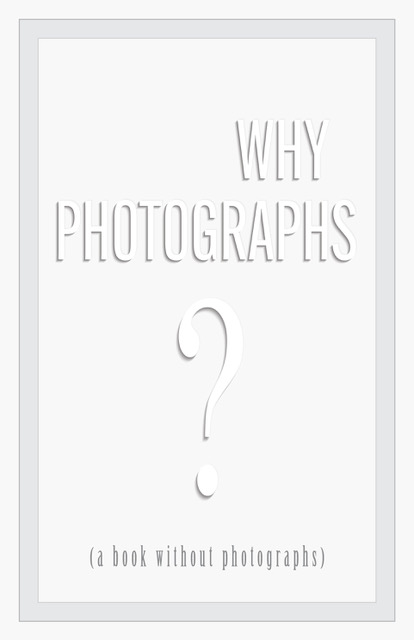
Almost since the beginning, most of us have had it all wrong. Timely and essential, Why Photographs? is meant for anyone interested in rediscovering how to look at a photograph. At a moment when it is possible to describe an image and see it instantly materialize on a screen, the triumph of the photograph as a record of observable fact remains essential, especially as the authenticity of any image is now in doubt.
The nature of a raw photograph: riveting detail, spontaneity, obvious credibility, and the gift of chance—radical characteristics that at the time of photography’s invention were immediately recognized by its creators—was promptly denounced by an establishment that correctly recognized photography as an existential threat to painting. The two have never had anything meaningful in common, beginning with the fact that painters start with a blank canvas and photographers start with a full one. The eccentric selection of writings, aphorisms, and poems in Why Photographs? illuminates the many ways photographs convey their truths and turn them into meaning.
In addition to Neil Selkirk’s introductory essay, contributors include: Berenice Abbott, Diane Arbus, Margaret Atwood, Richard Avedon, Sir Frances Bacon, Julian Barnes, Christine Coulson, Deborah Eisenberg, Lee Friedlander, Thomas Hardy, Dorothea Lange, Philip Larkin, and Oliver Sacks.
NEIL SELKIRK was born in London in 1947 and arrived in New York in 1968. As a passionate documentarian with an immigrant’s discerning eye for the anomalies of his adopted land, his photographs quickly drew assignments from all major U.S. magazines including Esquire, New York Times Magazine, Interview, Vanity Fair, The New Yorker, Vogue and the premier issues of Wired, Paper, Colors, and Spy. His other books include See No Evil, 1000 on 42nd Street, Lobbyists, and Certain Women. He has produced and directed the films Who Is Marvel Israel? and Procession. Since the death of Diane Arbus, he is the only person ever authorized to make posthumous prints of her photographs.


.svg)


.svg)
.svg)


