Richard Misrach: Rewind
Fraenkel Gallery
October 30, 2025
|
December 20, 2025


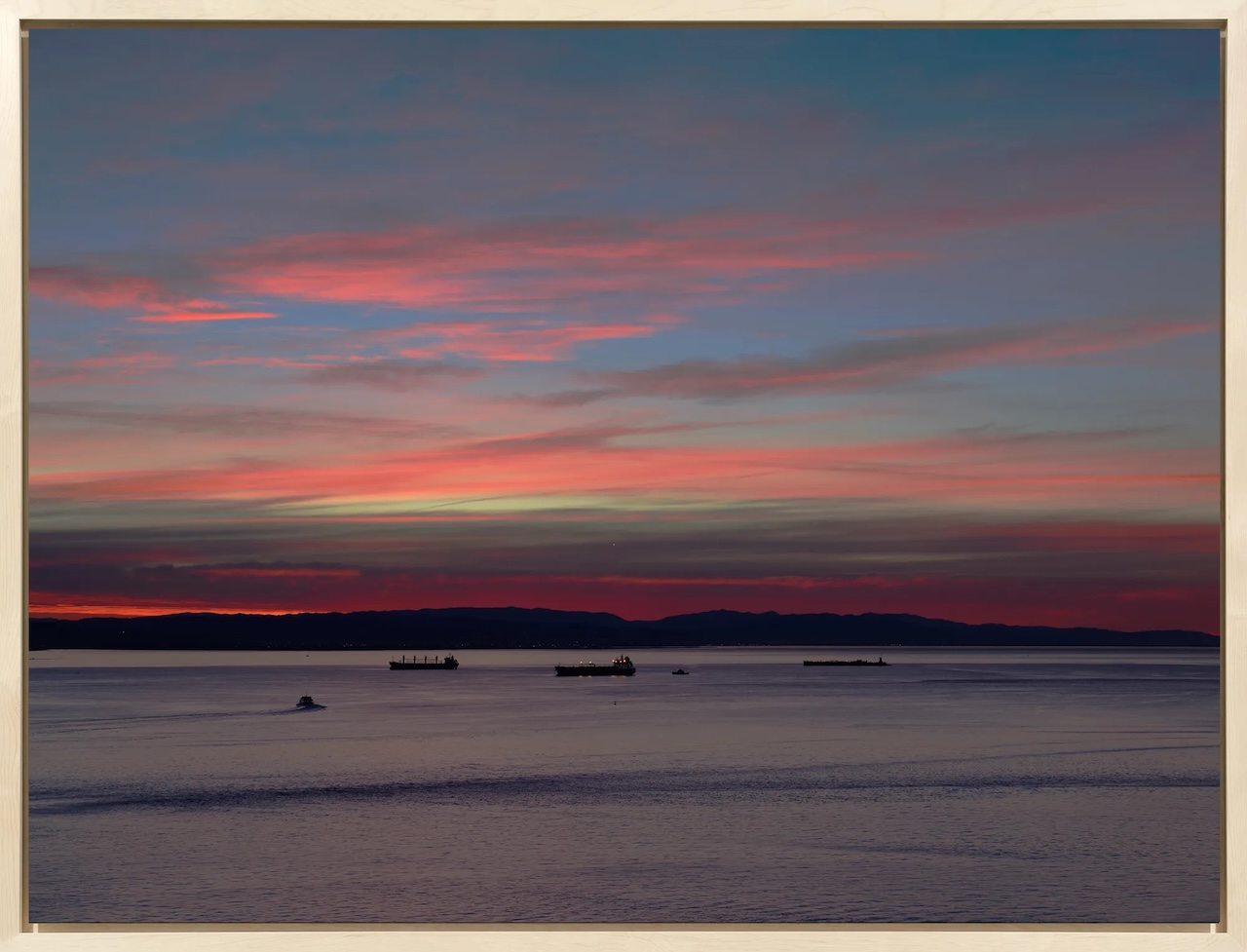
Presented in reverse chronological order, the exhibition ranges from Cargo, Misrach’s newest series exploring the impact of global trade, to Telegraph 3 A.M., his earliest project, documenting street culture in Berkeley, California in the early 1970s. Highlighting ideas and themes that have consistently driven his work, the exhibition presents photographs made with an array of materials and techniques. Using everything from 35mm film to large-scale digital prints, the show traces Misrach’s development across the forefront of the medium. Fraenkel Gallery has shown Misrach’s work since 1985; this will be his seventeenth exhibition with the gallery.
Whether photographing subjects as disparate as environmental disasters or cloud studies, Misrach has always pursued beauty. “I’ve come to believe that beauty can be a very powerful conveyor of difficult ideas,” says Misrach. “It engages people when they might otherwise look away.” The exhibition begins with a 2025 sunrise view of a freighter ship in the San Francisco Bay, printed at more than 5’ x 6’. Composed in vivid shades of pink, blue, and violet, the image from Cargo addresses the complex economic systems that shape modern life, and their far-reaching consequences. Other seductive but charged images document the U.S.-Mexico border wall, from the series Border Cantos; Louisiana's highly polluted Cancer Alley, from Petrochemical America; and the aftermath of Hurricane Katrina, from a series shown here for the first time, 20 years after the storm. Several photographs come from Desert Cantos, Misrach’s long-running series examining humans’ multifaceted relationship with the landscape of the American West.
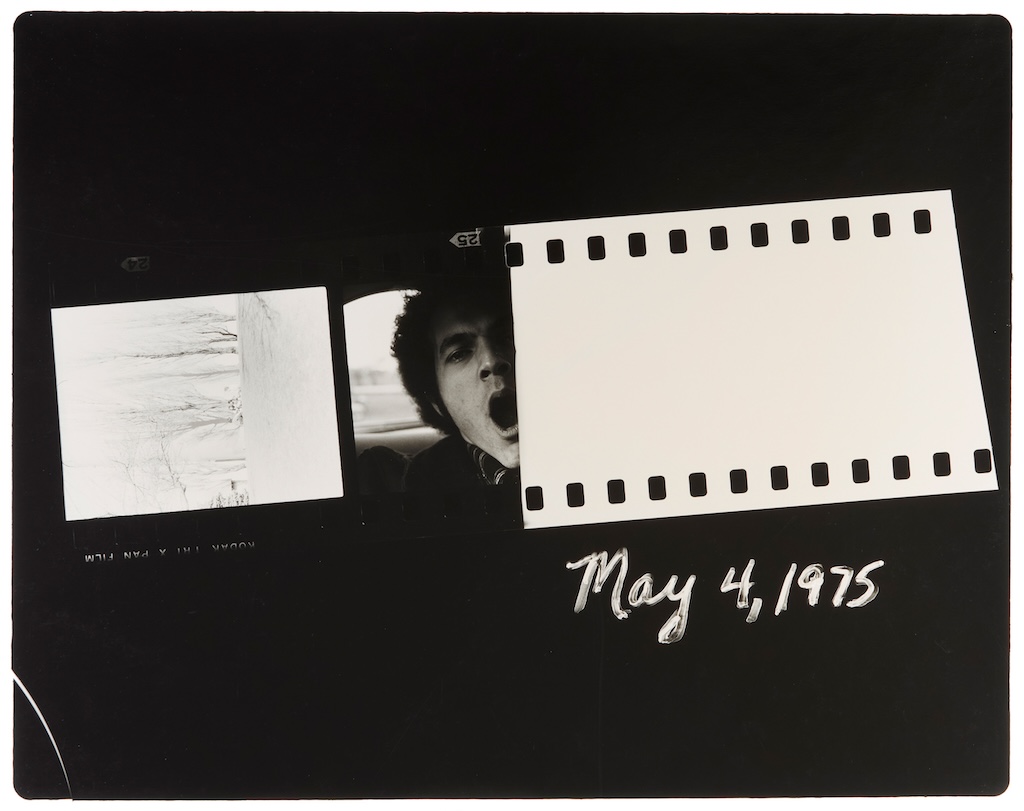
Since the start of his career, Misrach has moved seamlessly between social concerns and more philosophical, experimental questions. “My work…has been about navigating these two extremes—the political and the aesthetic,”
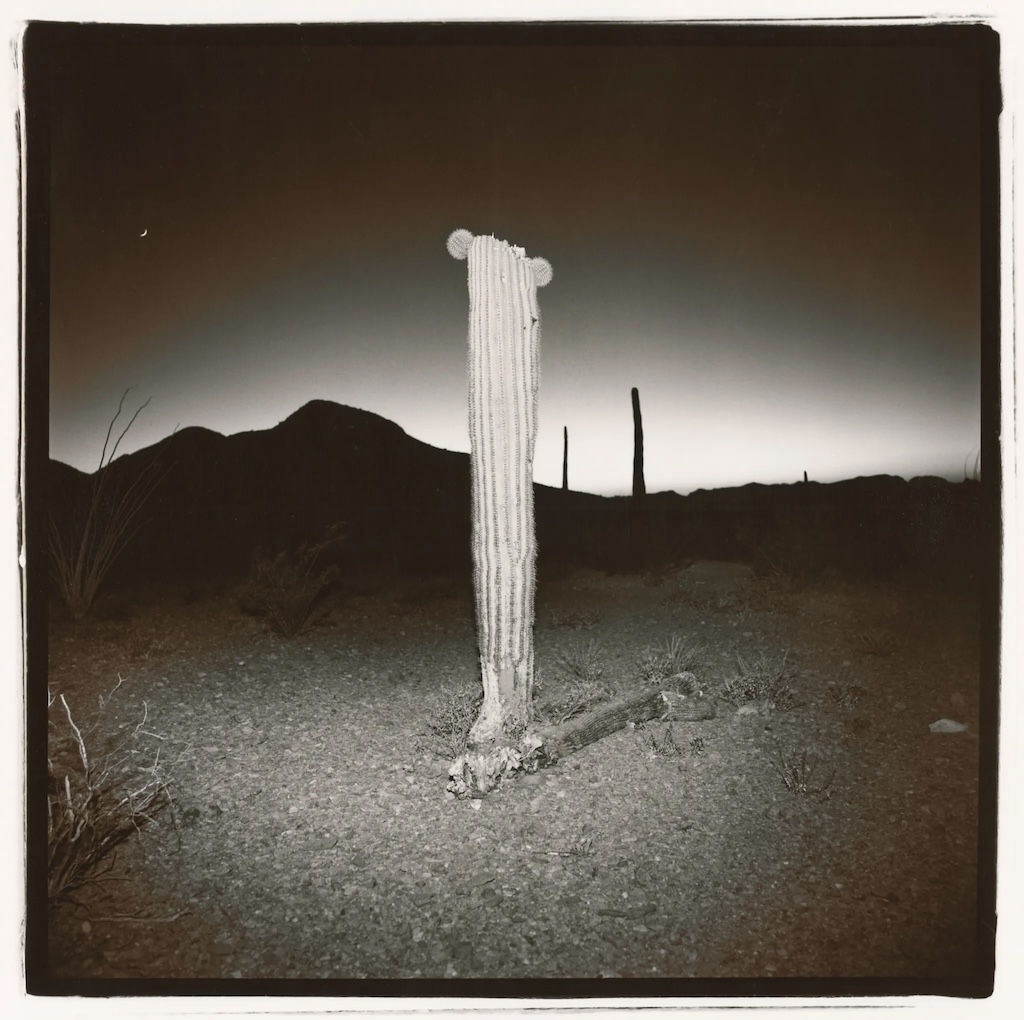
Misrach writes. His first series Telegraph 3 A.M. used a medium format camera on a tripod. Working during the day and at night, Misrach made portraits recording the effects of drugs and poverty in the wake of the Berkeley counterculture movement. In the series that followed, Misrach began photographing in the desert, shooting at night but using a strobe to reveal the otherworldly shapes of cacti and sagebrush. The richly black, split-toned prints he made depict a near-mystical landscape visible only to the camera. Later series p ush further into sublime encounters between nature and the camera. Starting in the 1990s, Misrach photographed the Golden Gate Bridge, capturing variations in atmosphere and color that border on abstraction. Working from a single vantage point, Misrach waited for the light and composition to align in front of his camera, an approach he returned to with On the Beach, his study of the ocean’s infinite surface, and most recently with Cargo. Abstraction in nature is also at the center of the series Notations, exploring the surreal hues found in color photographic negatives, digitally rendered. In these images, Misrach inverts the tonalities of clouds or desert scrub brush, creating delicate studies of texture and form.
“Beauty can be a very powerful conveyor of difficult ideas.”
Richard Misrach (born 1949) has been photographing the American West for more than 50 years. His work has been the subject of solo exhibitions at the National Gallery of Art, Washington, D.C.; Art Institute of Chicago; Los Angeles County Museum of Art; and Centre Pompidou, Paris, among others. Border Cantos, a collaboration with the composer Guillermo Galindo, opened at the San Jose Museum of Art in California in 2016 and continues to travel throughout the U.S. His work has been featured in more than a dozen books, including Telegraph 3 A.M., Bravo 20: The Bombing of the American West, Crimes and Splendors: The Desert Cantos of Richard Misrach, On the Beach, Destroy This Memory, Petrochemical America, Border Cantos, Blind Spot Folios 001: Nancy Holt & Richard Misrach, On Landscape and Meaning, Notations, and most recently, Cargo. His photographs are held in the collections of major institutions including the Museum of Modern Art, New York; Whitney Museum of American Art, New York; Metropolitan Museum of Art, New York; National Gallery of Art, Washington, D.C.; and the San Francisco Museum of Modern Art, among others. He is the recipient of numerous awards including four National Endowment for the Arts Fellowships and a Guggenheim Fellowship.
Richard Misrach is one of the most influential photographers of his generation. A pioneer in the renaissance of color photography, he is best known for his epic project on the deserts of the American West and his On the Beach series, both of which explore his singular perspective on humans’ place in nature.
Begun in 1979, Desert Cantos explores the southwest American landscape through separate but related bodies of work. Early sections focus on elemental forces, including The Flood, focused on the Salton Sea, and The Fires, chronicling the burning desert. Other chapters such as Clouds (Non-Equivalents) and Heavenly Bodies explore the desert’s natural and man-made phenomena in more abstract ways, turning toward the emotional resonance of the natural world. Border Cantos, made in collaboration with the experimental composer Guillermo Galindo, explores the unseen realities of the U.S.-Mexico borderlands. In subsequent chapters, Premonitions and The Writing on the Wall, Misrach documents graffiti on abandoned buildings throughout the Southwest and Southern California, finding an angry and ominous response to the highly charged political climate before and after the 2016 election. Both series premiered at Fraenkel Gallery in 2017. To date, the series includes 41 chapters.
Other notable bodies of work include a long-term study of weather, time, color, and light in Misrach’s serial photographs of the Golden Gate. Made from a single unvarying vantage point, the series records the erratic complexity of light and weather. Misrach continued this approach in On The Beach, an aerial perspective of isolation featuring the human figure and the infinite ocean, observed from an unsettling view point high above the scene. In recent years he has returned to the same location in Hawaii, documenting the ways humans embrace the danger and the beauty of the sea. In TheMysterious Opacity of Other Beings, Misrach has recorded figures in ambiguous poses on the beach or in the water.
“It’s hard for art to really solve problems but I’ve come to believe that art is an important way of communicating, not only with current generations, but future generations.”
Starting in the mid-2000s, Misrach began experimenting with new advances in digital capture and printing, foregrounding the negative as an end in itself and digitally creating images with astonishing detail and color spectrum. In another series, he built a powerful narrative out of images of graffiti produced in the aftermath of Hurricane Katrina, made with a 4-megapixel pocket camera. In 2012, in collaboration with landscape architect Kate Orff, Misrach launched a major book and exhibition entitled Petrochemical America, which addresses the health and environmental issues associated with our dependency on oil. Along with new photographs, the project included work from a 1998 commission from the High Museum of Art to document the industrial corridor along the Mississippi River known as “Cancer Alley.” In 2023, Misrach collaborated with Alonzo King LINES Ballet, incorporating his photographs of company dancers in Hawaii into backdrops and costumes for a performance that traveled throughout the U.S.
.svg)


.svg)
.svg)


