© Aletheia Casey | A Lost Place
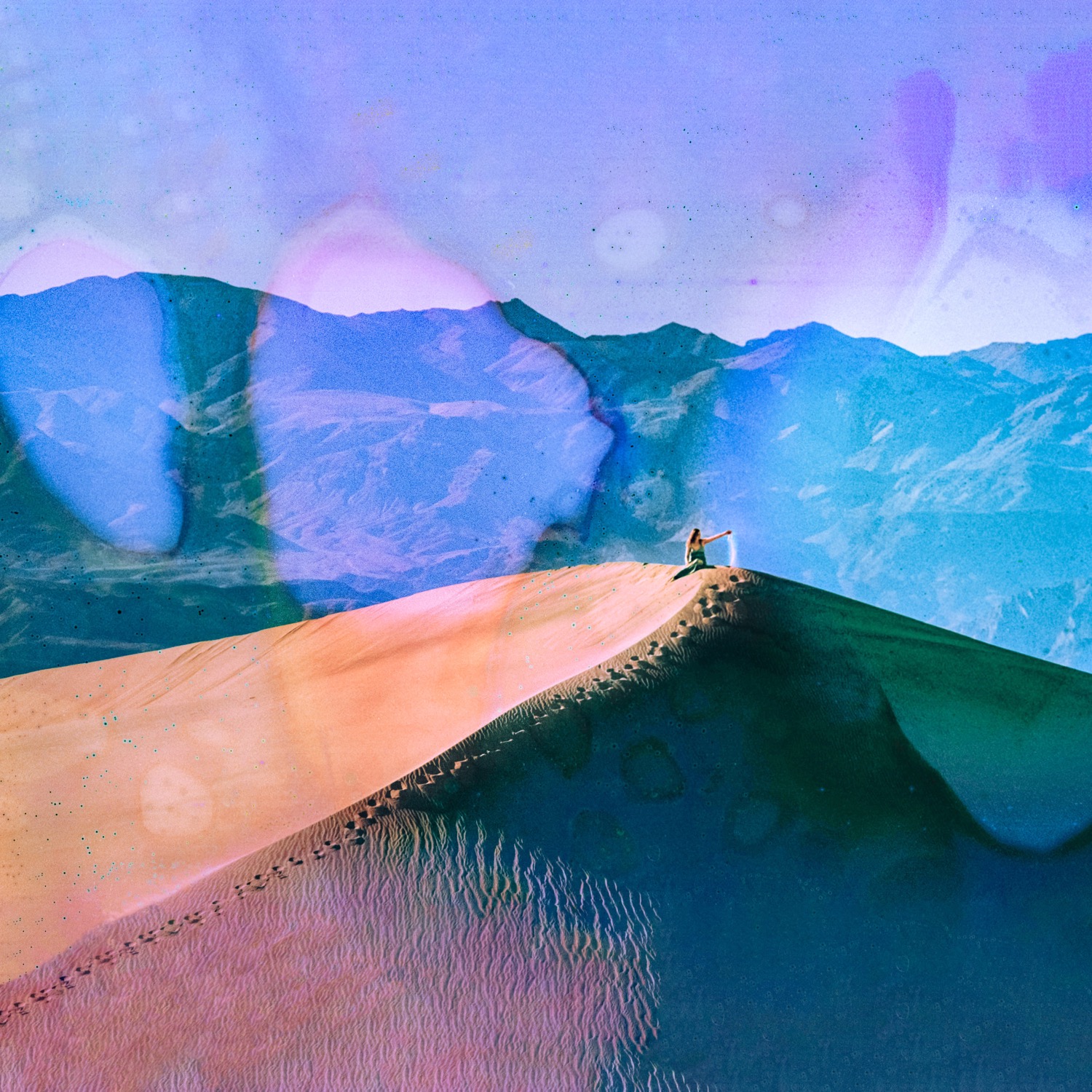
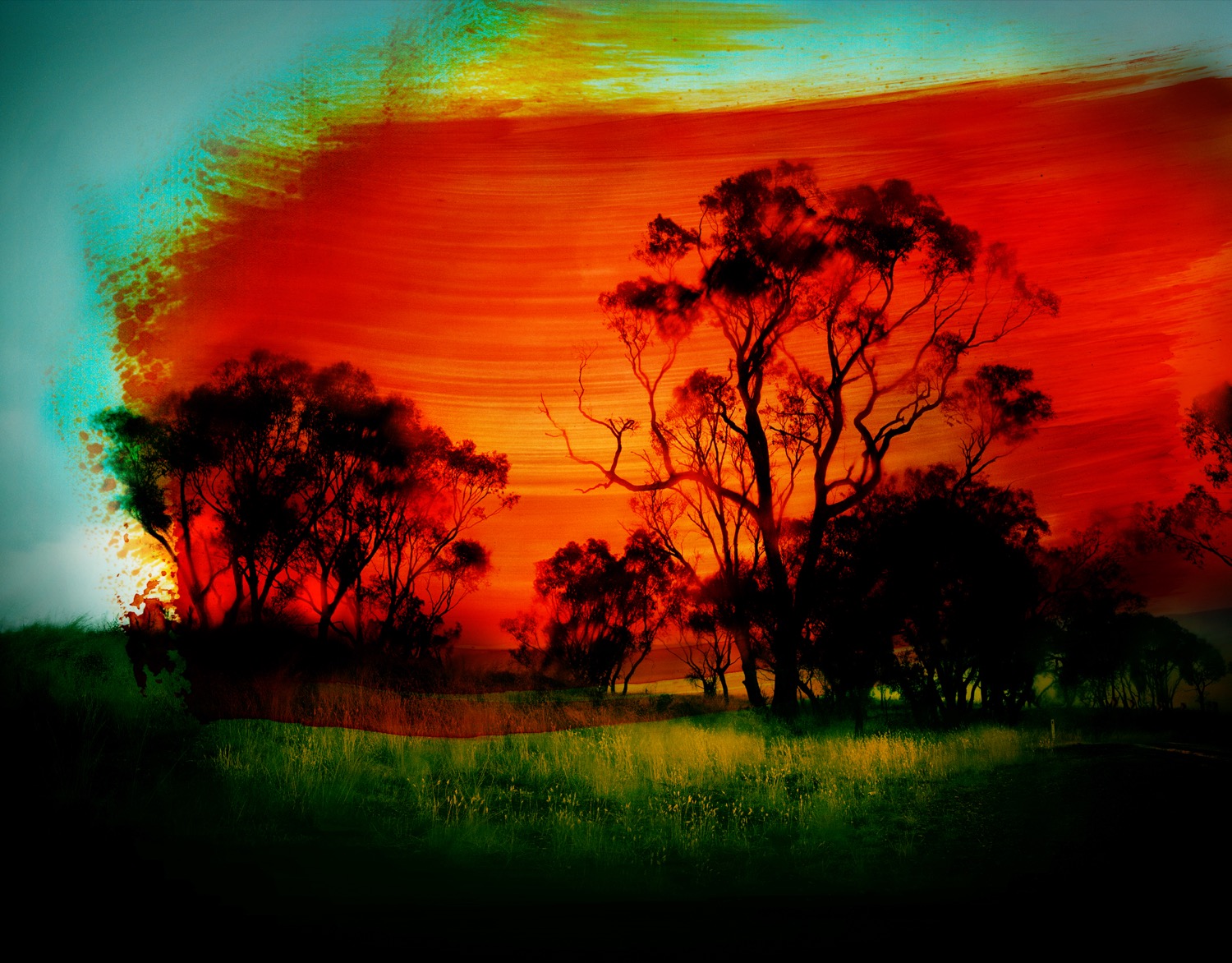
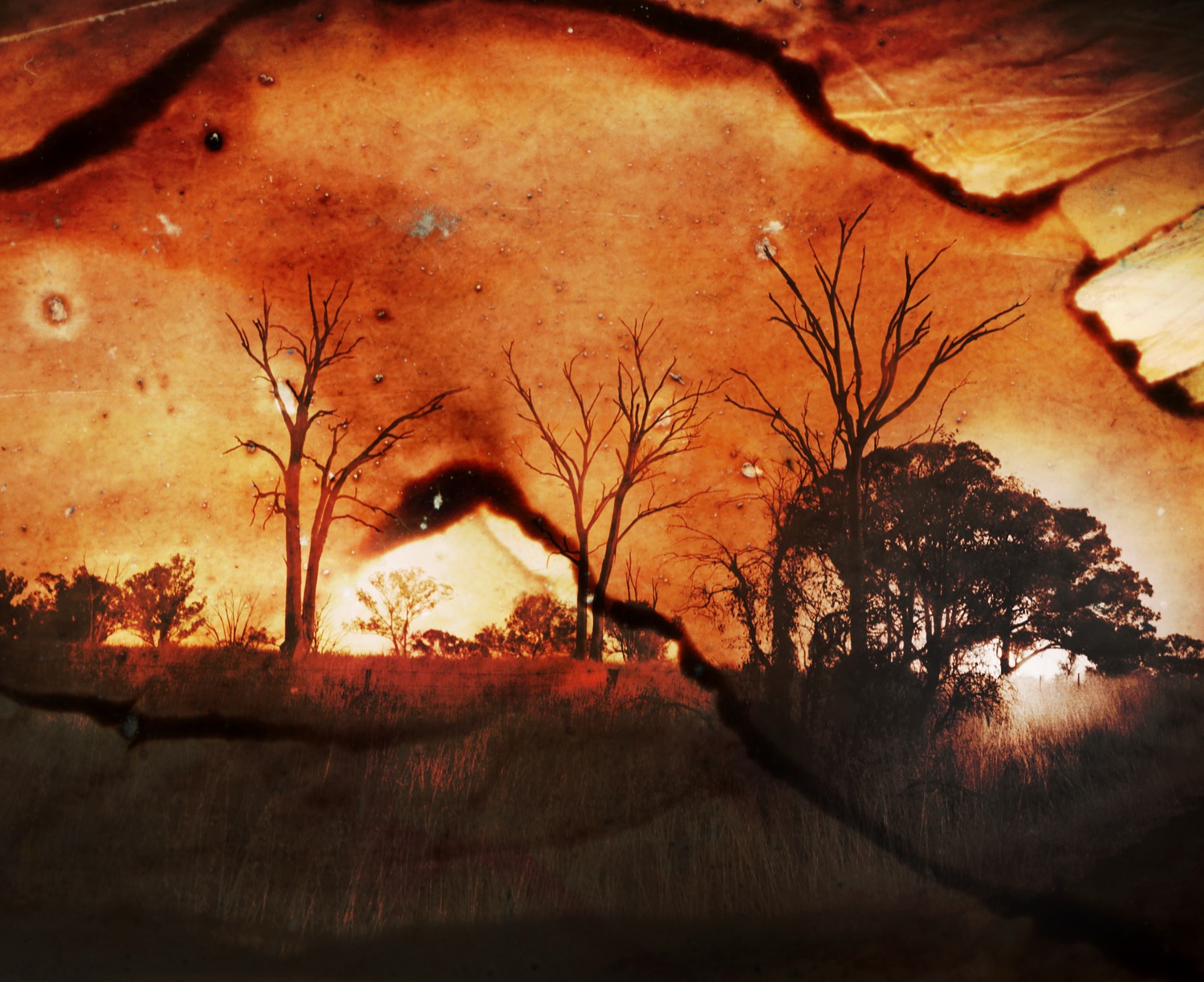
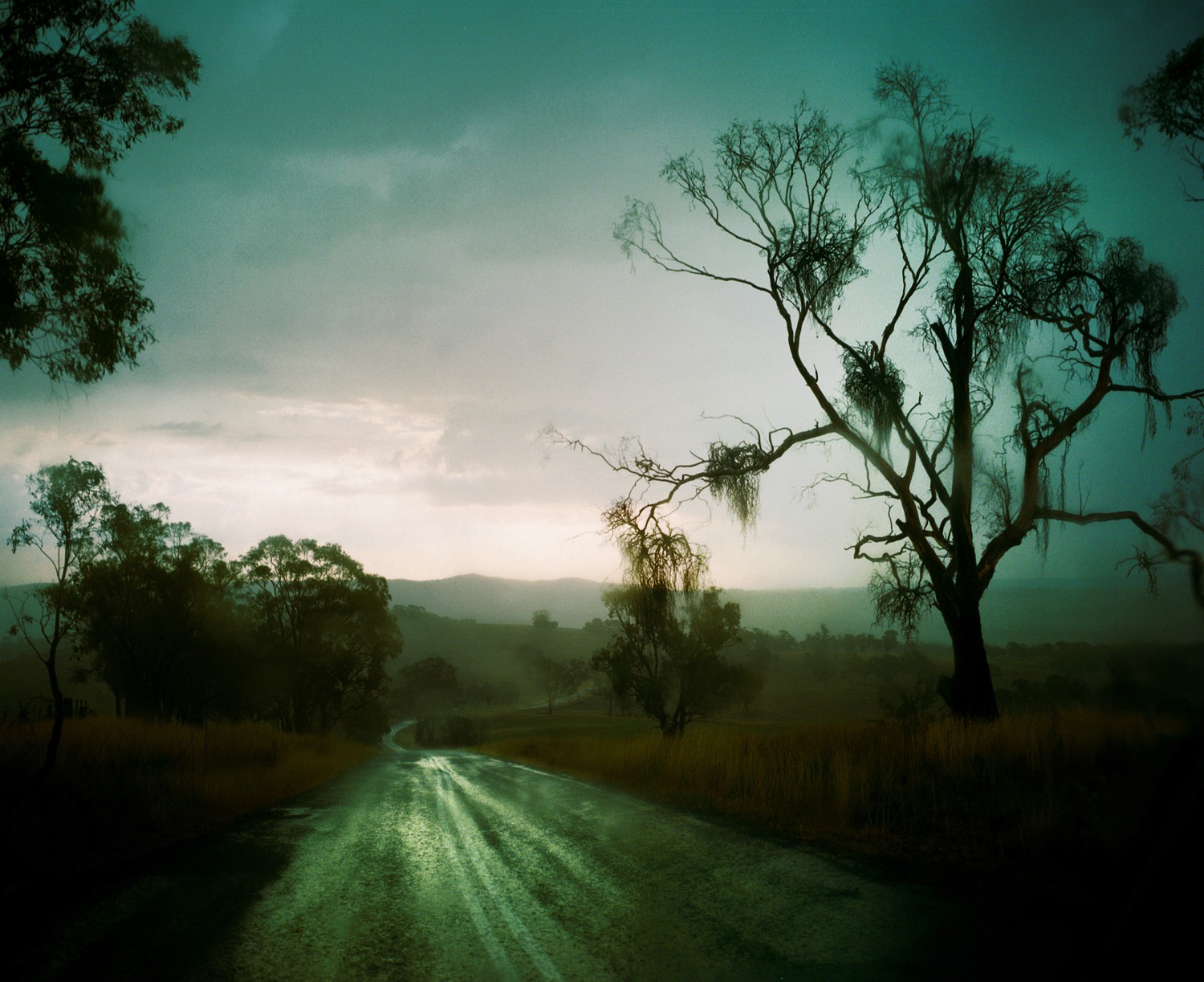
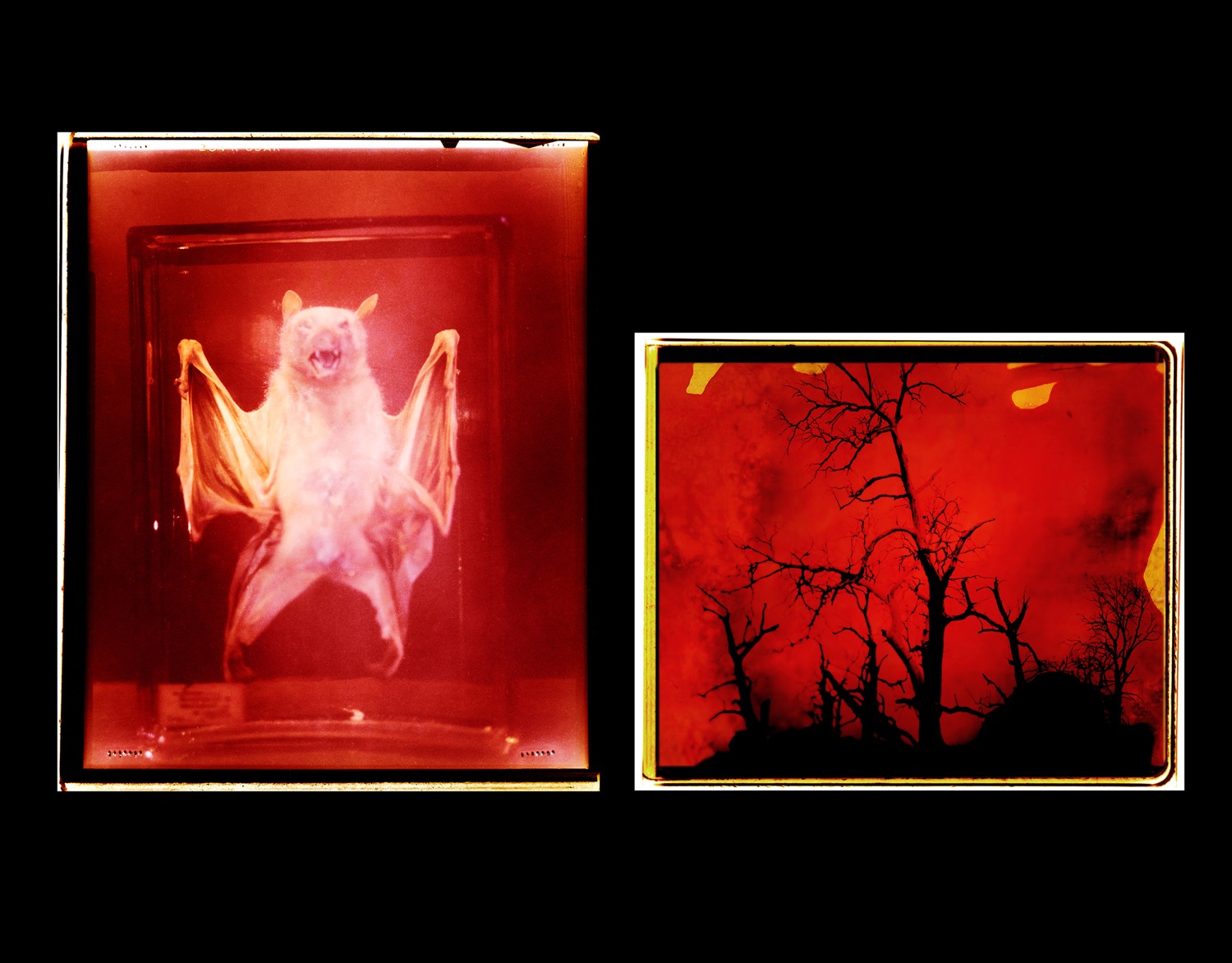
The photoworks of the series A Lost Place consist of realistic images with a superimposed layer of hand-painted colours, blending geographical reality with personal emotions about the devastating wildfires in Australia. This style was a deliberate choice. At the beginning of her career, Aletheia Casey wanted to become a photojournalist, but she concluded she wasn't the type to cover conflicts. Turning the camera towards ongoing injustice would completely deplete her emotionally. “I went down more of a documentary route to tell longer stories. And then that documentary path has led to an expanded documentary art practice, where I figured there are no rules — there are simply no rules in my practice. And that's the difference between my early photojournalistic work and how I work today.”


Casey wanted to move away from the strict format of photojournalism to better express her ideas and emotions. “I think there is definitely a place for observational photojournalistic work in order to depict particular events and record them. These days, there is a big question about how to depict the truth. But I want to engage myself without being constrained by any fixed rules. My work is both exploratory and intuitive. We're all human, and even though we have unique stories, we also share experiences in life. My work, A Lost Place, explores how we experience environmental catastrophes. Many of us will face these things, or have already. It is becoming a universal experience, tragically.”
My work, A Lost Place, explores how we experience environmental catastrophes.
Set the mind at ease
Even though Aletheia Casey, an Australian artist, currently lives in London, she remains strongly connected to Australia. “For me, it's still home. So when the fires started in 2019, I felt devastated by what was happening, and I felt anxious, fearful, and also angry about the government's response or lack of response.” The Australian government does not acknowledge its role in the environmental crisis. “They show a lack of acceptance that their policies on mining, coal exploitation, and damming contribute to what we're experiencing today. I was also interested in how our colonial history has played a part in why we are facing such disastrous environmental issues today.” Casey felt fearful and upset about the catastrophic bushfires, known as the Black Summer, that swept across Australia amid exceptional dry conditions. “At that time, I spoke to a friend about it, and she said: you just have to make work, just for yourself, just make work because it's the only thing that will set your mind at ease a little and calm it down because there was no point in me going to Australia at that point.”

Emotional exploration
She took images she had taken a year before in Australia, around the place where her parents live, along the south coast, and also inland in her children’s home of Wagga Wagga. “I took these images from both of these places. In some, I painted and then scratched onto them. For other images, I went into the darkroom, made prints, and then altered and manipulated them through analogue processes. I scanned and sandwiched other pictures while scanning, resulting in a double exposure. There were no rules about the process and no set agenda. It became an emotional exploration and an expression of the profound devastation I felt by the loss of land and animals, and the horrific impact this had on people.” The handcrafted process allowed Casey to express more emotion than a digital process would. “I generally try to handprint all of my work. Although for this series, it later became impossible to handprint every photo because we then went into the Pandemic. Darkrooms were closed. At the start of the year in Australia, everybody was trying to escape the fires, but then, only a few months later, they went straight into the pandemic. Then it was another sort of trauma – from having to flee their homes, they then couldn’t leave their homes further than a few kilometres.”
As Aletheia Casey was still in London, she was unable to return to Australia at that time. “So I kept making this work. Some images in the book were made from scans I had taken. I had printed them on my digital printer, but the paper went wrong, and the ink splattered and spread across the paper, which was not suited to the printer. That became fascinating and wonderful, so I explored that. There were absolutely no rules when it came to making the work, and a tension began to develop – between horror and beauty.”
No truth, but a language
Nowadays, we understand that in photography, ‘truth’—a term Susan Sontag still often used in the 1980s when describing it as one of the two main goals of photography (truth and beauty)—is no longer viewed as a realistic outcome of photographs. Moreover, Casey rejects the idea of truth as its essence, instead considering her work as an artistic language. “I doubt that there is a singular truth in photography because it is a manipulation of what we see, whether the world is shown in black and white or has been transformed into colour. It will always involve manipulating what our eyes perceive. I see it as a further step in expressing an idea. For me, my practice is about conveying the idea and making work in a way that feels right. It's not so much about sticking within strict boundaries or conforming to anyone's standards. Photography as an art form is about being authentic. Every piece of work I create is new to me because I try not to repeat steps. And because photography is so exciting, there’s no need to redo anything; it’s about exploring and expanding your practice. It's an endless process, really.”
Environmental laws needed
In painting on the surface of the previously taken photographs, Casey was able to merge her sadness, grief, and anger with old memories. “If we compare it to the UK, where I currently live, the amount of land that was burnt in those fires was roughly the size of England. It's unimaginable that this entire territory could have been burnt. What does this mean for the future?” Her deeply felt anger was directed at the Australian government, which failed to act adequately. “We require laws to change things, and lawmakers need to do that. During the pandemic, laws and rules changed, and people changed their habits. So humans are adaptable – we know it's possible. Yet the people making these laws seem not to be taking the environment seriously enough. We don't have another world to live in. Money has no value or worth when there is no world to be safe in. Nothing makes sense within this spectrum of environmental denial that many politicians are engaging in. I think that should make everybody furious.”
Nothing makes sense within this spectrum of environmental denial that many politicians are engaging in.

The Dark Forgetting
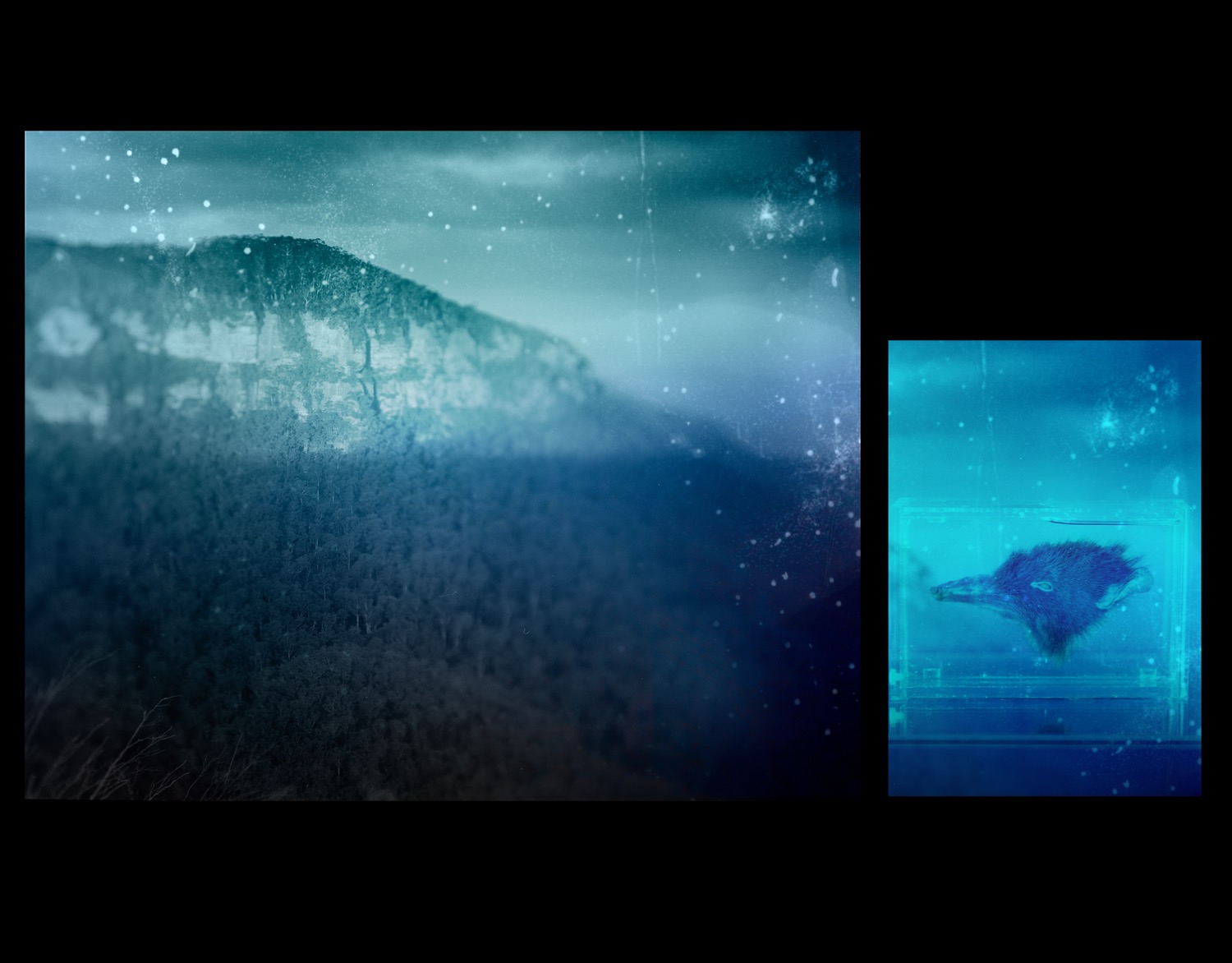
Despite numerous reconciliation efforts by the Australian government towards Aboriginal and Torres Strait Islander peoples, significant injustice persists against the original inhabitants. The First Peoples of Australia endured profound and immeasurable historical injustices, including the devastating loss and systematic disruption of their cultural identity, sovereignty, land, language, and ancestral continuity. In the series The Dark Forgetting, Aletheia Casey used distorted and disfigured landscapes, photographed at sites of conflicts and massacres, to depict past violence. “I think we are finally, slowly, starting to relook at who we commemorate and who we remember and who history has purposefully tried to forget. The anthropologist W. E. H. Stanner calls it the ‘disremembering’ of our history. It has been a very purposeful eradication of one aspect of history and that of our violent colonial past.”
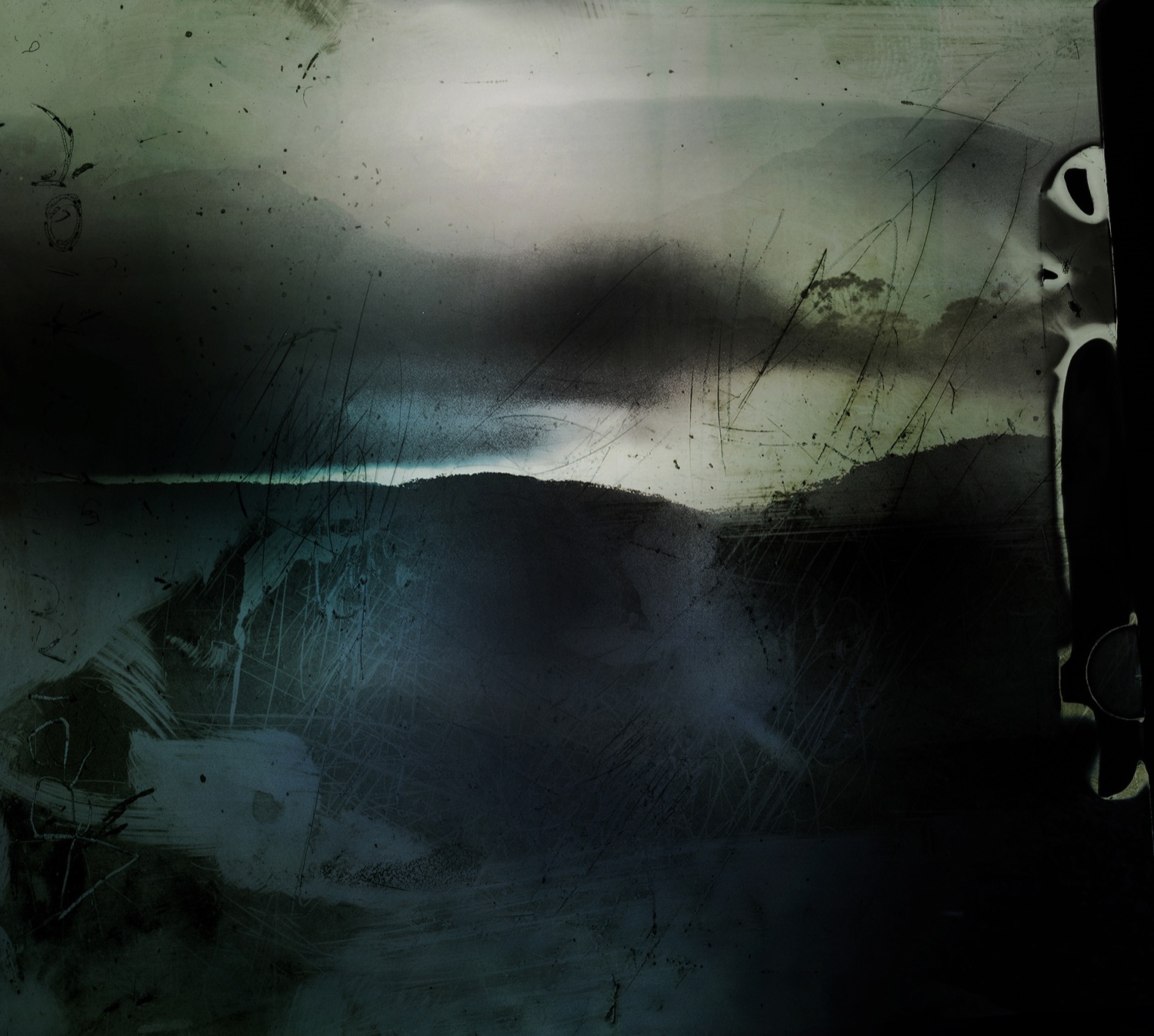
The painted photographs depict the guilty landscapes that hold troubled memories and, as such, form an archive of trauma from Australia's troubling history. “The land is an archive of history. It's an archive of violence. It's an archive of memory. From a colonial perspective, an archive is something you collect and categorise, then put in a closed room, label, and put away from light. However, there are alternative views that consider an archive to be something held and stored in the landscape. I'm interested in this idea of the landscape being an archive of history, and also of trauma, war, and conflict and all of the consequences of that.”
For these series, Casey found the exact points where these massacres of Indigenous Australians took place. “The settlers were moving into places to take over the land. They had weapons and other means of violence. Then there would be terrible violence and at times massacres throughout Australia.”
Influencing people through emotion
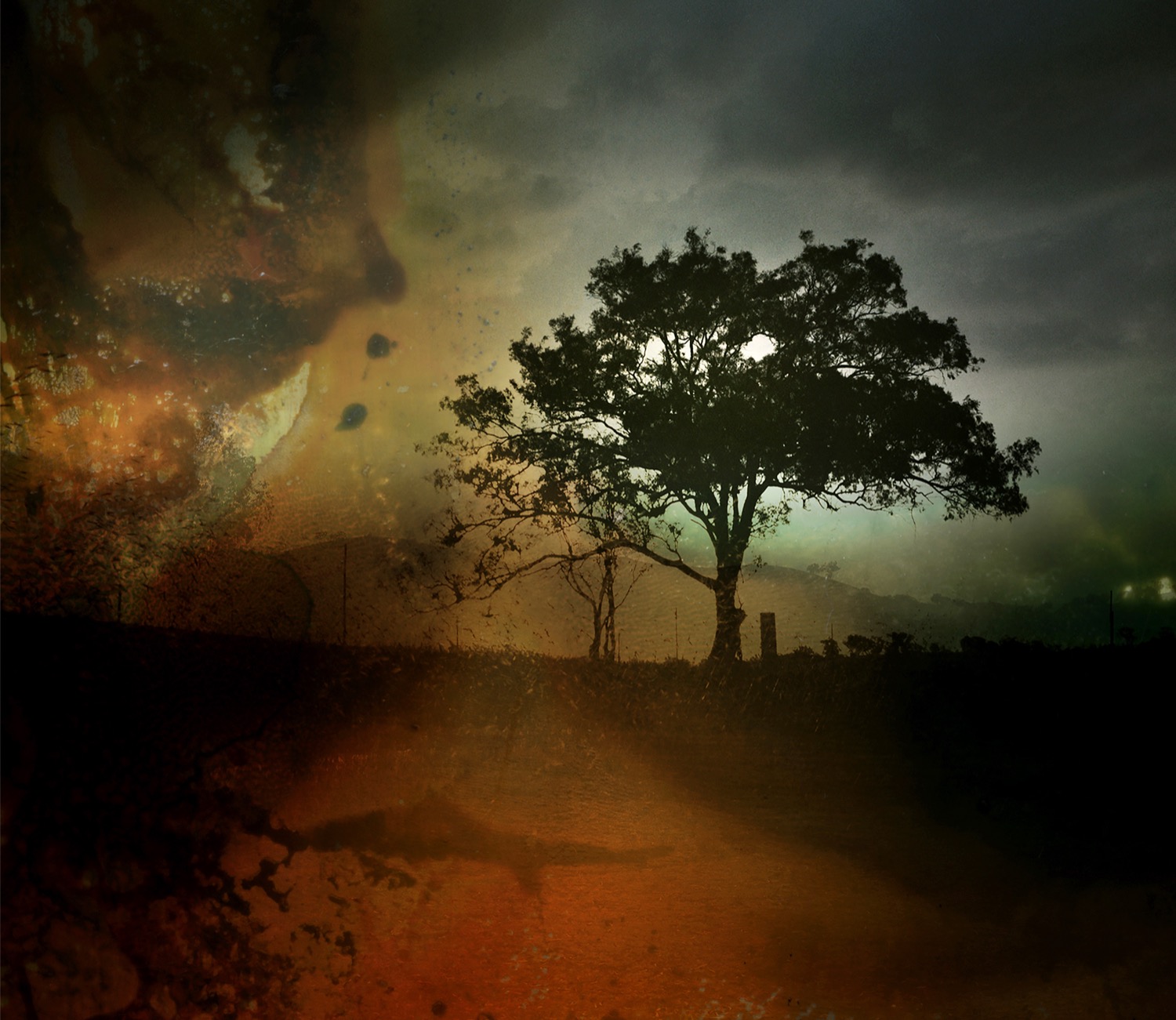
Even though photography may have a significant impact on viewers, it probably will not directly influence politicians. Nevertheless, art holds political importance in general, as it sparks conversation and influences people through beauty — not just graceful beauty, but also a form of ethical beauty. Aletheia Casey aims to reach people's hearts through art rather than rational discussions. “People have become despondent about what art can change, but there is still room for small improvements. We don't always understand why those in power make certain decisions. Occasionally, some choices are made for the benefit of humanity. If we become too despondent, nothing will happen. My work can touch an emotional part of people’s minds. I believe that if you move individuals emotionally, you invite them to view something with the power of beauty. To create an impact, it should include some element of beauty, which also fosters engagement. With the story behind the images, it may have a stronger emotional effect. That could leave a lasting, memorable impression.”


About
.svg)


.svg)
.svg)

The photoworks of the series A Lost Place consist of realistic images with a superimposed layer of hand-painted colours, blending geographical reality with personal emotions about the devastating wildfires in Australia. This style was a deliberate choice. At the beginning of her career, Aletheia Casey wanted to become a photojournalist, but she concluded she wasn't the type to cover conflicts. Turning the camera towards ongoing injustice would completely deplete her emotionally. “I went down more of a documentary route to tell longer stories. And then that documentary path has led to an expanded documentary art practice, where I figured there are no rules — there are simply no rules in my practice. And that's the difference between my early photojournalistic work and how I work today.”
Casey wanted to move away from the strict format of photojournalism to better express her ideas and emotions. “I think there is definitely a place for observational photojournalistic work in order to depict particular events and record them. These days, there is a big question about how to depict the truth. But I want to engage myself without being constrained by any fixed rules. My work is both exploratory and intuitive. We're all human, and even though we have unique stories, we also share experiences in life. My work, A Lost Place, explores how we experience environmental catastrophes. Many of us will face these things, or have already. It is becoming a universal experience, tragically.”
My work, A Lost Place, explores how we experience environmental catastrophes.
Set the mind at ease
Even though Aletheia Casey, an Australian artist, currently lives in London, she remains strongly connected to Australia. “For me, it's still home. So when the fires started in 2019, I felt devastated by what was happening, and I felt anxious, fearful, and also angry about the government's response or lack of response.” The Australian government does not acknowledge its role in the environmental crisis. “They show a lack of acceptance that their policies on mining, coal exploitation, and damming contribute to what we're experiencing today. I was also interested in how our colonial history has played a part in why we are facing such disastrous environmental issues today.” Casey felt fearful and upset about the catastrophic bushfires, known as the Black Summer, that swept across Australia amid exceptional dry conditions. “At that time, I spoke to a friend about it, and she said: you just have to make work, just for yourself, just make work because it's the only thing that will set your mind at ease a little and calm it down because there was no point in me going to Australia at that point.”
Emotional exploration
She took images she had taken a year before in Australia, around the place where her parents live, along the south coast, and also inland in her children’s home of Wagga Wagga. “I took these images from both of these places. In some, I painted and then scratched onto them. For other images, I went into the darkroom, made prints, and then altered and manipulated them through analogue processes. I scanned and sandwiched other pictures while scanning, resulting in a double exposure. There were no rules about the process and no set agenda. It became an emotional exploration and an expression of the profound devastation I felt by the loss of land and animals, and the horrific impact this had on people.” The handcrafted process allowed Casey to express more emotion than a digital process would. “I generally try to handprint all of my work. Although for this series, it later became impossible to handprint every photo because we then went into the Pandemic. Darkrooms were closed. At the start of the year in Australia, everybody was trying to escape the fires, but then, only a few months later, they went straight into the pandemic. Then it was another sort of trauma – from having to flee their homes, they then couldn’t leave their homes further than a few kilometres.”
As Aletheia Casey was still in London, she was unable to return to Australia at that time. “So I kept making this work. Some images in the book were made from scans I had taken. I had printed them on my digital printer, but the paper went wrong, and the ink splattered and spread across the paper, which was not suited to the printer. That became fascinating and wonderful, so I explored that. There were absolutely no rules when it came to making the work, and a tension began to develop – between horror and beauty.”
No truth, but a language
Nowadays, we understand that in photography, ‘truth’—a term Susan Sontag still often used in the 1980s when describing it as one of the two main goals of photography (truth and beauty)—is no longer viewed as a realistic outcome of photographs. Moreover, Casey rejects the idea of truth as its essence, instead considering her work as an artistic language. “I doubt that there is a singular truth in photography because it is a manipulation of what we see, whether the world is shown in black and white or has been transformed into colour. It will always involve manipulating what our eyes perceive. I see it as a further step in expressing an idea. For me, my practice is about conveying the idea and making work in a way that feels right. It's not so much about sticking within strict boundaries or conforming to anyone's standards. Photography as an art form is about being authentic. Every piece of work I create is new to me because I try not to repeat steps. And because photography is so exciting, there’s no need to redo anything; it’s about exploring and expanding your practice. It's an endless process, really.”
Environmental laws needed
In painting on the surface of the previously taken photographs, Casey was able to merge her sadness, grief, and anger with old memories. “If we compare it to the UK, where I currently live, the amount of land that was burnt in those fires was roughly the size of England. It's unimaginable that this entire territory could have been burnt. What does this mean for the future?” Her deeply felt anger was directed at the Australian government, which failed to act adequately. “We require laws to change things, and lawmakers need to do that. During the pandemic, laws and rules changed, and people changed their habits. So humans are adaptable – we know it's possible. Yet the people making these laws seem not to be taking the environment seriously enough. We don't have another world to live in. Money has no value or worth when there is no world to be safe in. Nothing makes sense within this spectrum of environmental denial that many politicians are engaging in. I think that should make everybody furious.”
Nothing makes sense within this spectrum of environmental denial that many politicians are engaging in.
The Dark Forgetting
Despite numerous reconciliation efforts by the Australian government towards Aboriginal and Torres Strait Islander peoples, significant injustice persists against the original inhabitants. The First Peoples of Australia endured profound and immeasurable historical injustices, including the devastating loss and systematic disruption of their cultural identity, sovereignty, land, language, and ancestral continuity. In the series The Dark Forgetting, Aletheia Casey used distorted and disfigured landscapes, photographed at sites of conflicts and massacres, to depict past violence. “I think we are finally, slowly, starting to relook at who we commemorate and who we remember and who history has purposefully tried to forget. The anthropologist W. E. H. Stanner calls it the ‘disremembering’ of our history. It has been a very purposeful eradication of one aspect of history and that of our violent colonial past.”
The painted photographs depict the guilty landscapes that hold troubled memories and, as such, form an archive of trauma from Australia's troubling history. “The land is an archive of history. It's an archive of violence. It's an archive of memory. From a colonial perspective, an archive is something you collect and categorise, then put in a closed room, label, and put away from light. However, there are alternative views that consider an archive to be something held and stored in the landscape. I'm interested in this idea of the landscape being an archive of history, and also of trauma, war, and conflict and all of the consequences of that.”
For these series, Casey found the exact points where these massacres of Indigenous Australians took place. “The settlers were moving into places to take over the land. They had weapons and other means of violence. Then there would be terrible violence and at times massacres throughout Australia.”
Influencing people through emotion
Even though photography may have a significant impact on viewers, it probably will not directly influence politicians. Nevertheless, art holds political importance in general, as it sparks conversation and influences people through beauty — not just graceful beauty, but also a form of ethical beauty. Aletheia Casey aims to reach people's hearts through art rather than rational discussions. “People have become despondent about what art can change, but there is still room for small improvements. We don't always understand why those in power make certain decisions. Occasionally, some choices are made for the benefit of humanity. If we become too despondent, nothing will happen. My work can touch an emotional part of people’s minds. I believe that if you move individuals emotionally, you invite them to view something with the power of beauty. To create an impact, it should include some element of beauty, which also fosters engagement. With the story behind the images, it may have a stronger emotional effect. That could leave a lasting, memorable impression.”
About
The photoworks of the series A Lost Place consist of realistic images with a superimposed layer of hand-painted colours, blending geographical reality with personal emotions about the devastating wildfires in Australia. This style was a deliberate choice. At the beginning of her career, Aletheia Casey wanted to become a photojournalist, but she concluded she wasn't the type to cover conflicts. Turning the camera towards ongoing injustice would completely deplete her emotionally. “I went down more of a documentary route to tell longer stories. And then that documentary path has led to an expanded documentary art practice, where I figured there are no rules — there are simply no rules in my practice. And that's the difference between my early photojournalistic work and how I work today.”
Casey wanted to move away from the strict format of photojournalism to better express her ideas and emotions. “I think there is definitely a place for observational photojournalistic work in order to depict particular events and record them. These days, there is a big question about how to depict the truth. But I want to engage myself without being constrained by any fixed rules. My work is both exploratory and intuitive. We're all human, and even though we have unique stories, we also share experiences in life. My work, A Lost Place, explores how we experience environmental catastrophes. Many of us will face these things, or have already. It is becoming a universal experience, tragically.”
My work, A Lost Place, explores how we experience environmental catastrophes.
Set the mind at ease
Even though Aletheia Casey, an Australian artist, currently lives in London, she remains strongly connected to Australia. “For me, it's still home. So when the fires started in 2019, I felt devastated by what was happening, and I felt anxious, fearful, and also angry about the government's response or lack of response.” The Australian government does not acknowledge its role in the environmental crisis. “They show a lack of acceptance that their policies on mining, coal exploitation, and damming contribute to what we're experiencing today. I was also interested in how our colonial history has played a part in why we are facing such disastrous environmental issues today.” Casey felt fearful and upset about the catastrophic bushfires, known as the Black Summer, that swept across Australia amid exceptional dry conditions. “At that time, I spoke to a friend about it, and she said: you just have to make work, just for yourself, just make work because it's the only thing that will set your mind at ease a little and calm it down because there was no point in me going to Australia at that point.”
Emotional exploration
She took images she had taken a year before in Australia, around the place where her parents live, along the south coast, and also inland in her children’s home of Wagga Wagga. “I took these images from both of these places. In some, I painted and then scratched onto them. For other images, I went into the darkroom, made prints, and then altered and manipulated them through analogue processes. I scanned and sandwiched other pictures while scanning, resulting in a double exposure. There were no rules about the process and no set agenda. It became an emotional exploration and an expression of the profound devastation I felt by the loss of land and animals, and the horrific impact this had on people.” The handcrafted process allowed Casey to express more emotion than a digital process would. “I generally try to handprint all of my work. Although for this series, it later became impossible to handprint every photo because we then went into the Pandemic. Darkrooms were closed. At the start of the year in Australia, everybody was trying to escape the fires, but then, only a few months later, they went straight into the pandemic. Then it was another sort of trauma – from having to flee their homes, they then couldn’t leave their homes further than a few kilometres.”
As Aletheia Casey was still in London, she was unable to return to Australia at that time. “So I kept making this work. Some images in the book were made from scans I had taken. I had printed them on my digital printer, but the paper went wrong, and the ink splattered and spread across the paper, which was not suited to the printer. That became fascinating and wonderful, so I explored that. There were absolutely no rules when it came to making the work, and a tension began to develop – between horror and beauty.”
No truth, but a language
Nowadays, we understand that in photography, ‘truth’—a term Susan Sontag still often used in the 1980s when describing it as one of the two main goals of photography (truth and beauty)—is no longer viewed as a realistic outcome of photographs. Moreover, Casey rejects the idea of truth as its essence, instead considering her work as an artistic language. “I doubt that there is a singular truth in photography because it is a manipulation of what we see, whether the world is shown in black and white or has been transformed into colour. It will always involve manipulating what our eyes perceive. I see it as a further step in expressing an idea. For me, my practice is about conveying the idea and making work in a way that feels right. It's not so much about sticking within strict boundaries or conforming to anyone's standards. Photography as an art form is about being authentic. Every piece of work I create is new to me because I try not to repeat steps. And because photography is so exciting, there’s no need to redo anything; it’s about exploring and expanding your practice. It's an endless process, really.”
Environmental laws needed
In painting on the surface of the previously taken photographs, Casey was able to merge her sadness, grief, and anger with old memories. “If we compare it to the UK, where I currently live, the amount of land that was burnt in those fires was roughly the size of England. It's unimaginable that this entire territory could have been burnt. What does this mean for the future?” Her deeply felt anger was directed at the Australian government, which failed to act adequately. “We require laws to change things, and lawmakers need to do that. During the pandemic, laws and rules changed, and people changed their habits. So humans are adaptable – we know it's possible. Yet the people making these laws seem not to be taking the environment seriously enough. We don't have another world to live in. Money has no value or worth when there is no world to be safe in. Nothing makes sense within this spectrum of environmental denial that many politicians are engaging in. I think that should make everybody furious.”
Nothing makes sense within this spectrum of environmental denial that many politicians are engaging in.
The Dark Forgetting
Despite numerous reconciliation efforts by the Australian government towards Aboriginal and Torres Strait Islander peoples, significant injustice persists against the original inhabitants. The First Peoples of Australia endured profound and immeasurable historical injustices, including the devastating loss and systematic disruption of their cultural identity, sovereignty, land, language, and ancestral continuity. In the series The Dark Forgetting, Aletheia Casey used distorted and disfigured landscapes, photographed at sites of conflicts and massacres, to depict past violence. “I think we are finally, slowly, starting to relook at who we commemorate and who we remember and who history has purposefully tried to forget. The anthropologist W. E. H. Stanner calls it the ‘disremembering’ of our history. It has been a very purposeful eradication of one aspect of history and that of our violent colonial past.”
The painted photographs depict the guilty landscapes that hold troubled memories and, as such, form an archive of trauma from Australia's troubling history. “The land is an archive of history. It's an archive of violence. It's an archive of memory. From a colonial perspective, an archive is something you collect and categorise, then put in a closed room, label, and put away from light. However, there are alternative views that consider an archive to be something held and stored in the landscape. I'm interested in this idea of the landscape being an archive of history, and also of trauma, war, and conflict and all of the consequences of that.”
For these series, Casey found the exact points where these massacres of Indigenous Australians took place. “The settlers were moving into places to take over the land. They had weapons and other means of violence. Then there would be terrible violence and at times massacres throughout Australia.”
Influencing people through emotion
Even though photography may have a significant impact on viewers, it probably will not directly influence politicians. Nevertheless, art holds political importance in general, as it sparks conversation and influences people through beauty — not just graceful beauty, but also a form of ethical beauty. Aletheia Casey aims to reach people's hearts through art rather than rational discussions. “People have become despondent about what art can change, but there is still room for small improvements. We don't always understand why those in power make certain decisions. Occasionally, some choices are made for the benefit of humanity. If we become too despondent, nothing will happen. My work can touch an emotional part of people’s minds. I believe that if you move individuals emotionally, you invite them to view something with the power of beauty. To create an impact, it should include some element of beauty, which also fosters engagement. With the story behind the images, it may have a stronger emotional effect. That could leave a lasting, memorable impression.”
About