© Olga Shatokha | Roots, Dad and St Seraphim


She and her family have moved across countries. “I have been living outside of Ukraine for over a decade, currently residing in Lisbon (previously Porto and Tallinn), where my parents joined me after fleeing the Russian war in Ukraine in 2022.” For Shatokha, displacement is never just geographic; it is emotional, historical, and linguistic. “I explore the concepts of memory, home, and belonging.”
Olga Shatokha experienced home as something layered, shifting, and often internal rather than fixed to a single place. The layered condition shapes both what she photographs and how she alters her images. “I photograph domestic spaces, family members, and landscapes, then return to these images physically through stitching and collage, trying to mend what is torn.”


Lifelines Shaped by Trauma
Lifelines traces the migratory lines of Shatokha's own family history, examining how belonging, lineage, and state power intersect across generations. “My family, like every Ukrainian family, has been suffering not just the consequences of the current war but the accumulated trauma of Russian and Soviet imperial aggression toward Ukraine throughout centuries. My grandfather's family survived the Holodomor, a man-made famine designed to break the Ukrainian nation, and my grandmother's family endured the dekulakization repression campaigns.”
Moving between ancestral geographies and contemporary documentation, the project questions the ways governments attempt to define identity through borders, papers and official records. “In my project Lifelines, I want to raise questions about imperialistic absorption and the violence of archiving. Empires do not only conquer land, but they also seek to arrest motion, to turn people into records, documents, statistics that serve their own narratives. They erase the particular in favour of the universal, and the personal in favour of the official.”

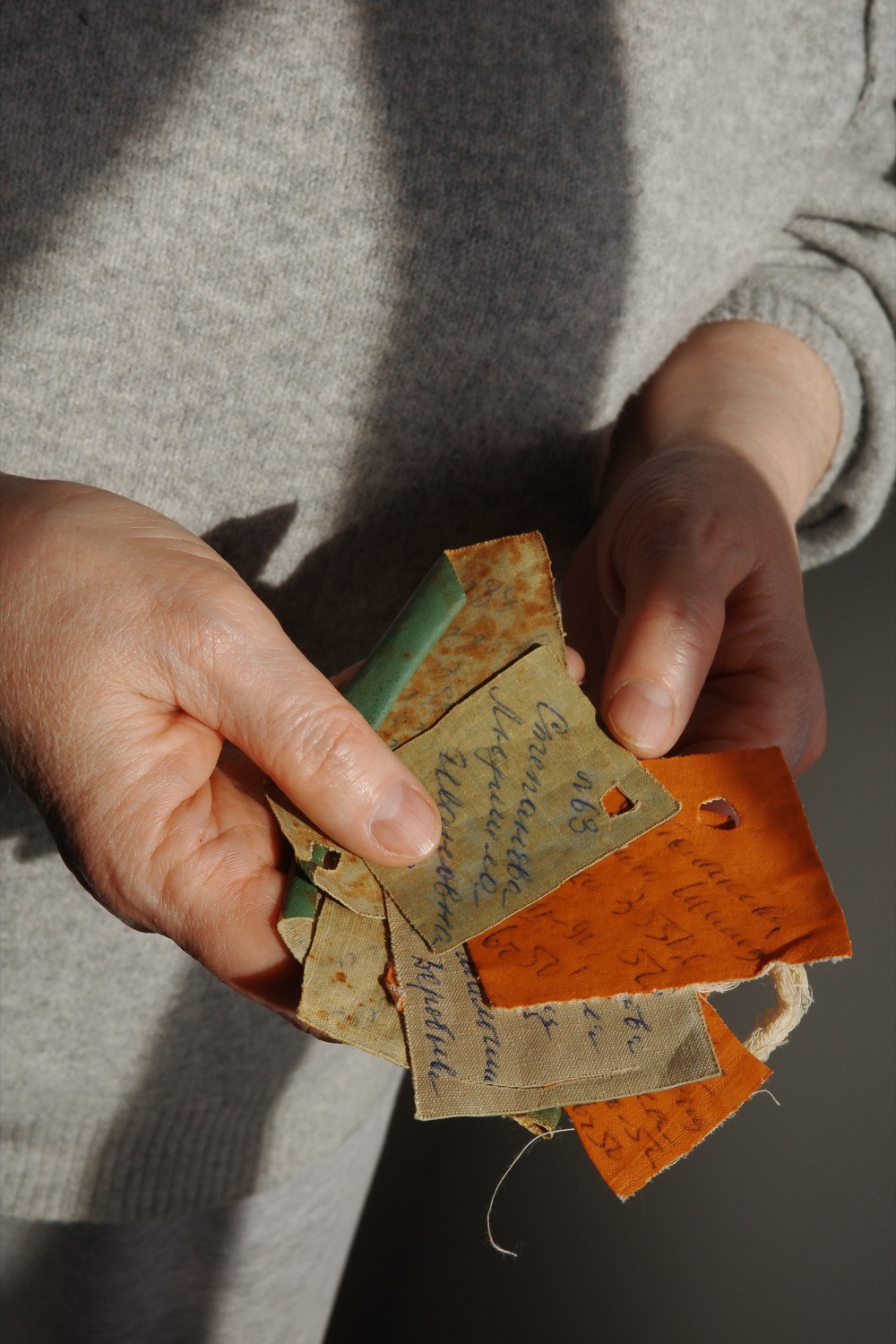
In response, her practice becomes archival in its own way. “My work invites viewers to unsee the imperial narrative and to see a personal one instead because our stories have as much historical weight as any official document.” Through layered visual techniques, Lifelines challenges imperial logics of possession and control, suggesting that it is precisely through movement, adaptation, and continuity that histories endure. “These histories live in us whether we talk about them or not. By working with family photographs and inherited objects, I'm creating a counter-archive to official histories, one that insists on the personal, human scale of these tragedies.”
These histories live in us whether we talk about them or not.


Histories of Displacement
In her series Roots, Shatokha constructs a visual dialogue between uprooted plants and displaced people, examining how history, land, and identity intertwine. The project confronts forced migration and the commodification of cultural heritage, drawing parallels between Native American and Ukrainian experiences of displacement. “I choose subjects that resonate with me personally and with whom I have established a certain intimacy. I often photograph what I can return to: my parents' hands, rooms I have lived in, and plants surviving in difficult places. In Roots, this extends to landscapes and people connected to histories of displacement, approached through meaningful encounters.”
With Roots, she opens a space for reflection on colonisation, war and cultural erasure, and the ways these forces reverberate across generations. “Most of my adult life, I have been creating ties with places while knowing I may not stay. This persistent inner conflict has taught me to live in the present moment, making me drawn to the ordinary, but fleeting: light on a curtain, a hand showing an object, a broken branch.”

Softness and Space
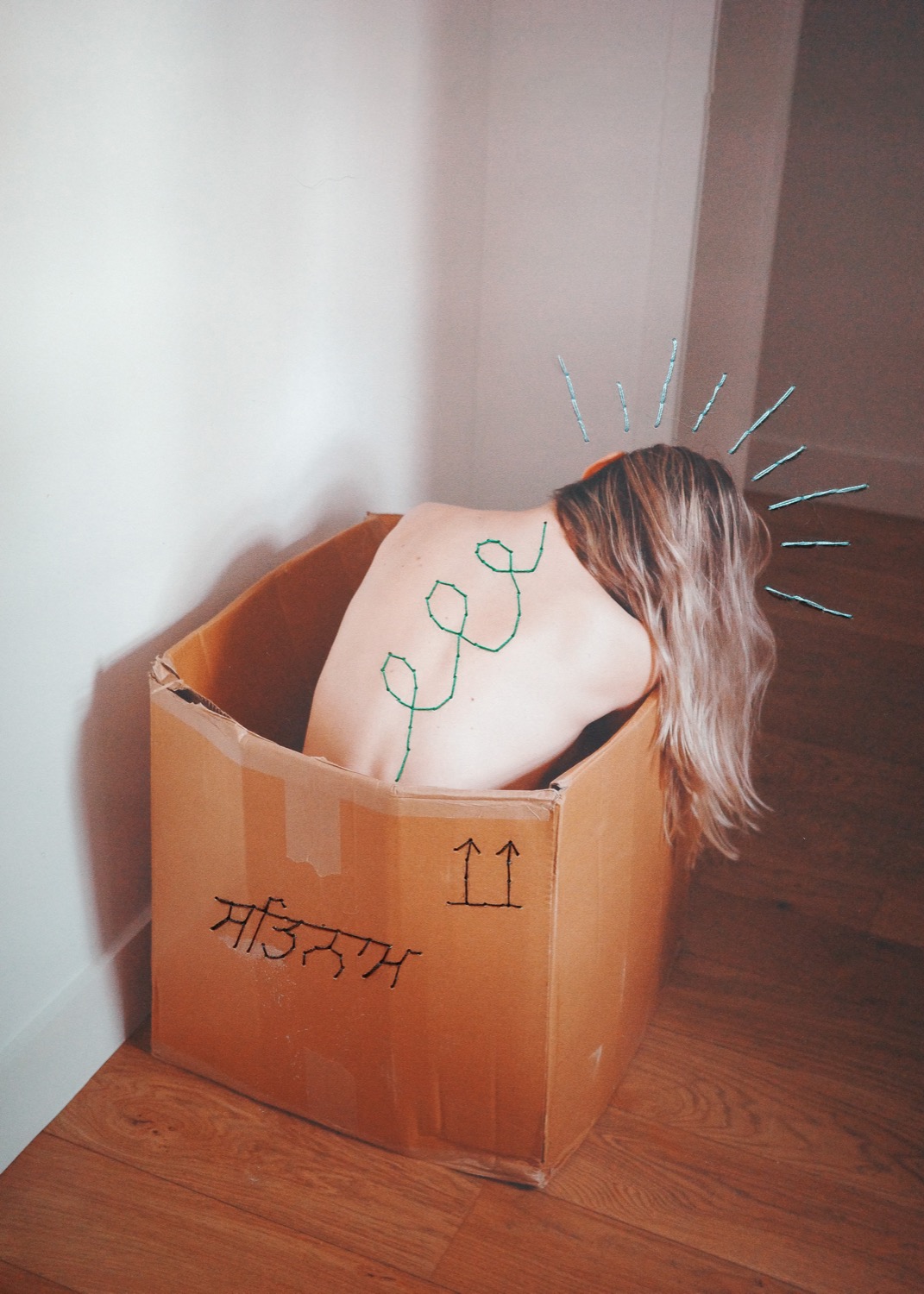
With her staged photography, she centres on an exploration of femininity and the conscious embodiment of softness within a culture that frequently rewards hardness. “Another important topic of my practice has been exploring my femininity and what it means to embody softness in a world that often demands harshness.” Qualities she once perceived as weaknesses have gradually become sites of strength and self-acceptance. “I typically model for my own photographs, extending to the idea of staying open, receiving, and vulnerable. I once considered these qualities weak, but lately, I've been learning to embrace them.”
This sensibility is echoed in her visual language: she works predominantly with natural light. “I work mostly with natural, soft, indirect light, the kind that feels domestic and intimate. When I want to add more drama, I occasionally use flash.” Alongside these material processes, she returns repeatedly to unoccupied interiors. “I love photographing empty spaces: sometimes they provide more information about us than our portraits. A room tells the story of how someone moves through the world, what they choose to keep close, and what they've left behind.”
Her practice is guided by a desire to activate reflection within the viewer. “I hope my work takes viewers on a journey down their own memory lane, making them reflect on their own sense of belonging and home. I'm not providing answers; I create space for questions. Where do you belong? What makes a place home? How do we find home within us when the physical place no longer exists?”
Shatokha’s photographs function as a form of introspection, inviting each person to consider their own experiences of attachment and displacement. “If viewers leave with a broader, more flexible idea of what a home can mean — that is enough. I want my work to validate the complexity of the feelings, not to simplify them.”
I hope my work takes viewers on a journey down their own memory lane, making them reflect on their own sense of belonging and home.


Altered Photographs
Material intervention forms the basis of her practice; the photographs are handled, altered and reconstituted. “Stitching and collage are central to my practice. These techniques transform the print into an object with its own history. The act of cutting and reassembling an image evokes the fragmentation ofmemory and the experience of migration. The thread is the reconstruction.”
Olga Shatokha uses written text on the frame as both a visual rhythm and a philosophical position. “I incorporate writing because within writing and photography, I love repetition. This circular nature contrasts with our Western linear thinking, and aligns more closely with Eastern philosophies, where existence is part of an endless cycle.”
In one work, we see emotional handwritten texts, around a photo of a window looking outside with a repetitive phrase 'My happiness, I'm here and waiting for you'. “This work pays homage to Oleg Mitasov, a Ukrainian outsider artist who transformed walls, notebooks, and entire rooms into archives of obsessively handwritten phrases.” The texts on her images function is restorative. “It uses a sequence of affirming phrases to facilitate reconciliation through simple, intentional language.”


Installation
Her practice continues to expand beyond the single frame. “I am interested in photographs as components within larger installations that include fabric, found objects, archival materials, and text.” The photograph enters into dialogue with other materials, forming spatial constellations in which memory unfolds through texture, proximity, and scale. This direction connects closely to her ongoing inquiry into inheritance and continuity. “I want to explore intergenerational memory more deeply — how habits, traditions, stories, and even fears travel through families. At the same time, I'm drawn to our personal, everyday stories because these are what ultimately shape the larger mosaic of life. History isn't only made in grand gestures, but in how we set a table, hold a photograph, or choose what to keep when we have to leave everything else behind.”
.svg)


.svg)
.svg)

She and her family have moved across countries. “I have been living outside of Ukraine for over a decade, currently residing in Lisbon (previously Porto and Tallinn), where my parents joined me after fleeing the Russian war in Ukraine in 2022.” For Shatokha, displacement is never just geographic; it is emotional, historical, and linguistic. “I explore the concepts of memory, home, and belonging.”
Olga Shatokha experienced home as something layered, shifting, and often internal rather than fixed to a single place. The layered condition shapes both what she photographs and how she alters her images. “I photograph domestic spaces, family members, and landscapes, then return to these images physically through stitching and collage, trying to mend what is torn.”
Lifelines Shaped by Trauma
Lifelines traces the migratory lines of Shatokha's own family history, examining how belonging, lineage, and state power intersect across generations. “My family, like every Ukrainian family, has been suffering not just the consequences of the current war but the accumulated trauma of Russian and Soviet imperial aggression toward Ukraine throughout centuries. My grandfather's family survived the Holodomor, a man-made famine designed to break the Ukrainian nation, and my grandmother's family endured the dekulakization repression campaigns.”
Moving between ancestral geographies and contemporary documentation, the project questions the ways governments attempt to define identity through borders, papers and official records. “In my project Lifelines, I want to raise questions about imperialistic absorption and the violence of archiving. Empires do not only conquer land, but they also seek to arrest motion, to turn people into records, documents, statistics that serve their own narratives. They erase the particular in favour of the universal, and the personal in favour of the official.”
In response, her practice becomes archival in its own way. “My work invites viewers to unsee the imperial narrative and to see a personal one instead because our stories have as much historical weight as any official document.” Through layered visual techniques, Lifelines challenges imperial logics of possession and control, suggesting that it is precisely through movement, adaptation, and continuity that histories endure. “These histories live in us whether we talk about them or not. By working with family photographs and inherited objects, I'm creating a counter-archive to official histories, one that insists on the personal, human scale of these tragedies.”
These histories live in us whether we talk about them or not.
Histories of Displacement
In her series Roots, Shatokha constructs a visual dialogue between uprooted plants and displaced people, examining how history, land, and identity intertwine. The project confronts forced migration and the commodification of cultural heritage, drawing parallels between Native American and Ukrainian experiences of displacement. “I choose subjects that resonate with me personally and with whom I have established a certain intimacy. I often photograph what I can return to: my parents' hands, rooms I have lived in, and plants surviving in difficult places. In Roots, this extends to landscapes and people connected to histories of displacement, approached through meaningful encounters.”
With Roots, she opens a space for reflection on colonisation, war and cultural erasure, and the ways these forces reverberate across generations. “Most of my adult life, I have been creating ties with places while knowing I may not stay. This persistent inner conflict has taught me to live in the present moment, making me drawn to the ordinary, but fleeting: light on a curtain, a hand showing an object, a broken branch.”
Softness and Space
With her staged photography, she centres on an exploration of femininity and the conscious embodiment of softness within a culture that frequently rewards hardness. “Another important topic of my practice has been exploring my femininity and what it means to embody softness in a world that often demands harshness.” Qualities she once perceived as weaknesses have gradually become sites of strength and self-acceptance. “I typically model for my own photographs, extending to the idea of staying open, receiving, and vulnerable. I once considered these qualities weak, but lately, I've been learning to embrace them.”
This sensibility is echoed in her visual language: she works predominantly with natural light. “I work mostly with natural, soft, indirect light, the kind that feels domestic and intimate. When I want to add more drama, I occasionally use flash.” Alongside these material processes, she returns repeatedly to unoccupied interiors. “I love photographing empty spaces: sometimes they provide more information about us than our portraits. A room tells the story of how someone moves through the world, what they choose to keep close, and what they've left behind.”
Her practice is guided by a desire to activate reflection within the viewer. “I hope my work takes viewers on a journey down their own memory lane, making them reflect on their own sense of belonging and home. I'm not providing answers; I create space for questions. Where do you belong? What makes a place home? How do we find home within us when the physical place no longer exists?”
Shatokha’s photographs function as a form of introspection, inviting each person to consider their own experiences of attachment and displacement. “If viewers leave with a broader, more flexible idea of what a home can mean — that is enough. I want my work to validate the complexity of the feelings, not to simplify them.”
I hope my work takes viewers on a journey down their own memory lane, making them reflect on their own sense of belonging and home.
Altered Photographs
Material intervention forms the basis of her practice; the photographs are handled, altered and reconstituted. “Stitching and collage are central to my practice. These techniques transform the print into an object with its own history. The act of cutting and reassembling an image evokes the fragmentation ofmemory and the experience of migration. The thread is the reconstruction.”
Olga Shatokha uses written text on the frame as both a visual rhythm and a philosophical position. “I incorporate writing because within writing and photography, I love repetition. This circular nature contrasts with our Western linear thinking, and aligns more closely with Eastern philosophies, where existence is part of an endless cycle.”
In one work, we see emotional handwritten texts, around a photo of a window looking outside with a repetitive phrase 'My happiness, I'm here and waiting for you'. “This work pays homage to Oleg Mitasov, a Ukrainian outsider artist who transformed walls, notebooks, and entire rooms into archives of obsessively handwritten phrases.” The texts on her images function is restorative. “It uses a sequence of affirming phrases to facilitate reconciliation through simple, intentional language.”
Installation
Her practice continues to expand beyond the single frame. “I am interested in photographs as components within larger installations that include fabric, found objects, archival materials, and text.” The photograph enters into dialogue with other materials, forming spatial constellations in which memory unfolds through texture, proximity, and scale. This direction connects closely to her ongoing inquiry into inheritance and continuity. “I want to explore intergenerational memory more deeply — how habits, traditions, stories, and even fears travel through families. At the same time, I'm drawn to our personal, everyday stories because these are what ultimately shape the larger mosaic of life. History isn't only made in grand gestures, but in how we set a table, hold a photograph, or choose what to keep when we have to leave everything else behind.”
She and her family have moved across countries. “I have been living outside of Ukraine for over a decade, currently residing in Lisbon (previously Porto and Tallinn), where my parents joined me after fleeing the Russian war in Ukraine in 2022.” For Shatokha, displacement is never just geographic; it is emotional, historical, and linguistic. “I explore the concepts of memory, home, and belonging.”
Olga Shatokha experienced home as something layered, shifting, and often internal rather than fixed to a single place. The layered condition shapes both what she photographs and how she alters her images. “I photograph domestic spaces, family members, and landscapes, then return to these images physically through stitching and collage, trying to mend what is torn.”
Lifelines Shaped by Trauma
Lifelines traces the migratory lines of Shatokha's own family history, examining how belonging, lineage, and state power intersect across generations. “My family, like every Ukrainian family, has been suffering not just the consequences of the current war but the accumulated trauma of Russian and Soviet imperial aggression toward Ukraine throughout centuries. My grandfather's family survived the Holodomor, a man-made famine designed to break the Ukrainian nation, and my grandmother's family endured the dekulakization repression campaigns.”
Moving between ancestral geographies and contemporary documentation, the project questions the ways governments attempt to define identity through borders, papers and official records. “In my project Lifelines, I want to raise questions about imperialistic absorption and the violence of archiving. Empires do not only conquer land, but they also seek to arrest motion, to turn people into records, documents, statistics that serve their own narratives. They erase the particular in favour of the universal, and the personal in favour of the official.”
In response, her practice becomes archival in its own way. “My work invites viewers to unsee the imperial narrative and to see a personal one instead because our stories have as much historical weight as any official document.” Through layered visual techniques, Lifelines challenges imperial logics of possession and control, suggesting that it is precisely through movement, adaptation, and continuity that histories endure. “These histories live in us whether we talk about them or not. By working with family photographs and inherited objects, I'm creating a counter-archive to official histories, one that insists on the personal, human scale of these tragedies.”
These histories live in us whether we talk about them or not.
Histories of Displacement
In her series Roots, Shatokha constructs a visual dialogue between uprooted plants and displaced people, examining how history, land, and identity intertwine. The project confronts forced migration and the commodification of cultural heritage, drawing parallels between Native American and Ukrainian experiences of displacement. “I choose subjects that resonate with me personally and with whom I have established a certain intimacy. I often photograph what I can return to: my parents' hands, rooms I have lived in, and plants surviving in difficult places. In Roots, this extends to landscapes and people connected to histories of displacement, approached through meaningful encounters.”
With Roots, she opens a space for reflection on colonisation, war and cultural erasure, and the ways these forces reverberate across generations. “Most of my adult life, I have been creating ties with places while knowing I may not stay. This persistent inner conflict has taught me to live in the present moment, making me drawn to the ordinary, but fleeting: light on a curtain, a hand showing an object, a broken branch.”
Softness and Space
With her staged photography, she centres on an exploration of femininity and the conscious embodiment of softness within a culture that frequently rewards hardness. “Another important topic of my practice has been exploring my femininity and what it means to embody softness in a world that often demands harshness.” Qualities she once perceived as weaknesses have gradually become sites of strength and self-acceptance. “I typically model for my own photographs, extending to the idea of staying open, receiving, and vulnerable. I once considered these qualities weak, but lately, I've been learning to embrace them.”
This sensibility is echoed in her visual language: she works predominantly with natural light. “I work mostly with natural, soft, indirect light, the kind that feels domestic and intimate. When I want to add more drama, I occasionally use flash.” Alongside these material processes, she returns repeatedly to unoccupied interiors. “I love photographing empty spaces: sometimes they provide more information about us than our portraits. A room tells the story of how someone moves through the world, what they choose to keep close, and what they've left behind.”
Her practice is guided by a desire to activate reflection within the viewer. “I hope my work takes viewers on a journey down their own memory lane, making them reflect on their own sense of belonging and home. I'm not providing answers; I create space for questions. Where do you belong? What makes a place home? How do we find home within us when the physical place no longer exists?”
Shatokha’s photographs function as a form of introspection, inviting each person to consider their own experiences of attachment and displacement. “If viewers leave with a broader, more flexible idea of what a home can mean — that is enough. I want my work to validate the complexity of the feelings, not to simplify them.”
I hope my work takes viewers on a journey down their own memory lane, making them reflect on their own sense of belonging and home.
Altered Photographs
Material intervention forms the basis of her practice; the photographs are handled, altered and reconstituted. “Stitching and collage are central to my practice. These techniques transform the print into an object with its own history. The act of cutting and reassembling an image evokes the fragmentation ofmemory and the experience of migration. The thread is the reconstruction.”
Olga Shatokha uses written text on the frame as both a visual rhythm and a philosophical position. “I incorporate writing because within writing and photography, I love repetition. This circular nature contrasts with our Western linear thinking, and aligns more closely with Eastern philosophies, where existence is part of an endless cycle.”
In one work, we see emotional handwritten texts, around a photo of a window looking outside with a repetitive phrase 'My happiness, I'm here and waiting for you'. “This work pays homage to Oleg Mitasov, a Ukrainian outsider artist who transformed walls, notebooks, and entire rooms into archives of obsessively handwritten phrases.” The texts on her images function is restorative. “It uses a sequence of affirming phrases to facilitate reconciliation through simple, intentional language.”
Installation
Her practice continues to expand beyond the single frame. “I am interested in photographs as components within larger installations that include fabric, found objects, archival materials, and text.” The photograph enters into dialogue with other materials, forming spatial constellations in which memory unfolds through texture, proximity, and scale. This direction connects closely to her ongoing inquiry into inheritance and continuity. “I want to explore intergenerational memory more deeply — how habits, traditions, stories, and even fears travel through families. At the same time, I'm drawn to our personal, everyday stories because these are what ultimately shape the larger mosaic of life. History isn't only made in grand gestures, but in how we set a table, hold a photograph, or choose what to keep when we have to leave everything else behind.”