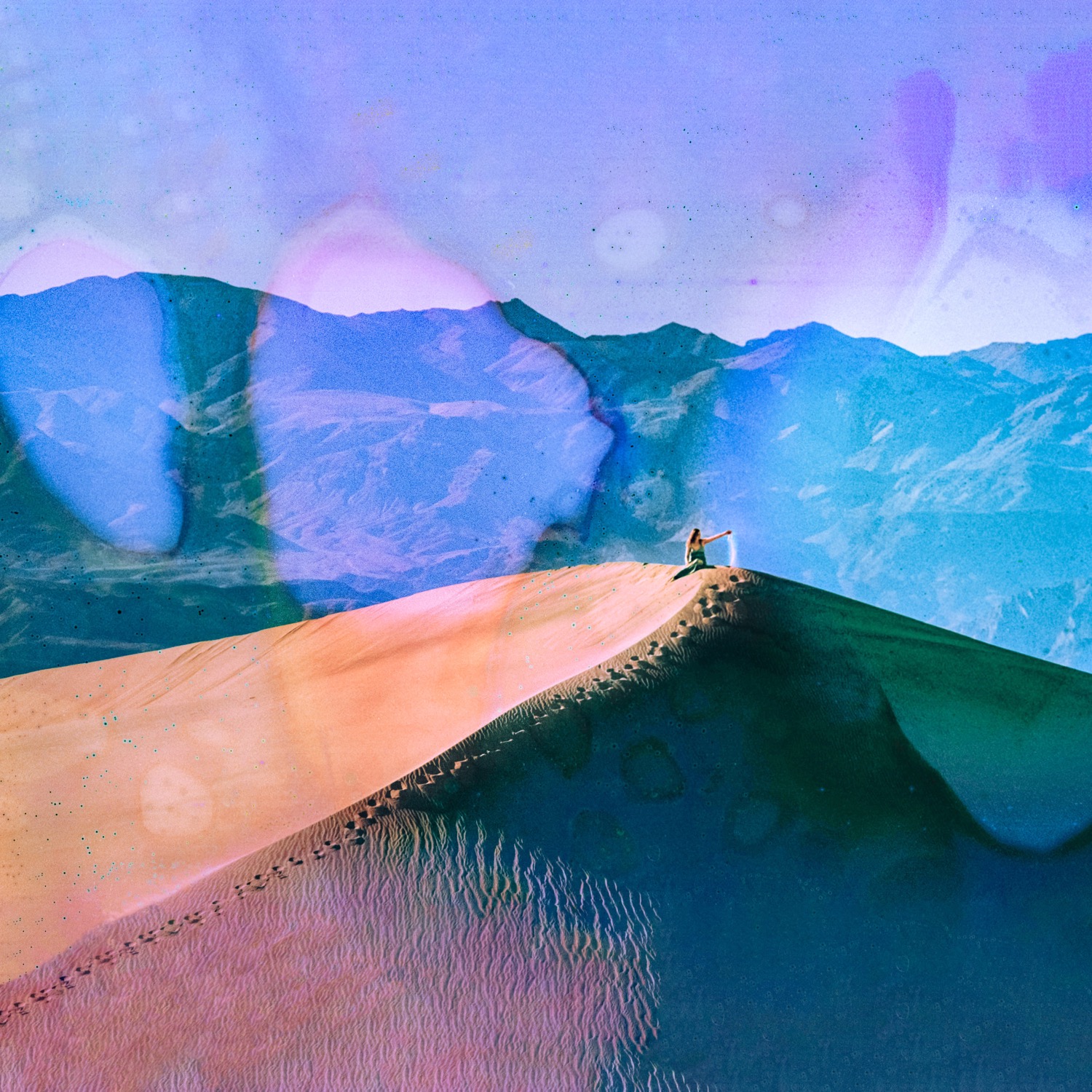
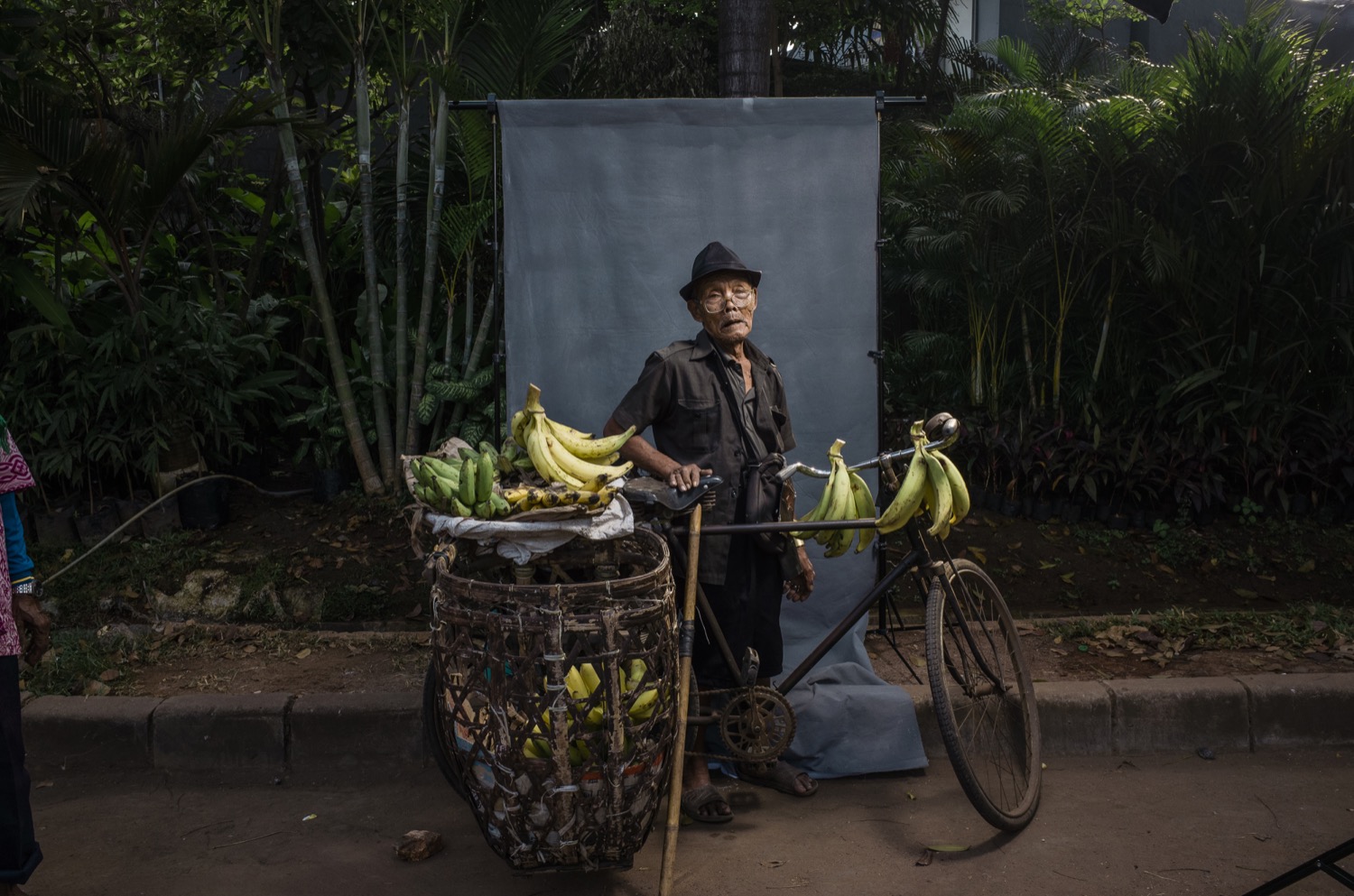
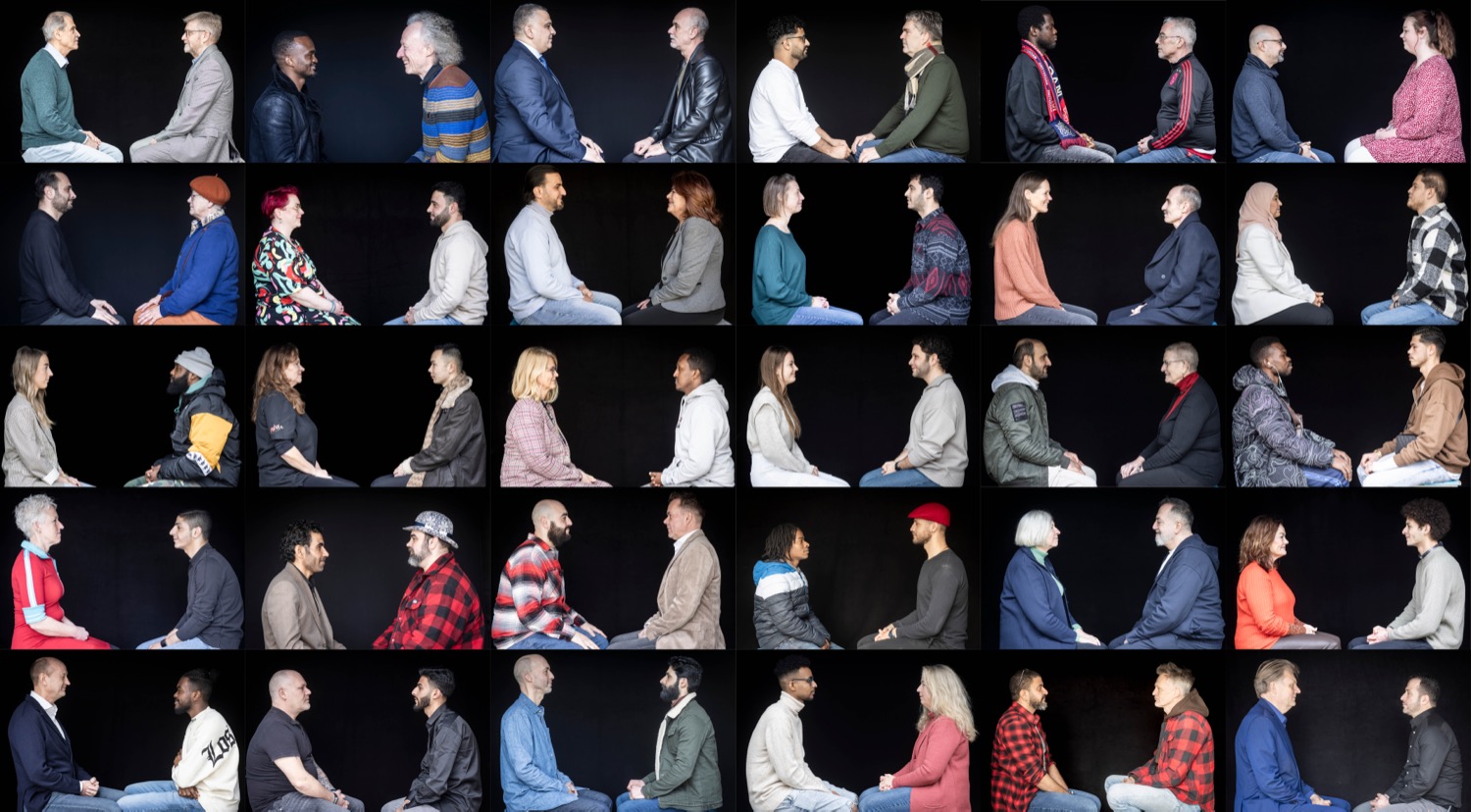
© Susana Espana | The Construction of a Dream

Susana Espana is particularly interested in the concept of metamorphosis and in how memories are not static but evolve over time. Through layering, archival excavation and material intervention, she constructs images that examine how personal history persists within physical space. "By using mypersonal archive, I engage in an intimate dialogue with my past self, transforming raw emotions into a visual language of layering and texture. This exploration is important because it allows me to process the ephemeral nature of life, turning vulnerability into something tangible. Ultimately, I strive to create a visual echo that invites viewers to reflect on their own internal realities and the poetic beauty hidden in their most intimate spaces."


Espana's central concern lies in the relationship between space and remembrance. "My work explores the intersection between domestic space and the internal landscape of memory. I aim to investigate how our physical surroundings, specifically the home, act as a sanctuary for dreaming and a springboard for poetic inquiry. These themes are vital to me because they address the universal human experiences of belonging, isolation, and healing."
Grief has played a decisive role in shaping Espana's practice. This event led her back to earlier images and materials. "The emotional tone of my work is deeply influenced by my journey through grief and healing, particularly following the loss of my father in 2019. This experience compelled me to revisit my personal archives, turning a vulnerable excavation into an enriching journey of recontextualisation. My photographs function in the space between sensation and remembrance, often carrying a tone of quiet melancholy balanced with the warmth of a sanctuary."


Alchemy of Materials
In her practice, technical elements are never purely aesthetic; they are the vocabulary of her internal world. Her use of light functions as a symbol of presence and absence. "I often seek a soft, diffused light that evokes the ethereal nature of a dream or the hazy quality of a fading memory." Her compositions shape psychological spaces. "My compositions are used to create a sense of intimacy or isolation, often placing subjects in a way that emphasises the protective 'shelter' of the domestic space or the vastness of an internal void." Colour and texture are deliberately selected. "My colour palette is deliberately chosen to resonate with the 'emotional residue' of the scene, muted tones and monochromatic bases are often interrupted by the 'dream work' of special techniques."


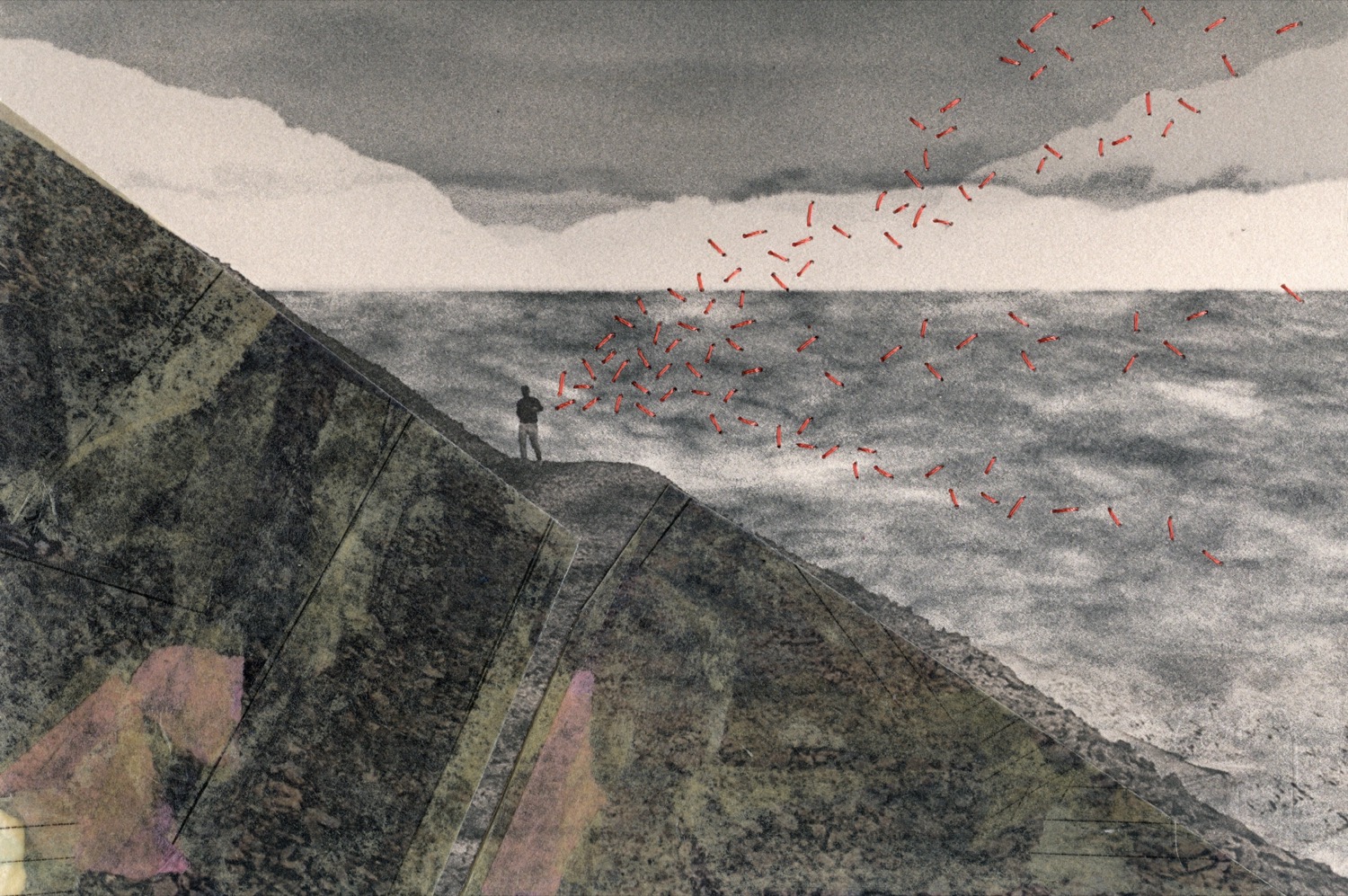
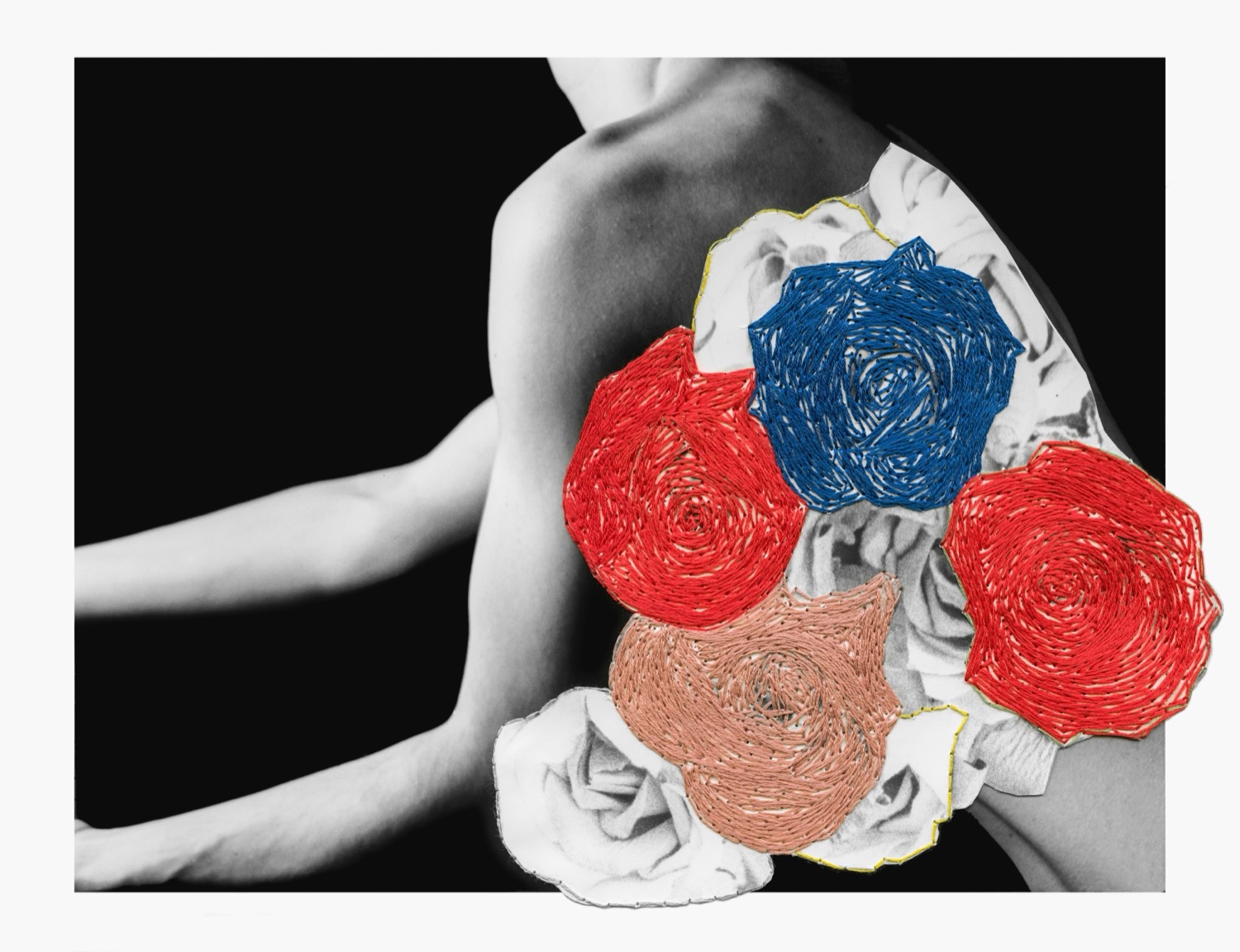
Her commitment to analogue processes informs the image's surface. "By using analogue photography, I embrace the grain and the organic texture of film, which I then manipulate through collage and hand interventions. I use ink bleeds, thread, and digital layering to create a temporal depth that a lens alone cannot capture."
I use ink bleeds, thread, and digital layering to create a temporal depth that a lens alone cannot capture.
Espana describes these accumulations as temporal markers. The act of making is integral to meaning. "The physical act of manipulating the image, layering or painting, is a metaphor for the metamorphosis of memory, turning a flat photograph into a tactile, multidimensional visual poem."
Her practice continues to expand in both scope and scale, while remaining grounded in the dialogue between lived experience and visual form. "My work is evolving from a purely visual medium into a more tactile and multi-sensory experience. I am moving deeper into the alchemy of materials, allowing myself more freedom in hand interventions and collage, which I previously used primarily for personal, therapeutic exploration."

Lens of Emotional Layers
Espana’s photographs function within a particular emotional register. The language she uses reflects a structural approach to image-making. "I perceive the world through a lens of 'emotional layering'. Just as memories are non-linear and fragmented, my images are intentionally translucent and layered to reflect the complexity of our inner lives. This perspective influences me to seek the sublime in the ordinary and the overlooked nuances of daily life."
In her work, certain motifs act as silent protagonists, bridging the gap between the physical and the metaphysical. "The most recurring symbol is the ‘domestic interior’: the room, the window, the curtains, which represent the sanctuary of the mind and the ‘shelter for dreaming’. These spaces are not just settings but metaphors for the internal world and the layers of our identity."
For Espana, storytelling is about evocative resonance rather than literal explanation. Meaning is formed through the resonance of the images with the mind of the spectator. "Storytelling in my work does not follow a traditional, linear path. Instead, I aim to create a visual poem where the narrative is woven through layers of memory and sensation. By incorporating self-portraiture and archival images, I invite viewers to participate in the construction of a dream. The story is complete when the image achieves an emotional truth that resonates with the viewer's own well of experiences, blurring the lines between my personal history and a universal sense of remembrance."
Self Portraits as Symbols
Self-portraiture occupies a recurring place within her framework, creating a process that remains dialogic and ongoing. "By placing myself within the frame through self-portraiture, I engage with themes of vulnerability and the shifting nature of identity. Ultimately, my work is an intimate dialogue with my past, aiming to create a sense of peace and recognition for anyone who has ever sought shelter in their own memories."
Self-portraiture also appears as a symbol of vulnerability and transformation. "My own body becomes a map where time and experience leave their mark. Finally, the use of organic textures, such as ink bleeds or the grain of analogue film, serves as a motif for the 'alchemical' transformation of grief into art. Together, these symbols create a visual language that speaks of belonging, the passage of time, and the poetic beauty found in life's most intimate remnants."
My own body becomes a map where time and experience leave their mark.
For Espana, self-portraiture and the manipulation of analogue materials challenge the contemporary obsession with digital perfection. "This influences a broader cultural conversation about the subjective nature of truth and perception. By showing the 'scars' of the creative process, I advocate for an artistic culture that values vulnerability and the non-linear path of human experience. I see my work as a contribution to a more empathetic visual culture, where the intimate and the domestic are recognised as essential pillars of our shared human story."


The Internal Landscape
Through her inner landscapes, she aims to raise awareness of the non-linear nature of healing and the complexity of memory. "My message is aninvitation to embrace metamorphosis and to recognise that the most profound human experiences often occur in the quietest, most overlooked moments ofour lives."
She describes her intention to foreground interiority within contemporary culture. "I believe my photography influences conversations by shifting the focus toward the universal cultural experiences of memory, loss, and the concept of home. While my work begins with my personal history, it touches upon a shared social reality: how we, as a society, process grief and preserve our collective identity through individual archives. By bringing the internal landscape into the public eye, I encourage a dialogue about the importance of emotional well-being and the need for reflective spaces in our fast-paced modern culture."


Finding Stillness
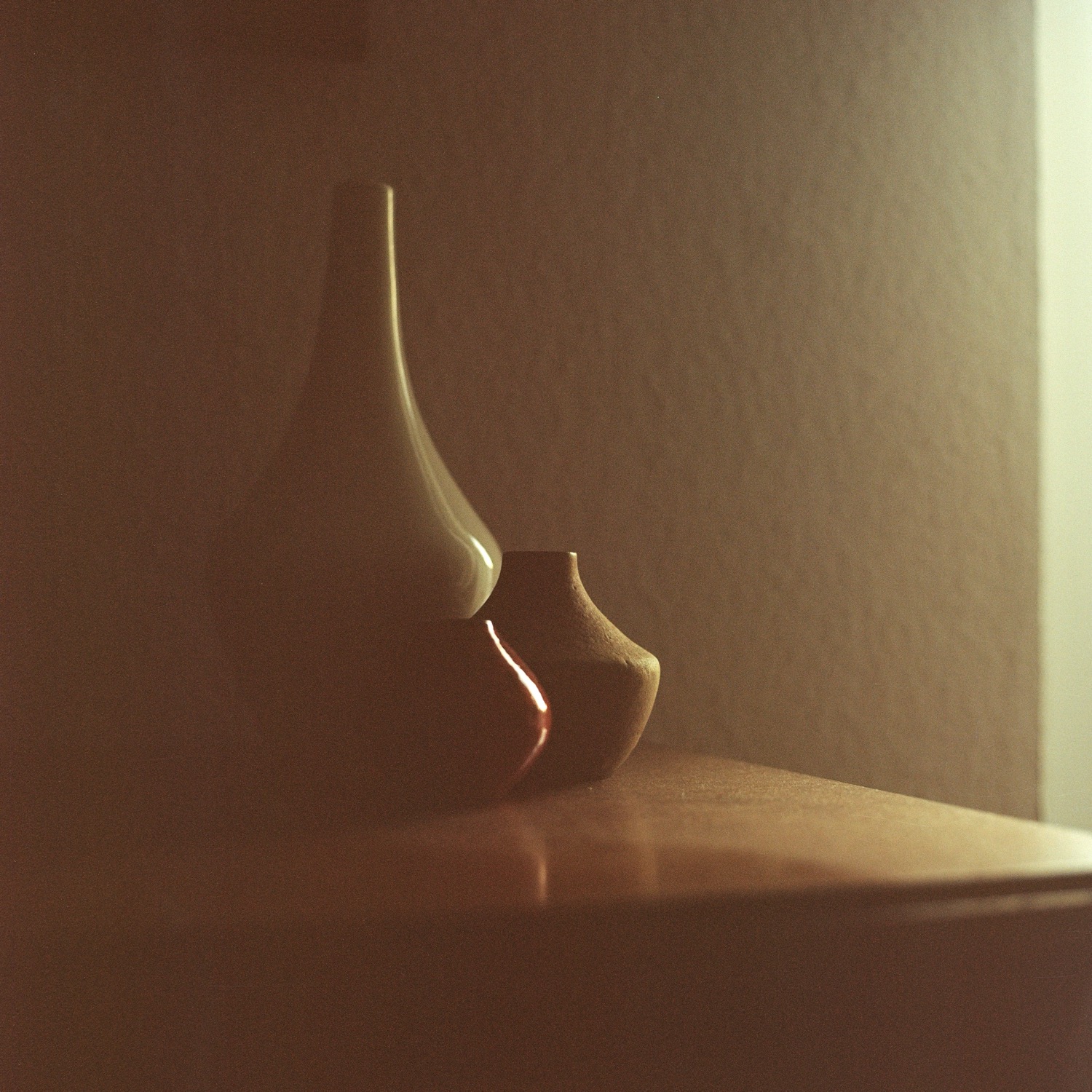
Her choice of subjects is an intuitive process that begins in the domestic sphere. "I am drawn to scenes where intimacy resides and where the subtle dramas of daily life unfold. I don't look for grand spectacles; instead, I find my subjects in the emotional residue of a space, a corner where the light hits a certain way or a fragment of an old photograph from my personal archive. These scenes serve as anchors for exploring intangible feelings like loss, connection, and the passage of time."
The domestic interior becomes a sustained focus of inquiry, not merely as a setting but as a structural element of her visual thinking. She directly references the seventeenth-century French philosopher and mathematician Blaise Pascal in framing this perspective. "As the philosopher Pascal noted, the inability to remain quiet in one's own room is a source of human unrest; my photography aims to capture that quietude and the 'God of small things' found in daily life. My work serves as a reminder, as Pascal suggested, of the profound value of being still within one's own space. In a world that often prioritises the external and the immediate, I seek to highlight the beauty in the mundane and the importance of our domestic sanctuaries."

.svg)


.svg)
.svg)

Susana Espana is particularly interested in the concept of metamorphosis and in how memories are not static but evolve over time. Through layering, archival excavation and material intervention, she constructs images that examine how personal history persists within physical space. "By using mypersonal archive, I engage in an intimate dialogue with my past self, transforming raw emotions into a visual language of layering and texture. This exploration is important because it allows me to process the ephemeral nature of life, turning vulnerability into something tangible. Ultimately, I strive to create a visual echo that invites viewers to reflect on their own internal realities and the poetic beauty hidden in their most intimate spaces."
Espana's central concern lies in the relationship between space and remembrance. "My work explores the intersection between domestic space and the internal landscape of memory. I aim to investigate how our physical surroundings, specifically the home, act as a sanctuary for dreaming and a springboard for poetic inquiry. These themes are vital to me because they address the universal human experiences of belonging, isolation, and healing."
Grief has played a decisive role in shaping Espana's practice. This event led her back to earlier images and materials. "The emotional tone of my work is deeply influenced by my journey through grief and healing, particularly following the loss of my father in 2019. This experience compelled me to revisit my personal archives, turning a vulnerable excavation into an enriching journey of recontextualisation. My photographs function in the space between sensation and remembrance, often carrying a tone of quiet melancholy balanced with the warmth of a sanctuary."
Alchemy of Materials
In her practice, technical elements are never purely aesthetic; they are the vocabulary of her internal world. Her use of light functions as a symbol of presence and absence. "I often seek a soft, diffused light that evokes the ethereal nature of a dream or the hazy quality of a fading memory." Her compositions shape psychological spaces. "My compositions are used to create a sense of intimacy or isolation, often placing subjects in a way that emphasises the protective 'shelter' of the domestic space or the vastness of an internal void." Colour and texture are deliberately selected. "My colour palette is deliberately chosen to resonate with the 'emotional residue' of the scene, muted tones and monochromatic bases are often interrupted by the 'dream work' of special techniques."
Her commitment to analogue processes informs the image's surface. "By using analogue photography, I embrace the grain and the organic texture of film, which I then manipulate through collage and hand interventions. I use ink bleeds, thread, and digital layering to create a temporal depth that a lens alone cannot capture."
I use ink bleeds, thread, and digital layering to create a temporal depth that a lens alone cannot capture.
Espana describes these accumulations as temporal markers. The act of making is integral to meaning. "The physical act of manipulating the image, layering or painting, is a metaphor for the metamorphosis of memory, turning a flat photograph into a tactile, multidimensional visual poem."
Her practice continues to expand in both scope and scale, while remaining grounded in the dialogue between lived experience and visual form. "My work is evolving from a purely visual medium into a more tactile and multi-sensory experience. I am moving deeper into the alchemy of materials, allowing myself more freedom in hand interventions and collage, which I previously used primarily for personal, therapeutic exploration."
Lens of Emotional Layers
Espana’s photographs function within a particular emotional register. The language she uses reflects a structural approach to image-making. "I perceive the world through a lens of 'emotional layering'. Just as memories are non-linear and fragmented, my images are intentionally translucent and layered to reflect the complexity of our inner lives. This perspective influences me to seek the sublime in the ordinary and the overlooked nuances of daily life."
In her work, certain motifs act as silent protagonists, bridging the gap between the physical and the metaphysical. "The most recurring symbol is the ‘domestic interior’: the room, the window, the curtains, which represent the sanctuary of the mind and the ‘shelter for dreaming’. These spaces are not just settings but metaphors for the internal world and the layers of our identity."
For Espana, storytelling is about evocative resonance rather than literal explanation. Meaning is formed through the resonance of the images with the mind of the spectator. "Storytelling in my work does not follow a traditional, linear path. Instead, I aim to create a visual poem where the narrative is woven through layers of memory and sensation. By incorporating self-portraiture and archival images, I invite viewers to participate in the construction of a dream. The story is complete when the image achieves an emotional truth that resonates with the viewer's own well of experiences, blurring the lines between my personal history and a universal sense of remembrance."
Self Portraits as Symbols
Self-portraiture occupies a recurring place within her framework, creating a process that remains dialogic and ongoing. "By placing myself within the frame through self-portraiture, I engage with themes of vulnerability and the shifting nature of identity. Ultimately, my work is an intimate dialogue with my past, aiming to create a sense of peace and recognition for anyone who has ever sought shelter in their own memories."
Self-portraiture also appears as a symbol of vulnerability and transformation. "My own body becomes a map where time and experience leave their mark. Finally, the use of organic textures, such as ink bleeds or the grain of analogue film, serves as a motif for the 'alchemical' transformation of grief into art. Together, these symbols create a visual language that speaks of belonging, the passage of time, and the poetic beauty found in life's most intimate remnants."
My own body becomes a map where time and experience leave their mark.
For Espana, self-portraiture and the manipulation of analogue materials challenge the contemporary obsession with digital perfection. "This influences a broader cultural conversation about the subjective nature of truth and perception. By showing the 'scars' of the creative process, I advocate for an artistic culture that values vulnerability and the non-linear path of human experience. I see my work as a contribution to a more empathetic visual culture, where the intimate and the domestic are recognised as essential pillars of our shared human story."
The Internal Landscape
Through her inner landscapes, she aims to raise awareness of the non-linear nature of healing and the complexity of memory. "My message is aninvitation to embrace metamorphosis and to recognise that the most profound human experiences often occur in the quietest, most overlooked moments ofour lives."
She describes her intention to foreground interiority within contemporary culture. "I believe my photography influences conversations by shifting the focus toward the universal cultural experiences of memory, loss, and the concept of home. While my work begins with my personal history, it touches upon a shared social reality: how we, as a society, process grief and preserve our collective identity through individual archives. By bringing the internal landscape into the public eye, I encourage a dialogue about the importance of emotional well-being and the need for reflective spaces in our fast-paced modern culture."
Finding Stillness
Her choice of subjects is an intuitive process that begins in the domestic sphere. "I am drawn to scenes where intimacy resides and where the subtle dramas of daily life unfold. I don't look for grand spectacles; instead, I find my subjects in the emotional residue of a space, a corner where the light hits a certain way or a fragment of an old photograph from my personal archive. These scenes serve as anchors for exploring intangible feelings like loss, connection, and the passage of time."
The domestic interior becomes a sustained focus of inquiry, not merely as a setting but as a structural element of her visual thinking. She directly references the seventeenth-century French philosopher and mathematician Blaise Pascal in framing this perspective. "As the philosopher Pascal noted, the inability to remain quiet in one's own room is a source of human unrest; my photography aims to capture that quietude and the 'God of small things' found in daily life. My work serves as a reminder, as Pascal suggested, of the profound value of being still within one's own space. In a world that often prioritises the external and the immediate, I seek to highlight the beauty in the mundane and the importance of our domestic sanctuaries."
Susana Espana is particularly interested in the concept of metamorphosis and in how memories are not static but evolve over time. Through layering, archival excavation and material intervention, she constructs images that examine how personal history persists within physical space. "By using mypersonal archive, I engage in an intimate dialogue with my past self, transforming raw emotions into a visual language of layering and texture. This exploration is important because it allows me to process the ephemeral nature of life, turning vulnerability into something tangible. Ultimately, I strive to create a visual echo that invites viewers to reflect on their own internal realities and the poetic beauty hidden in their most intimate spaces."
Espana's central concern lies in the relationship between space and remembrance. "My work explores the intersection between domestic space and the internal landscape of memory. I aim to investigate how our physical surroundings, specifically the home, act as a sanctuary for dreaming and a springboard for poetic inquiry. These themes are vital to me because they address the universal human experiences of belonging, isolation, and healing."
Grief has played a decisive role in shaping Espana's practice. This event led her back to earlier images and materials. "The emotional tone of my work is deeply influenced by my journey through grief and healing, particularly following the loss of my father in 2019. This experience compelled me to revisit my personal archives, turning a vulnerable excavation into an enriching journey of recontextualisation. My photographs function in the space between sensation and remembrance, often carrying a tone of quiet melancholy balanced with the warmth of a sanctuary."
Alchemy of Materials
In her practice, technical elements are never purely aesthetic; they are the vocabulary of her internal world. Her use of light functions as a symbol of presence and absence. "I often seek a soft, diffused light that evokes the ethereal nature of a dream or the hazy quality of a fading memory." Her compositions shape psychological spaces. "My compositions are used to create a sense of intimacy or isolation, often placing subjects in a way that emphasises the protective 'shelter' of the domestic space or the vastness of an internal void." Colour and texture are deliberately selected. "My colour palette is deliberately chosen to resonate with the 'emotional residue' of the scene, muted tones and monochromatic bases are often interrupted by the 'dream work' of special techniques."
Her commitment to analogue processes informs the image's surface. "By using analogue photography, I embrace the grain and the organic texture of film, which I then manipulate through collage and hand interventions. I use ink bleeds, thread, and digital layering to create a temporal depth that a lens alone cannot capture."
I use ink bleeds, thread, and digital layering to create a temporal depth that a lens alone cannot capture.
Espana describes these accumulations as temporal markers. The act of making is integral to meaning. "The physical act of manipulating the image, layering or painting, is a metaphor for the metamorphosis of memory, turning a flat photograph into a tactile, multidimensional visual poem."
Her practice continues to expand in both scope and scale, while remaining grounded in the dialogue between lived experience and visual form. "My work is evolving from a purely visual medium into a more tactile and multi-sensory experience. I am moving deeper into the alchemy of materials, allowing myself more freedom in hand interventions and collage, which I previously used primarily for personal, therapeutic exploration."
Lens of Emotional Layers
Espana’s photographs function within a particular emotional register. The language she uses reflects a structural approach to image-making. "I perceive the world through a lens of 'emotional layering'. Just as memories are non-linear and fragmented, my images are intentionally translucent and layered to reflect the complexity of our inner lives. This perspective influences me to seek the sublime in the ordinary and the overlooked nuances of daily life."
In her work, certain motifs act as silent protagonists, bridging the gap between the physical and the metaphysical. "The most recurring symbol is the ‘domestic interior’: the room, the window, the curtains, which represent the sanctuary of the mind and the ‘shelter for dreaming’. These spaces are not just settings but metaphors for the internal world and the layers of our identity."
For Espana, storytelling is about evocative resonance rather than literal explanation. Meaning is formed through the resonance of the images with the mind of the spectator. "Storytelling in my work does not follow a traditional, linear path. Instead, I aim to create a visual poem where the narrative is woven through layers of memory and sensation. By incorporating self-portraiture and archival images, I invite viewers to participate in the construction of a dream. The story is complete when the image achieves an emotional truth that resonates with the viewer's own well of experiences, blurring the lines between my personal history and a universal sense of remembrance."
Self Portraits as Symbols
Self-portraiture occupies a recurring place within her framework, creating a process that remains dialogic and ongoing. "By placing myself within the frame through self-portraiture, I engage with themes of vulnerability and the shifting nature of identity. Ultimately, my work is an intimate dialogue with my past, aiming to create a sense of peace and recognition for anyone who has ever sought shelter in their own memories."
Self-portraiture also appears as a symbol of vulnerability and transformation. "My own body becomes a map where time and experience leave their mark. Finally, the use of organic textures, such as ink bleeds or the grain of analogue film, serves as a motif for the 'alchemical' transformation of grief into art. Together, these symbols create a visual language that speaks of belonging, the passage of time, and the poetic beauty found in life's most intimate remnants."
My own body becomes a map where time and experience leave their mark.
For Espana, self-portraiture and the manipulation of analogue materials challenge the contemporary obsession with digital perfection. "This influences a broader cultural conversation about the subjective nature of truth and perception. By showing the 'scars' of the creative process, I advocate for an artistic culture that values vulnerability and the non-linear path of human experience. I see my work as a contribution to a more empathetic visual culture, where the intimate and the domestic are recognised as essential pillars of our shared human story."
The Internal Landscape
Through her inner landscapes, she aims to raise awareness of the non-linear nature of healing and the complexity of memory. "My message is aninvitation to embrace metamorphosis and to recognise that the most profound human experiences often occur in the quietest, most overlooked moments ofour lives."
She describes her intention to foreground interiority within contemporary culture. "I believe my photography influences conversations by shifting the focus toward the universal cultural experiences of memory, loss, and the concept of home. While my work begins with my personal history, it touches upon a shared social reality: how we, as a society, process grief and preserve our collective identity through individual archives. By bringing the internal landscape into the public eye, I encourage a dialogue about the importance of emotional well-being and the need for reflective spaces in our fast-paced modern culture."
Finding Stillness
Her choice of subjects is an intuitive process that begins in the domestic sphere. "I am drawn to scenes where intimacy resides and where the subtle dramas of daily life unfold. I don't look for grand spectacles; instead, I find my subjects in the emotional residue of a space, a corner where the light hits a certain way or a fragment of an old photograph from my personal archive. These scenes serve as anchors for exploring intangible feelings like loss, connection, and the passage of time."
The domestic interior becomes a sustained focus of inquiry, not merely as a setting but as a structural element of her visual thinking. She directly references the seventeenth-century French philosopher and mathematician Blaise Pascal in framing this perspective. "As the philosopher Pascal noted, the inability to remain quiet in one's own room is a source of human unrest; my photography aims to capture that quietude and the 'God of small things' found in daily life. My work serves as a reminder, as Pascal suggested, of the profound value of being still within one's own space. In a world that often prioritises the external and the immediate, I seek to highlight the beauty in the mundane and the importance of our domestic sanctuaries."