Joachim Patinir, The Penitence of Saint Jerome, ca. 1515. Oil on panel. The Metropolitan Museum of Art, New York
In the early history of Western art, iconography functioned as a disciplined and collective language. Within religious art, symbols were neither ambiguous nor optional. They were part of a structured visual system through which religious doctrine was communicated, reinforced and stabilised.
A lily symbolised purity. A lamb stood for sacrifice. Keys represented Saint Peter. A skull beneath the cross pointed to Golgotha and the certainty of death. Such symbols weren’t poetic suggestions subject to personal interpretation; they were unambiguous statements. Their meanings were rooted in theology and reinforced by centuries of repetition.
The power of these images lies in their clarity. In a largely illiterate society, painting and sculpture served as visual scripture. Churches functioned as spaces where the faithful encountered narratives made legible through recognisable attributes and recurring motifs. The viewer did not approach the image as an individual interpreter but as a participant in a shared belief system.
The viewer did not approach the image as an individual interpreter but as a participant in a shared belief system.
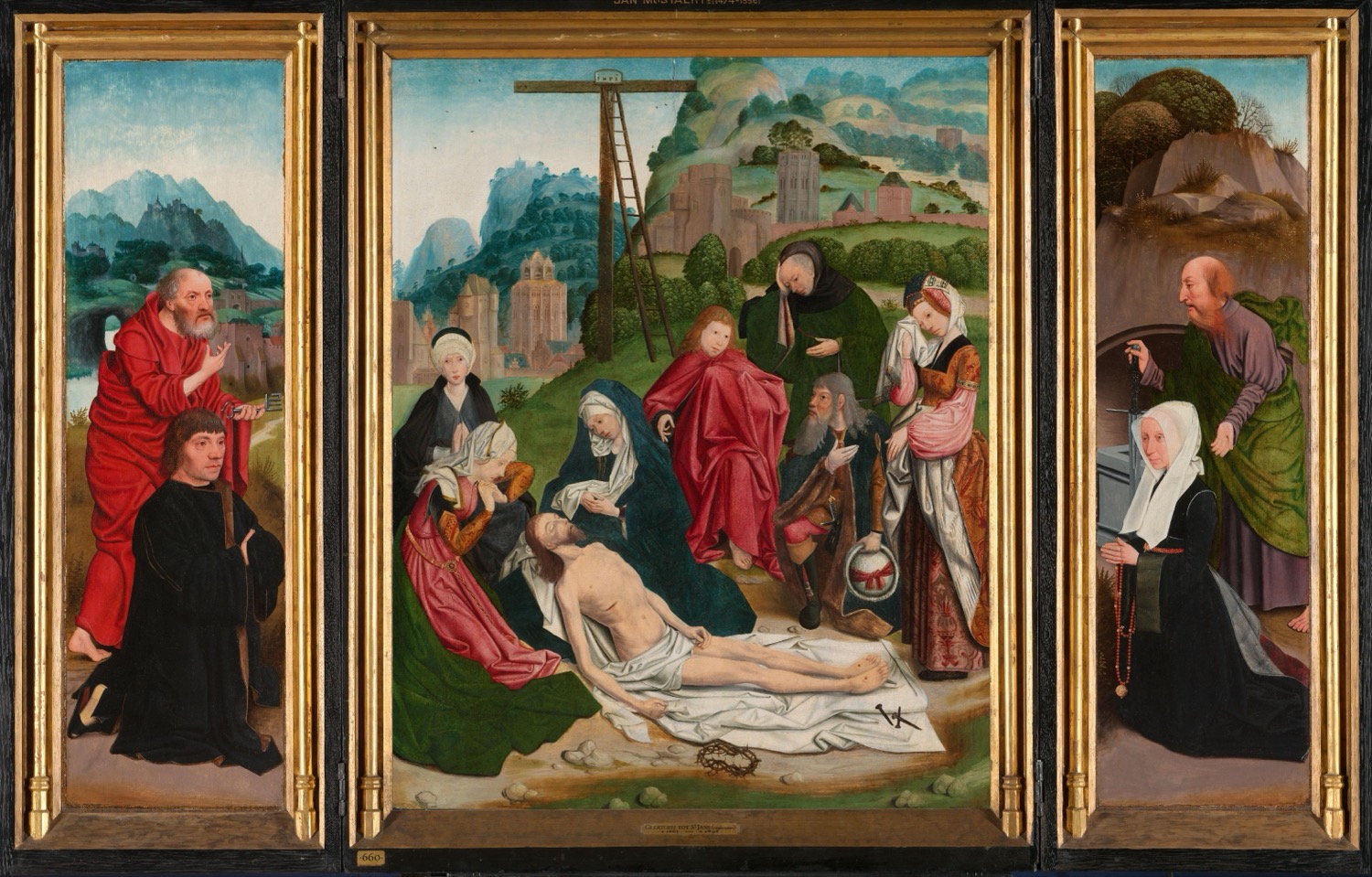
This symbolic language was maintained through tradition and authority. Artists worked within established conventions, ensuring that saints could be recognised instantly, and that biblical episodes could be decoded without hesitation. Consistency and stability were important because the image had to accurately convey Christian doctrine.
The preset meaning, therefore, imposed the interpretation of the images. The skull did not invite existential speculation; it affirmed a moral truth already defined by religious teaching. The lamb did not oscillate between possible meanings; it stood firmly for Christ.
This clarity endowed ecclesiastical art with a powerful means of communication. The image served as a bridge between the visible and the invisible, connecting earthly materiality and divine reality. The Church dictated the symbolic order, and deviations from accepted meanings were discouraged.
Ambiguity, as we understand it in modern art, had little place here. The image’s purpose was not to destabilise perception or invite subjective reflection. It was to confirm belief.
Understanding this early phase of iconography is essential because it establishes a baseline: a moment in history when symbols were stable, meanings were collectively understood, and interpretation operated within defined limits. Only against this background can we fully grasp the shifts that would later transform the role of symbolism in art.

Symbolism in the Still Life
When religious authority gradually loosened its grip on artistic production, symbolism did not vanish from the visual field. It migrated to the still-life genre that was popular in the seventeenth century, during the Dutch Golden Age. Metaphors shifted from saints and sacred narratives to the material world itself. The still-life emerged as one of the most refined vehicles of this transformation.
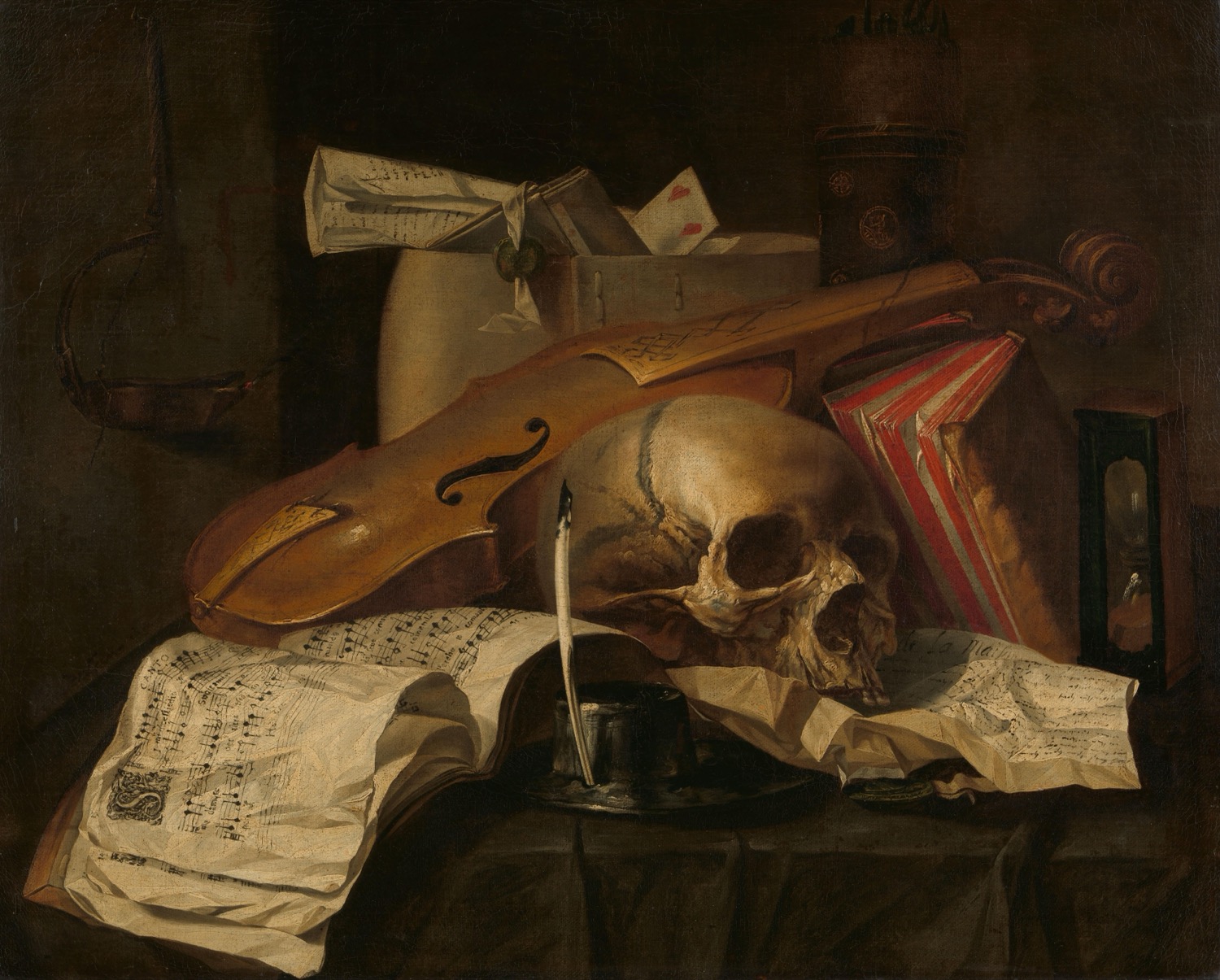
In seventeenth-century Northern Europe, still-life painting developed into a well-defined genre. These artworks primarily showed arrangements of fruit, flowers, silverware, game, books, or musical instruments. However, behind their detailed realism, they contained a structured symbolic language that was broadly recognised.
A skull signified mortality. A guttering candle marked the passage of time. A half-peeled lemon suggested both luxury and bitterness. Rotting fruit indicated decay. A watch or an hourglass reinforced the inevitability of death. These objects formed a recognisable lexicon within the vanitas tradition — a moral reminder that earthly pleasures are fleeting.
The transition from ecclesiastical imagery to still life did not remove fixed meanings; it secularised them. Instead of divine figures representing theological truths, ordinary objects conveyed philosophical ideas. The table replaced the altar, and the domestic interior replaced sacred spaces. Nonetheless, the symbolic framework remained notably consistent.

The meaning of still lives developed through relationships, using proximity and contrast. An abundant display of imported fruit might symbolise wealth and international trade, while its decay foreshadowed impermanence. The moral lesson was conveyed through material richness.
What makes the still life significant in the history of iconography is its quiet authority. Unlike religious altarpieces, these paintings did not explicitly narrate any doctrine. They appeared as modest observations. Yet their viewers were trained to recognise their signs. The symbolism functioned almost discreetly, derived from ordinary life.
Importantly, the list of symbolic objects was not limitless. It was relatively stable and consistent. Both artists and audiences understood what specific objects represented. For instance, a skull never symbolised joy; a fading flower did not imply immortality. Although these codes were secular, they remained symbolic.

This stage in the history of iconography shows that symbolism can persist beyond explicit religious contexts. Instead of sacred stories, meaning was linked to objects, yet it remained understandable to the public. The viewer mainly recognised symbols rather than created new meanings.
The still life holds a vital position bridging the authority of religious art and the unpredictability of modern visual culture. It demonstrates that symbols can be embedded in tangible objects while remaining clear. Simultaneously, by emphasising everyday items—such as food, tools, and luxury goods—it paved the way for a future where meaning would be more closely connected to lived experience and material circumstances. Within this world of objects, the groundwork was laid for photography—a medium that would inherit still life’s realism and symbolism, and later push beyond both.
Dissolution of the Fixed Symbol
By the late 1800s, the stability of symbolic language in art started to weaken. The established set of objects—such as skulls, candles, hourglasses, and lilies—lost their unquestioned significance. Images no longer needed to convey a common moral message. Instead, art increasingly evolved into a space focused on personal expression.
Impressionism represented a decisive shift. Painters such as Claude Monet and Pierre-Auguste Renoir focused on light, atmosphere, and transient moments. Instead of symbolising labour or transience, a haystack became an exploration of changing colours. A cathedral’s façade appeared to shift in hues at various times of day. The significance no longer lay in the object's symbolic meaning, but in the act of seeing itself. The emphasis moved from what was depicted to how it was depicted.
With Vincent van Gogh, this transformation intensified. His sunflowers ceased to be vanitas symbols in the conventional sense or mere decorative still lifes. Instead, they became expressions of emotional intensity. Colours vibrated beyond naturalism; brushstrokes pulsed with psychological intensity. The painting did not communicate a predetermined message; it embodied a moment of existence.
Cubism expanded this approach. In the fragmented compositions of Pablo Picasso and Georges Braque, objects no longer had clear outlines. A violin or a glass could be deconstructed into flat surfaces and facets, seen from different angles at once. The object stayed recognisable, but its symbolic meaning faded. The viewer was faced not with a moral allegory but with a fresh way of constructing visual reality.

Later movements like Cobra radicalised this break even further. Emerging in the aftermath of the Second World War, Cobra artists consciously sought freedom from classical art, academic refinement, and symbolic conventions. Spontaneity became a guiding principle. The artists, including Karel Appel, used raw colours and urgent gestures to dismiss polish, perspective, and established iconography altogether. Their figures and animals appeared childlike, distorted, and instinctive—more like eruptions of energy than traditional representations. These works defied fixed interpretation, favouring vitality over clarity and process over symbolism. In doing so, they not only rejected traditional iconography but also challenged the very idea that art must encode predetermined meaning.
In these modern movements, colour, technique, and expression replaced traditional symbolic systems. Art no longer primarily functioned as a carrier of coded messages. Instead, it established its independence, where form was no longer secondary to meaning; instead, form itself became the meaning.

This transformation was closely linked to wider cultural shifts. The processes of secularisation, industrialisation, and the growth of individualism disrupted collective symbolic systems. Lacking a leading religious authority or common moral language, the artist was free from traditional signs. Consequently, imagery could explore perception, subjectivity, and formal experimentation.
Modern art represents a significant shift in the history of iconography. Although fixed symbols disappeared, art did not become meaningless. The symbol itself did not completely vanish; rather, it lost its firm grounding. Instead of interpreting a set message, viewers engaged in a dialogue with the artwork.
This shift would have enduring effects. As photography eventually became a dominant visual medium, it entered a world where fixed symbolic codes no longer imposed meaning. The images had to function within a culture accustomed to ambiguity, interpretation, and expressive freedom.
%2C%201913.jpg)
The Return of Meaning in Photography
If modernism dismantled the authority of fixed symbols, but contemporary art and documentary photography do not just discard meaning. Instead, they have reshaped how meaning functions, with symbols now serving as open-ended metaphors rather than stable icons.
In many modern practices, images again hold symbolic meaning, but their importance is not dictated by tradition or doctrine. For example, a melting glacier can symbolise a climate crisis, and burned forests remain connected to ecological themes. Meaning is constructed within shared realities, even if it isn't predefined. Today’s visual symbols are more relational than instructive, encouraging viewers to participate in completing the message.
An empty landscape—a field left to the wind and silence—can symbolise absence or loss. The terrain becomes more than just land; it appears as a remnant of something gone. A self-portrait, emerging from darkness with a face partly shadowed, might suggest feelings of depression or inner conflict without explicitly stating it. The image does not directly show suffering but implies it through its mood. A hand gently holding a delicate natural object — such as a fading flower, a slender branch, or a melting piece of ice — can hint at vulnerability or fleetingness. The gesture is subtle, almost accidental, yet it carries emotional depth.
None of these meanings are imposed; instead, they develop through mood, context, and the viewer’s personal experiences. The photograph does not tell us what to think, but creates a space for recognition.

The distinction from traditional iconography is clear. In religious art or vanitas still life, a skull symbolised mortality within a common moral context, strengthened through repetition and collective belief. In contrast, a landscape today does not inherently represent loss, nor does shadow always symbolise despair. The image suggests rather than enforces meaning, with its metaphor coming alive through engagement.
Documentary photography vividly demonstrates this transformation clearly. An image of a border fence does not function as a medieval symbol; it signifies a tangible political reality. At the same time, it serves as a metaphor for division, exclusion, fear, or sovereignty. The image fluctuates between a documentary record and a symbolic message. Its interpretation isn’t completely objective nor purely random; rather, it varies according to the viewer’s social and political discourse.
In contemporary art photography, still life has made a comeback in a transformed form. Images of consumer products, plastic waste, prepared foods, or home interiors can serve as metaphors, illustrating themes such as excess, environmental harm, or emotional loneliness. The objects themselves lack inherent fixed meanings; instead, their symbolic significance depends on how they are arranged, repeated, and framed.
What has changed most profoundly is the viewer’s role. Lacking a fixed symbolic language, interpretation turns into a dynamic activity. We project our personal histories, knowledge, and anxieties onto the image. Instead of a static metaphor, meaning is generated through interaction. Cultural backgrounds influence how we interpret. We are no longer just passive recipients of symbols; we actively co-create meaning. However, this freedom requires more careful attention, since without common codes, meaning can quickly fade as it appears.
The disappearance of fixed symbols in modern art did not end iconography, but transformed it. Freed from assigned meanings, images now operate within a space of multiple interpretations. They no longer tell us what to see but instead prompt us to ask what we perceive — and why. This change brings both responsibility and opportunity. While traditional art aimed to instruct the viewer, modern photography encourages engagement. The act of viewing now shapes the future of photographic iconography.
.svg)


.svg)
.svg)

In the early history of Western art, iconography functioned as a disciplined and collective language. Within religious art, symbols were neither ambiguous nor optional. They were part of a structured visual system through which religious doctrine was communicated, reinforced and stabilised.
A lily symbolised purity. A lamb stood for sacrifice. Keys represented Saint Peter. A skull beneath the cross pointed to Golgotha and the certainty of death. Such symbols weren’t poetic suggestions subject to personal interpretation; they were unambiguous statements. Their meanings were rooted in theology and reinforced by centuries of repetition.
The power of these images lies in their clarity. In a largely illiterate society, painting and sculpture served as visual scripture. Churches functioned as spaces where the faithful encountered narratives made legible through recognisable attributes and recurring motifs. The viewer did not approach the image as an individual interpreter but as a participant in a shared belief system.
The viewer did not approach the image as an individual interpreter but as a participant in a shared belief system.
This symbolic language was maintained through tradition and authority. Artists worked within established conventions, ensuring that saints could be recognised instantly, and that biblical episodes could be decoded without hesitation. Consistency and stability were important because the image had to accurately convey Christian doctrine.
The preset meaning, therefore, imposed the interpretation of the images. The skull did not invite existential speculation; it affirmed a moral truth already defined by religious teaching. The lamb did not oscillate between possible meanings; it stood firmly for Christ.
This clarity endowed ecclesiastical art with a powerful means of communication. The image served as a bridge between the visible and the invisible, connecting earthly materiality and divine reality. The Church dictated the symbolic order, and deviations from accepted meanings were discouraged.
Ambiguity, as we understand it in modern art, had little place here. The image’s purpose was not to destabilise perception or invite subjective reflection. It was to confirm belief.
Understanding this early phase of iconography is essential because it establishes a baseline: a moment in history when symbols were stable, meanings were collectively understood, and interpretation operated within defined limits. Only against this background can we fully grasp the shifts that would later transform the role of symbolism in art.
Symbolism in the Still Life
When religious authority gradually loosened its grip on artistic production, symbolism did not vanish from the visual field. It migrated to the still-life genre that was popular in the seventeenth century, during the Dutch Golden Age. Metaphors shifted from saints and sacred narratives to the material world itself. The still-life emerged as one of the most refined vehicles of this transformation.
In seventeenth-century Northern Europe, still-life painting developed into a well-defined genre. These artworks primarily showed arrangements of fruit, flowers, silverware, game, books, or musical instruments. However, behind their detailed realism, they contained a structured symbolic language that was broadly recognised.
A skull signified mortality. A guttering candle marked the passage of time. A half-peeled lemon suggested both luxury and bitterness. Rotting fruit indicated decay. A watch or an hourglass reinforced the inevitability of death. These objects formed a recognisable lexicon within the vanitas tradition — a moral reminder that earthly pleasures are fleeting.
The transition from ecclesiastical imagery to still life did not remove fixed meanings; it secularised them. Instead of divine figures representing theological truths, ordinary objects conveyed philosophical ideas. The table replaced the altar, and the domestic interior replaced sacred spaces. Nonetheless, the symbolic framework remained notably consistent.
The meaning of still lives developed through relationships, using proximity and contrast. An abundant display of imported fruit might symbolise wealth and international trade, while its decay foreshadowed impermanence. The moral lesson was conveyed through material richness.
What makes the still life significant in the history of iconography is its quiet authority. Unlike religious altarpieces, these paintings did not explicitly narrate any doctrine. They appeared as modest observations. Yet their viewers were trained to recognise their signs. The symbolism functioned almost discreetly, derived from ordinary life.
Importantly, the list of symbolic objects was not limitless. It was relatively stable and consistent. Both artists and audiences understood what specific objects represented. For instance, a skull never symbolised joy; a fading flower did not imply immortality. Although these codes were secular, they remained symbolic.
This stage in the history of iconography shows that symbolism can persist beyond explicit religious contexts. Instead of sacred stories, meaning was linked to objects, yet it remained understandable to the public. The viewer mainly recognised symbols rather than created new meanings.
The still life holds a vital position bridging the authority of religious art and the unpredictability of modern visual culture. It demonstrates that symbols can be embedded in tangible objects while remaining clear. Simultaneously, by emphasising everyday items—such as food, tools, and luxury goods—it paved the way for a future where meaning would be more closely connected to lived experience and material circumstances. Within this world of objects, the groundwork was laid for photography—a medium that would inherit still life’s realism and symbolism, and later push beyond both.
Dissolution of the Fixed Symbol
By the late 1800s, the stability of symbolic language in art started to weaken. The established set of objects—such as skulls, candles, hourglasses, and lilies—lost their unquestioned significance. Images no longer needed to convey a common moral message. Instead, art increasingly evolved into a space focused on personal expression.
Impressionism represented a decisive shift. Painters such as Claude Monet and Pierre-Auguste Renoir focused on light, atmosphere, and transient moments. Instead of symbolising labour or transience, a haystack became an exploration of changing colours. A cathedral’s façade appeared to shift in hues at various times of day. The significance no longer lay in the object's symbolic meaning, but in the act of seeing itself. The emphasis moved from what was depicted to how it was depicted.
With Vincent van Gogh, this transformation intensified. His sunflowers ceased to be vanitas symbols in the conventional sense or mere decorative still lifes. Instead, they became expressions of emotional intensity. Colours vibrated beyond naturalism; brushstrokes pulsed with psychological intensity. The painting did not communicate a predetermined message; it embodied a moment of existence.
Cubism expanded this approach. In the fragmented compositions of Pablo Picasso and Georges Braque, objects no longer had clear outlines. A violin or a glass could be deconstructed into flat surfaces and facets, seen from different angles at once. The object stayed recognisable, but its symbolic meaning faded. The viewer was faced not with a moral allegory but with a fresh way of constructing visual reality.
Later movements like Cobra radicalised this break even further. Emerging in the aftermath of the Second World War, Cobra artists consciously sought freedom from classical art, academic refinement, and symbolic conventions. Spontaneity became a guiding principle. The artists, including Karel Appel, used raw colours and urgent gestures to dismiss polish, perspective, and established iconography altogether. Their figures and animals appeared childlike, distorted, and instinctive—more like eruptions of energy than traditional representations. These works defied fixed interpretation, favouring vitality over clarity and process over symbolism. In doing so, they not only rejected traditional iconography but also challenged the very idea that art must encode predetermined meaning.
In these modern movements, colour, technique, and expression replaced traditional symbolic systems. Art no longer primarily functioned as a carrier of coded messages. Instead, it established its independence, where form was no longer secondary to meaning; instead, form itself became the meaning.
This transformation was closely linked to wider cultural shifts. The processes of secularisation, industrialisation, and the growth of individualism disrupted collective symbolic systems. Lacking a leading religious authority or common moral language, the artist was free from traditional signs. Consequently, imagery could explore perception, subjectivity, and formal experimentation.
Modern art represents a significant shift in the history of iconography. Although fixed symbols disappeared, art did not become meaningless. The symbol itself did not completely vanish; rather, it lost its firm grounding. Instead of interpreting a set message, viewers engaged in a dialogue with the artwork.
This shift would have enduring effects. As photography eventually became a dominant visual medium, it entered a world where fixed symbolic codes no longer imposed meaning. The images had to function within a culture accustomed to ambiguity, interpretation, and expressive freedom.
The Return of Meaning in Photography
If modernism dismantled the authority of fixed symbols, but contemporary art and documentary photography do not just discard meaning. Instead, they have reshaped how meaning functions, with symbols now serving as open-ended metaphors rather than stable icons.
In many modern practices, images again hold symbolic meaning, but their importance is not dictated by tradition or doctrine. For example, a melting glacier can symbolise a climate crisis, and burned forests remain connected to ecological themes. Meaning is constructed within shared realities, even if it isn't predefined. Today’s visual symbols are more relational than instructive, encouraging viewers to participate in completing the message.
An empty landscape—a field left to the wind and silence—can symbolise absence or loss. The terrain becomes more than just land; it appears as a remnant of something gone. A self-portrait, emerging from darkness with a face partly shadowed, might suggest feelings of depression or inner conflict without explicitly stating it. The image does not directly show suffering but implies it through its mood. A hand gently holding a delicate natural object — such as a fading flower, a slender branch, or a melting piece of ice — can hint at vulnerability or fleetingness. The gesture is subtle, almost accidental, yet it carries emotional depth.
None of these meanings are imposed; instead, they develop through mood, context, and the viewer’s personal experiences. The photograph does not tell us what to think, but creates a space for recognition.
The distinction from traditional iconography is clear. In religious art or vanitas still life, a skull symbolised mortality within a common moral context, strengthened through repetition and collective belief. In contrast, a landscape today does not inherently represent loss, nor does shadow always symbolise despair. The image suggests rather than enforces meaning, with its metaphor coming alive through engagement.
Documentary photography vividly demonstrates this transformation clearly. An image of a border fence does not function as a medieval symbol; it signifies a tangible political reality. At the same time, it serves as a metaphor for division, exclusion, fear, or sovereignty. The image fluctuates between a documentary record and a symbolic message. Its interpretation isn’t completely objective nor purely random; rather, it varies according to the viewer’s social and political discourse.
In contemporary art photography, still life has made a comeback in a transformed form. Images of consumer products, plastic waste, prepared foods, or home interiors can serve as metaphors, illustrating themes such as excess, environmental harm, or emotional loneliness. The objects themselves lack inherent fixed meanings; instead, their symbolic significance depends on how they are arranged, repeated, and framed.
What has changed most profoundly is the viewer’s role. Lacking a fixed symbolic language, interpretation turns into a dynamic activity. We project our personal histories, knowledge, and anxieties onto the image. Instead of a static metaphor, meaning is generated through interaction. Cultural backgrounds influence how we interpret. We are no longer just passive recipients of symbols; we actively co-create meaning. However, this freedom requires more careful attention, since without common codes, meaning can quickly fade as it appears.
The disappearance of fixed symbols in modern art did not end iconography, but transformed it. Freed from assigned meanings, images now operate within a space of multiple interpretations. They no longer tell us what to see but instead prompt us to ask what we perceive — and why. This change brings both responsibility and opportunity. While traditional art aimed to instruct the viewer, modern photography encourages engagement. The act of viewing now shapes the future of photographic iconography.
In the early history of Western art, iconography functioned as a disciplined and collective language. Within religious art, symbols were neither ambiguous nor optional. They were part of a structured visual system through which religious doctrine was communicated, reinforced and stabilised.
A lily symbolised purity. A lamb stood for sacrifice. Keys represented Saint Peter. A skull beneath the cross pointed to Golgotha and the certainty of death. Such symbols weren’t poetic suggestions subject to personal interpretation; they were unambiguous statements. Their meanings were rooted in theology and reinforced by centuries of repetition.
The power of these images lies in their clarity. In a largely illiterate society, painting and sculpture served as visual scripture. Churches functioned as spaces where the faithful encountered narratives made legible through recognisable attributes and recurring motifs. The viewer did not approach the image as an individual interpreter but as a participant in a shared belief system.
The viewer did not approach the image as an individual interpreter but as a participant in a shared belief system.
This symbolic language was maintained through tradition and authority. Artists worked within established conventions, ensuring that saints could be recognised instantly, and that biblical episodes could be decoded without hesitation. Consistency and stability were important because the image had to accurately convey Christian doctrine.
The preset meaning, therefore, imposed the interpretation of the images. The skull did not invite existential speculation; it affirmed a moral truth already defined by religious teaching. The lamb did not oscillate between possible meanings; it stood firmly for Christ.
This clarity endowed ecclesiastical art with a powerful means of communication. The image served as a bridge between the visible and the invisible, connecting earthly materiality and divine reality. The Church dictated the symbolic order, and deviations from accepted meanings were discouraged.
Ambiguity, as we understand it in modern art, had little place here. The image’s purpose was not to destabilise perception or invite subjective reflection. It was to confirm belief.
Understanding this early phase of iconography is essential because it establishes a baseline: a moment in history when symbols were stable, meanings were collectively understood, and interpretation operated within defined limits. Only against this background can we fully grasp the shifts that would later transform the role of symbolism in art.
Symbolism in the Still Life
When religious authority gradually loosened its grip on artistic production, symbolism did not vanish from the visual field. It migrated to the still-life genre that was popular in the seventeenth century, during the Dutch Golden Age. Metaphors shifted from saints and sacred narratives to the material world itself. The still-life emerged as one of the most refined vehicles of this transformation.
In seventeenth-century Northern Europe, still-life painting developed into a well-defined genre. These artworks primarily showed arrangements of fruit, flowers, silverware, game, books, or musical instruments. However, behind their detailed realism, they contained a structured symbolic language that was broadly recognised.
A skull signified mortality. A guttering candle marked the passage of time. A half-peeled lemon suggested both luxury and bitterness. Rotting fruit indicated decay. A watch or an hourglass reinforced the inevitability of death. These objects formed a recognisable lexicon within the vanitas tradition — a moral reminder that earthly pleasures are fleeting.
The transition from ecclesiastical imagery to still life did not remove fixed meanings; it secularised them. Instead of divine figures representing theological truths, ordinary objects conveyed philosophical ideas. The table replaced the altar, and the domestic interior replaced sacred spaces. Nonetheless, the symbolic framework remained notably consistent.
The meaning of still lives developed through relationships, using proximity and contrast. An abundant display of imported fruit might symbolise wealth and international trade, while its decay foreshadowed impermanence. The moral lesson was conveyed through material richness.
What makes the still life significant in the history of iconography is its quiet authority. Unlike religious altarpieces, these paintings did not explicitly narrate any doctrine. They appeared as modest observations. Yet their viewers were trained to recognise their signs. The symbolism functioned almost discreetly, derived from ordinary life.
Importantly, the list of symbolic objects was not limitless. It was relatively stable and consistent. Both artists and audiences understood what specific objects represented. For instance, a skull never symbolised joy; a fading flower did not imply immortality. Although these codes were secular, they remained symbolic.
This stage in the history of iconography shows that symbolism can persist beyond explicit religious contexts. Instead of sacred stories, meaning was linked to objects, yet it remained understandable to the public. The viewer mainly recognised symbols rather than created new meanings.
The still life holds a vital position bridging the authority of religious art and the unpredictability of modern visual culture. It demonstrates that symbols can be embedded in tangible objects while remaining clear. Simultaneously, by emphasising everyday items—such as food, tools, and luxury goods—it paved the way for a future where meaning would be more closely connected to lived experience and material circumstances. Within this world of objects, the groundwork was laid for photography—a medium that would inherit still life’s realism and symbolism, and later push beyond both.
Dissolution of the Fixed Symbol
By the late 1800s, the stability of symbolic language in art started to weaken. The established set of objects—such as skulls, candles, hourglasses, and lilies—lost their unquestioned significance. Images no longer needed to convey a common moral message. Instead, art increasingly evolved into a space focused on personal expression.
Impressionism represented a decisive shift. Painters such as Claude Monet and Pierre-Auguste Renoir focused on light, atmosphere, and transient moments. Instead of symbolising labour or transience, a haystack became an exploration of changing colours. A cathedral’s façade appeared to shift in hues at various times of day. The significance no longer lay in the object's symbolic meaning, but in the act of seeing itself. The emphasis moved from what was depicted to how it was depicted.
With Vincent van Gogh, this transformation intensified. His sunflowers ceased to be vanitas symbols in the conventional sense or mere decorative still lifes. Instead, they became expressions of emotional intensity. Colours vibrated beyond naturalism; brushstrokes pulsed with psychological intensity. The painting did not communicate a predetermined message; it embodied a moment of existence.
Cubism expanded this approach. In the fragmented compositions of Pablo Picasso and Georges Braque, objects no longer had clear outlines. A violin or a glass could be deconstructed into flat surfaces and facets, seen from different angles at once. The object stayed recognisable, but its symbolic meaning faded. The viewer was faced not with a moral allegory but with a fresh way of constructing visual reality.
Later movements like Cobra radicalised this break even further. Emerging in the aftermath of the Second World War, Cobra artists consciously sought freedom from classical art, academic refinement, and symbolic conventions. Spontaneity became a guiding principle. The artists, including Karel Appel, used raw colours and urgent gestures to dismiss polish, perspective, and established iconography altogether. Their figures and animals appeared childlike, distorted, and instinctive—more like eruptions of energy than traditional representations. These works defied fixed interpretation, favouring vitality over clarity and process over symbolism. In doing so, they not only rejected traditional iconography but also challenged the very idea that art must encode predetermined meaning.
In these modern movements, colour, technique, and expression replaced traditional symbolic systems. Art no longer primarily functioned as a carrier of coded messages. Instead, it established its independence, where form was no longer secondary to meaning; instead, form itself became the meaning.
This transformation was closely linked to wider cultural shifts. The processes of secularisation, industrialisation, and the growth of individualism disrupted collective symbolic systems. Lacking a leading religious authority or common moral language, the artist was free from traditional signs. Consequently, imagery could explore perception, subjectivity, and formal experimentation.
Modern art represents a significant shift in the history of iconography. Although fixed symbols disappeared, art did not become meaningless. The symbol itself did not completely vanish; rather, it lost its firm grounding. Instead of interpreting a set message, viewers engaged in a dialogue with the artwork.
This shift would have enduring effects. As photography eventually became a dominant visual medium, it entered a world where fixed symbolic codes no longer imposed meaning. The images had to function within a culture accustomed to ambiguity, interpretation, and expressive freedom.
The Return of Meaning in Photography
If modernism dismantled the authority of fixed symbols, but contemporary art and documentary photography do not just discard meaning. Instead, they have reshaped how meaning functions, with symbols now serving as open-ended metaphors rather than stable icons.
In many modern practices, images again hold symbolic meaning, but their importance is not dictated by tradition or doctrine. For example, a melting glacier can symbolise a climate crisis, and burned forests remain connected to ecological themes. Meaning is constructed within shared realities, even if it isn't predefined. Today’s visual symbols are more relational than instructive, encouraging viewers to participate in completing the message.
An empty landscape—a field left to the wind and silence—can symbolise absence or loss. The terrain becomes more than just land; it appears as a remnant of something gone. A self-portrait, emerging from darkness with a face partly shadowed, might suggest feelings of depression or inner conflict without explicitly stating it. The image does not directly show suffering but implies it through its mood. A hand gently holding a delicate natural object — such as a fading flower, a slender branch, or a melting piece of ice — can hint at vulnerability or fleetingness. The gesture is subtle, almost accidental, yet it carries emotional depth.
None of these meanings are imposed; instead, they develop through mood, context, and the viewer’s personal experiences. The photograph does not tell us what to think, but creates a space for recognition.
The distinction from traditional iconography is clear. In religious art or vanitas still life, a skull symbolised mortality within a common moral context, strengthened through repetition and collective belief. In contrast, a landscape today does not inherently represent loss, nor does shadow always symbolise despair. The image suggests rather than enforces meaning, with its metaphor coming alive through engagement.
Documentary photography vividly demonstrates this transformation clearly. An image of a border fence does not function as a medieval symbol; it signifies a tangible political reality. At the same time, it serves as a metaphor for division, exclusion, fear, or sovereignty. The image fluctuates between a documentary record and a symbolic message. Its interpretation isn’t completely objective nor purely random; rather, it varies according to the viewer’s social and political discourse.
In contemporary art photography, still life has made a comeback in a transformed form. Images of consumer products, plastic waste, prepared foods, or home interiors can serve as metaphors, illustrating themes such as excess, environmental harm, or emotional loneliness. The objects themselves lack inherent fixed meanings; instead, their symbolic significance depends on how they are arranged, repeated, and framed.
What has changed most profoundly is the viewer’s role. Lacking a fixed symbolic language, interpretation turns into a dynamic activity. We project our personal histories, knowledge, and anxieties onto the image. Instead of a static metaphor, meaning is generated through interaction. Cultural backgrounds influence how we interpret. We are no longer just passive recipients of symbols; we actively co-create meaning. However, this freedom requires more careful attention, since without common codes, meaning can quickly fade as it appears.
The disappearance of fixed symbols in modern art did not end iconography, but transformed it. Freed from assigned meanings, images now operate within a space of multiple interpretations. They no longer tell us what to see but instead prompt us to ask what we perceive — and why. This change brings both responsibility and opportunity. While traditional art aimed to instruct the viewer, modern photography encourages engagement. The act of viewing now shapes the future of photographic iconography.