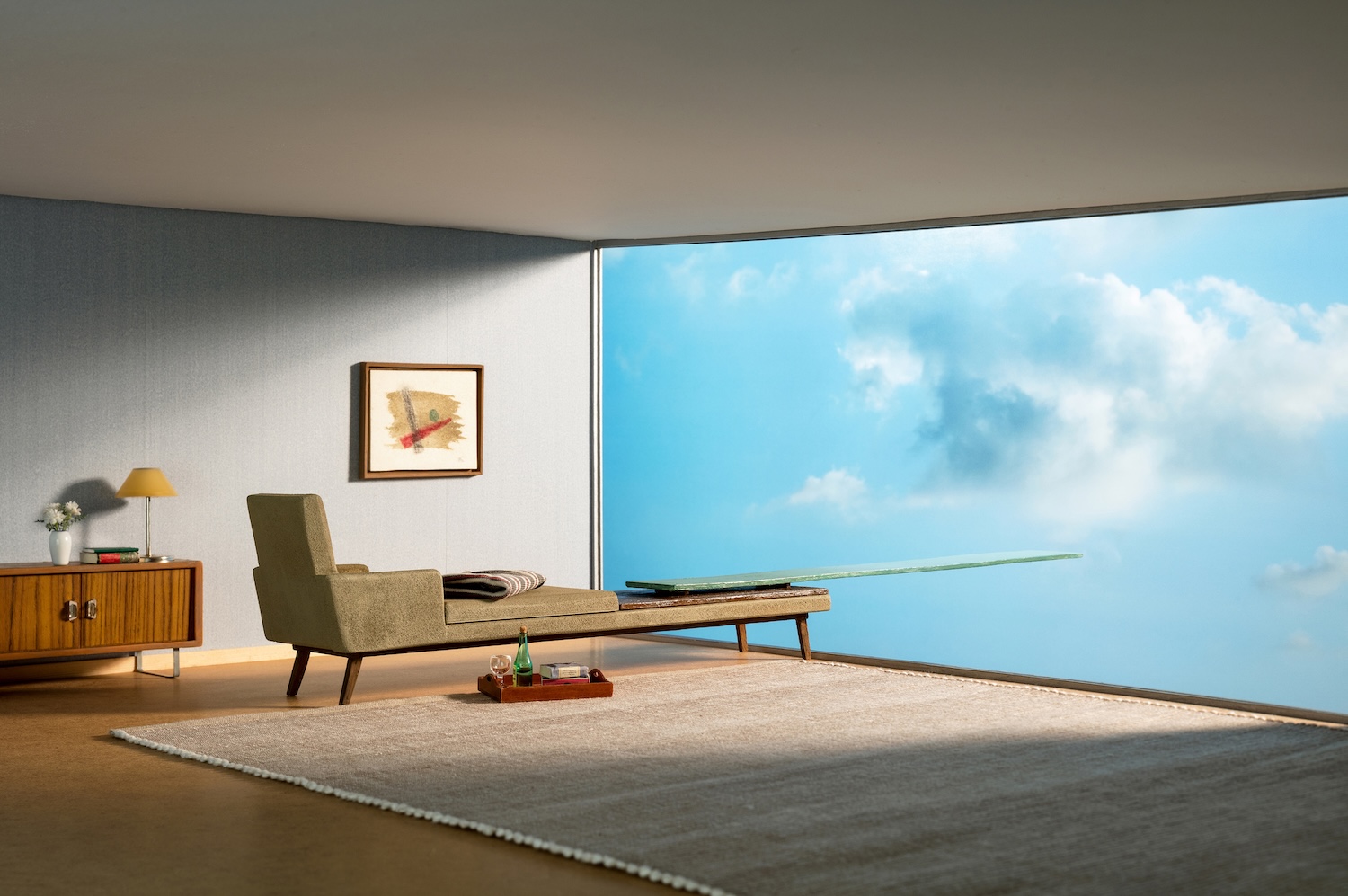
© Frank Kunert | A Room with a View
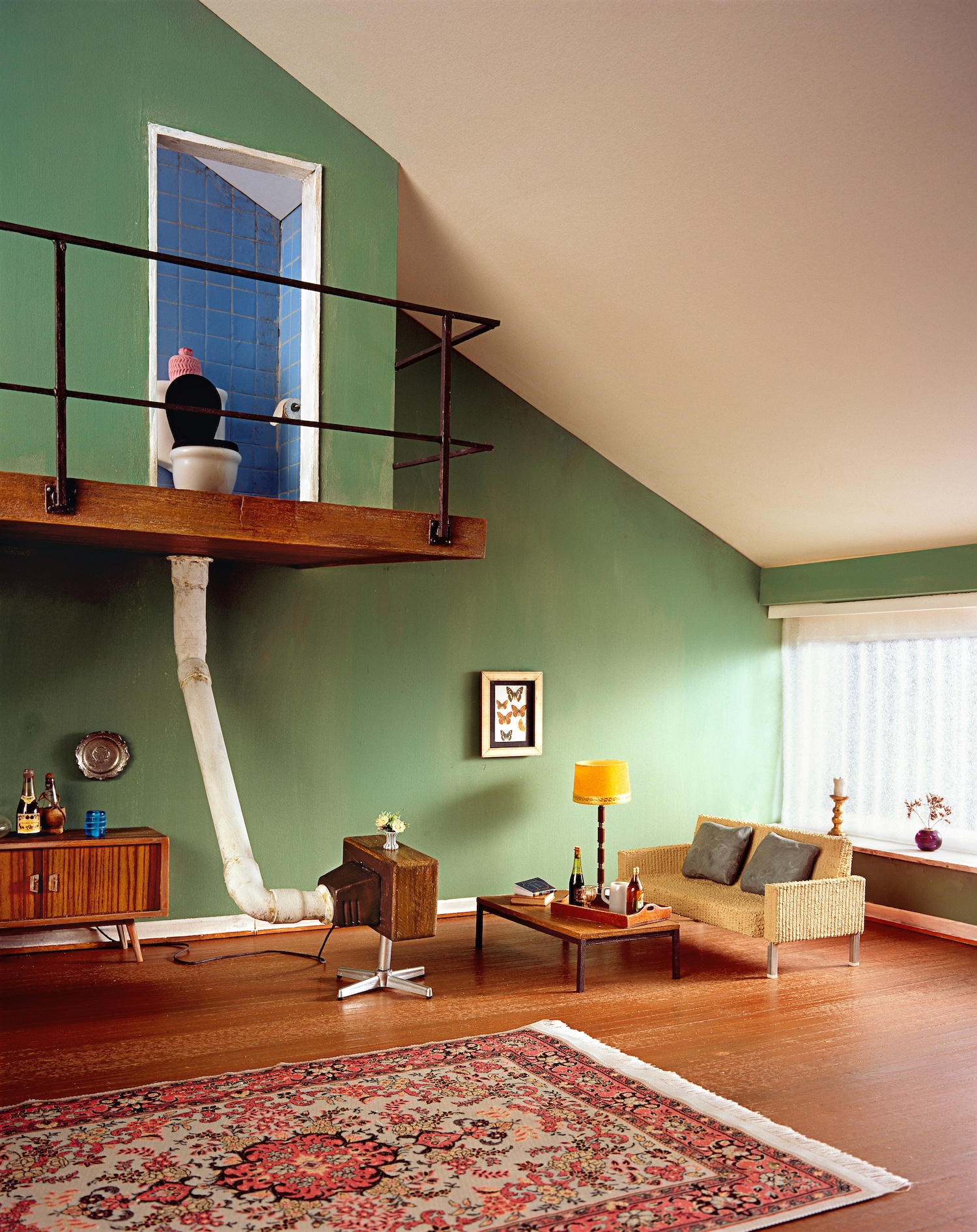
Kunert’s process of creating sculptures in his studio can take weeks, months, or even years. Meanwhile, he repeatedly contemplates his concept, refining it until he knows how to craft the final scene. He constructs everything by hand, from scratch, like a sculptor. Even while working on it, he remains uncertain of the final outcome, as it evolves during the process. Ultimately, his maquettes reveal his eerie, prophetic thoughts, infused with humour, about our comfortable yet often insecure lives in the 21st century. Hidden within the absurd scenes are high expectations, everyday failures, transience, and death. These scenes, drawn from the external world, act as mirrors of the artist and simultaneously as windows into society. In Live Broadcast, we see a sharp, cynical critique of the television entertainment industry, portrayed as a human waste industry.
Patina of hope
In his artistic vision, our lives seem to wither and rust over time, leaving the world with a thin layer of corrosion — a motif that echoes through his own words. In an interview for his book publisher Hatje Cantz, Kunert reflects: “I was always fascinated by how traces of ageing can breathe life into a façade. In my work, I want to create a place for this patina and the life that has been lived. And, of course, the absurd in our world - that hasn't changed in all these years.”
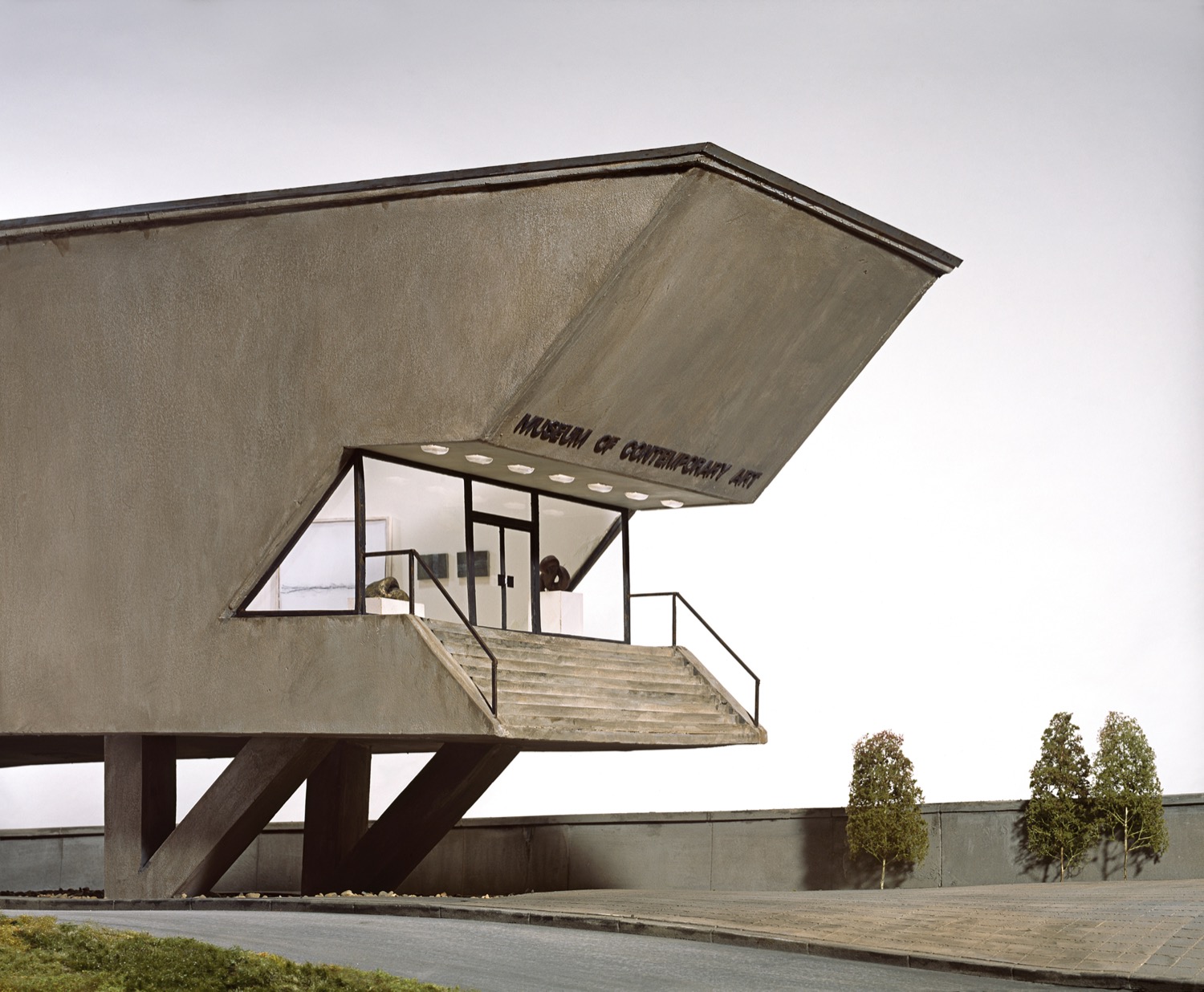
Frank Kunert uses a miraculous blend of dystopian fantasies and dry humour in his work. His photographs — or, more accurately, his miniature constructions of external reality — serve as a clear reflection of his worldview. His humour functions as an antidote to the bitterness of modern life. In Room with a View, we see a 1950s interior with a stretched sofa that leads to a diving board of a swimming pool. The present moment feels safe, but what the near future holds is uncertain happiness, if happiness at all. “People search for happiness, sometimes they find it, only to lose it again from one moment to the next - or very gradually, almost imperceptibly. And with all the small and large catastrophes that we encounter, a certain distance helps us to bear the dystopian aspects of our world. In the long run, the seriousness of life is only digestible with a pinch of humour.”
In the long run, the seriousness of life is only digestible with a pinch of humour.
Recurring themes in his works include humans’ inability to create a truly happy life, as if all proper solutions lead to disaster, failure, and ultimate unhappiness. Kunert: “Ultimately, my work is about all the ambivalence in life, the constant hope, our fears, failure and moving on. At the same time, the idea of transience and the inevitable end, death, plays a major role in my pictures.”
Metaphors of life
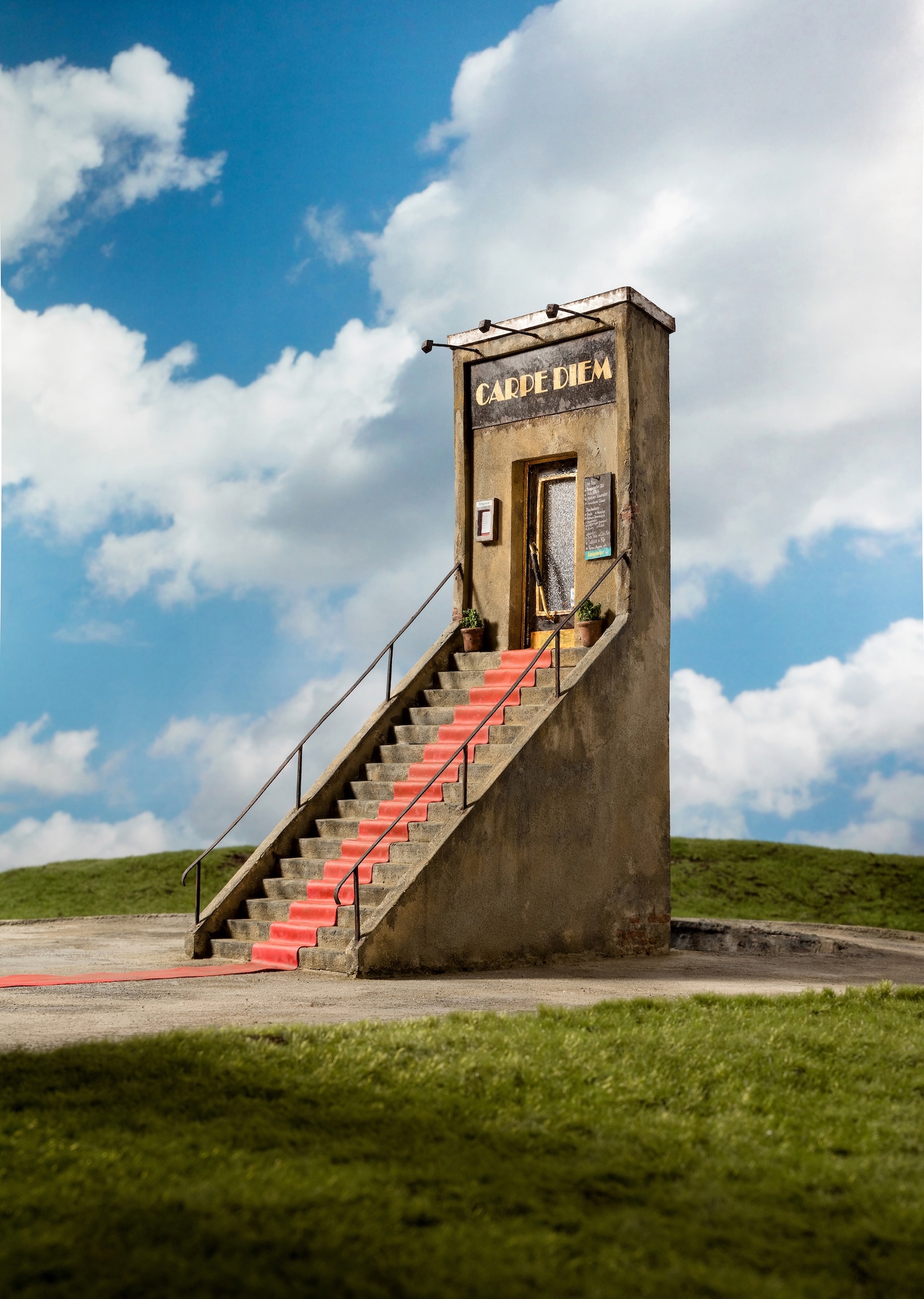
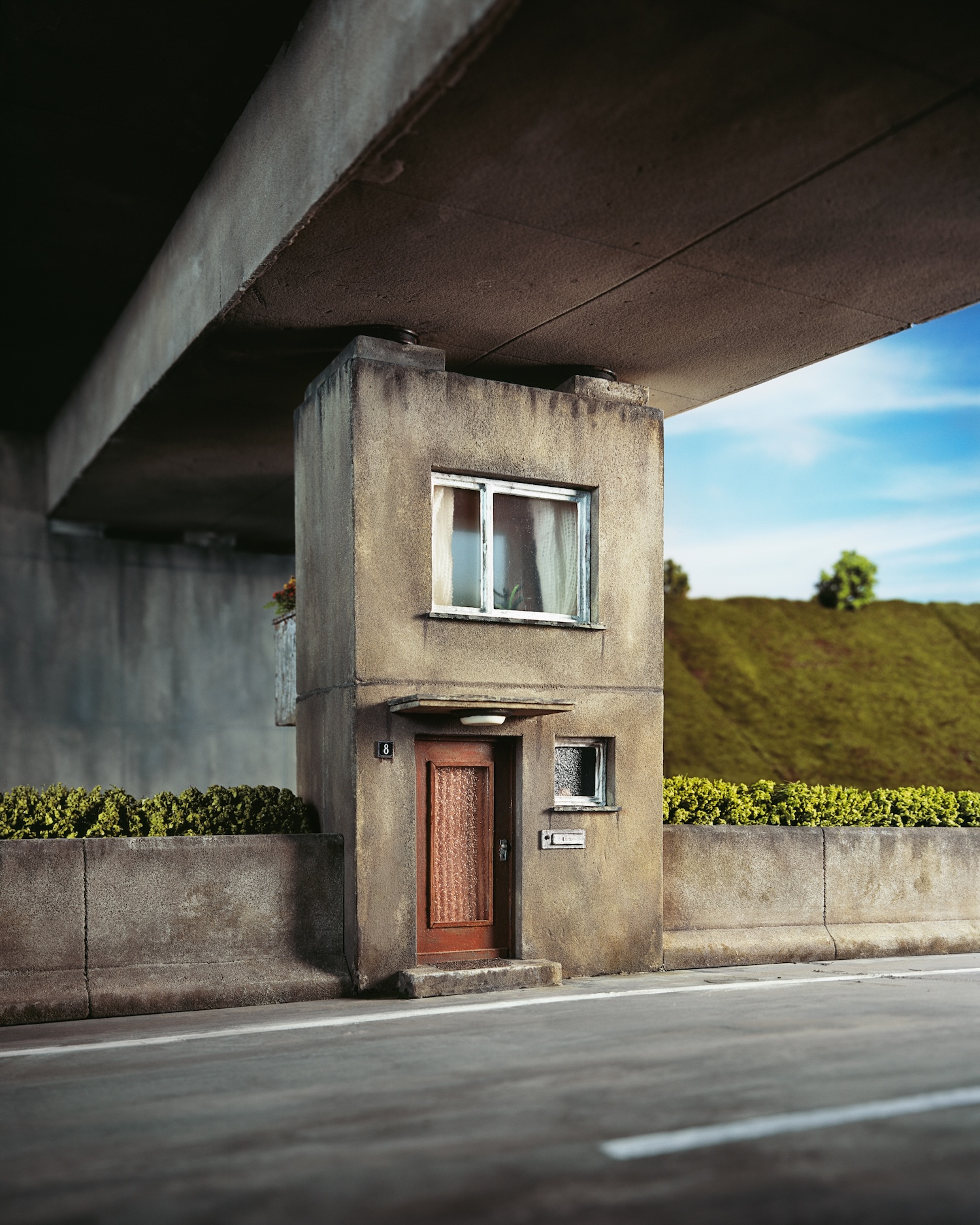
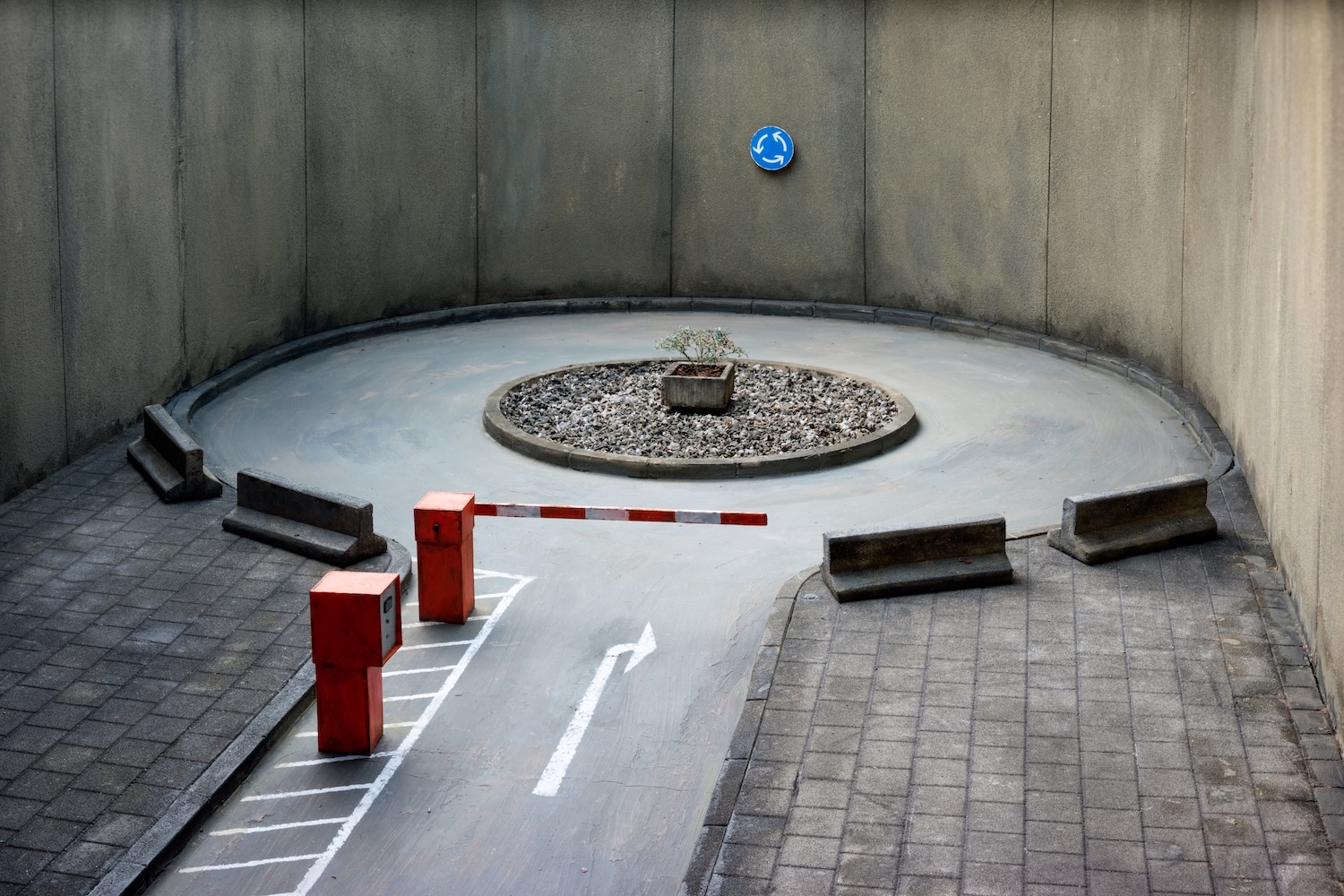
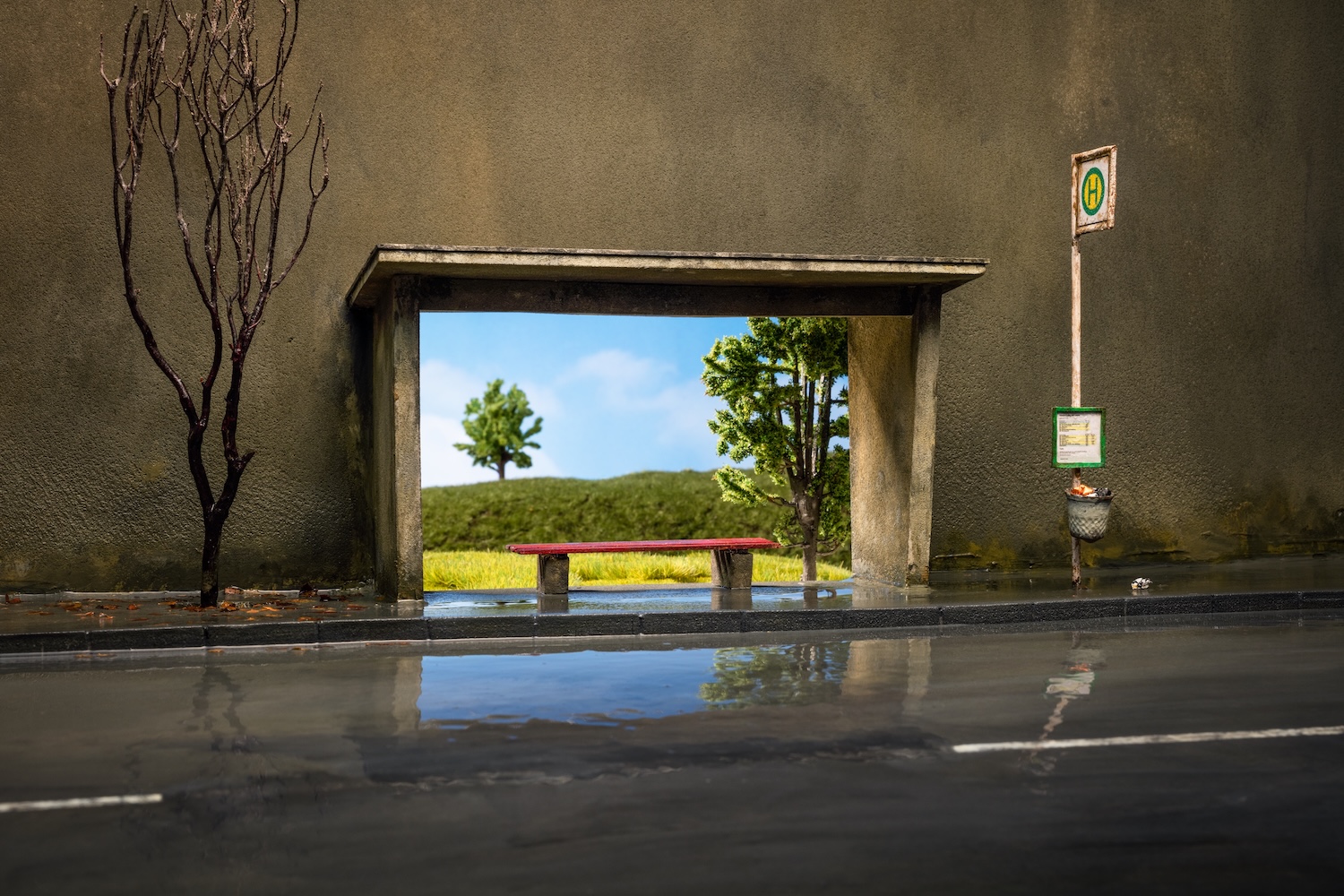
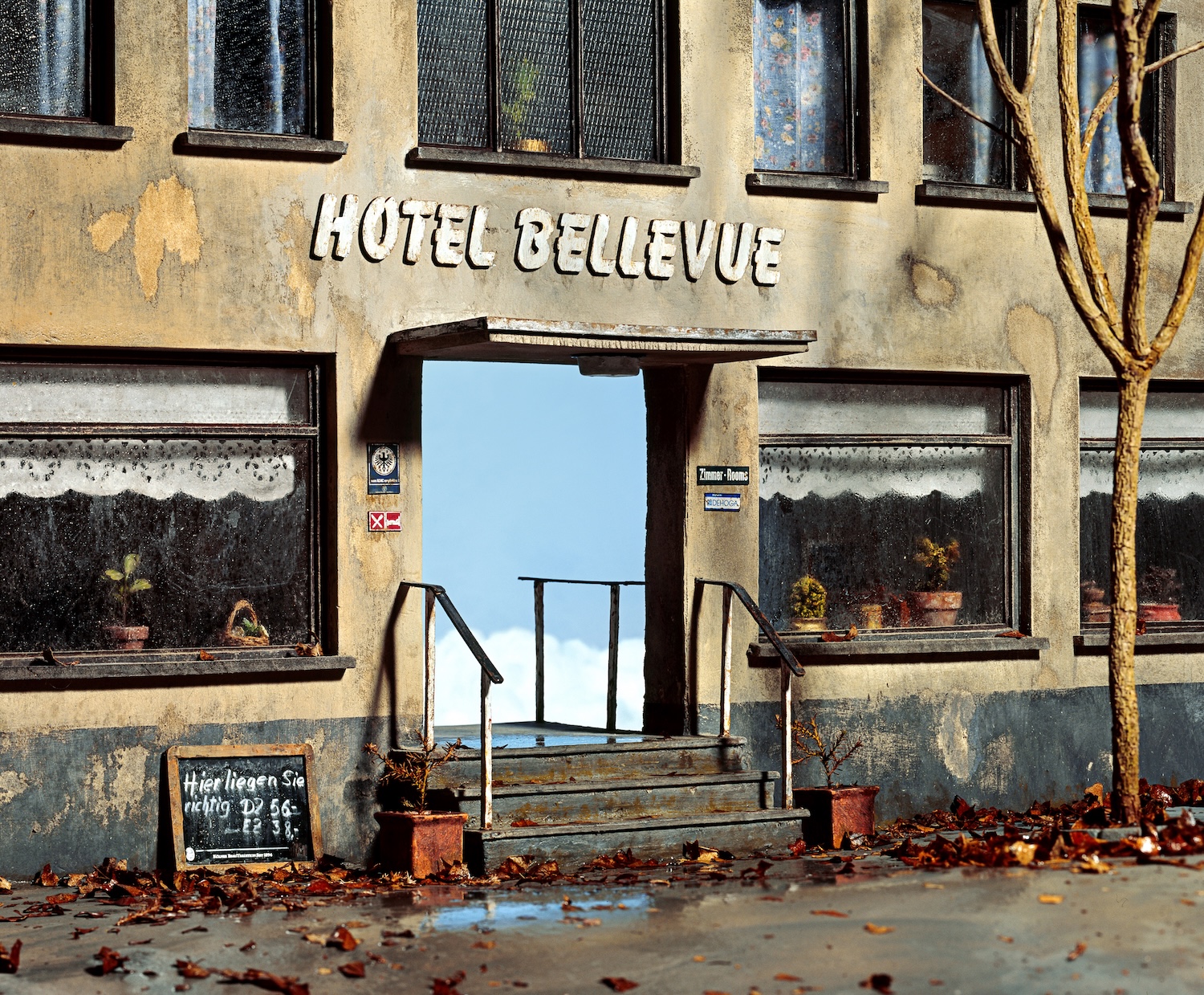
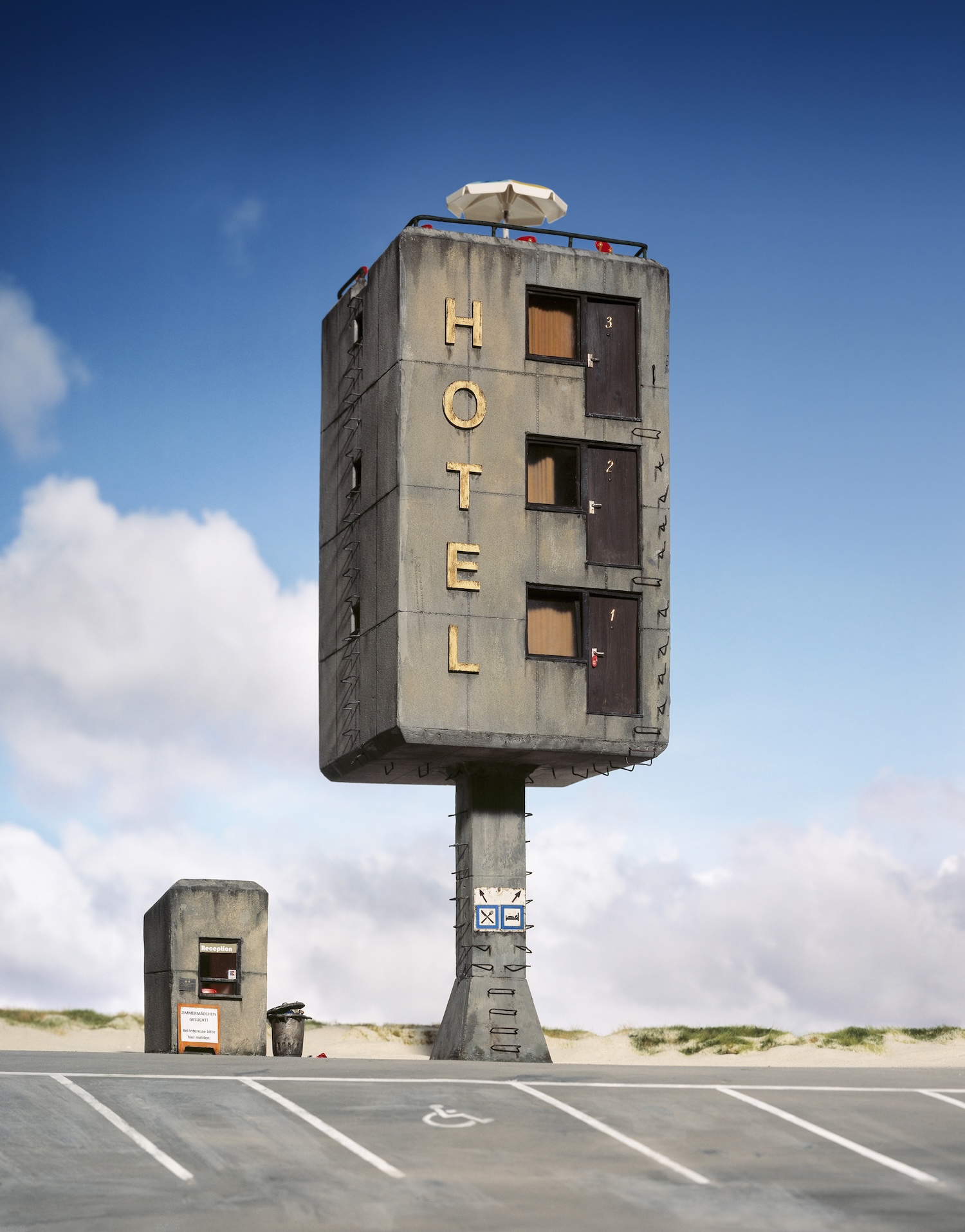
The absurd scenes Kunert constructs in his home studio serve as metaphors for our postmodern, civilised lives, full of insecurities, nostalgia, and efforts to remain happy—or at least to pretend to be so. In the image Hotel Bellevue, the metaphor for the desire to have a joyful holiday is depicted; however, the hotel appears old and neglected. More significantly, the entrance leads to an empty space, an abyss where happiness feels insecure or even absent. “My photographs are like stage sets that you can play with your own thoughts and fantasies. In the scenes, I often show houses that are getting on in years, on which the ravages of time have gnawed and continue to gnaw. Nevertheless, they still stand there with their sometimes-fragile charm and a certain pride—at least that's how I feel. Life in and around them seems to work somehow.”
My photographs are like stage sets that you can play with your own thoughts and fantasies.
The human condition
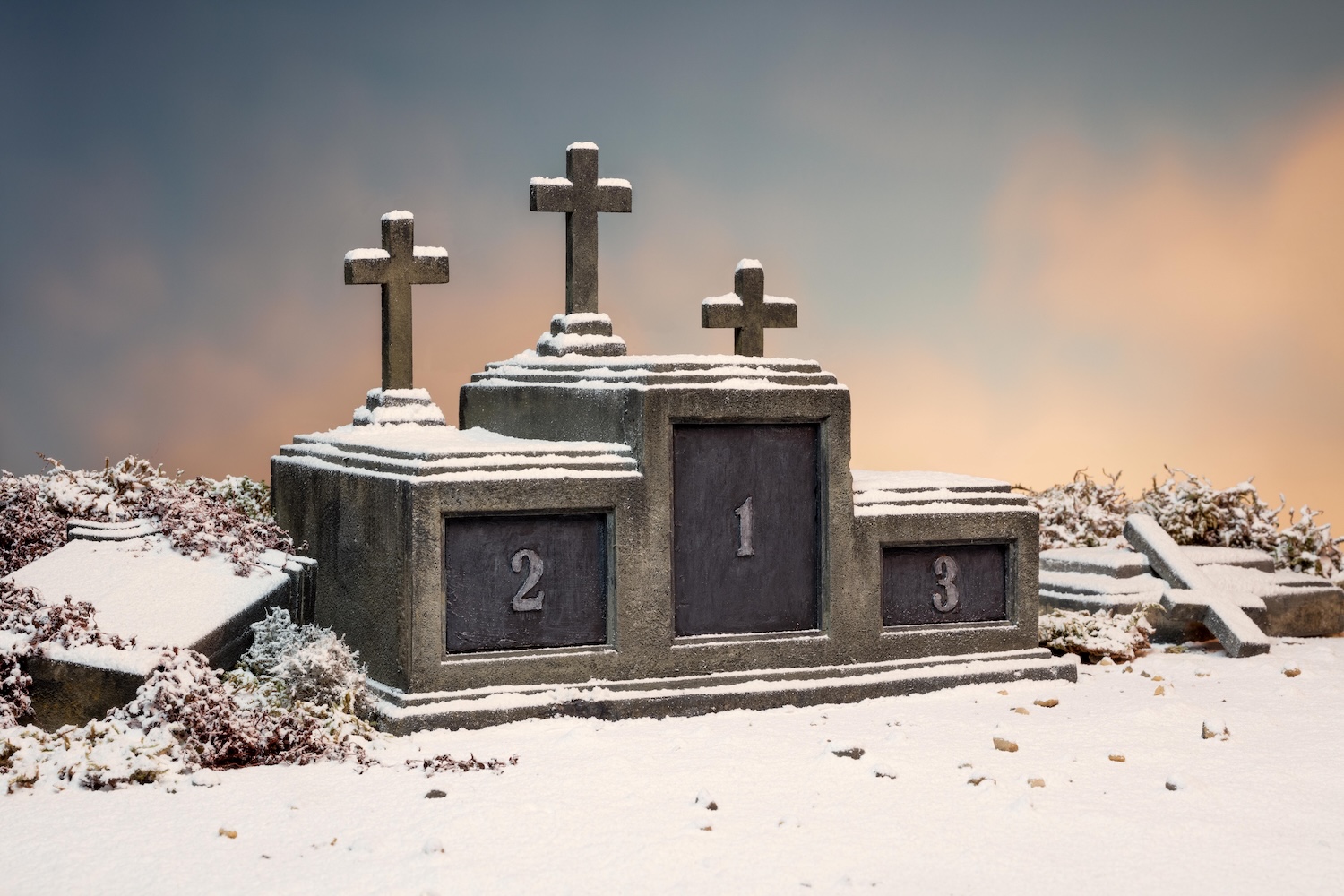
You might say that the theatre Frank Kunert has created reflects the human condition, much like how existentialist philosophers have described it. The view of the human condition as one defined by a search for meaning in a meaningless world. Humans are condemned to be free, but this freedom carries the heavy burden of life. How can we make the best of it in a world filled with disasters? The conflict between humanity's innate search for meaning and the universe's apparent emptiness leads to a sense of the absurd. This results in existential angst: the anxiety that arises from recognising the need to find meaning in a meaningless world. Even death does not escape Frank Kunert’s vision of human life. In the image The Best Places, we see the graves as the three final sporting prizes. Even the best medal ultimately leads to the end, in the snow and the cold, without heroism.
.svg)


.svg)
.svg)

Kunert’s process of creating sculptures in his studio can take weeks, months, or even years. Meanwhile, he repeatedly contemplates his concept, refining it until he knows how to craft the final scene. He constructs everything by hand, from scratch, like a sculptor. Even while working on it, he remains uncertain of the final outcome, as it evolves during the process. Ultimately, his maquettes reveal his eerie, prophetic thoughts, infused with humour, about our comfortable yet often insecure lives in the 21st century. Hidden within the absurd scenes are high expectations, everyday failures, transience, and death. These scenes, drawn from the external world, act as mirrors of the artist and simultaneously as windows into society. In Live Broadcast, we see a sharp, cynical critique of the television entertainment industry, portrayed as a human waste industry.
Patina of hope
In his artistic vision, our lives seem to wither and rust over time, leaving the world with a thin layer of corrosion — a motif that echoes through his own words. In an interview for his book publisher Hatje Cantz, Kunert reflects: “I was always fascinated by how traces of ageing can breathe life into a façade. In my work, I want to create a place for this patina and the life that has been lived. And, of course, the absurd in our world - that hasn't changed in all these years.”
Frank Kunert uses a miraculous blend of dystopian fantasies and dry humour in his work. His photographs — or, more accurately, his miniature constructions of external reality — serve as a clear reflection of his worldview. His humour functions as an antidote to the bitterness of modern life. In Room with a View, we see a 1950s interior with a stretched sofa that leads to a diving board of a swimming pool. The present moment feels safe, but what the near future holds is uncertain happiness, if happiness at all. “People search for happiness, sometimes they find it, only to lose it again from one moment to the next - or very gradually, almost imperceptibly. And with all the small and large catastrophes that we encounter, a certain distance helps us to bear the dystopian aspects of our world. In the long run, the seriousness of life is only digestible with a pinch of humour.”
In the long run, the seriousness of life is only digestible with a pinch of humour.
Recurring themes in his works include humans’ inability to create a truly happy life, as if all proper solutions lead to disaster, failure, and ultimate unhappiness. Kunert: “Ultimately, my work is about all the ambivalence in life, the constant hope, our fears, failure and moving on. At the same time, the idea of transience and the inevitable end, death, plays a major role in my pictures.”
Metaphors of life
The absurd scenes Kunert constructs in his home studio serve as metaphors for our postmodern, civilised lives, full of insecurities, nostalgia, and efforts to remain happy—or at least to pretend to be so. In the image Hotel Bellevue, the metaphor for the desire to have a joyful holiday is depicted; however, the hotel appears old and neglected. More significantly, the entrance leads to an empty space, an abyss where happiness feels insecure or even absent. “My photographs are like stage sets that you can play with your own thoughts and fantasies. In the scenes, I often show houses that are getting on in years, on which the ravages of time have gnawed and continue to gnaw. Nevertheless, they still stand there with their sometimes-fragile charm and a certain pride—at least that's how I feel. Life in and around them seems to work somehow.”
My photographs are like stage sets that you can play with your own thoughts and fantasies.
The human condition
You might say that the theatre Frank Kunert has created reflects the human condition, much like how existentialist philosophers have described it. The view of the human condition as one defined by a search for meaning in a meaningless world. Humans are condemned to be free, but this freedom carries the heavy burden of life. How can we make the best of it in a world filled with disasters? The conflict between humanity's innate search for meaning and the universe's apparent emptiness leads to a sense of the absurd. This results in existential angst: the anxiety that arises from recognising the need to find meaning in a meaningless world. Even death does not escape Frank Kunert’s vision of human life. In the image The Best Places, we see the graves as the three final sporting prizes. Even the best medal ultimately leads to the end, in the snow and the cold, without heroism.
Kunert’s process of creating sculptures in his studio can take weeks, months, or even years. Meanwhile, he repeatedly contemplates his concept, refining it until he knows how to craft the final scene. He constructs everything by hand, from scratch, like a sculptor. Even while working on it, he remains uncertain of the final outcome, as it evolves during the process. Ultimately, his maquettes reveal his eerie, prophetic thoughts, infused with humour, about our comfortable yet often insecure lives in the 21st century. Hidden within the absurd scenes are high expectations, everyday failures, transience, and death. These scenes, drawn from the external world, act as mirrors of the artist and simultaneously as windows into society. In Live Broadcast, we see a sharp, cynical critique of the television entertainment industry, portrayed as a human waste industry.
Patina of hope
In his artistic vision, our lives seem to wither and rust over time, leaving the world with a thin layer of corrosion — a motif that echoes through his own words. In an interview for his book publisher Hatje Cantz, Kunert reflects: “I was always fascinated by how traces of ageing can breathe life into a façade. In my work, I want to create a place for this patina and the life that has been lived. And, of course, the absurd in our world - that hasn't changed in all these years.”
Frank Kunert uses a miraculous blend of dystopian fantasies and dry humour in his work. His photographs — or, more accurately, his miniature constructions of external reality — serve as a clear reflection of his worldview. His humour functions as an antidote to the bitterness of modern life. In Room with a View, we see a 1950s interior with a stretched sofa that leads to a diving board of a swimming pool. The present moment feels safe, but what the near future holds is uncertain happiness, if happiness at all. “People search for happiness, sometimes they find it, only to lose it again from one moment to the next - or very gradually, almost imperceptibly. And with all the small and large catastrophes that we encounter, a certain distance helps us to bear the dystopian aspects of our world. In the long run, the seriousness of life is only digestible with a pinch of humour.”
In the long run, the seriousness of life is only digestible with a pinch of humour.
Recurring themes in his works include humans’ inability to create a truly happy life, as if all proper solutions lead to disaster, failure, and ultimate unhappiness. Kunert: “Ultimately, my work is about all the ambivalence in life, the constant hope, our fears, failure and moving on. At the same time, the idea of transience and the inevitable end, death, plays a major role in my pictures.”
Metaphors of life
The absurd scenes Kunert constructs in his home studio serve as metaphors for our postmodern, civilised lives, full of insecurities, nostalgia, and efforts to remain happy—or at least to pretend to be so. In the image Hotel Bellevue, the metaphor for the desire to have a joyful holiday is depicted; however, the hotel appears old and neglected. More significantly, the entrance leads to an empty space, an abyss where happiness feels insecure or even absent. “My photographs are like stage sets that you can play with your own thoughts and fantasies. In the scenes, I often show houses that are getting on in years, on which the ravages of time have gnawed and continue to gnaw. Nevertheless, they still stand there with their sometimes-fragile charm and a certain pride—at least that's how I feel. Life in and around them seems to work somehow.”
My photographs are like stage sets that you can play with your own thoughts and fantasies.
The human condition
You might say that the theatre Frank Kunert has created reflects the human condition, much like how existentialist philosophers have described it. The view of the human condition as one defined by a search for meaning in a meaningless world. Humans are condemned to be free, but this freedom carries the heavy burden of life. How can we make the best of it in a world filled with disasters? The conflict between humanity's innate search for meaning and the universe's apparent emptiness leads to a sense of the absurd. This results in existential angst: the anxiety that arises from recognising the need to find meaning in a meaningless world. Even death does not escape Frank Kunert’s vision of human life. In the image The Best Places, we see the graves as the three final sporting prizes. Even the best medal ultimately leads to the end, in the snow and the cold, without heroism.