© Natalie Karpushenko | Rebirth
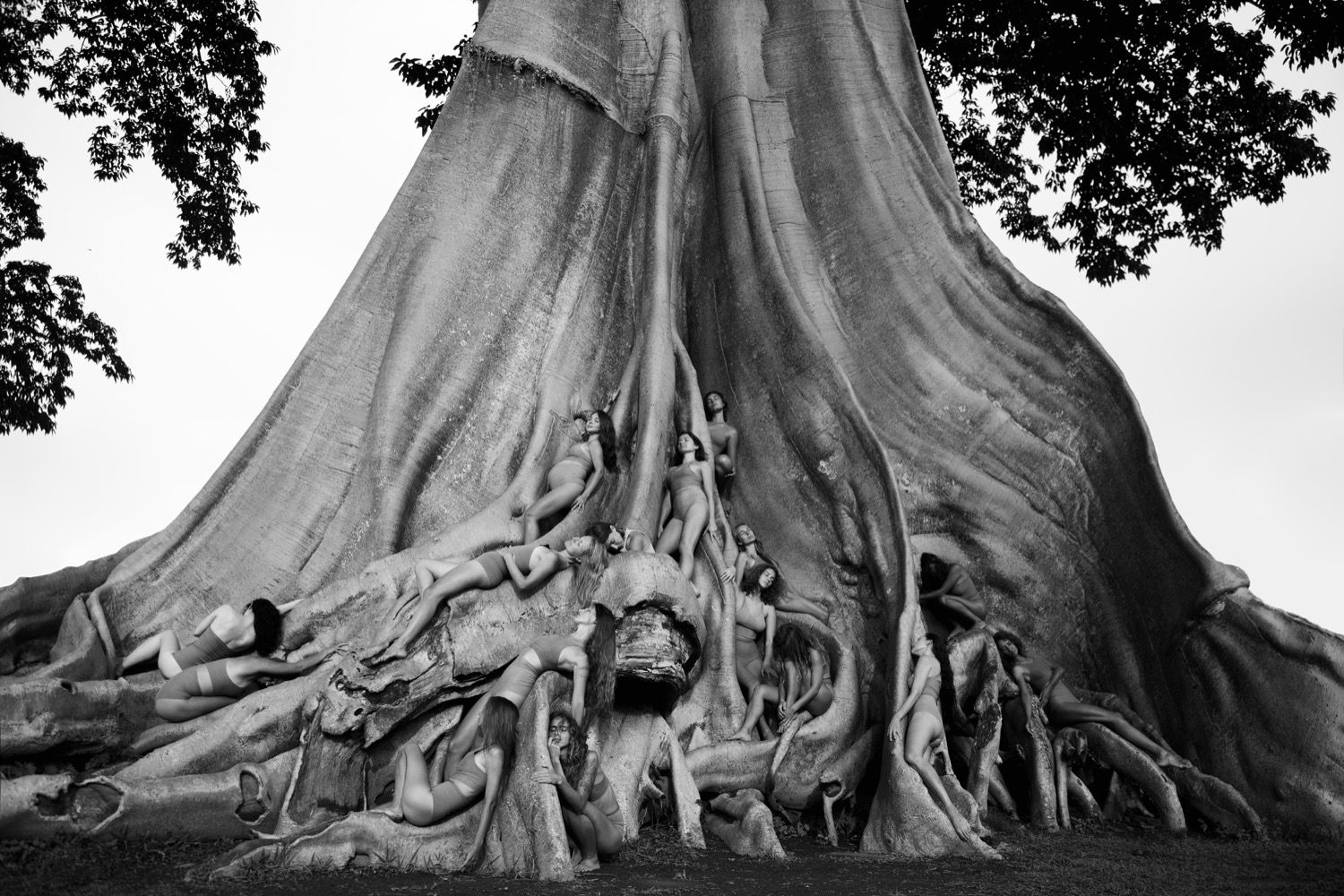
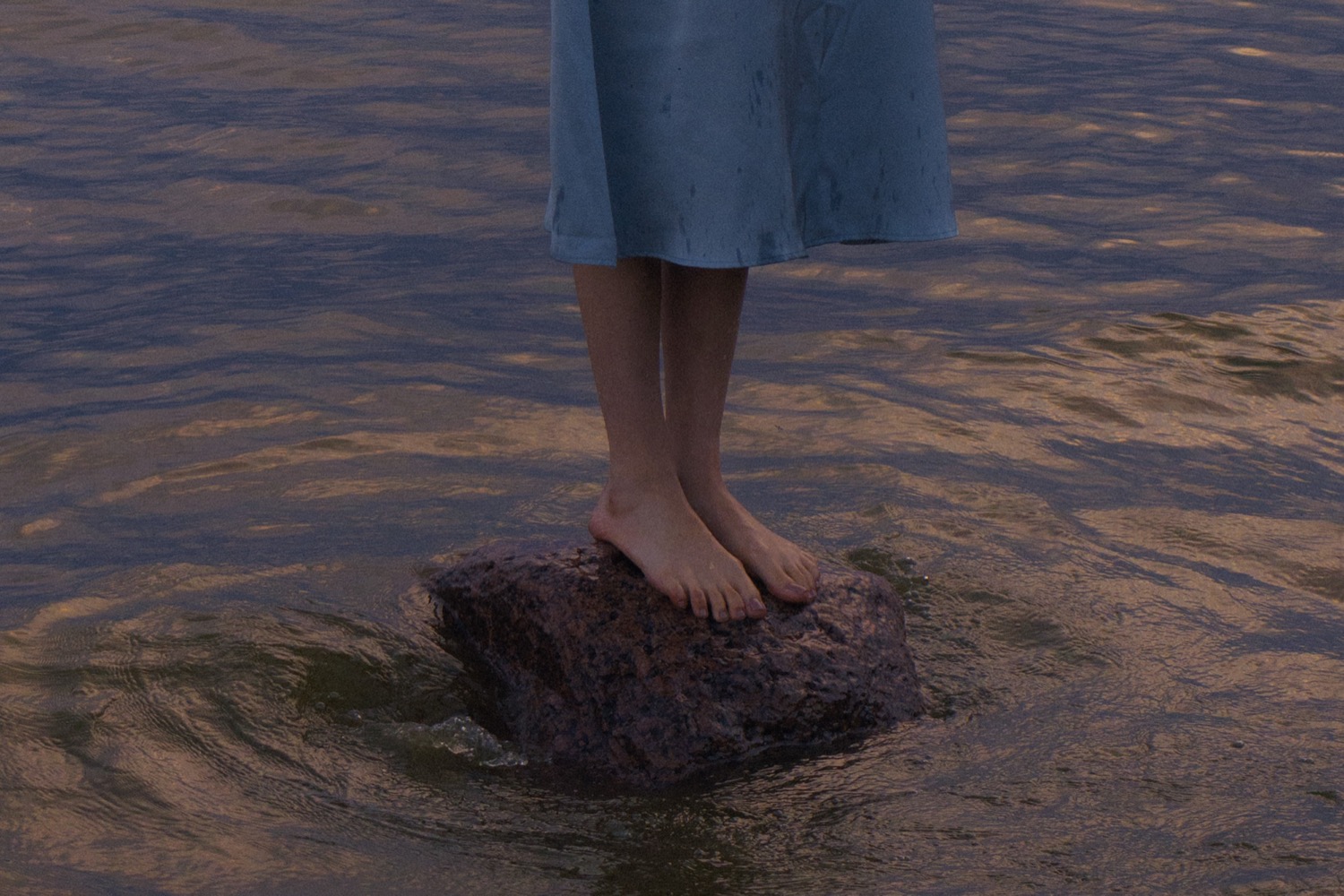
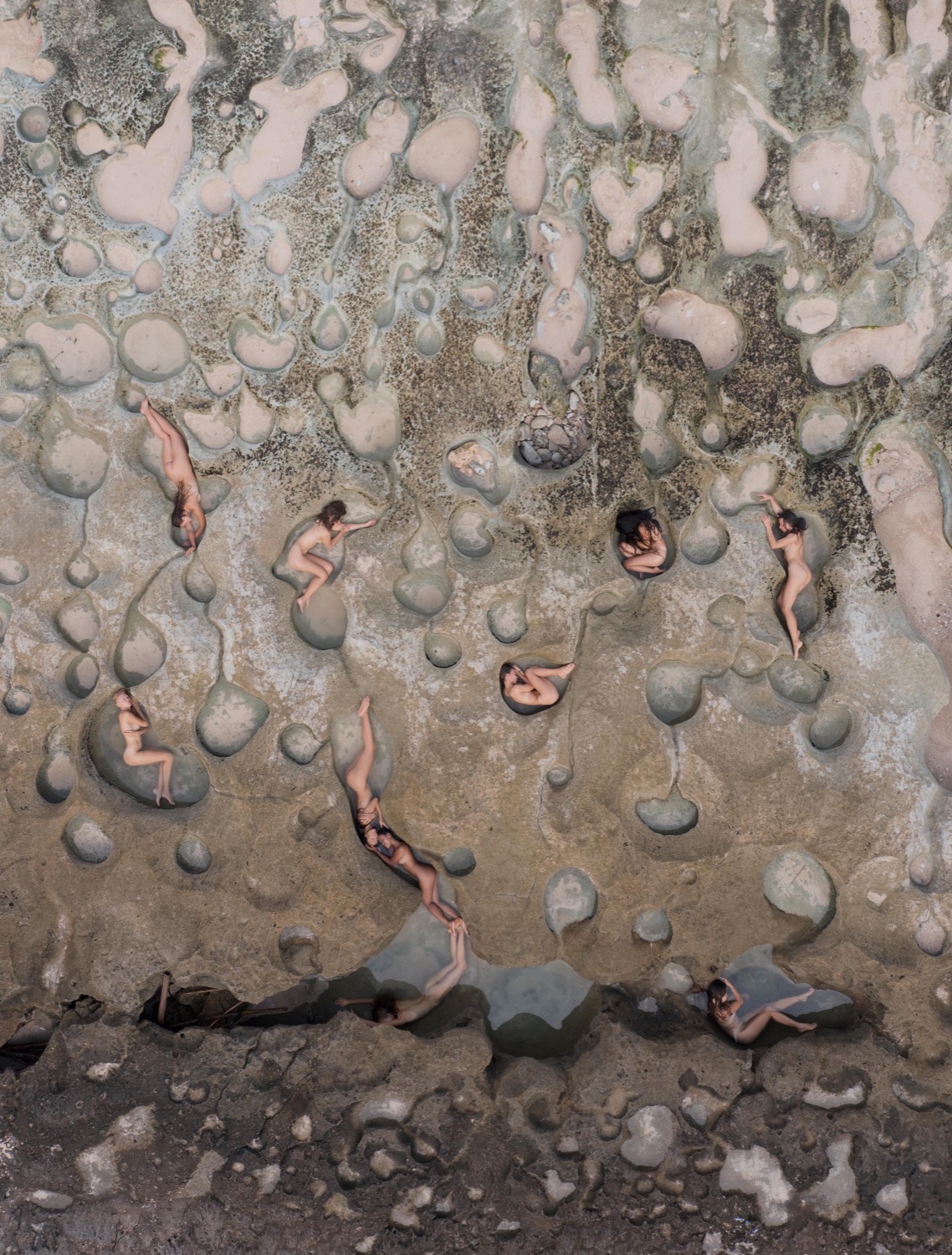
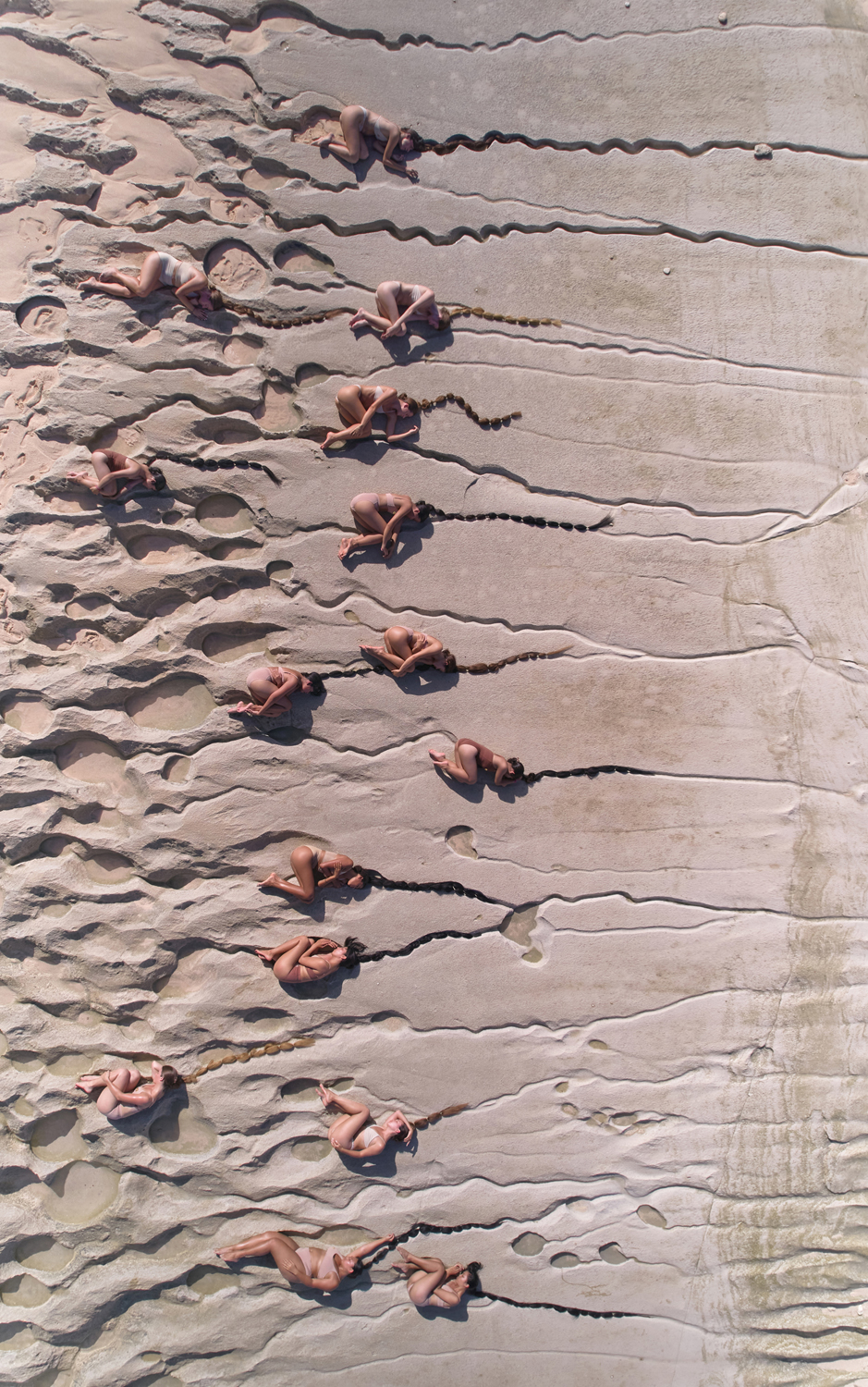
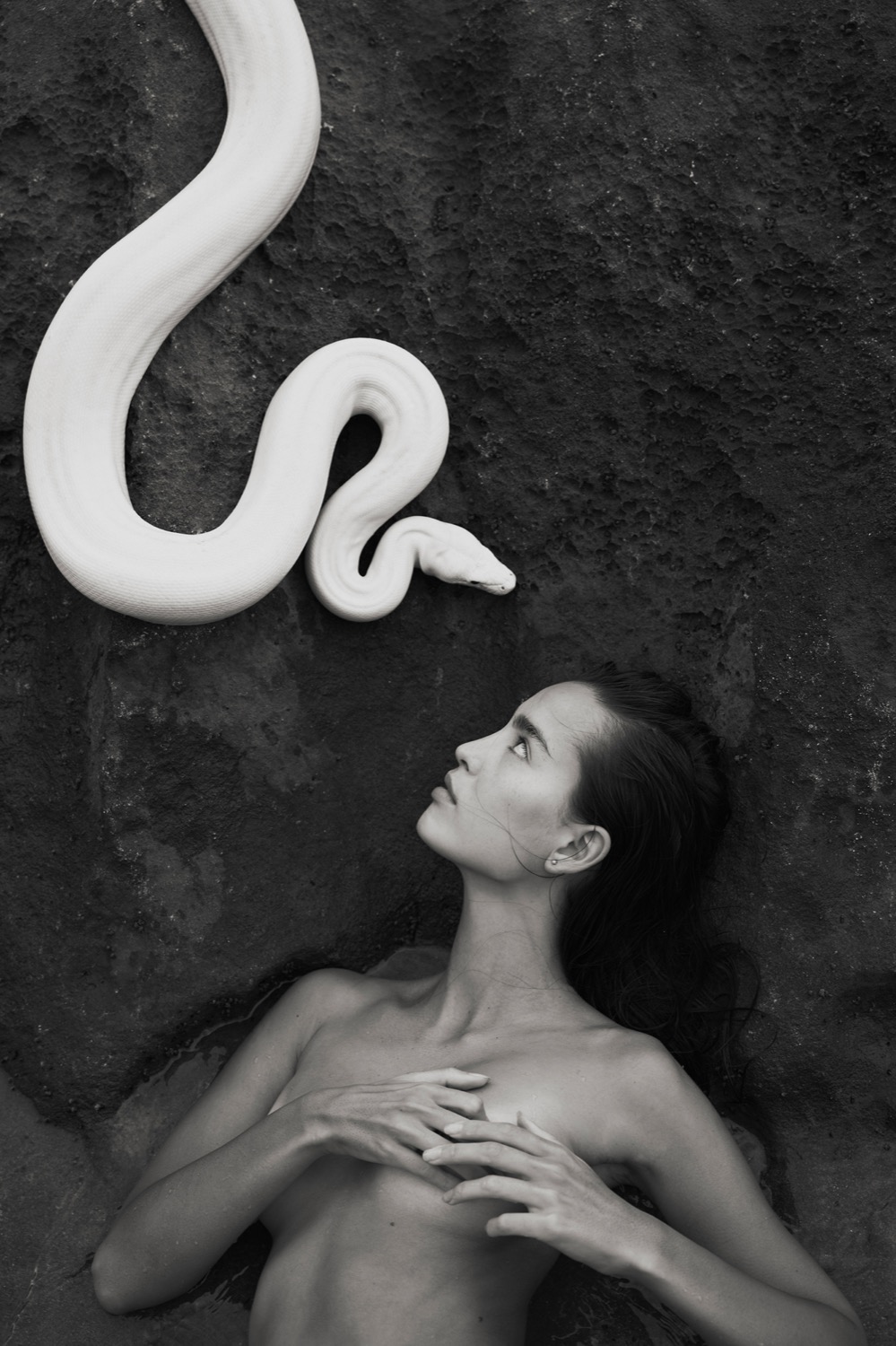
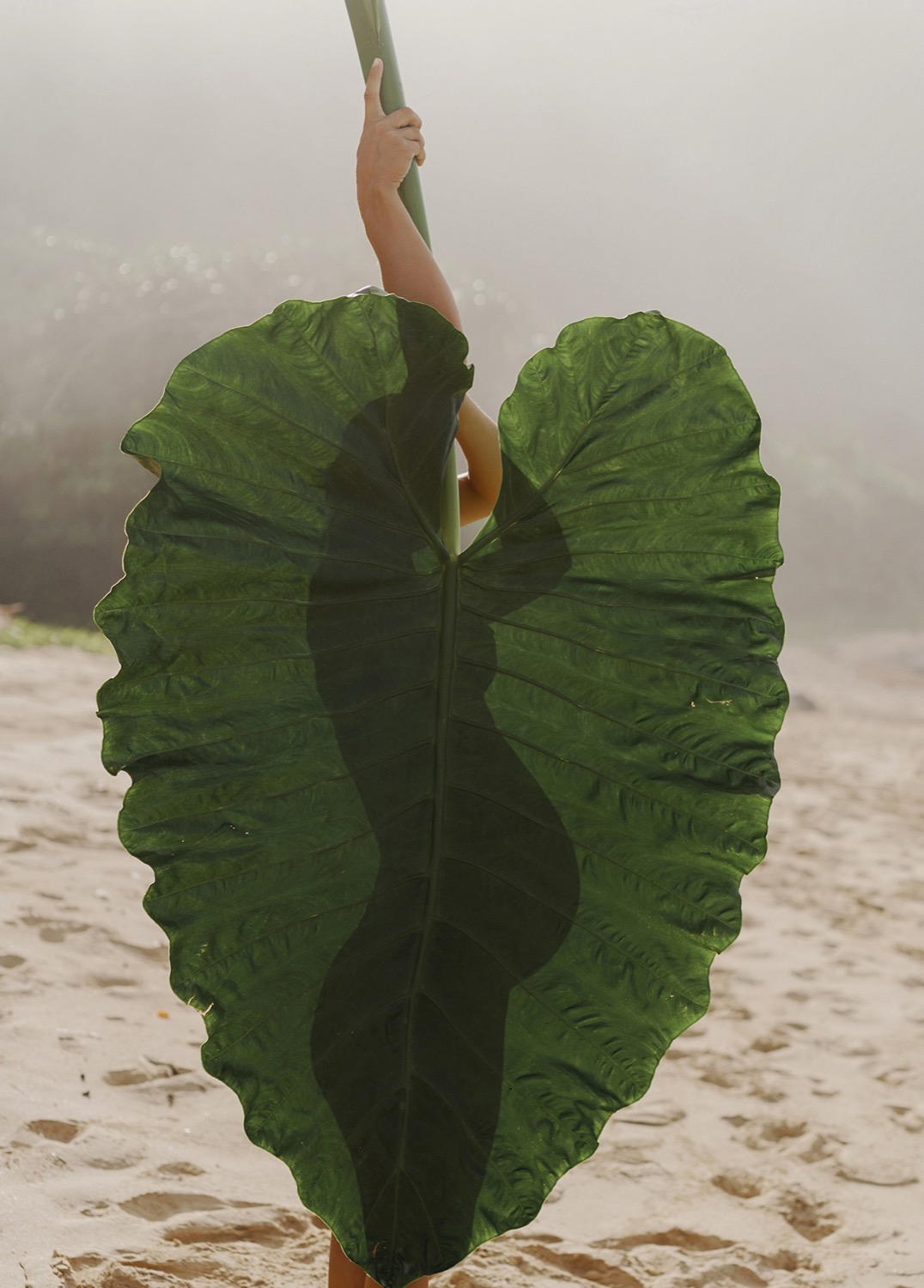
Karpushenko is drawn to the subtle interrelationships between human form and landscape, gestures of belonging that are easily forgotten. “I’m fascinated by how we’ve forgotten our wild origins and become disconnected from our natural home. Through my lens, I capture moments where the human form mirrors natural shapes—a woman’s silhouette echoing a rock formation, or bodies moving like flowing water.” These images are not simply aesthetic experiments; for her, they carry a vital message. “These themes matter deeply because I believe our planet’s healing depends on remembering we’re not separate from nature, but part of it. Each image is my attempt to bridge that forgotten bond and inspire others to see themselves reflected in the natural world around them.”

That message is carried not only in what she photographs, but in how she finds her subjects. Her process is intuitive, almost instinctive, as though guided by the land and water themselves. She describes it as a kind of listening. “I might notice how a rock formation resembles the female form, or observe an animal in its habitat and remember our own wild essence. Sometimes I swim through ocean plastic and imagine the fish’s perspective in their polluted home. My storytelling is about capturing fleeting moments where the boundary between human and nature dissolves, creating visual poetry that speaks to our shared origins and interdependence.”
Environmentalist Perspective
Karpushenko’s vision has been shaped by movement across cultures and landscapes, each encounter deepening her sense that humanity, despite its divisions, springs from the same elemental source. “My travels across different cultures and environments shaped my understanding that despite our diverse backgrounds, we all share the same elemental origins. This realisation infuses my work with both melancholy for what we’ve lost and hope for what we can reclaim.”
Her background in fine art and architecture also informs the way she sees—order and structure revealed in natural forms, fluidity and flow discovered in the human body. Yet it is her environmentalist perspective that lends her images a quiet urgency. “My environmentalist perspective adds urgency to my images—there’s a longing quality, as if each photograph is a love letter to a disappearing world. The emotional tone carries both celebration of natural beauty and a quiet call to action for its protection.”
Appreciation and Protection
For Karpushenko, the success of an image lies in its ability to awaken something dormant in the viewer. “I want viewers to feel a profound moment of recognition—the ‘remembering’ of our connection to nature. When someone looks at my work, I hope they experience a shift from seeing themselves as separate from the natural world to understanding they’re part of it.” Her photographs hold both wonder and discomfort, echoing the dual emotions she experiences. “I want them to feel the same wonder I feel when I see a woman’s curve echoing a mountain’s silhouette, or the same concern I feel swimming through plastic debris.” The ultimate aim is not simply contemplation, but transformation. “Most importantly, I hope my images inspire a deep appreciation and protective instinct for our planet. If my art can make someone pause and truly see the magic in the union between human and nature, then it has fulfilled its purpose.”
Through beauty, I convey the urgent message that reconnecting with nature is essential for healing ourselves and our planet.

Visual Poetry as Activism
Karpushenko’s work operates in two registers at once: the poetic and the political. “My art is both visual poetry and environmental activism. Through beauty, I convey the urgent message that reconnecting with nature is essential for healing ourselves and our planet. Each image raises awareness about our disconnection from the natural world and the consequences of this separation. When I photograph plastic pollution alongside natural beauty, or capture humans harmoniously integrated with their environment, I’m showing both the problem and the solution.” Her message is clear: “Environmental protection isn’t about saving something external to us—it’s about remembering that we are nature, and by healing our relationship with the earth, we heal ourselves.”

Her work challenges entrenched cultural narratives, particularly the assumption that humans exist apart from or above the natural world. “Through visual storytelling, I’m contributing to conversations about sustainable living, environmental responsibility, and spiritual reconnection with the earth.” By aligning the female form with natural landscapes, she introduces another layer of meaning—an exploration of feminine power and its connection to Mother Earth. “I hope my images spark discussions about how we can restructure our societies to honour rather than exploit natural systems.”
The Language of Light and Symbols
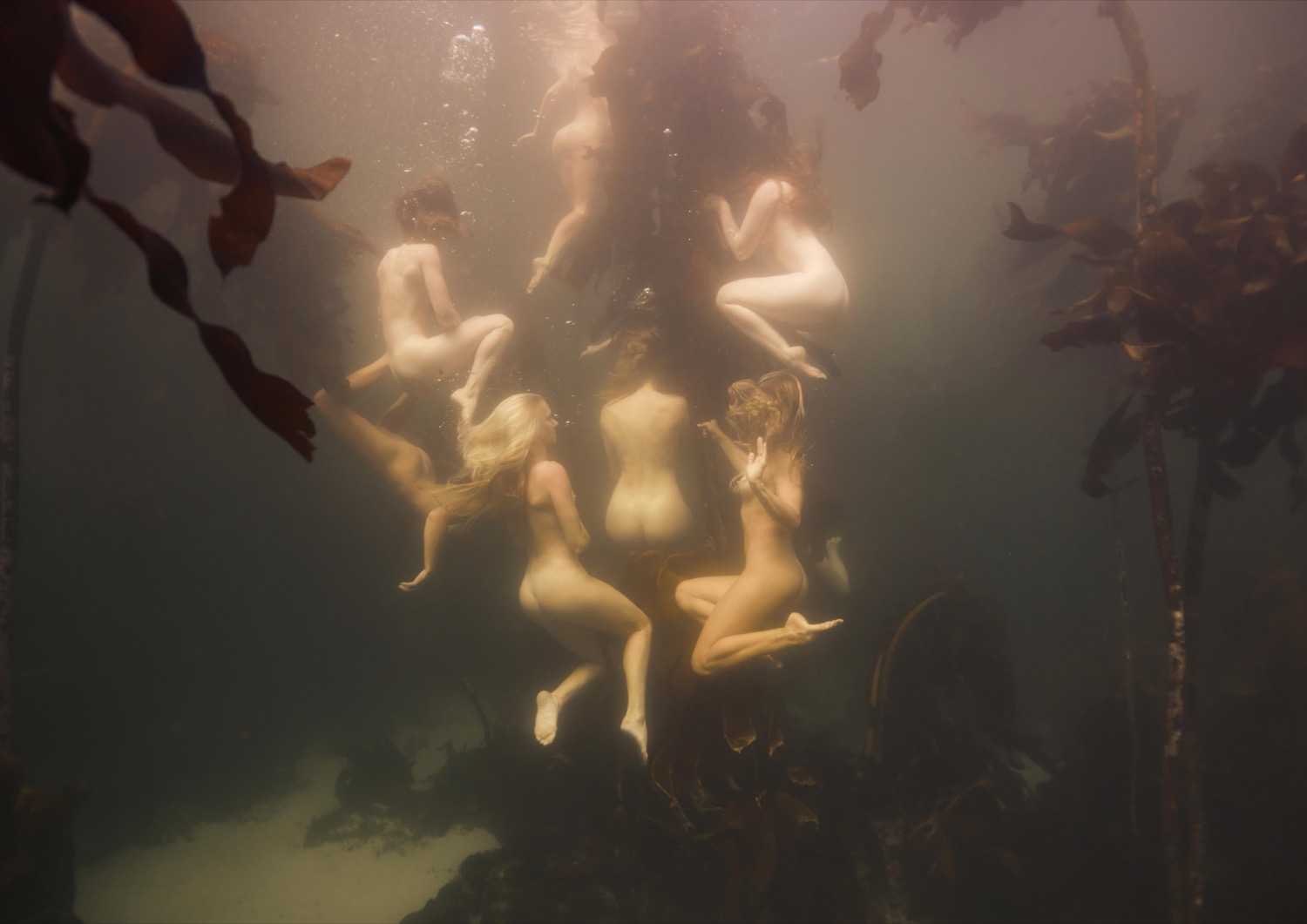
For Karpushenko, light is not just an element of photography but a collaborator. “I use natural light to create seamless integration between human subjects and their environment, making it unclear where one ends and the other begins.” Composition follows the same principle: figures placed to echo the curves of rocks or the flow of water, colours drawn from earth and sea—tones of soil, stone, and deep blue. “Underwater photography is a special technique I use to literally immerse subjects in the element of our origin. I also employ reflection and transparency effects to show the interpenetration of human and natural forms, creating images where boundaries dissolve and unity emerges through pure visual poetry.”
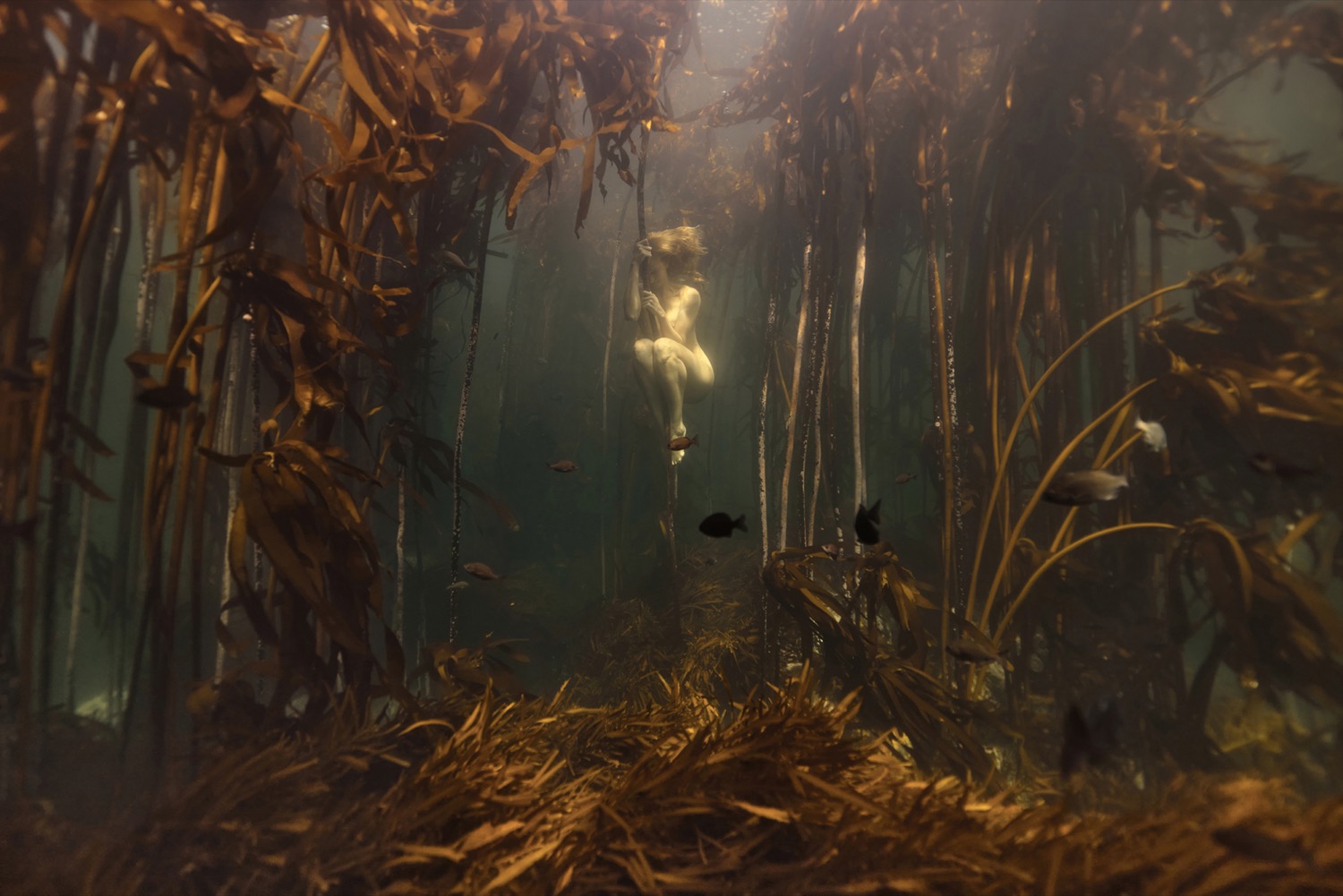
The imagery is enriched by a symbolic lexicon that recurs across her work. “Water is my most powerful recurring motif—it represents our origin, our life force, and our shared essence with all living beings. The female form appears frequently, often positioned to mirror natural landscapes, symbolising the connection between feminine energy and Mother Earth. Rocks and stone formations recur as symbols of permanence and ancient wisdom. Plastic debris has become an unfortunate but important motif, representing humanity’s disconnection from natural cycles.” Each carries its own resonance: water as healing, stone as grounding, the female form as creative life force, and plastic as a wake-up call. Together, they form a visual language that insists on remembering our place within nature’s unfolding story.
A Prayer for Remembrance
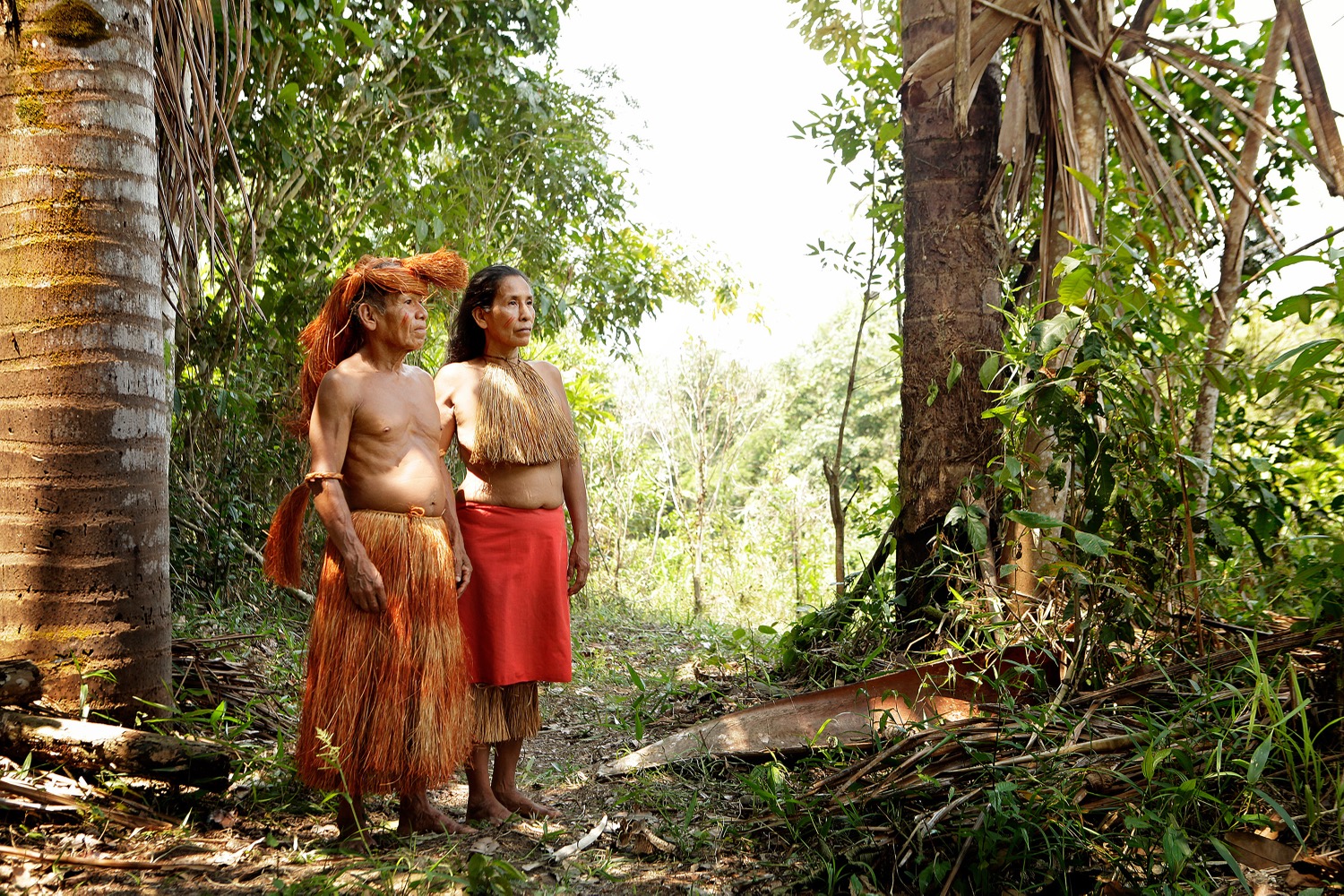
Karpushenko’s artistic path continues to deepen into the mysteries of our bond with water and earth. “I’m excited to explore how ancient wisdom traditions understood our connection to nature, and how this knowledge can inform contemporary environmental healing. I want to investigate the role of ritual and ceremony in reconnecting with natural cycles.” Future projects will take her further beneath the surface, expanding her underwater practice to reveal both the beauty and the fragility of marine ecosystems. She is also drawn to collaborating with indigenous communities whose traditions embody strong connections to the land. As she acknowledges, the urgency of her work only grows sharper: “As climate change accelerates, my work will undoubtedly become more urgent in its call for remembering our wild, interconnected nature.”
For Karpushenko, the act of making images is inseparable from the act of care. “Through my lens, I’m not just documenting the world—I’m participating in its healing. Every photograph is an act of love, a prayer for remembrance, and an invitation to return home to our natural selves. Art has the power to change hearts, and changed hearts can change the world.”
.svg)


.svg)
.svg)

Karpushenko is drawn to the subtle interrelationships between human form and landscape, gestures of belonging that are easily forgotten. “I’m fascinated by how we’ve forgotten our wild origins and become disconnected from our natural home. Through my lens, I capture moments where the human form mirrors natural shapes—a woman’s silhouette echoing a rock formation, or bodies moving like flowing water.” These images are not simply aesthetic experiments; for her, they carry a vital message. “These themes matter deeply because I believe our planet’s healing depends on remembering we’re not separate from nature, but part of it. Each image is my attempt to bridge that forgotten bond and inspire others to see themselves reflected in the natural world around them.”
That message is carried not only in what she photographs, but in how she finds her subjects. Her process is intuitive, almost instinctive, as though guided by the land and water themselves. She describes it as a kind of listening. “I might notice how a rock formation resembles the female form, or observe an animal in its habitat and remember our own wild essence. Sometimes I swim through ocean plastic and imagine the fish’s perspective in their polluted home. My storytelling is about capturing fleeting moments where the boundary between human and nature dissolves, creating visual poetry that speaks to our shared origins and interdependence.”
Environmentalist Perspective
Karpushenko’s vision has been shaped by movement across cultures and landscapes, each encounter deepening her sense that humanity, despite its divisions, springs from the same elemental source. “My travels across different cultures and environments shaped my understanding that despite our diverse backgrounds, we all share the same elemental origins. This realisation infuses my work with both melancholy for what we’ve lost and hope for what we can reclaim.”
Her background in fine art and architecture also informs the way she sees—order and structure revealed in natural forms, fluidity and flow discovered in the human body. Yet it is her environmentalist perspective that lends her images a quiet urgency. “My environmentalist perspective adds urgency to my images—there’s a longing quality, as if each photograph is a love letter to a disappearing world. The emotional tone carries both celebration of natural beauty and a quiet call to action for its protection.”
Appreciation and Protection
For Karpushenko, the success of an image lies in its ability to awaken something dormant in the viewer. “I want viewers to feel a profound moment of recognition—the ‘remembering’ of our connection to nature. When someone looks at my work, I hope they experience a shift from seeing themselves as separate from the natural world to understanding they’re part of it.” Her photographs hold both wonder and discomfort, echoing the dual emotions she experiences. “I want them to feel the same wonder I feel when I see a woman’s curve echoing a mountain’s silhouette, or the same concern I feel swimming through plastic debris.” The ultimate aim is not simply contemplation, but transformation. “Most importantly, I hope my images inspire a deep appreciation and protective instinct for our planet. If my art can make someone pause and truly see the magic in the union between human and nature, then it has fulfilled its purpose.”
Through beauty, I convey the urgent message that reconnecting with nature is essential for healing ourselves and our planet.
Visual Poetry as Activism
Karpushenko’s work operates in two registers at once: the poetic and the political. “My art is both visual poetry and environmental activism. Through beauty, I convey the urgent message that reconnecting with nature is essential for healing ourselves and our planet. Each image raises awareness about our disconnection from the natural world and the consequences of this separation. When I photograph plastic pollution alongside natural beauty, or capture humans harmoniously integrated with their environment, I’m showing both the problem and the solution.” Her message is clear: “Environmental protection isn’t about saving something external to us—it’s about remembering that we are nature, and by healing our relationship with the earth, we heal ourselves.”
Her work challenges entrenched cultural narratives, particularly the assumption that humans exist apart from or above the natural world. “Through visual storytelling, I’m contributing to conversations about sustainable living, environmental responsibility, and spiritual reconnection with the earth.” By aligning the female form with natural landscapes, she introduces another layer of meaning—an exploration of feminine power and its connection to Mother Earth. “I hope my images spark discussions about how we can restructure our societies to honour rather than exploit natural systems.”
The Language of Light and Symbols
For Karpushenko, light is not just an element of photography but a collaborator. “I use natural light to create seamless integration between human subjects and their environment, making it unclear where one ends and the other begins.” Composition follows the same principle: figures placed to echo the curves of rocks or the flow of water, colours drawn from earth and sea—tones of soil, stone, and deep blue. “Underwater photography is a special technique I use to literally immerse subjects in the element of our origin. I also employ reflection and transparency effects to show the interpenetration of human and natural forms, creating images where boundaries dissolve and unity emerges through pure visual poetry.”
The imagery is enriched by a symbolic lexicon that recurs across her work. “Water is my most powerful recurring motif—it represents our origin, our life force, and our shared essence with all living beings. The female form appears frequently, often positioned to mirror natural landscapes, symbolising the connection between feminine energy and Mother Earth. Rocks and stone formations recur as symbols of permanence and ancient wisdom. Plastic debris has become an unfortunate but important motif, representing humanity’s disconnection from natural cycles.” Each carries its own resonance: water as healing, stone as grounding, the female form as creative life force, and plastic as a wake-up call. Together, they form a visual language that insists on remembering our place within nature’s unfolding story.
A Prayer for Remembrance
Karpushenko’s artistic path continues to deepen into the mysteries of our bond with water and earth. “I’m excited to explore how ancient wisdom traditions understood our connection to nature, and how this knowledge can inform contemporary environmental healing. I want to investigate the role of ritual and ceremony in reconnecting with natural cycles.” Future projects will take her further beneath the surface, expanding her underwater practice to reveal both the beauty and the fragility of marine ecosystems. She is also drawn to collaborating with indigenous communities whose traditions embody strong connections to the land. As she acknowledges, the urgency of her work only grows sharper: “As climate change accelerates, my work will undoubtedly become more urgent in its call for remembering our wild, interconnected nature.”
For Karpushenko, the act of making images is inseparable from the act of care. “Through my lens, I’m not just documenting the world—I’m participating in its healing. Every photograph is an act of love, a prayer for remembrance, and an invitation to return home to our natural selves. Art has the power to change hearts, and changed hearts can change the world.”
Karpushenko is drawn to the subtle interrelationships between human form and landscape, gestures of belonging that are easily forgotten. “I’m fascinated by how we’ve forgotten our wild origins and become disconnected from our natural home. Through my lens, I capture moments where the human form mirrors natural shapes—a woman’s silhouette echoing a rock formation, or bodies moving like flowing water.” These images are not simply aesthetic experiments; for her, they carry a vital message. “These themes matter deeply because I believe our planet’s healing depends on remembering we’re not separate from nature, but part of it. Each image is my attempt to bridge that forgotten bond and inspire others to see themselves reflected in the natural world around them.”
That message is carried not only in what she photographs, but in how she finds her subjects. Her process is intuitive, almost instinctive, as though guided by the land and water themselves. She describes it as a kind of listening. “I might notice how a rock formation resembles the female form, or observe an animal in its habitat and remember our own wild essence. Sometimes I swim through ocean plastic and imagine the fish’s perspective in their polluted home. My storytelling is about capturing fleeting moments where the boundary between human and nature dissolves, creating visual poetry that speaks to our shared origins and interdependence.”
Environmentalist Perspective
Karpushenko’s vision has been shaped by movement across cultures and landscapes, each encounter deepening her sense that humanity, despite its divisions, springs from the same elemental source. “My travels across different cultures and environments shaped my understanding that despite our diverse backgrounds, we all share the same elemental origins. This realisation infuses my work with both melancholy for what we’ve lost and hope for what we can reclaim.”
Her background in fine art and architecture also informs the way she sees—order and structure revealed in natural forms, fluidity and flow discovered in the human body. Yet it is her environmentalist perspective that lends her images a quiet urgency. “My environmentalist perspective adds urgency to my images—there’s a longing quality, as if each photograph is a love letter to a disappearing world. The emotional tone carries both celebration of natural beauty and a quiet call to action for its protection.”
Appreciation and Protection
For Karpushenko, the success of an image lies in its ability to awaken something dormant in the viewer. “I want viewers to feel a profound moment of recognition—the ‘remembering’ of our connection to nature. When someone looks at my work, I hope they experience a shift from seeing themselves as separate from the natural world to understanding they’re part of it.” Her photographs hold both wonder and discomfort, echoing the dual emotions she experiences. “I want them to feel the same wonder I feel when I see a woman’s curve echoing a mountain’s silhouette, or the same concern I feel swimming through plastic debris.” The ultimate aim is not simply contemplation, but transformation. “Most importantly, I hope my images inspire a deep appreciation and protective instinct for our planet. If my art can make someone pause and truly see the magic in the union between human and nature, then it has fulfilled its purpose.”
Through beauty, I convey the urgent message that reconnecting with nature is essential for healing ourselves and our planet.
Visual Poetry as Activism
Karpushenko’s work operates in two registers at once: the poetic and the political. “My art is both visual poetry and environmental activism. Through beauty, I convey the urgent message that reconnecting with nature is essential for healing ourselves and our planet. Each image raises awareness about our disconnection from the natural world and the consequences of this separation. When I photograph plastic pollution alongside natural beauty, or capture humans harmoniously integrated with their environment, I’m showing both the problem and the solution.” Her message is clear: “Environmental protection isn’t about saving something external to us—it’s about remembering that we are nature, and by healing our relationship with the earth, we heal ourselves.”
Her work challenges entrenched cultural narratives, particularly the assumption that humans exist apart from or above the natural world. “Through visual storytelling, I’m contributing to conversations about sustainable living, environmental responsibility, and spiritual reconnection with the earth.” By aligning the female form with natural landscapes, she introduces another layer of meaning—an exploration of feminine power and its connection to Mother Earth. “I hope my images spark discussions about how we can restructure our societies to honour rather than exploit natural systems.”
The Language of Light and Symbols
For Karpushenko, light is not just an element of photography but a collaborator. “I use natural light to create seamless integration between human subjects and their environment, making it unclear where one ends and the other begins.” Composition follows the same principle: figures placed to echo the curves of rocks or the flow of water, colours drawn from earth and sea—tones of soil, stone, and deep blue. “Underwater photography is a special technique I use to literally immerse subjects in the element of our origin. I also employ reflection and transparency effects to show the interpenetration of human and natural forms, creating images where boundaries dissolve and unity emerges through pure visual poetry.”
The imagery is enriched by a symbolic lexicon that recurs across her work. “Water is my most powerful recurring motif—it represents our origin, our life force, and our shared essence with all living beings. The female form appears frequently, often positioned to mirror natural landscapes, symbolising the connection between feminine energy and Mother Earth. Rocks and stone formations recur as symbols of permanence and ancient wisdom. Plastic debris has become an unfortunate but important motif, representing humanity’s disconnection from natural cycles.” Each carries its own resonance: water as healing, stone as grounding, the female form as creative life force, and plastic as a wake-up call. Together, they form a visual language that insists on remembering our place within nature’s unfolding story.
A Prayer for Remembrance
Karpushenko’s artistic path continues to deepen into the mysteries of our bond with water and earth. “I’m excited to explore how ancient wisdom traditions understood our connection to nature, and how this knowledge can inform contemporary environmental healing. I want to investigate the role of ritual and ceremony in reconnecting with natural cycles.” Future projects will take her further beneath the surface, expanding her underwater practice to reveal both the beauty and the fragility of marine ecosystems. She is also drawn to collaborating with indigenous communities whose traditions embody strong connections to the land. As she acknowledges, the urgency of her work only grows sharper: “As climate change accelerates, my work will undoubtedly become more urgent in its call for remembering our wild, interconnected nature.”
For Karpushenko, the act of making images is inseparable from the act of care. “Through my lens, I’m not just documenting the world—I’m participating in its healing. Every photograph is an act of love, a prayer for remembrance, and an invitation to return home to our natural selves. Art has the power to change hearts, and changed hearts can change the world.”