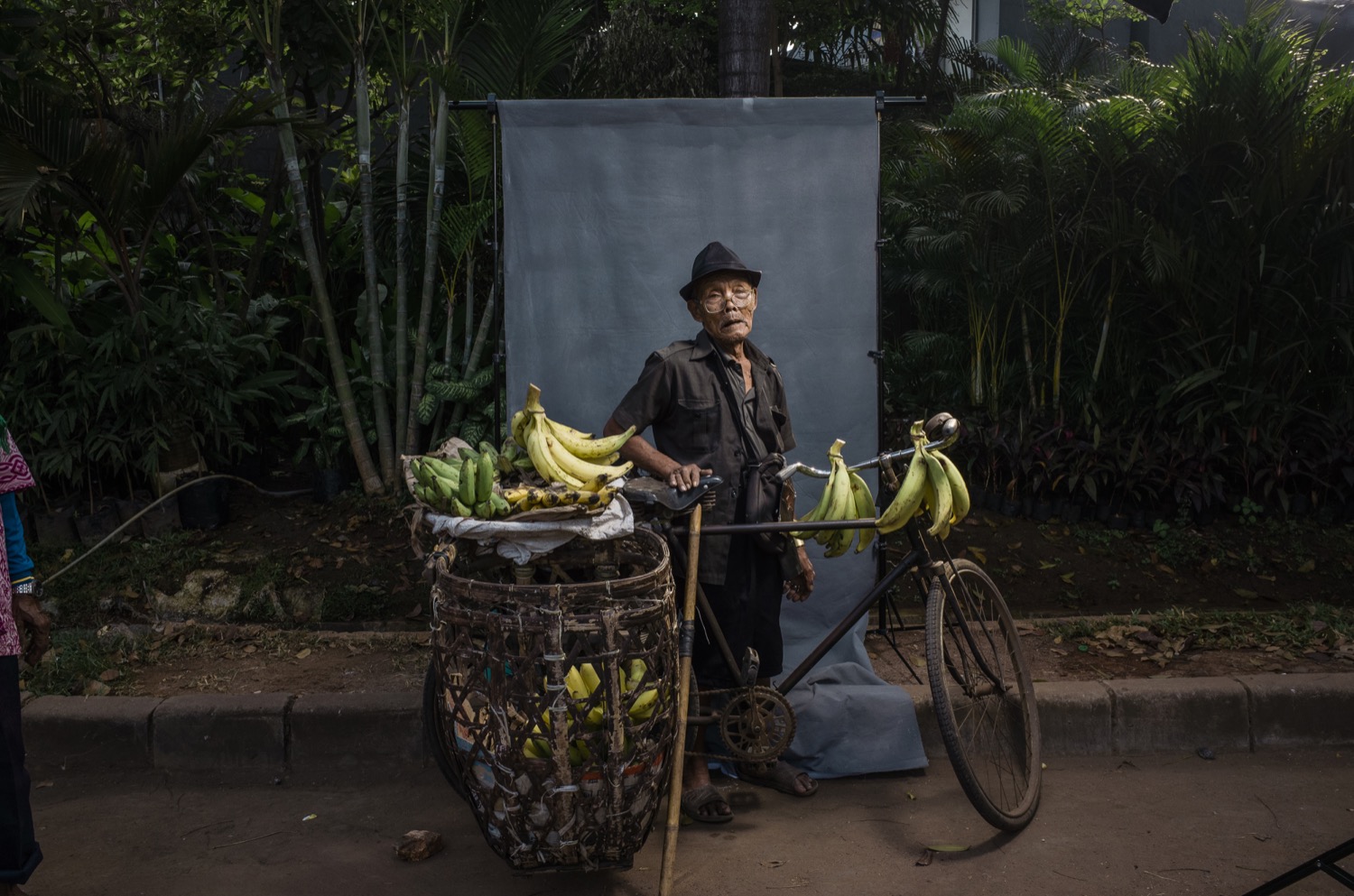
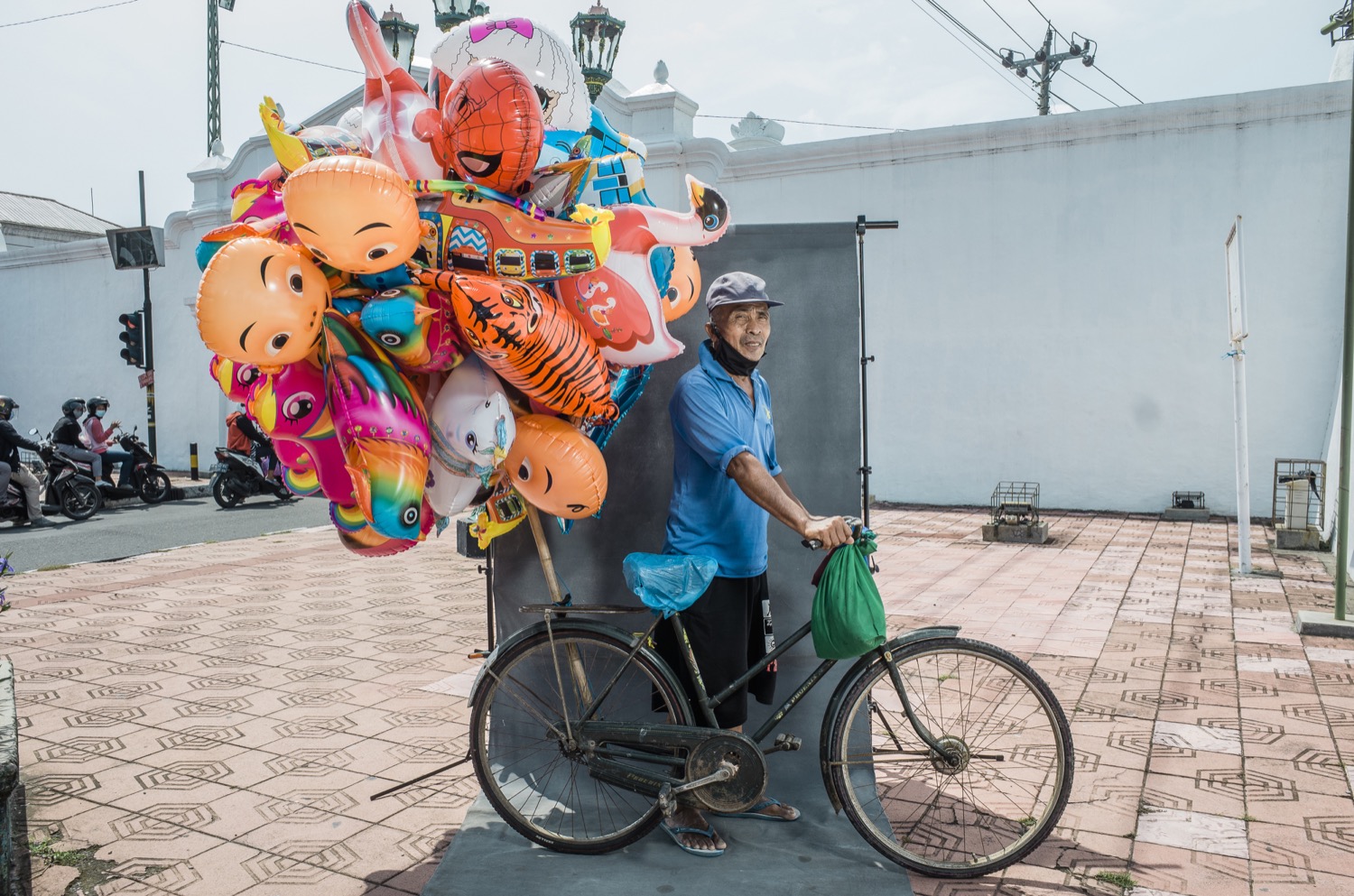
© Panji Indra Permana | This is Mr Bodong; he’s over 80, but he’s still full of enthusiasm, selling his wares on his old bicycle.
Panji Indra primarily works as a commercial photographer, specialising in portraits, beauty and fashion shoots, editorial work for magazines, and corporate portraits. Although these assignments form the core of his livelihood, they do not fully satisfy his creative, personal, or social aspirations. This motivated him to conceive an innovative project: photographing people on bicycles. The idea was inspired by the pandemic, during which many in Java took up cycling as a new hobby because public transport was no longer a viable option. His work also largely stopped during this period. “During the pandemic, cycling became a new hobby. People purchased bicycles and organised group rides. It was one of the few activities that could be done instead of attending concerts or indoor gatherings. I wanted to create a simple portrait series of those who started cycling during this pandemic—what we now call pandemic cyclists,” he explained.
Panji Indra had been cycling for years, so he embraced the new cycling trend and began photographing his enthusiastic fellow cyclists. “Some of my friends had never considered cycling before, but now they’re asking me where to buy a bike and how to start. I see this as a positive sign. They’re eager to try something new. More people are getting interested in cycling. I also started capturing how they dress while cycling. This eventually led to my vendor series, which grew out of that initial collection.”
I wanted to create a simple portrait series of those who started cycling during this pandemic—what we now call pandemic cyclists.
Kaki lima
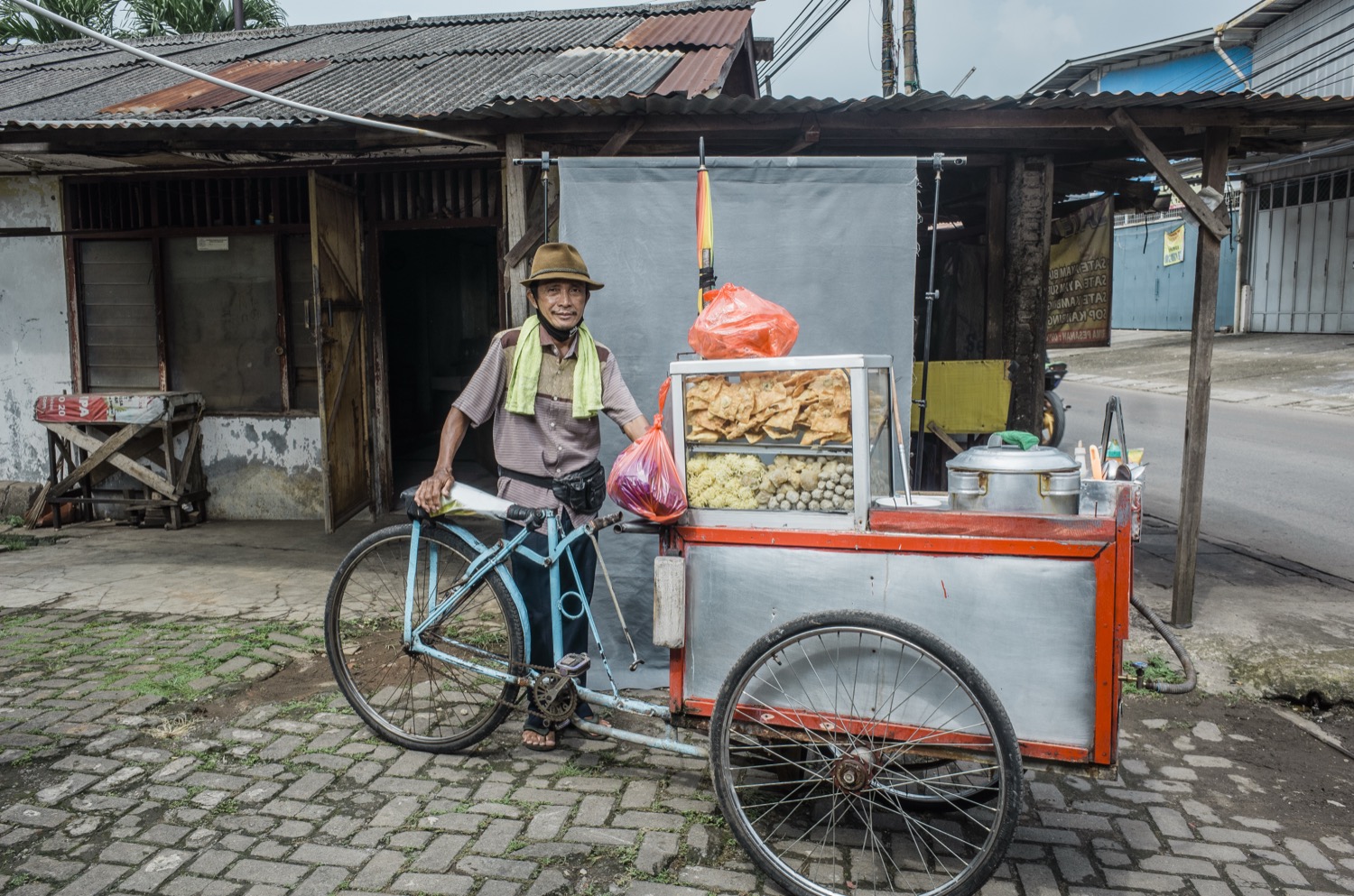
Java has a deep-rooted cultural tradition of kaki lima (street vendors) and mobile merchants who use modified bicycles to transport goods, as bicycles are very affordable. Major cities like Jakarta, Surabaya, and Bandung host thousands of brick-and-mortar bicycle shops, complemented by tens of thousands of informal mobile street vendors. This number increases with urban density and the demand for micro-entrepreneurship. Mobile bicycle vendors utilise their bikes as mobile stalls to sell instant noodles, hot coffee, tea, cigarettes, snacks, and drinks. It's a simple business to start: bicycles require little investment, no fuel, and enable vendors to access narrow streets inaccessible to cars.
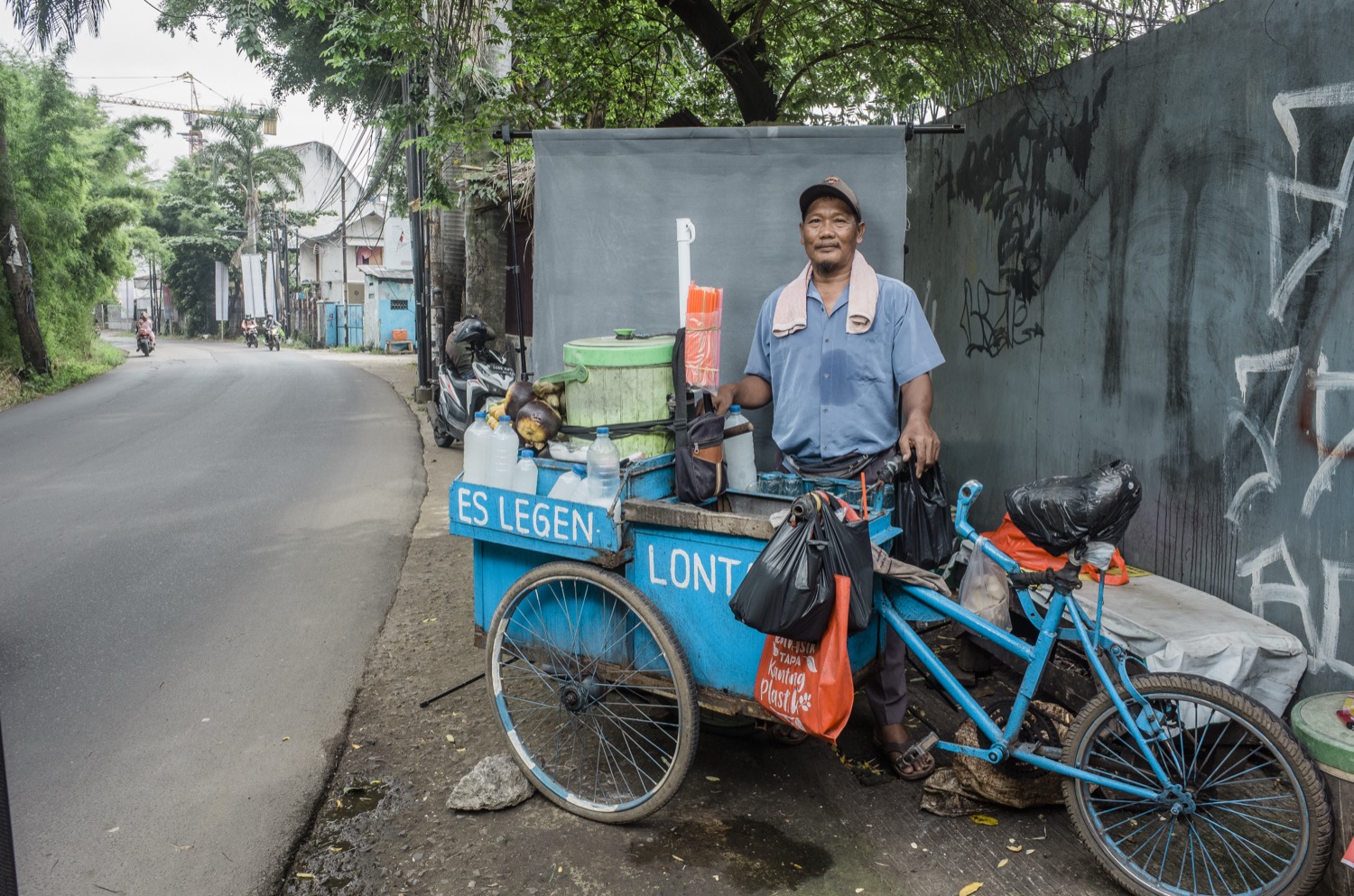
In Indra’s photographs, we see a wide range of merchandise that he not only photographed but also described. Panji Indra documented all his vendors with the meticulousness of a field anthropologist. For example, Mr. Sutrisno from Bojong has been selling crackers from his bike for five years, offering items like round fish crackers, rempeyek, and cheese sticks. Pak Ajo sells green bean porridge. Mr. Subejo has operated a stall selling palm fruit ice cream for 25 years. Mr. Soleh sells ice lollies, and Abah Aca has been selling beko candy floss since 1982. Mr. Tarmidi has been selling otak-otak, a savoury snack made from seasoned fish paste, coconut milk, garlic, shallots, egg, and spices, from his bike for over 20 years. Mrs. Tukiyem has been selling herbal remedies since 1976. Vendors not only sell food but also provide repairs or other services. For example, Mr. Ilyas has been a watch repairer for 20 years. Adyaputra has been pulling a fairground ride with rocking animals around the neighbourhood for seven years. Mas Giat from Pekalongan has been a travelling tailor since 2012.
One of my goals is to make them visible and to help people recognise their presence.
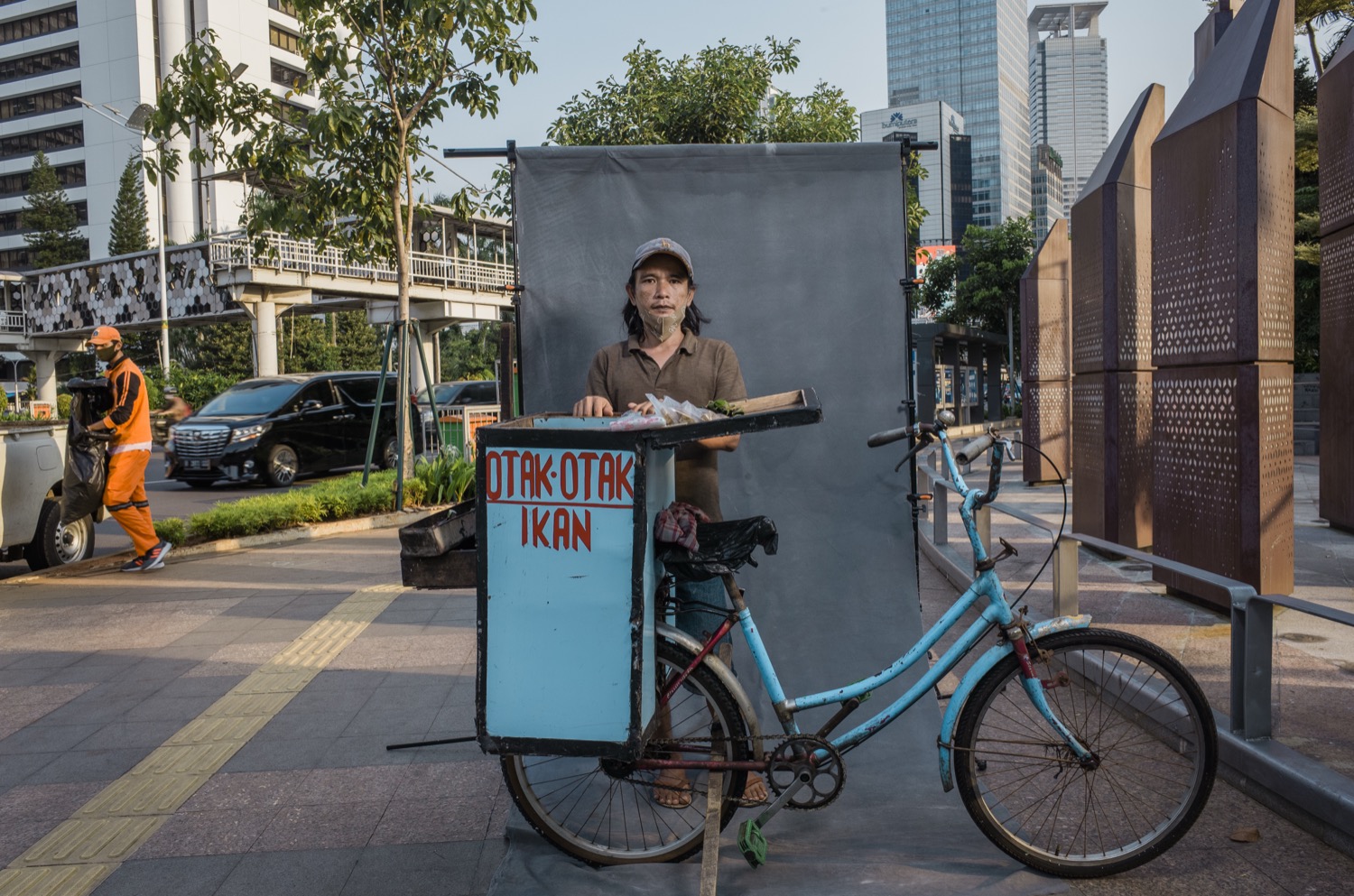
What sparked his interest in the vendors? “In Jakarta, we have many cycle sellers who are true road warriors, cycling daily. Yet, they often go unnoticed on the streets, as people tend to overlook them. They don't really dress well. They're not the typical pandemic cyclist with stylish clothing. I believe it's important to raise awareness about these cycle sellers. One of my goals is to make them visible and to help people recognise their presence.”
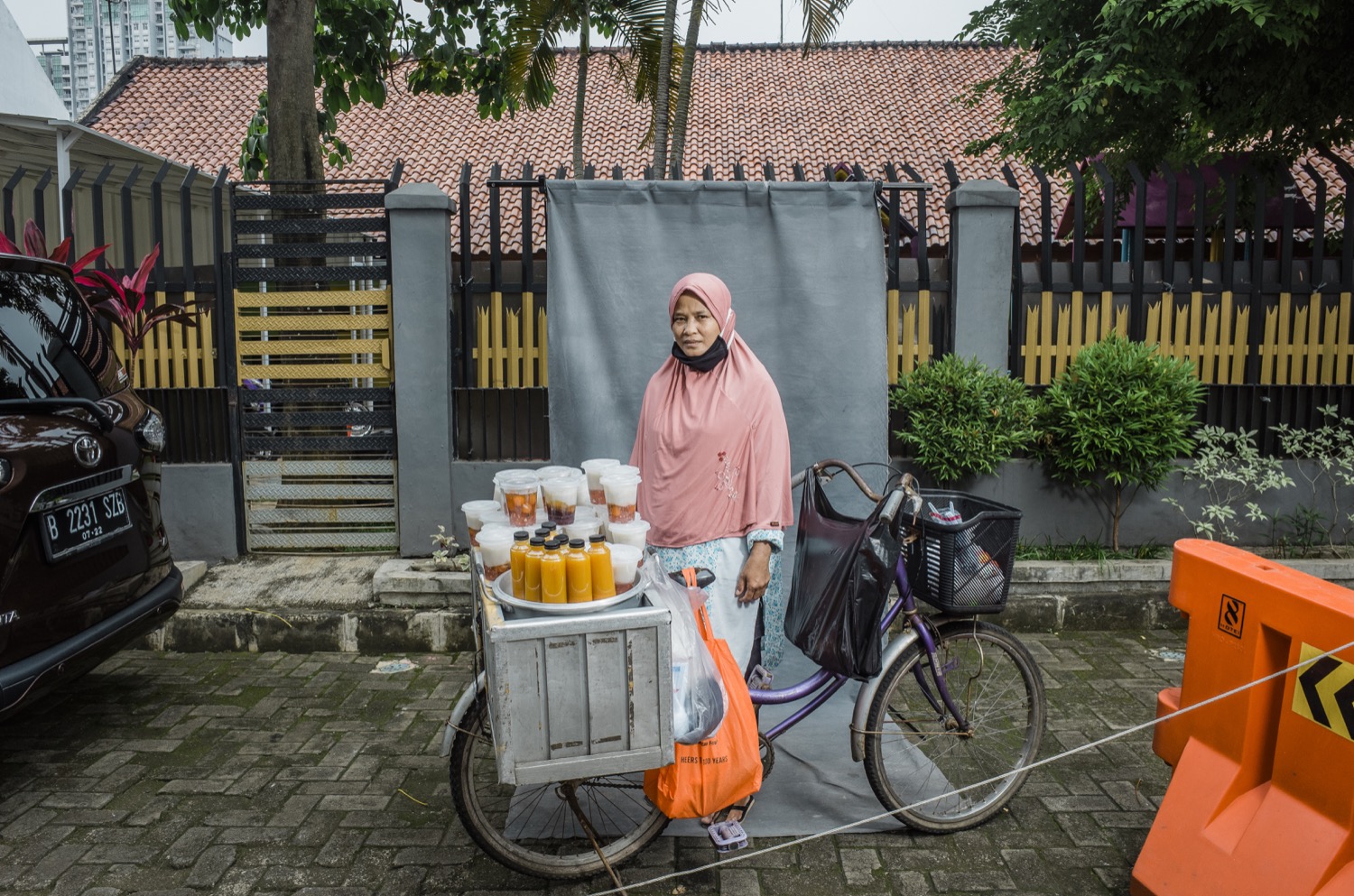
Grey backdrop and flashlight
A notable aspect of the cyclist portraits is the grey backdrop and the use of a flashlight. The backdrop does not cover the entire frame, leaving ample space to glimpse the location. “When I photograph them, I don't bring them into a studio. Usually, I shoot them where I meet them, sometimes in the street or on the side. And that's the location where I want to capture them. I want viewers to see that they are in a real location where I encountered them. Therefore, I aim to include the surroundings and environment. However, I also needed the backdrop to separate the subject from the background, without losing the sense of the environment.”
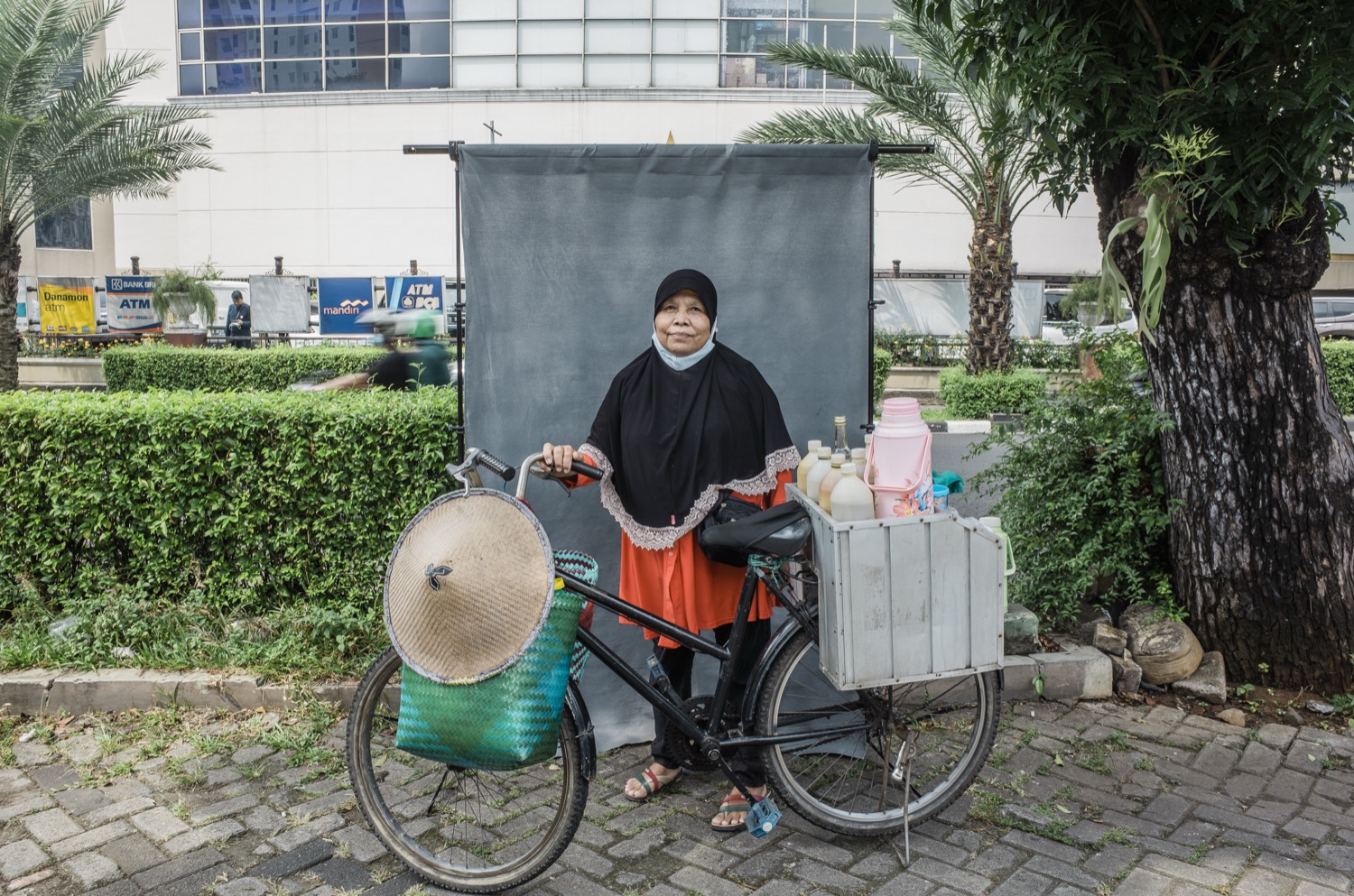
The flashlight, created with a small softbox, enhances the impression that the vendors are captured in a real studio setting. “I love the softbox's relatively subtle contrast, and I often position it slightly to the side to cast a shadow on the face. My goal is to make them feel as if I brought a studio to them. This way, I deliver the studio environment directly to them. The studio setting makes a significant difference: when they feel like they are in a studio, they feel more seen and valued. It provides greater fulfilment because it makes them feel special. Many of them have never been photographed professionally with proper lighting and a backdrop. I want to give them the experience of a street shoot, but with professional background and lighting. Afterwards, I send them printed copies of the photos.” Panji Indra personally carries all the studio equipment, including the backdrop, on his bicycle—demonstrating Indonesian ingenuity. It's highly practical and also helps him connect with his subjects on a societal level.
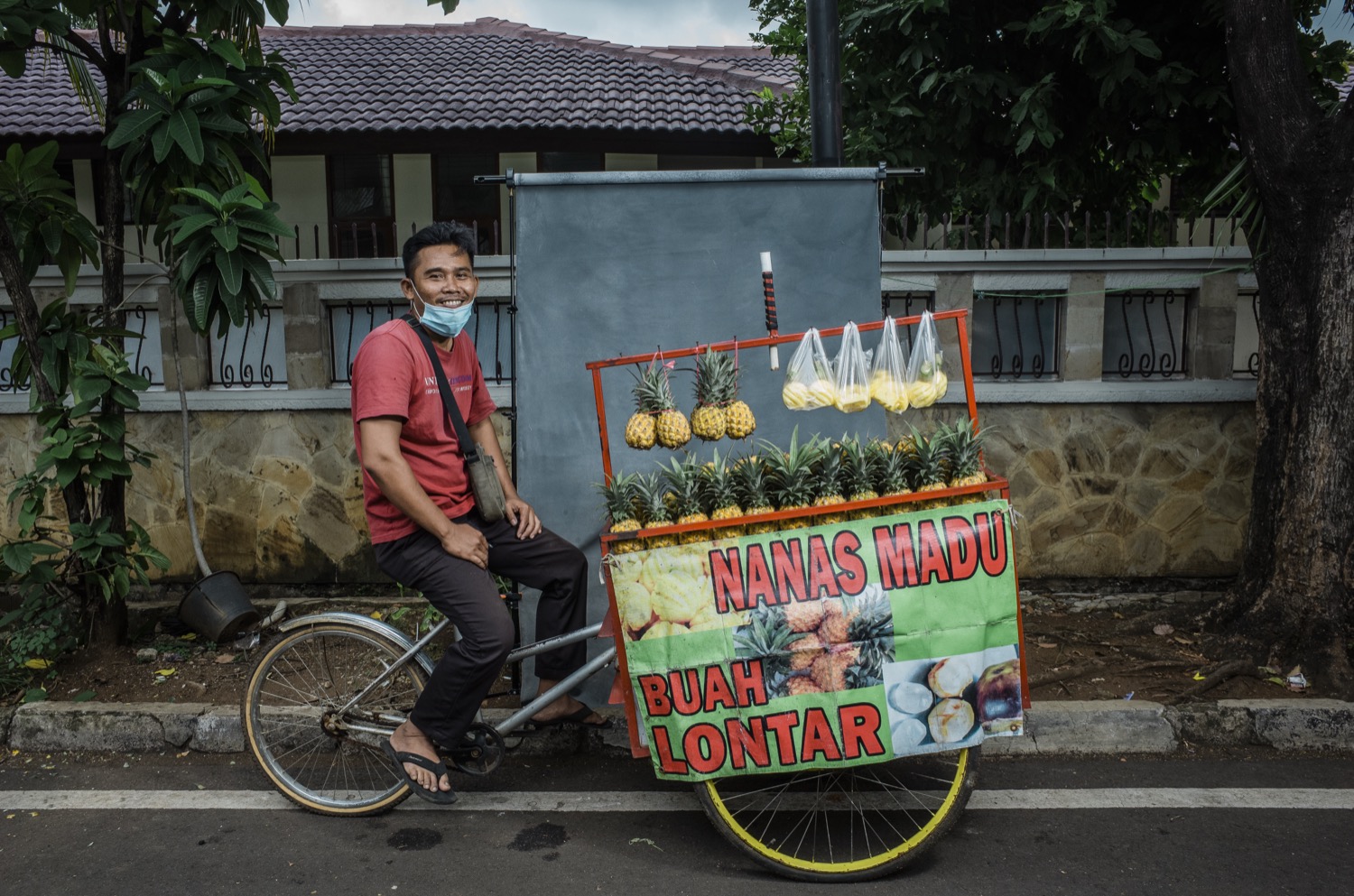
Humanity on wheels
The photographs of cyclist vendors serve as a humble yet powerful display of humanistic photography. They feature individuals often considered society's underclass who demonstrate hard work and ingenuity and contribute to a vibrant economy. “They ride their bicycles longer than contemporary cyclists. Most of these vendors have been cycling for 20 to 30 years. Some of the people I photographed work as bicycle vendors for almost their entire lives. They could sell within their own neighbourhood, but they chose to use a bicycle to reach broader markets. Some of them travel up to 30 kilometres daily just to get to their selling locations, often far from where they reside.”
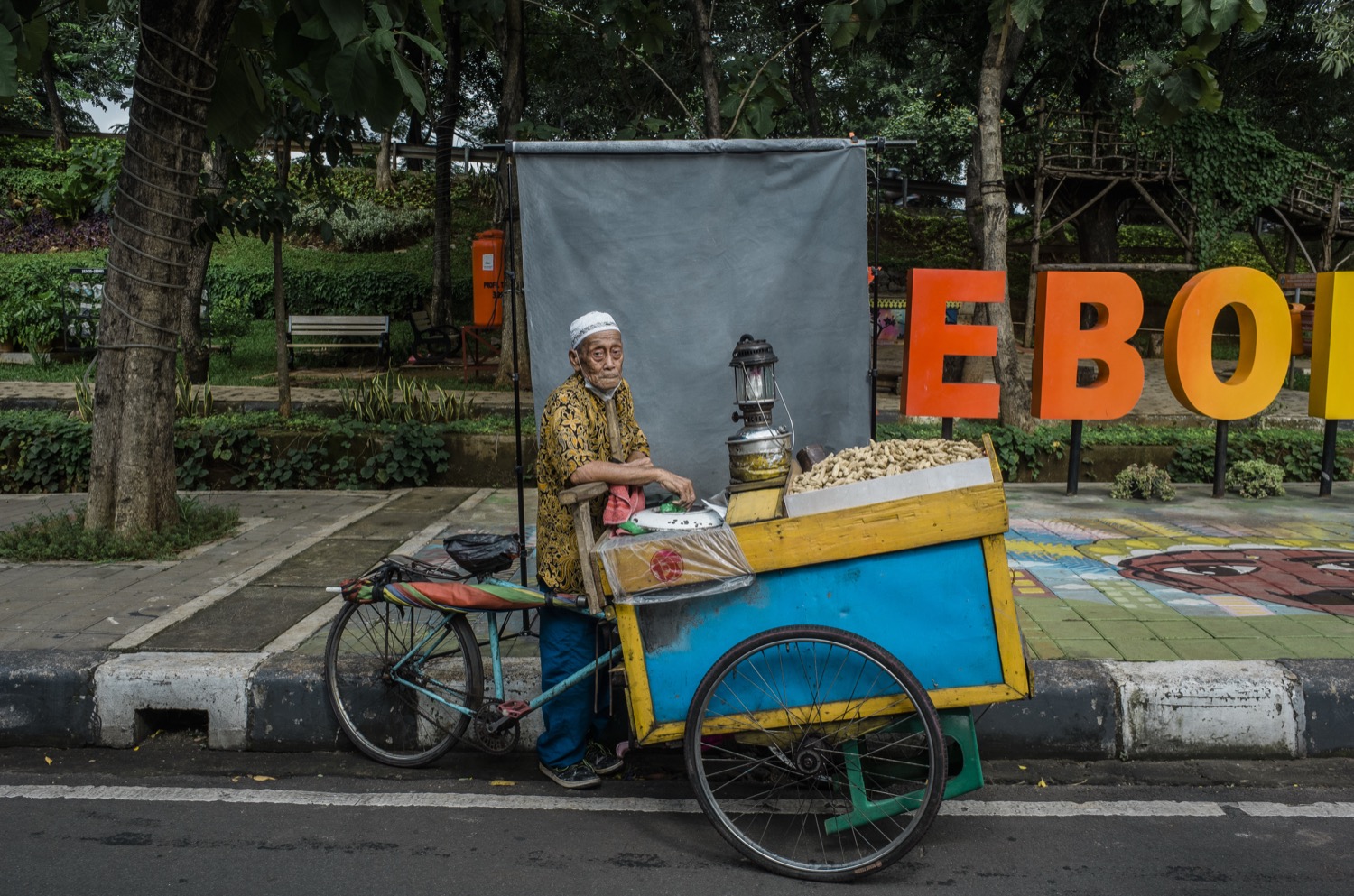
The Cyclist Portrait series extends beyond merely showcasing bicycles, vendors, or street economies. It highlights the rich diversity of humanity. Panji Indra invites us to observe and acknowledge the quiet dignity of those often overlooked. Through his grey backdrop, his light, and patient focus, he grants each vendor a moment of grace—offering a place in the frame, a name, a story, and a face. These images serve as a reminder that humanity shines in everyday perseverance, small acts of survival, and the simple beauty of ethical awareness.
.svg)


.svg)
.svg)

Panji Indra primarily works as a commercial photographer, specialising in portraits, beauty and fashion shoots, editorial work for magazines, and corporate portraits. Although these assignments form the core of his livelihood, they do not fully satisfy his creative, personal, or social aspirations. This motivated him to conceive an innovative project: photographing people on bicycles. The idea was inspired by the pandemic, during which many in Java took up cycling as a new hobby because public transport was no longer a viable option. His work also largely stopped during this period. “During the pandemic, cycling became a new hobby. People purchased bicycles and organised group rides. It was one of the few activities that could be done instead of attending concerts or indoor gatherings. I wanted to create a simple portrait series of those who started cycling during this pandemic—what we now call pandemic cyclists,” he explained.
Panji Indra had been cycling for years, so he embraced the new cycling trend and began photographing his enthusiastic fellow cyclists. “Some of my friends had never considered cycling before, but now they’re asking me where to buy a bike and how to start. I see this as a positive sign. They’re eager to try something new. More people are getting interested in cycling. I also started capturing how they dress while cycling. This eventually led to my vendor series, which grew out of that initial collection.”
I wanted to create a simple portrait series of those who started cycling during this pandemic—what we now call pandemic cyclists.
Kaki lima
Java has a deep-rooted cultural tradition of kaki lima (street vendors) and mobile merchants who use modified bicycles to transport goods, as bicycles are very affordable. Major cities like Jakarta, Surabaya, and Bandung host thousands of brick-and-mortar bicycle shops, complemented by tens of thousands of informal mobile street vendors. This number increases with urban density and the demand for micro-entrepreneurship. Mobile bicycle vendors utilise their bikes as mobile stalls to sell instant noodles, hot coffee, tea, cigarettes, snacks, and drinks. It's a simple business to start: bicycles require little investment, no fuel, and enable vendors to access narrow streets inaccessible to cars.
In Indra’s photographs, we see a wide range of merchandise that he not only photographed but also described. Panji Indra documented all his vendors with the meticulousness of a field anthropologist. For example, Mr. Sutrisno from Bojong has been selling crackers from his bike for five years, offering items like round fish crackers, rempeyek, and cheese sticks. Pak Ajo sells green bean porridge. Mr. Subejo has operated a stall selling palm fruit ice cream for 25 years. Mr. Soleh sells ice lollies, and Abah Aca has been selling beko candy floss since 1982. Mr. Tarmidi has been selling otak-otak, a savoury snack made from seasoned fish paste, coconut milk, garlic, shallots, egg, and spices, from his bike for over 20 years. Mrs. Tukiyem has been selling herbal remedies since 1976. Vendors not only sell food but also provide repairs or other services. For example, Mr. Ilyas has been a watch repairer for 20 years. Adyaputra has been pulling a fairground ride with rocking animals around the neighbourhood for seven years. Mas Giat from Pekalongan has been a travelling tailor since 2012.
One of my goals is to make them visible and to help people recognise their presence.
What sparked his interest in the vendors? “In Jakarta, we have many cycle sellers who are true road warriors, cycling daily. Yet, they often go unnoticed on the streets, as people tend to overlook them. They don't really dress well. They're not the typical pandemic cyclist with stylish clothing. I believe it's important to raise awareness about these cycle sellers. One of my goals is to make them visible and to help people recognise their presence.”
Grey backdrop and flashlight
A notable aspect of the cyclist portraits is the grey backdrop and the use of a flashlight. The backdrop does not cover the entire frame, leaving ample space to glimpse the location. “When I photograph them, I don't bring them into a studio. Usually, I shoot them where I meet them, sometimes in the street or on the side. And that's the location where I want to capture them. I want viewers to see that they are in a real location where I encountered them. Therefore, I aim to include the surroundings and environment. However, I also needed the backdrop to separate the subject from the background, without losing the sense of the environment.”
The flashlight, created with a small softbox, enhances the impression that the vendors are captured in a real studio setting. “I love the softbox's relatively subtle contrast, and I often position it slightly to the side to cast a shadow on the face. My goal is to make them feel as if I brought a studio to them. This way, I deliver the studio environment directly to them. The studio setting makes a significant difference: when they feel like they are in a studio, they feel more seen and valued. It provides greater fulfilment because it makes them feel special. Many of them have never been photographed professionally with proper lighting and a backdrop. I want to give them the experience of a street shoot, but with professional background and lighting. Afterwards, I send them printed copies of the photos.” Panji Indra personally carries all the studio equipment, including the backdrop, on his bicycle—demonstrating Indonesian ingenuity. It's highly practical and also helps him connect with his subjects on a societal level.
Humanity on wheels
The photographs of cyclist vendors serve as a humble yet powerful display of humanistic photography. They feature individuals often considered society's underclass who demonstrate hard work and ingenuity and contribute to a vibrant economy. “They ride their bicycles longer than contemporary cyclists. Most of these vendors have been cycling for 20 to 30 years. Some of the people I photographed work as bicycle vendors for almost their entire lives. They could sell within their own neighbourhood, but they chose to use a bicycle to reach broader markets. Some of them travel up to 30 kilometres daily just to get to their selling locations, often far from where they reside.”
The Cyclist Portrait series extends beyond merely showcasing bicycles, vendors, or street economies. It highlights the rich diversity of humanity. Panji Indra invites us to observe and acknowledge the quiet dignity of those often overlooked. Through his grey backdrop, his light, and patient focus, he grants each vendor a moment of grace—offering a place in the frame, a name, a story, and a face. These images serve as a reminder that humanity shines in everyday perseverance, small acts of survival, and the simple beauty of ethical awareness.
Panji Indra primarily works as a commercial photographer, specialising in portraits, beauty and fashion shoots, editorial work for magazines, and corporate portraits. Although these assignments form the core of his livelihood, they do not fully satisfy his creative, personal, or social aspirations. This motivated him to conceive an innovative project: photographing people on bicycles. The idea was inspired by the pandemic, during which many in Java took up cycling as a new hobby because public transport was no longer a viable option. His work also largely stopped during this period. “During the pandemic, cycling became a new hobby. People purchased bicycles and organised group rides. It was one of the few activities that could be done instead of attending concerts or indoor gatherings. I wanted to create a simple portrait series of those who started cycling during this pandemic—what we now call pandemic cyclists,” he explained.
Panji Indra had been cycling for years, so he embraced the new cycling trend and began photographing his enthusiastic fellow cyclists. “Some of my friends had never considered cycling before, but now they’re asking me where to buy a bike and how to start. I see this as a positive sign. They’re eager to try something new. More people are getting interested in cycling. I also started capturing how they dress while cycling. This eventually led to my vendor series, which grew out of that initial collection.”
I wanted to create a simple portrait series of those who started cycling during this pandemic—what we now call pandemic cyclists.
Kaki lima
Java has a deep-rooted cultural tradition of kaki lima (street vendors) and mobile merchants who use modified bicycles to transport goods, as bicycles are very affordable. Major cities like Jakarta, Surabaya, and Bandung host thousands of brick-and-mortar bicycle shops, complemented by tens of thousands of informal mobile street vendors. This number increases with urban density and the demand for micro-entrepreneurship. Mobile bicycle vendors utilise their bikes as mobile stalls to sell instant noodles, hot coffee, tea, cigarettes, snacks, and drinks. It's a simple business to start: bicycles require little investment, no fuel, and enable vendors to access narrow streets inaccessible to cars.
In Indra’s photographs, we see a wide range of merchandise that he not only photographed but also described. Panji Indra documented all his vendors with the meticulousness of a field anthropologist. For example, Mr. Sutrisno from Bojong has been selling crackers from his bike for five years, offering items like round fish crackers, rempeyek, and cheese sticks. Pak Ajo sells green bean porridge. Mr. Subejo has operated a stall selling palm fruit ice cream for 25 years. Mr. Soleh sells ice lollies, and Abah Aca has been selling beko candy floss since 1982. Mr. Tarmidi has been selling otak-otak, a savoury snack made from seasoned fish paste, coconut milk, garlic, shallots, egg, and spices, from his bike for over 20 years. Mrs. Tukiyem has been selling herbal remedies since 1976. Vendors not only sell food but also provide repairs or other services. For example, Mr. Ilyas has been a watch repairer for 20 years. Adyaputra has been pulling a fairground ride with rocking animals around the neighbourhood for seven years. Mas Giat from Pekalongan has been a travelling tailor since 2012.
One of my goals is to make them visible and to help people recognise their presence.
What sparked his interest in the vendors? “In Jakarta, we have many cycle sellers who are true road warriors, cycling daily. Yet, they often go unnoticed on the streets, as people tend to overlook them. They don't really dress well. They're not the typical pandemic cyclist with stylish clothing. I believe it's important to raise awareness about these cycle sellers. One of my goals is to make them visible and to help people recognise their presence.”
Grey backdrop and flashlight
A notable aspect of the cyclist portraits is the grey backdrop and the use of a flashlight. The backdrop does not cover the entire frame, leaving ample space to glimpse the location. “When I photograph them, I don't bring them into a studio. Usually, I shoot them where I meet them, sometimes in the street or on the side. And that's the location where I want to capture them. I want viewers to see that they are in a real location where I encountered them. Therefore, I aim to include the surroundings and environment. However, I also needed the backdrop to separate the subject from the background, without losing the sense of the environment.”
The flashlight, created with a small softbox, enhances the impression that the vendors are captured in a real studio setting. “I love the softbox's relatively subtle contrast, and I often position it slightly to the side to cast a shadow on the face. My goal is to make them feel as if I brought a studio to them. This way, I deliver the studio environment directly to them. The studio setting makes a significant difference: when they feel like they are in a studio, they feel more seen and valued. It provides greater fulfilment because it makes them feel special. Many of them have never been photographed professionally with proper lighting and a backdrop. I want to give them the experience of a street shoot, but with professional background and lighting. Afterwards, I send them printed copies of the photos.” Panji Indra personally carries all the studio equipment, including the backdrop, on his bicycle—demonstrating Indonesian ingenuity. It's highly practical and also helps him connect with his subjects on a societal level.
Humanity on wheels
The photographs of cyclist vendors serve as a humble yet powerful display of humanistic photography. They feature individuals often considered society's underclass who demonstrate hard work and ingenuity and contribute to a vibrant economy. “They ride their bicycles longer than contemporary cyclists. Most of these vendors have been cycling for 20 to 30 years. Some of the people I photographed work as bicycle vendors for almost their entire lives. They could sell within their own neighbourhood, but they chose to use a bicycle to reach broader markets. Some of them travel up to 30 kilometres daily just to get to their selling locations, often far from where they reside.”
The Cyclist Portrait series extends beyond merely showcasing bicycles, vendors, or street economies. It highlights the rich diversity of humanity. Panji Indra invites us to observe and acknowledge the quiet dignity of those often overlooked. Through his grey backdrop, his light, and patient focus, he grants each vendor a moment of grace—offering a place in the frame, a name, a story, and a face. These images serve as a reminder that humanity shines in everyday perseverance, small acts of survival, and the simple beauty of ethical awareness.