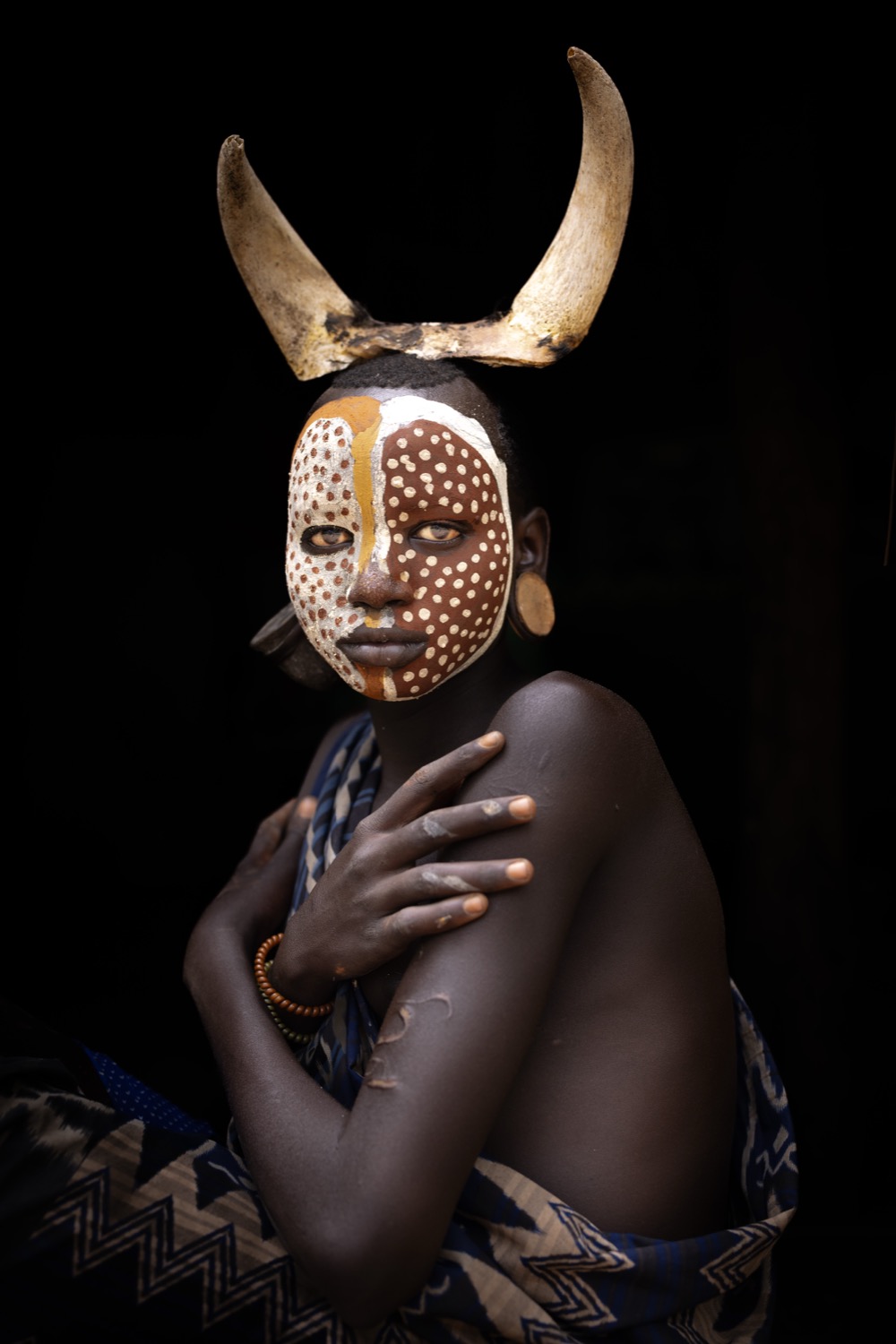
© Matilde Simas | Suri Guardians
Matilde Simas is drawn to subjects through encounter and connection. She approaches each project without preset narratives, regularly starting by listening and spending time in a place before taking photos. Visual storytelling serves as the framework that unites her images, each contributing to a larger story rather than a single statement. “I look for moments where personal experience intersects with broader social, cultural, or environmental realities. What interests me is not spectacle, but presence—how people inhabit their worlds and carry histories, responsibilities, and knowledge that may not be immediately visible.”
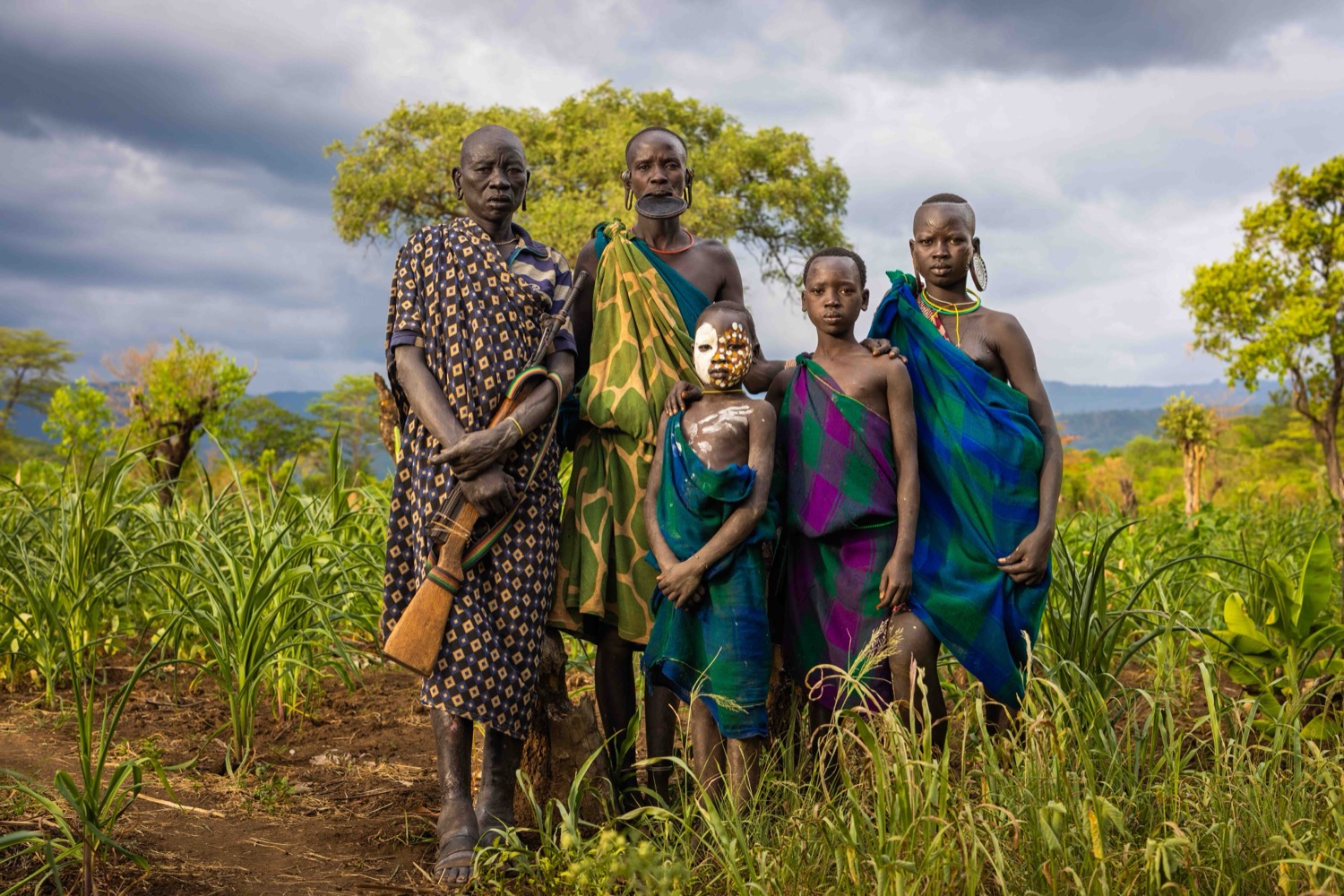
Simas views photography not only as a way to observe, but also as a form of affirmation. Her work reflects a conviction that photography can serve as both a record and a connector. “I am interested in how images can encompass complexity, highlight shared human experiences, and encourage viewers to rethink stories influenced by distance, stereotypes, or inequalities. Through this work, I aim to foster spaces for recognition, empathy, and meaningful engagement with lives and landscapes experiencing significant change.”
The American photographer develops visual stories that inspire viewers to seek deeper links between people, places, and experiences. Her work with groups affected by trauma, displacement, and social change has heightened her awareness of dignity, trust, and the emotional impact images can carry. “Rather than concentrating only on suffering, I am drawn to presence, resilience, and the places where vulnerability and strength meet. I aim to go beyond images that exoticise or oversimplify indigenous life and instead produce portraits rooted in respect and collaboration.”
Land, water, and guardianship
Ethiopia's Omo Valley is home to the Suri people, whose connection to land and water is deeply intertwined with their identity, history, and survival. The series Suri Guardians features figures like the Land and Water Guardians, whose roles exemplify the strong bond between community and environment. Matilde Simas states: “Their roles reflect an understanding of land and water as living systems that contain memory, ancestry, and continuity. Water is especially experienced as memory, embodying the presence of ancestors, cultural knowledge, and the ongoing life of these inhabitants through its flow.”
Their roles reflect an understanding of land and water as living systems that contain memory, ancestry, and continuity.
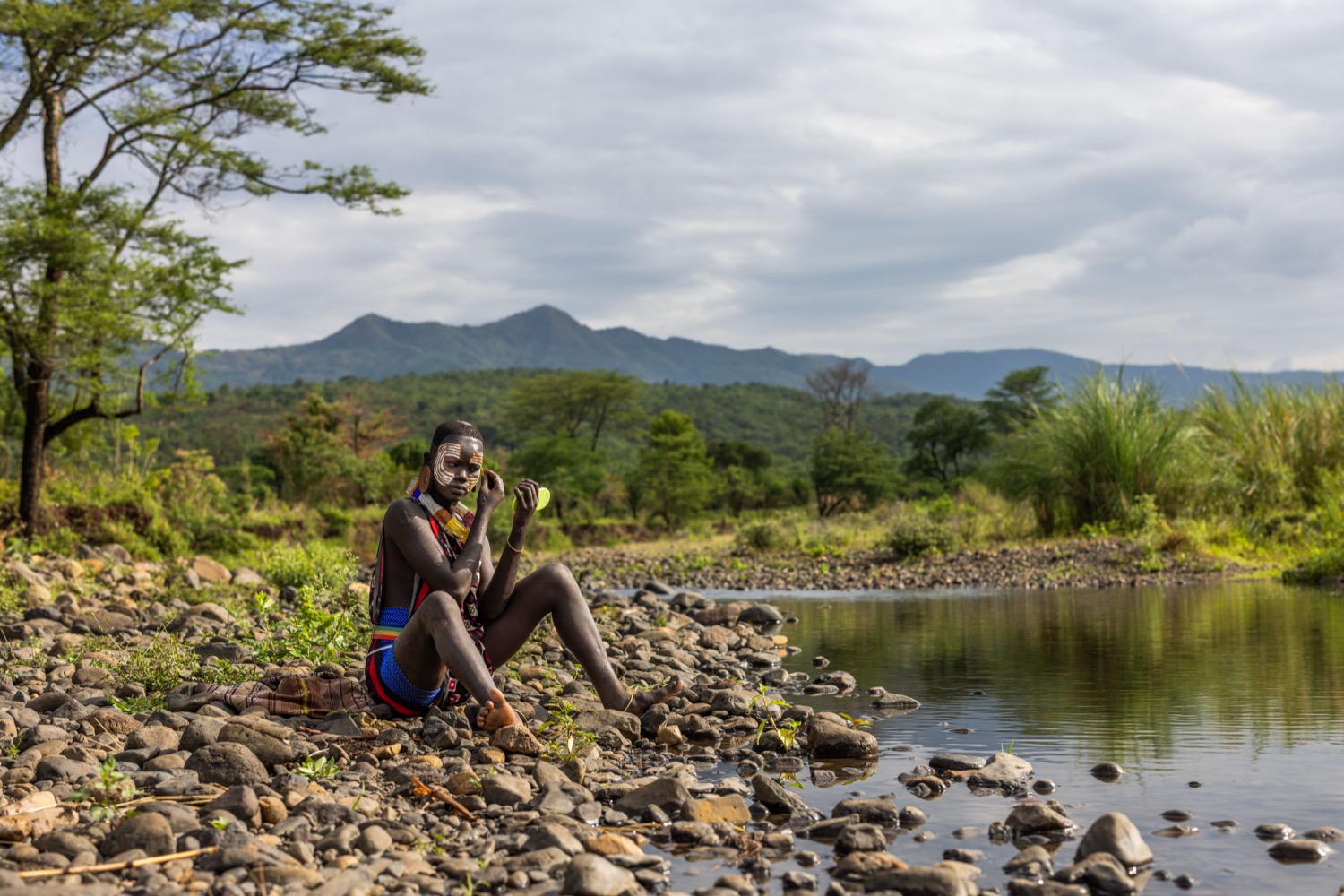
A land guardian is responsible for protecting the land, its resources, and the traditions associated with it. This includes safeguarding sacred sites, maintaining cultural practices, and ensuring ecological balance for future generations. “As globalisation and ecological pressures alter the region, these photos serve not only as portraits but also as records of cultural knowledge and continuity. I hope Suri Guardians fosters discussions on cultural preservation, environmental change, and the portrayal of indigenous peoples through photography.”
Seasonal flooding of the Omo River
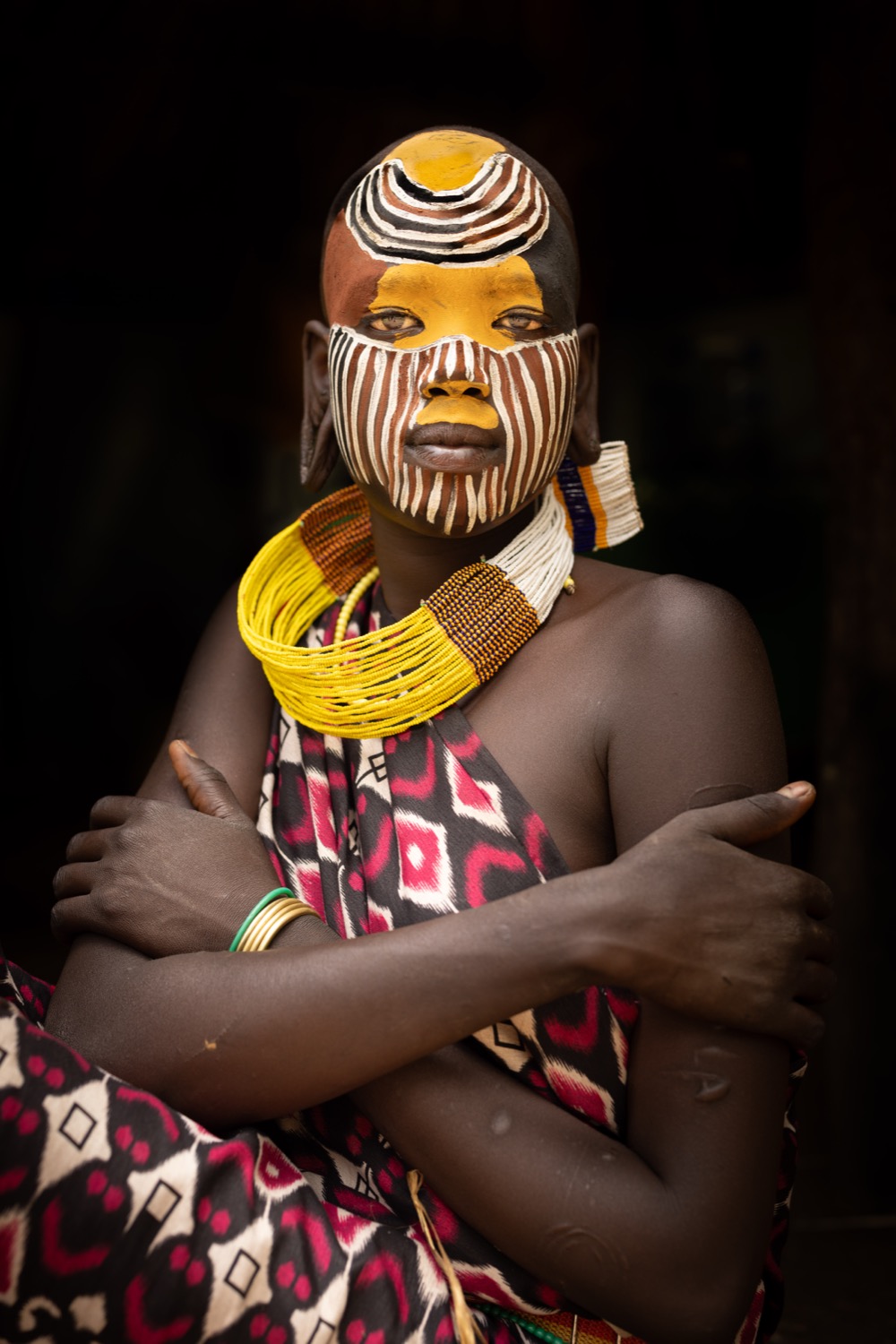
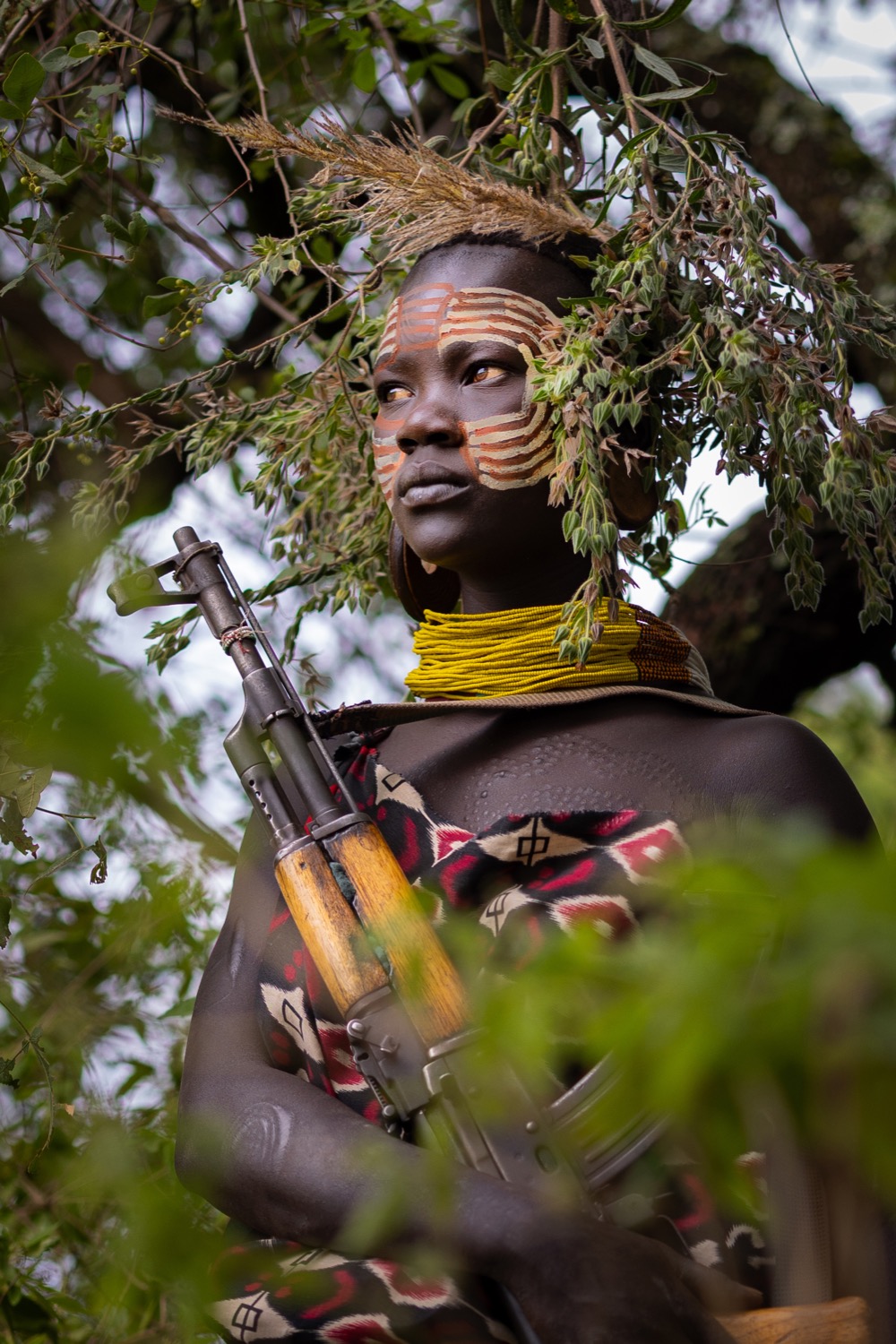
The portraits of Suri Guardians are rooted in the lives of women who act as living links between their community, land, and collective memory. Marilla, a Water Guardian, explained her face paint as reflecting this bond: “These patterns are similar to the river — ever-changing and connected. They serve as a reminder that we are part of this land, like the flowers and trees. I protect the water because it is vital to my people. The river is more than a source of life; it's our link to the land, ancestors, and future. By safeguarding it, I help preserve our traditions, culture, and way of life.”
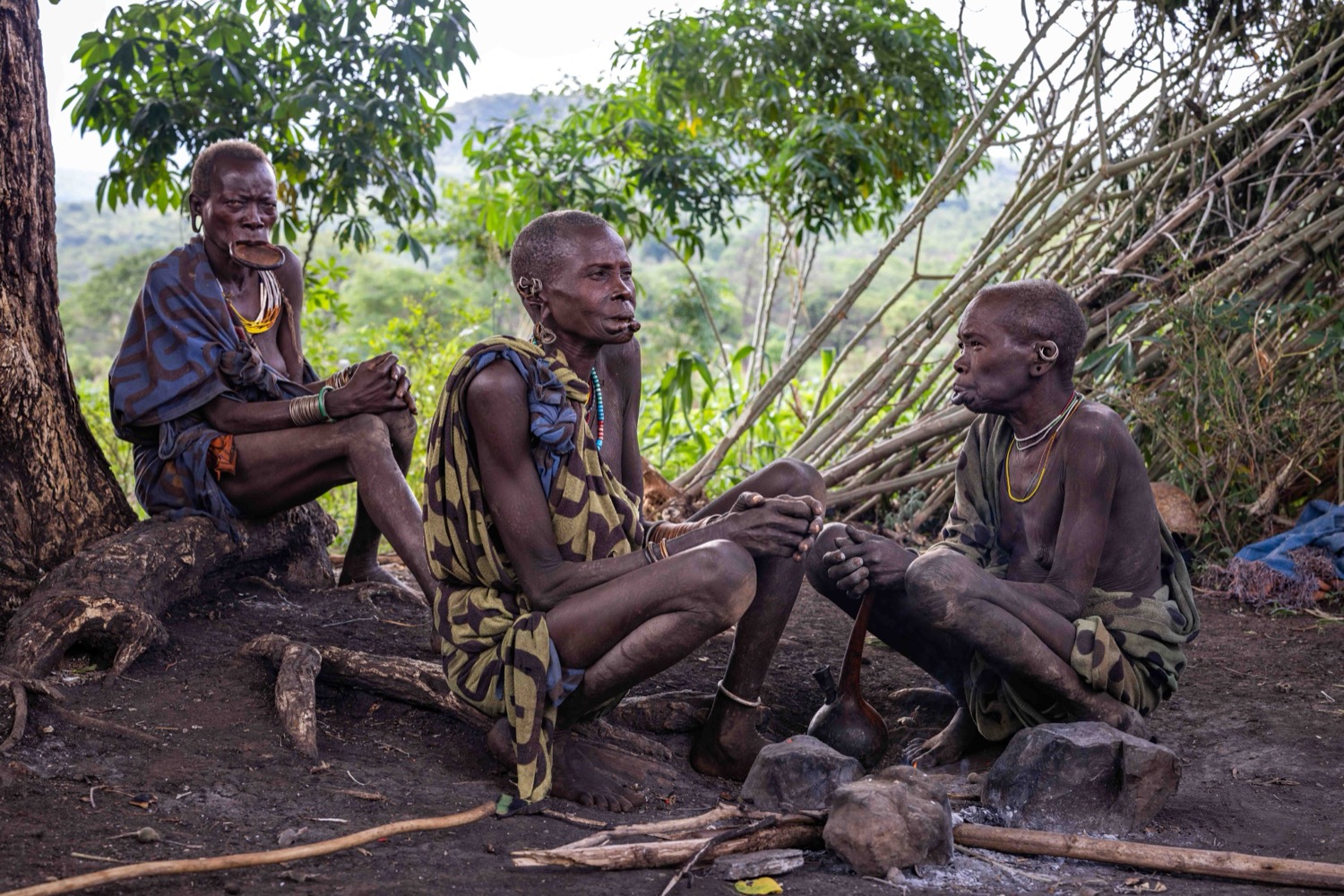
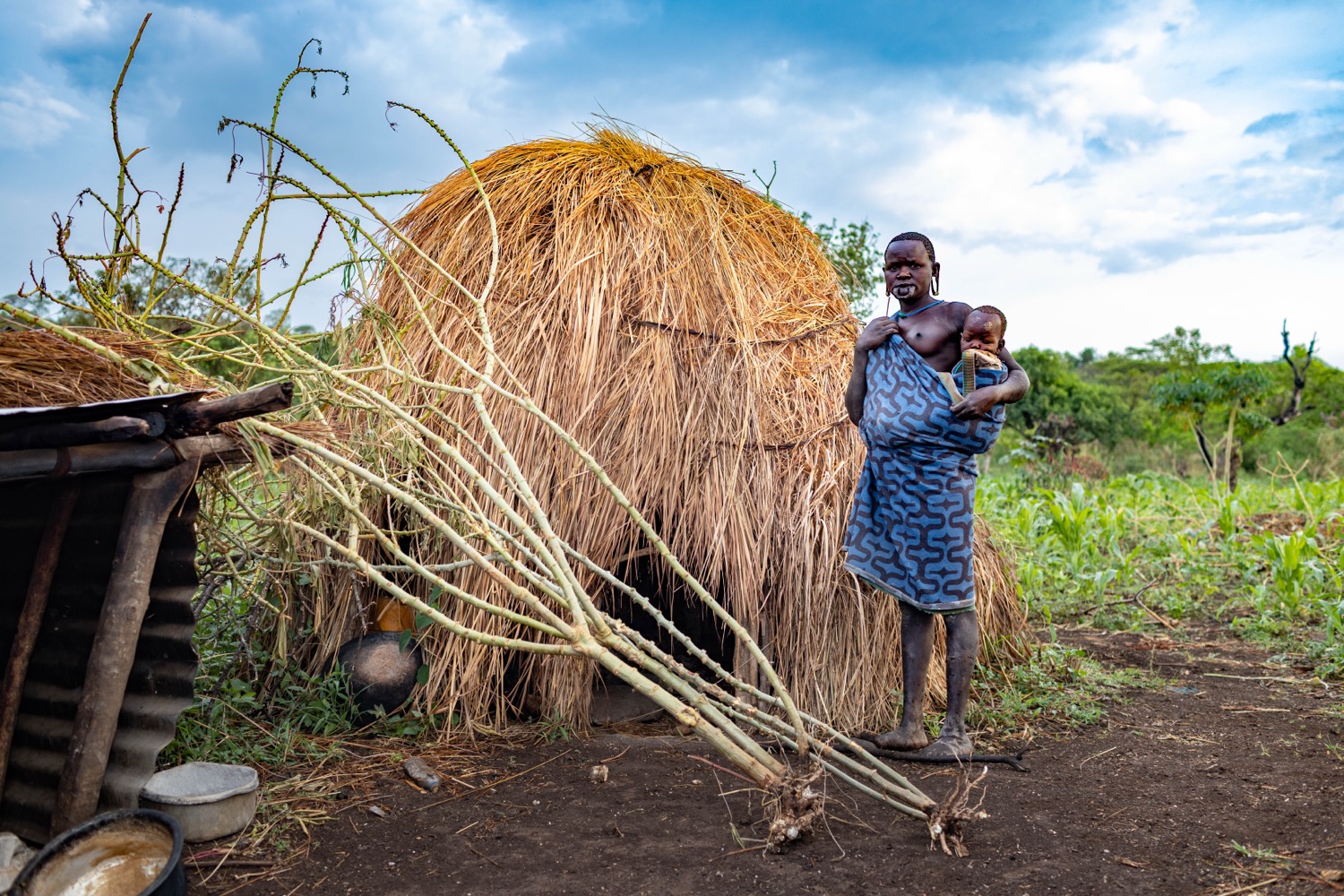
The Omo River, once characterised by seasonal flooding, has been significantly impacted by upstream dams and extensive agriculture. This has disrupted ecological cycles and heightened issues like resource scarcity, food insecurity, and intertribal tensions. Despite these changes, women continue to be essential for survival—fetching water, supporting their families, and safeguarding the cultural knowledge linked to the land. “These portraits challenge narratives that depict these communities through lack, instead celebrating their strength, continuity, and resilience. Suri Guardians serves both as a visual tribute and a recognition of women’s vital roles as guardians of culture and the environment, highlighting the urgent need to protect both amid rapid environmental changes.”
These portraits challenge narratives that depict these communities through lack, instead celebrating their strength, continuity, and resilience.
Staged portraits and in-between moments
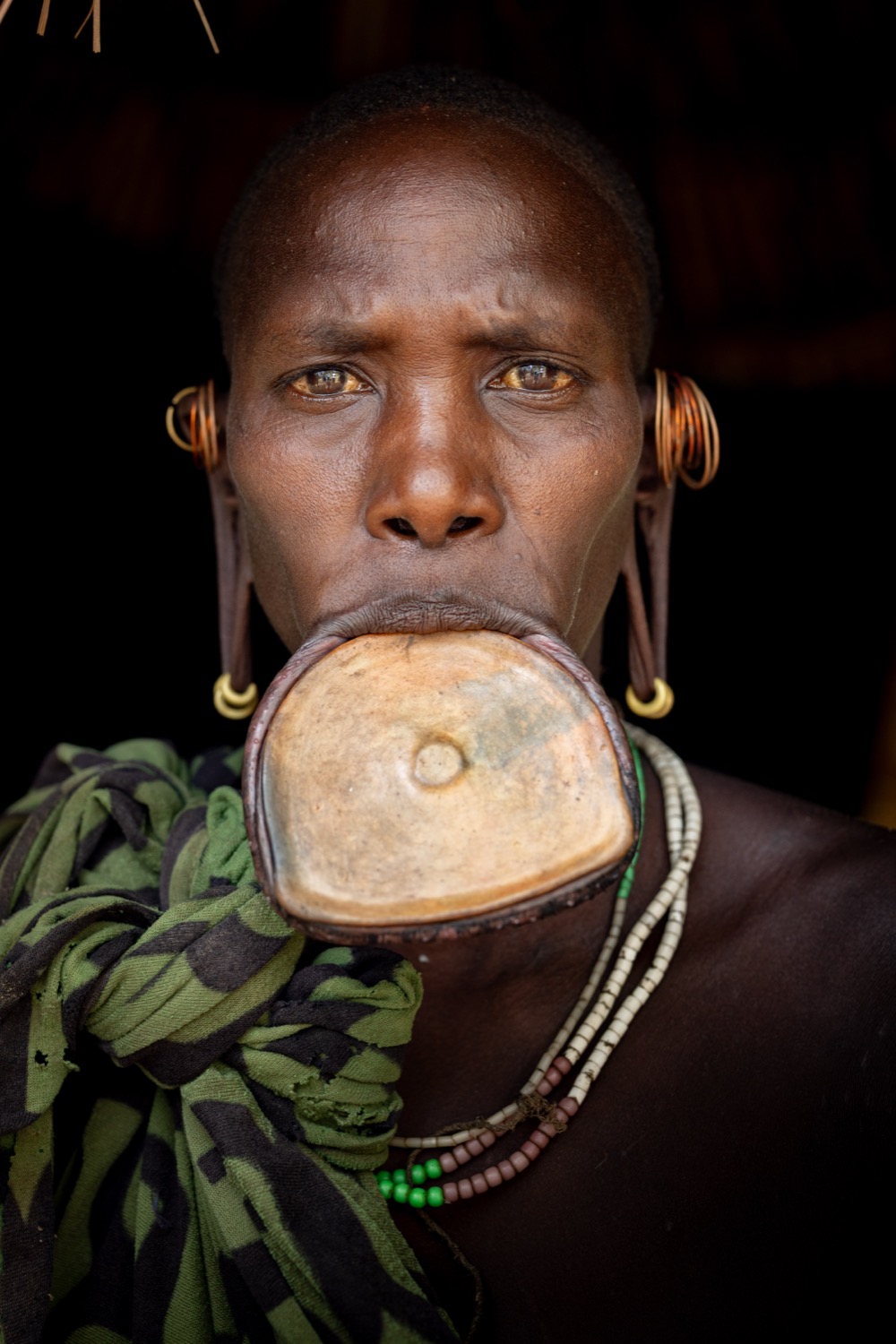
Throughout her work, Simas explores recurring themes that oscillate between formal portraiture and intimate, everyday moments. In Suri Guardians, this is expressed through a dual method: composed portraits set against a black background and environmental shots within the landscape. The black backgrounds emphasise the presence of the subjects, while the environmental portraits and landscapes place them within the Omo Valley, where land, light, and material culture are intrinsically linked to their community.
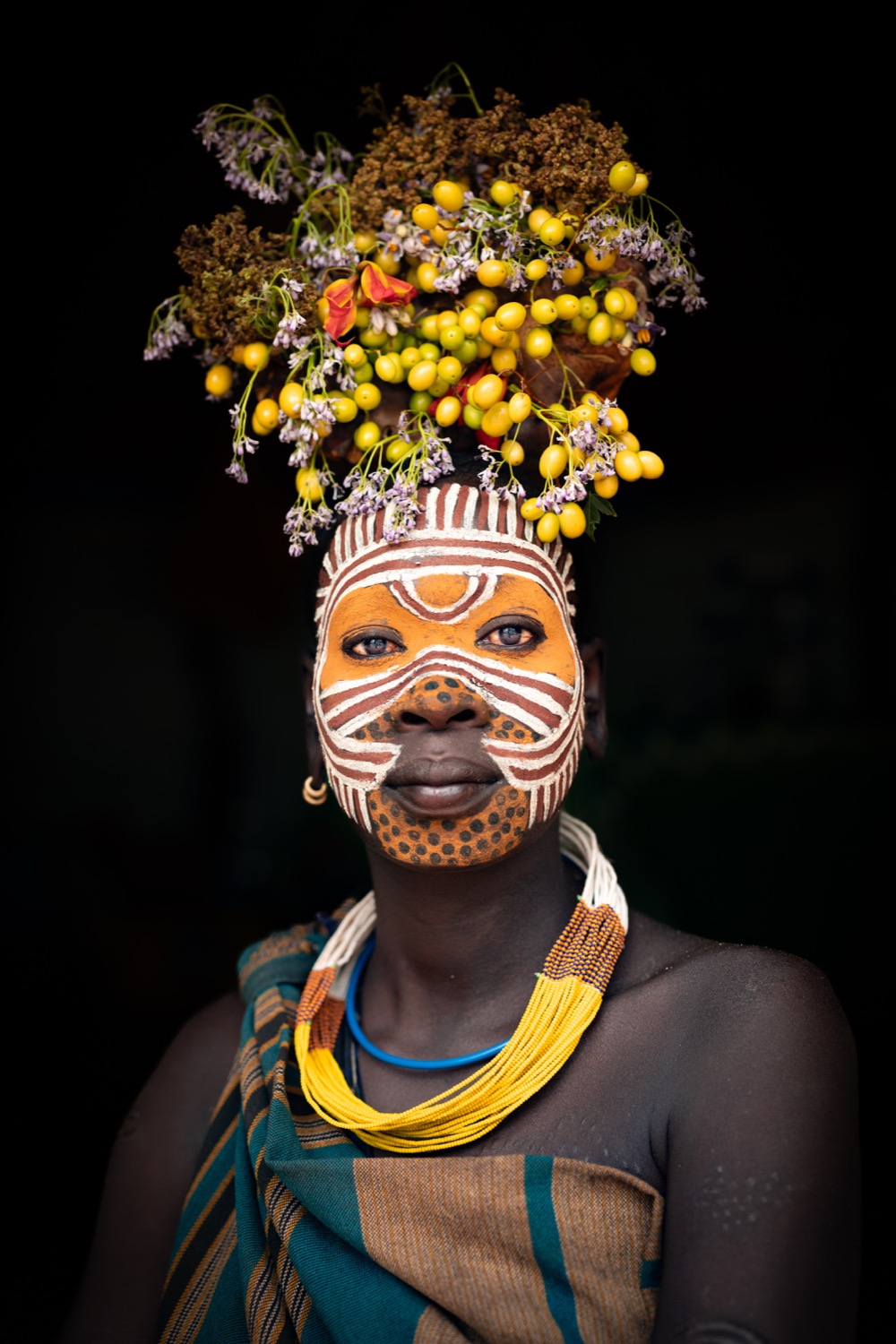
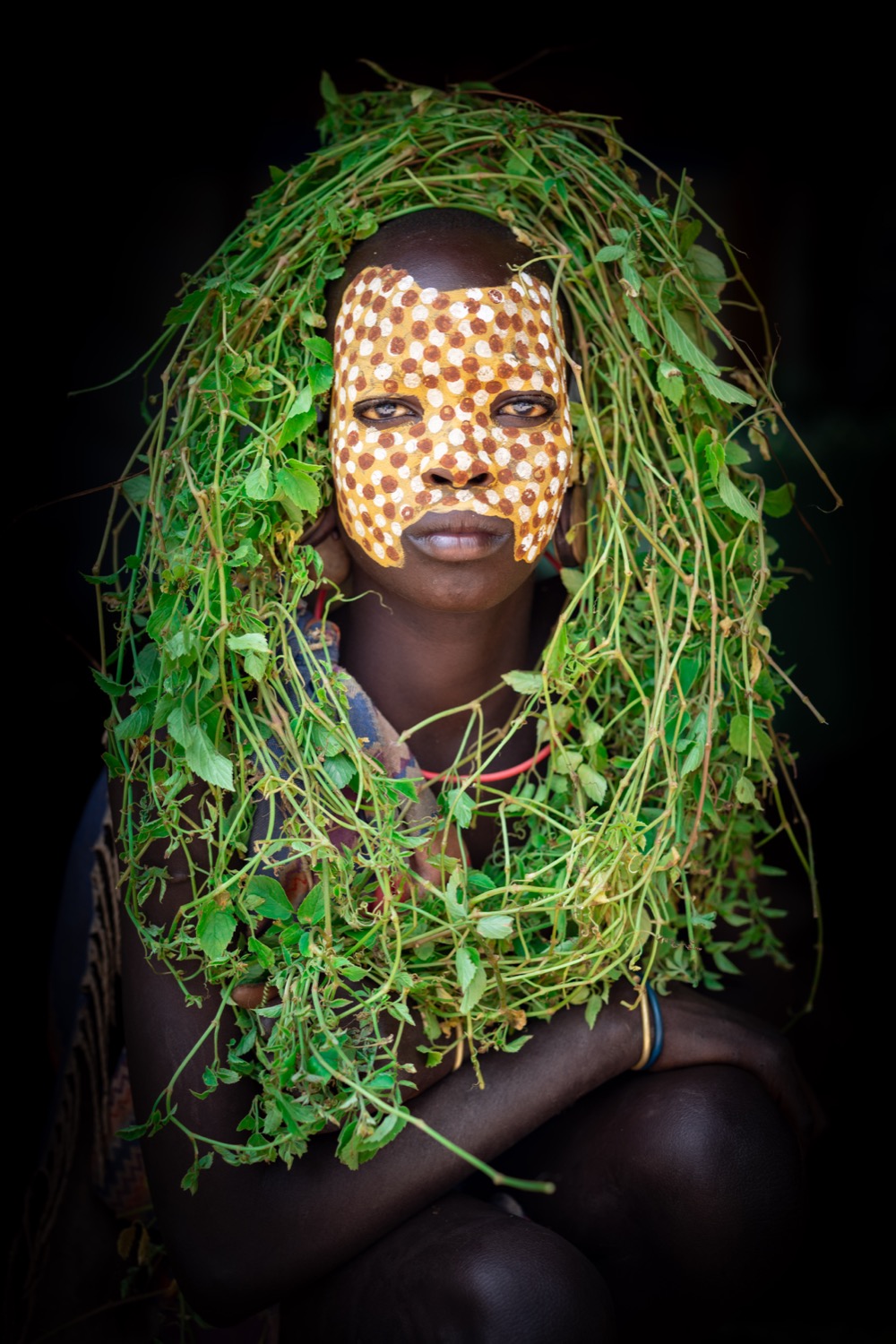
She presents the portraits subtly, allowing viewers to connect directly with the subjects and their expressions. “I am attracted to quieter transitional moments like the elder woman with morning pipes, a water guardian applying face paint, and a mother with her child. These scenes convey a different truth—one of continuity, care, and daily ritual.” In Suri traditions, colour holds special meaning, with flowers, natural pigments, and adornments closely linked to identity, ceremonies, and the environment.
In Suri Guardians, Simas mainly uses natural light and straightforward compositions to maintain a feeling of presence and authenticity. “I focus on letting the environment and the subject shape the image instead of using elaborate staging or technical effects. Natural light keeps the landscape's atmosphere intact and highlights textures of skin, flowers, and painted surfaces in a way that feels close and genuine.”
Factual presence and emotional truth
Although many of her projects focus on themes like human rights, gender, cultural survival, and disability, Simas aims not just to raise awareness but to craft images that draw attention, foster empathy, and promote a deeper, ongoing understanding. “Whether working with survivors, children regaining mobility, or women protecting land and water, I want audiences to see not only struggle or adversity but also resilience and common humanity.”
Simas sees her practice continuing to evolve through deeper, longer-term engagement with the communities and landscapes she works with. “I am interested in expanding the relationship between portraiture and environment, and in exploring how collaboration can shape not only the content of the work but also its form. I am also interested in the space between documentation and lived experience, where photography can hold both factual presence and emotional truth.”
.svg)


.svg)
.svg)

Matilde Simas is drawn to subjects through encounter and connection. She approaches each project without preset narratives, regularly starting by listening and spending time in a place before taking photos. Visual storytelling serves as the framework that unites her images, each contributing to a larger story rather than a single statement. “I look for moments where personal experience intersects with broader social, cultural, or environmental realities. What interests me is not spectacle, but presence—how people inhabit their worlds and carry histories, responsibilities, and knowledge that may not be immediately visible.”
Simas views photography not only as a way to observe, but also as a form of affirmation. Her work reflects a conviction that photography can serve as both a record and a connector. “I am interested in how images can encompass complexity, highlight shared human experiences, and encourage viewers to rethink stories influenced by distance, stereotypes, or inequalities. Through this work, I aim to foster spaces for recognition, empathy, and meaningful engagement with lives and landscapes experiencing significant change.”
The American photographer develops visual stories that inspire viewers to seek deeper links between people, places, and experiences. Her work with groups affected by trauma, displacement, and social change has heightened her awareness of dignity, trust, and the emotional impact images can carry. “Rather than concentrating only on suffering, I am drawn to presence, resilience, and the places where vulnerability and strength meet. I aim to go beyond images that exoticise or oversimplify indigenous life and instead produce portraits rooted in respect and collaboration.”
Land, water, and guardianship
Ethiopia's Omo Valley is home to the Suri people, whose connection to land and water is deeply intertwined with their identity, history, and survival. The series Suri Guardians features figures like the Land and Water Guardians, whose roles exemplify the strong bond between community and environment. Matilde Simas states: “Their roles reflect an understanding of land and water as living systems that contain memory, ancestry, and continuity. Water is especially experienced as memory, embodying the presence of ancestors, cultural knowledge, and the ongoing life of these inhabitants through its flow.”
Their roles reflect an understanding of land and water as living systems that contain memory, ancestry, and continuity.
A land guardian is responsible for protecting the land, its resources, and the traditions associated with it. This includes safeguarding sacred sites, maintaining cultural practices, and ensuring ecological balance for future generations. “As globalisation and ecological pressures alter the region, these photos serve not only as portraits but also as records of cultural knowledge and continuity. I hope Suri Guardians fosters discussions on cultural preservation, environmental change, and the portrayal of indigenous peoples through photography.”
Seasonal flooding of the Omo River
The portraits of Suri Guardians are rooted in the lives of women who act as living links between their community, land, and collective memory. Marilla, a Water Guardian, explained her face paint as reflecting this bond: “These patterns are similar to the river — ever-changing and connected. They serve as a reminder that we are part of this land, like the flowers and trees. I protect the water because it is vital to my people. The river is more than a source of life; it's our link to the land, ancestors, and future. By safeguarding it, I help preserve our traditions, culture, and way of life.”
The Omo River, once characterised by seasonal flooding, has been significantly impacted by upstream dams and extensive agriculture. This has disrupted ecological cycles and heightened issues like resource scarcity, food insecurity, and intertribal tensions. Despite these changes, women continue to be essential for survival—fetching water, supporting their families, and safeguarding the cultural knowledge linked to the land. “These portraits challenge narratives that depict these communities through lack, instead celebrating their strength, continuity, and resilience. Suri Guardians serves both as a visual tribute and a recognition of women’s vital roles as guardians of culture and the environment, highlighting the urgent need to protect both amid rapid environmental changes.”
These portraits challenge narratives that depict these communities through lack, instead celebrating their strength, continuity, and resilience.
Staged portraits and in-between moments
Throughout her work, Simas explores recurring themes that oscillate between formal portraiture and intimate, everyday moments. In Suri Guardians, this is expressed through a dual method: composed portraits set against a black background and environmental shots within the landscape. The black backgrounds emphasise the presence of the subjects, while the environmental portraits and landscapes place them within the Omo Valley, where land, light, and material culture are intrinsically linked to their community.
She presents the portraits subtly, allowing viewers to connect directly with the subjects and their expressions. “I am attracted to quieter transitional moments like the elder woman with morning pipes, a water guardian applying face paint, and a mother with her child. These scenes convey a different truth—one of continuity, care, and daily ritual.” In Suri traditions, colour holds special meaning, with flowers, natural pigments, and adornments closely linked to identity, ceremonies, and the environment.
In Suri Guardians, Simas mainly uses natural light and straightforward compositions to maintain a feeling of presence and authenticity. “I focus on letting the environment and the subject shape the image instead of using elaborate staging or technical effects. Natural light keeps the landscape's atmosphere intact and highlights textures of skin, flowers, and painted surfaces in a way that feels close and genuine.”
Factual presence and emotional truth
Although many of her projects focus on themes like human rights, gender, cultural survival, and disability, Simas aims not just to raise awareness but to craft images that draw attention, foster empathy, and promote a deeper, ongoing understanding. “Whether working with survivors, children regaining mobility, or women protecting land and water, I want audiences to see not only struggle or adversity but also resilience and common humanity.”
Simas sees her practice continuing to evolve through deeper, longer-term engagement with the communities and landscapes she works with. “I am interested in expanding the relationship between portraiture and environment, and in exploring how collaboration can shape not only the content of the work but also its form. I am also interested in the space between documentation and lived experience, where photography can hold both factual presence and emotional truth.”
Matilde Simas is drawn to subjects through encounter and connection. She approaches each project without preset narratives, regularly starting by listening and spending time in a place before taking photos. Visual storytelling serves as the framework that unites her images, each contributing to a larger story rather than a single statement. “I look for moments where personal experience intersects with broader social, cultural, or environmental realities. What interests me is not spectacle, but presence—how people inhabit their worlds and carry histories, responsibilities, and knowledge that may not be immediately visible.”
Simas views photography not only as a way to observe, but also as a form of affirmation. Her work reflects a conviction that photography can serve as both a record and a connector. “I am interested in how images can encompass complexity, highlight shared human experiences, and encourage viewers to rethink stories influenced by distance, stereotypes, or inequalities. Through this work, I aim to foster spaces for recognition, empathy, and meaningful engagement with lives and landscapes experiencing significant change.”
The American photographer develops visual stories that inspire viewers to seek deeper links between people, places, and experiences. Her work with groups affected by trauma, displacement, and social change has heightened her awareness of dignity, trust, and the emotional impact images can carry. “Rather than concentrating only on suffering, I am drawn to presence, resilience, and the places where vulnerability and strength meet. I aim to go beyond images that exoticise or oversimplify indigenous life and instead produce portraits rooted in respect and collaboration.”
Land, water, and guardianship
Ethiopia's Omo Valley is home to the Suri people, whose connection to land and water is deeply intertwined with their identity, history, and survival. The series Suri Guardians features figures like the Land and Water Guardians, whose roles exemplify the strong bond between community and environment. Matilde Simas states: “Their roles reflect an understanding of land and water as living systems that contain memory, ancestry, and continuity. Water is especially experienced as memory, embodying the presence of ancestors, cultural knowledge, and the ongoing life of these inhabitants through its flow.”
Their roles reflect an understanding of land and water as living systems that contain memory, ancestry, and continuity.
A land guardian is responsible for protecting the land, its resources, and the traditions associated with it. This includes safeguarding sacred sites, maintaining cultural practices, and ensuring ecological balance for future generations. “As globalisation and ecological pressures alter the region, these photos serve not only as portraits but also as records of cultural knowledge and continuity. I hope Suri Guardians fosters discussions on cultural preservation, environmental change, and the portrayal of indigenous peoples through photography.”
Seasonal flooding of the Omo River
The portraits of Suri Guardians are rooted in the lives of women who act as living links between their community, land, and collective memory. Marilla, a Water Guardian, explained her face paint as reflecting this bond: “These patterns are similar to the river — ever-changing and connected. They serve as a reminder that we are part of this land, like the flowers and trees. I protect the water because it is vital to my people. The river is more than a source of life; it's our link to the land, ancestors, and future. By safeguarding it, I help preserve our traditions, culture, and way of life.”
The Omo River, once characterised by seasonal flooding, has been significantly impacted by upstream dams and extensive agriculture. This has disrupted ecological cycles and heightened issues like resource scarcity, food insecurity, and intertribal tensions. Despite these changes, women continue to be essential for survival—fetching water, supporting their families, and safeguarding the cultural knowledge linked to the land. “These portraits challenge narratives that depict these communities through lack, instead celebrating their strength, continuity, and resilience. Suri Guardians serves both as a visual tribute and a recognition of women’s vital roles as guardians of culture and the environment, highlighting the urgent need to protect both amid rapid environmental changes.”
These portraits challenge narratives that depict these communities through lack, instead celebrating their strength, continuity, and resilience.
Staged portraits and in-between moments
Throughout her work, Simas explores recurring themes that oscillate between formal portraiture and intimate, everyday moments. In Suri Guardians, this is expressed through a dual method: composed portraits set against a black background and environmental shots within the landscape. The black backgrounds emphasise the presence of the subjects, while the environmental portraits and landscapes place them within the Omo Valley, where land, light, and material culture are intrinsically linked to their community.
She presents the portraits subtly, allowing viewers to connect directly with the subjects and their expressions. “I am attracted to quieter transitional moments like the elder woman with morning pipes, a water guardian applying face paint, and a mother with her child. These scenes convey a different truth—one of continuity, care, and daily ritual.” In Suri traditions, colour holds special meaning, with flowers, natural pigments, and adornments closely linked to identity, ceremonies, and the environment.
In Suri Guardians, Simas mainly uses natural light and straightforward compositions to maintain a feeling of presence and authenticity. “I focus on letting the environment and the subject shape the image instead of using elaborate staging or technical effects. Natural light keeps the landscape's atmosphere intact and highlights textures of skin, flowers, and painted surfaces in a way that feels close and genuine.”
Factual presence and emotional truth
Although many of her projects focus on themes like human rights, gender, cultural survival, and disability, Simas aims not just to raise awareness but to craft images that draw attention, foster empathy, and promote a deeper, ongoing understanding. “Whether working with survivors, children regaining mobility, or women protecting land and water, I want audiences to see not only struggle or adversity but also resilience and common humanity.”
Simas sees her practice continuing to evolve through deeper, longer-term engagement with the communities and landscapes she works with. “I am interested in expanding the relationship between portraiture and environment, and in exploring how collaboration can shape not only the content of the work but also its form. I am also interested in the space between documentation and lived experience, where photography can hold both factual presence and emotional truth.”