© Sarah Ketelaars | The 544

In her early twenties, Sarah Ketelaars learned from her Latvian grandmother about the tragic killing of 544 psychiatric patients by the Nazis in 1941. The story's profound impact took years for her years to process and eventually inspired an artwork. Initially, Ketelaars considered becoming a novelist, aiming to write her grandmother’s life story. “My grandmother bought me a typewriter when I was a child,” she recalls, “and said, ‘Darling, you can write my life story, and you must use your imagination.’ I knew the basic facts, but she envisioned a fictionalised novel about her life and escape from Latvia. I studied English literature and hoped to be a writer. It wasn’t until my early 20s that she revealed the second part of her story—about the massacre. As a psychiatrist at the hospital, she described the day the Nazis arrived, took all the patients, and murdered them. She also mentioned how the hospital director felt regretful for not being able to protect his patients.”
No memorials
Sarah Ketelaars was deeply affected by hearing this distressing story. Knowing the story of her grandmother, who had to leave her homeland and never see her parents again, was already tragic, but learning about the massacre was even more shocking. The older generation generally avoided discussing it, likely due to PTSD. “Years later, when I returned to Latvia with my mum, I began asking around, and it turned out many people didn't know about it. In 2013, I visited the hospital, and locals confirmed it definitely happened. Since then, I've conducted more research and discovered it occurred throughout Latvia and across Europe. However, there are only a few memorials, and it is hard to find them in official records.”
Cyanotypes
The horrifying story wasn't depicted in a novel, but Ketelaars, now a photographer-artist, created a cyanotype artwork honouring the 544 patients, rather than just mourning their deaths. “Once I realised I wouldn't become a novelist, I shifted to visual art in my 40s. My initial concept was quite different. I wanted to craft 544 nightgowns—like the shirts people wore in the hospital—and suspend them in a forest near the hospital, believing that was where they had been murdered. I later discovered they weren't murdered in a forest. So, I envisioned it as an installation piece,” she explained.
This idea faded over time, and in 2023, Sarah decided to create A4 cyanotypes. “This process was doable on a domestic scale and relatively inexpensive. And when I made the first few, I thought, this is it, this is what I've been looking for.”
Restoring individuality
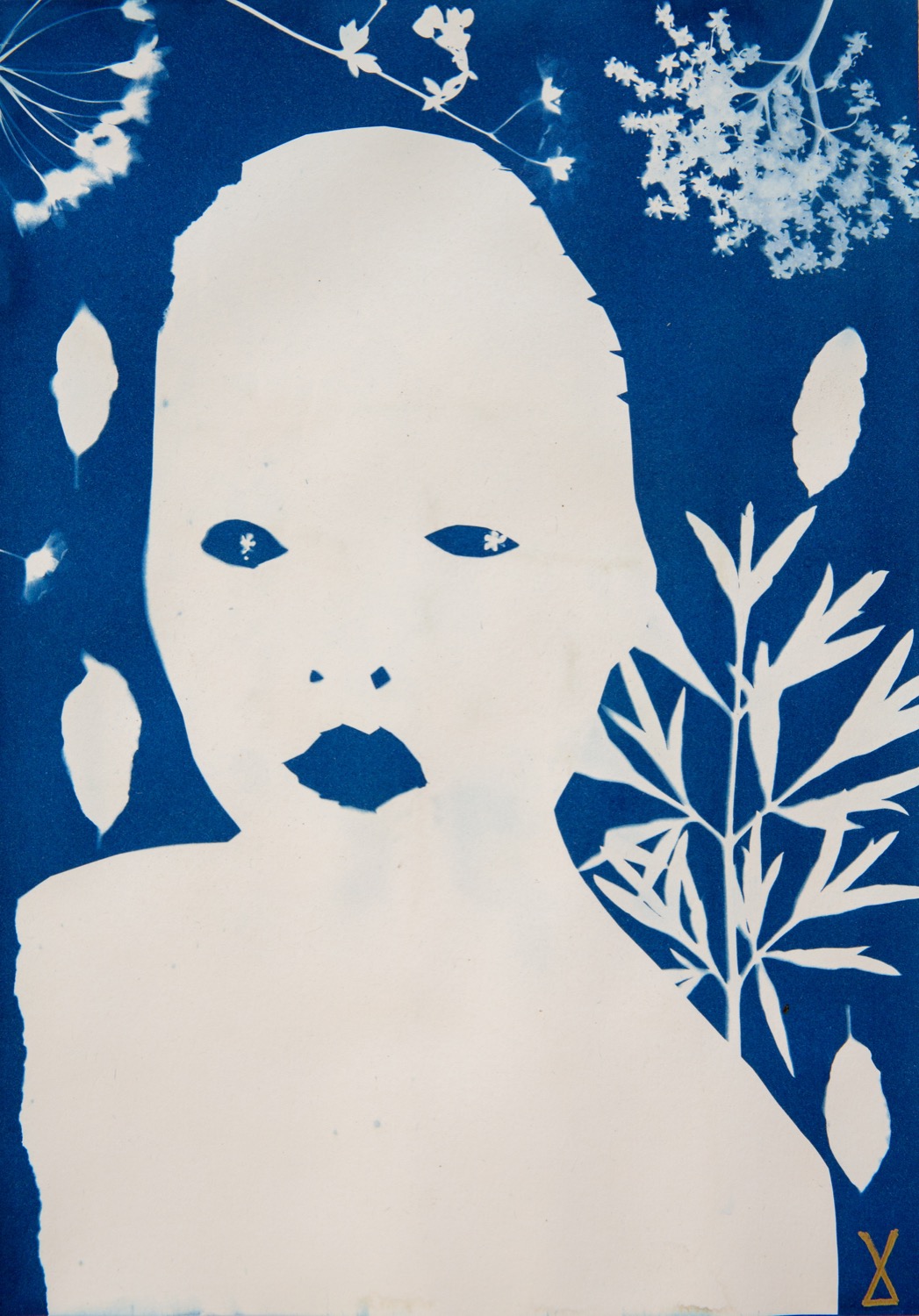
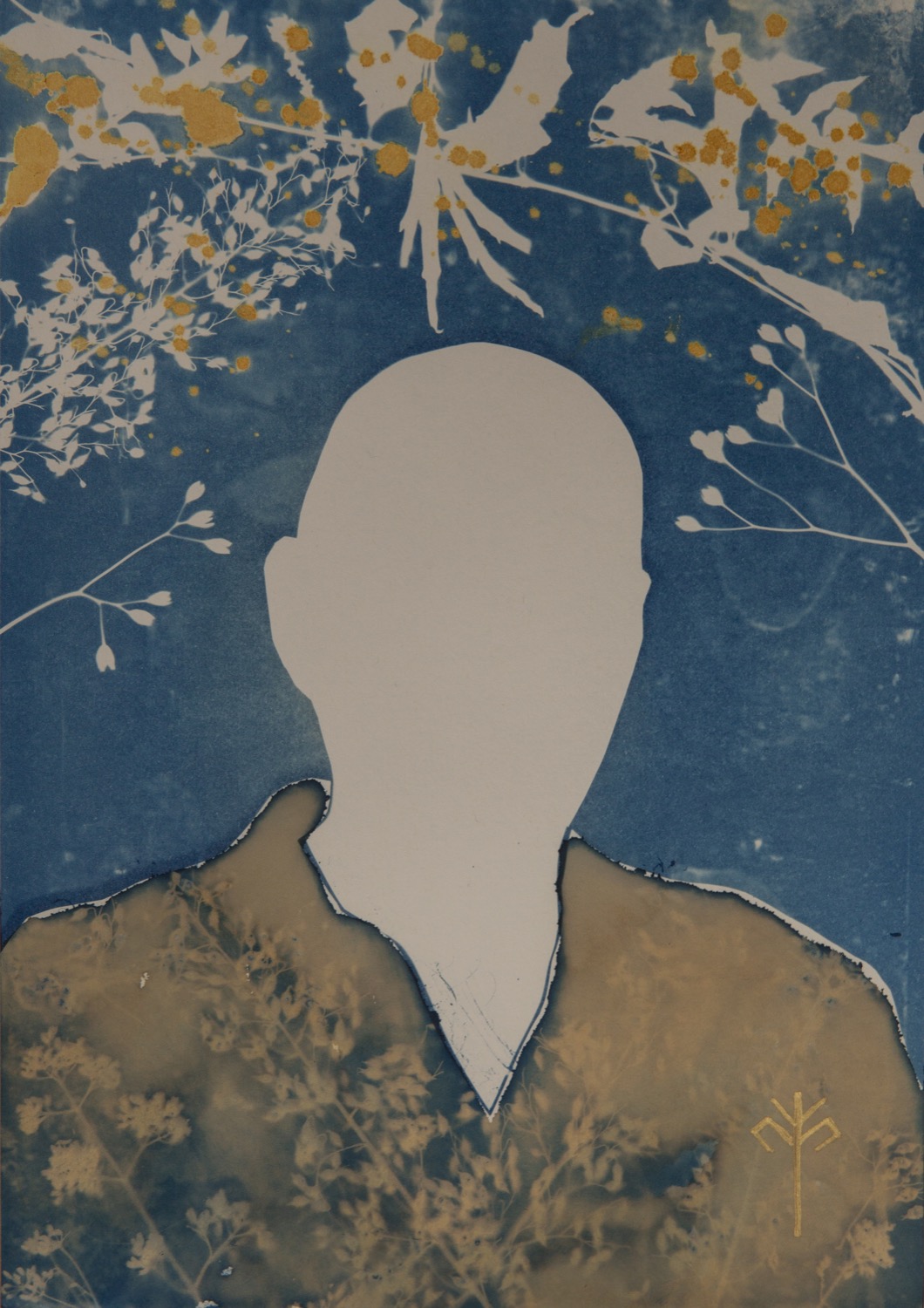
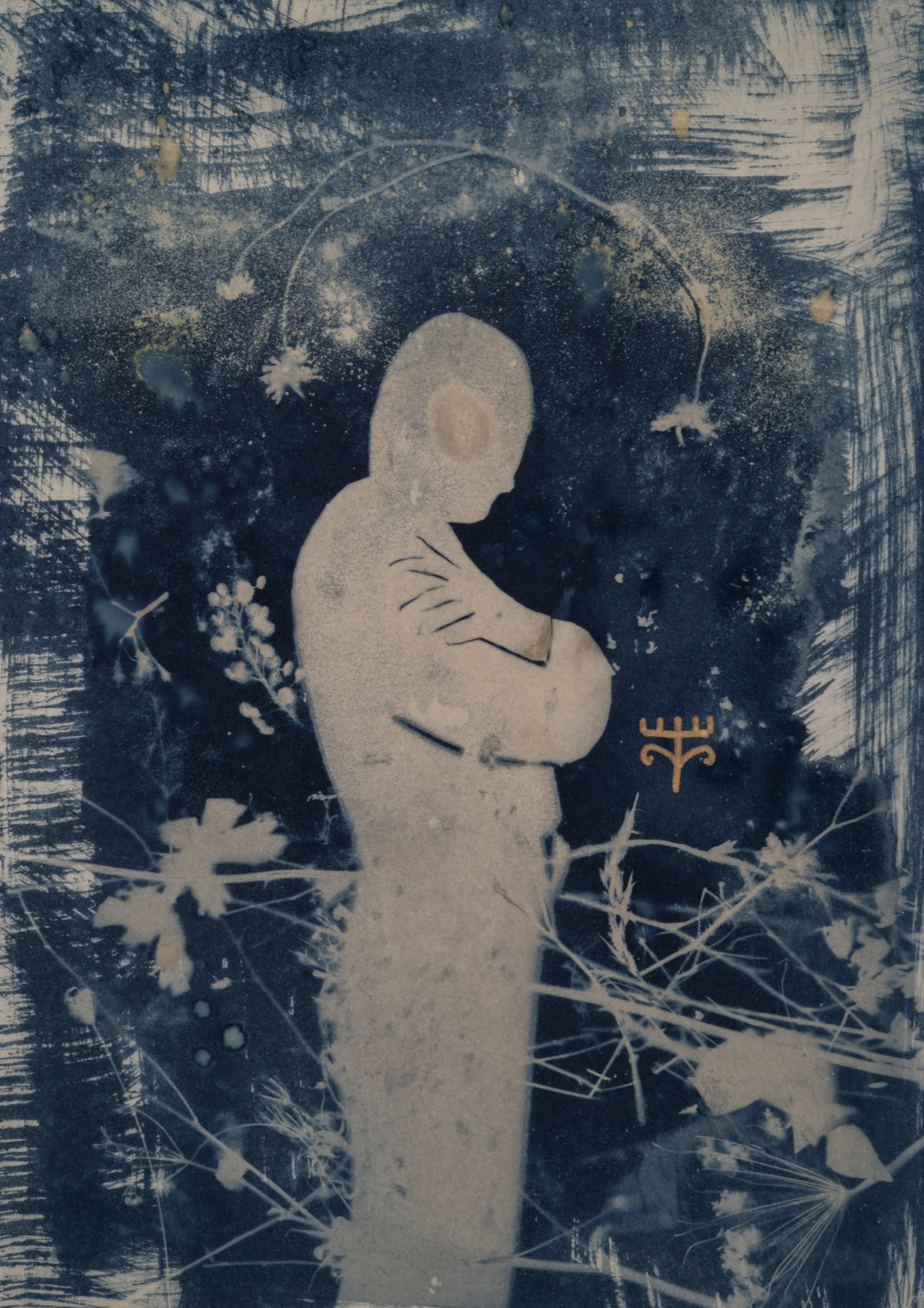
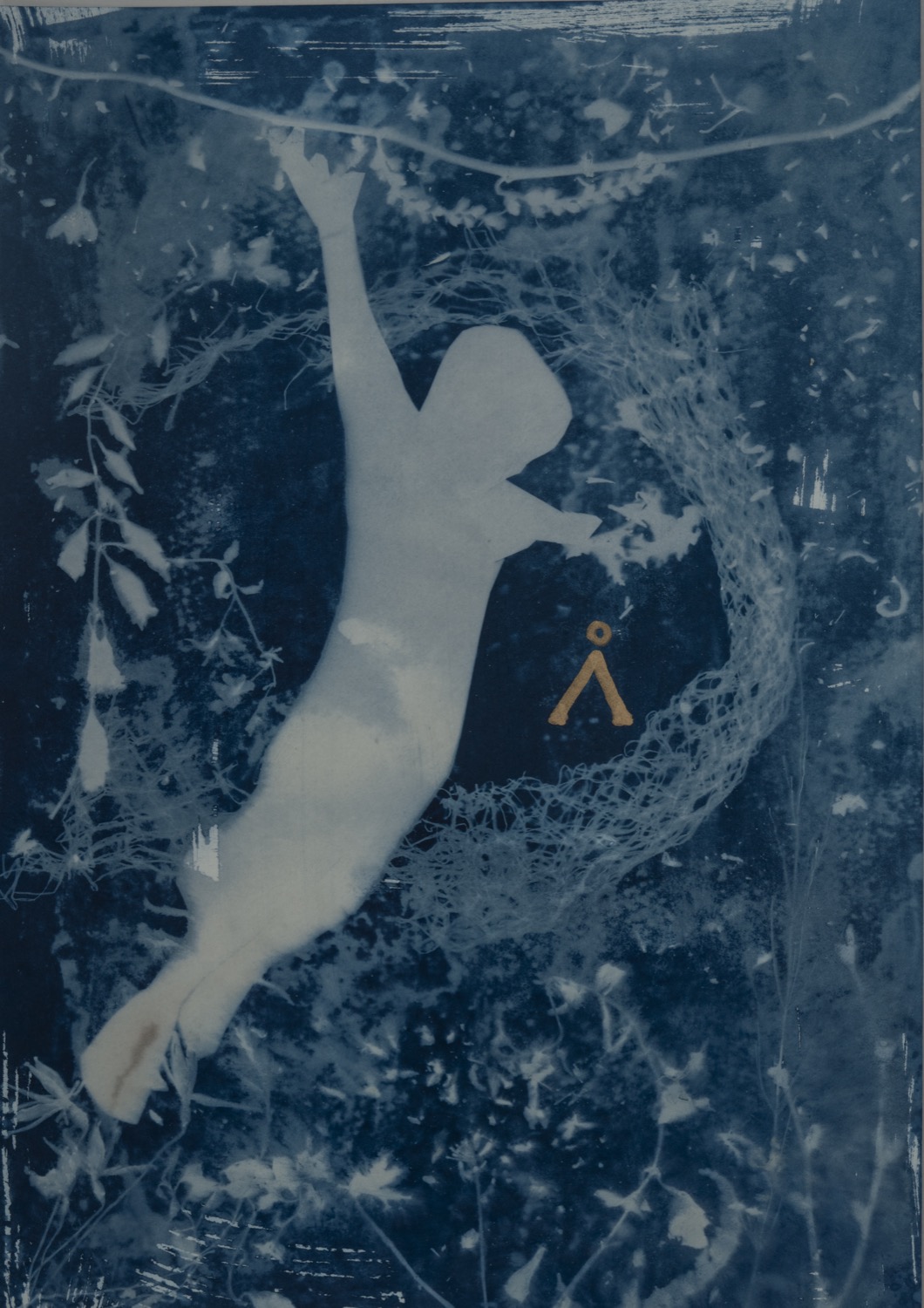
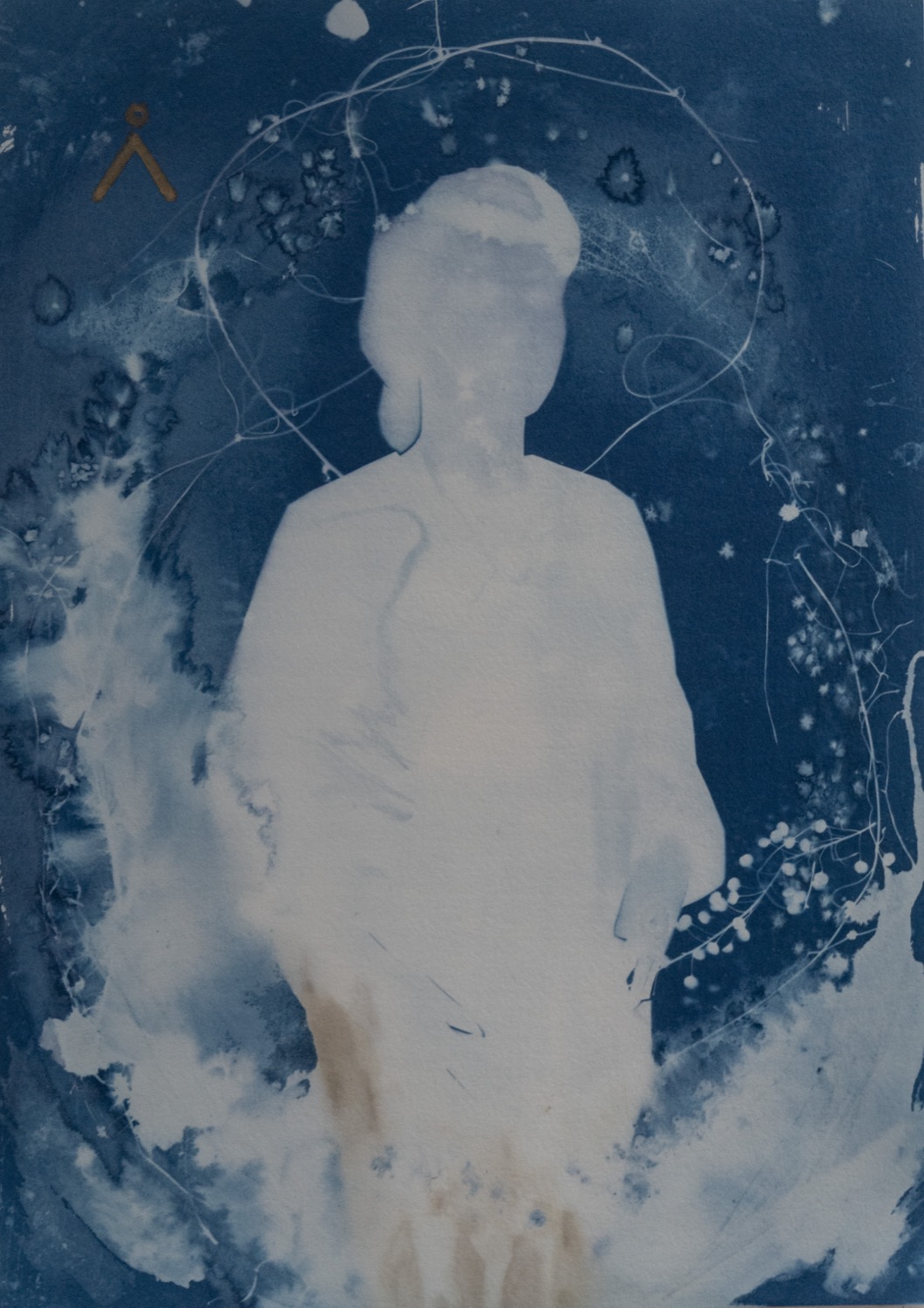
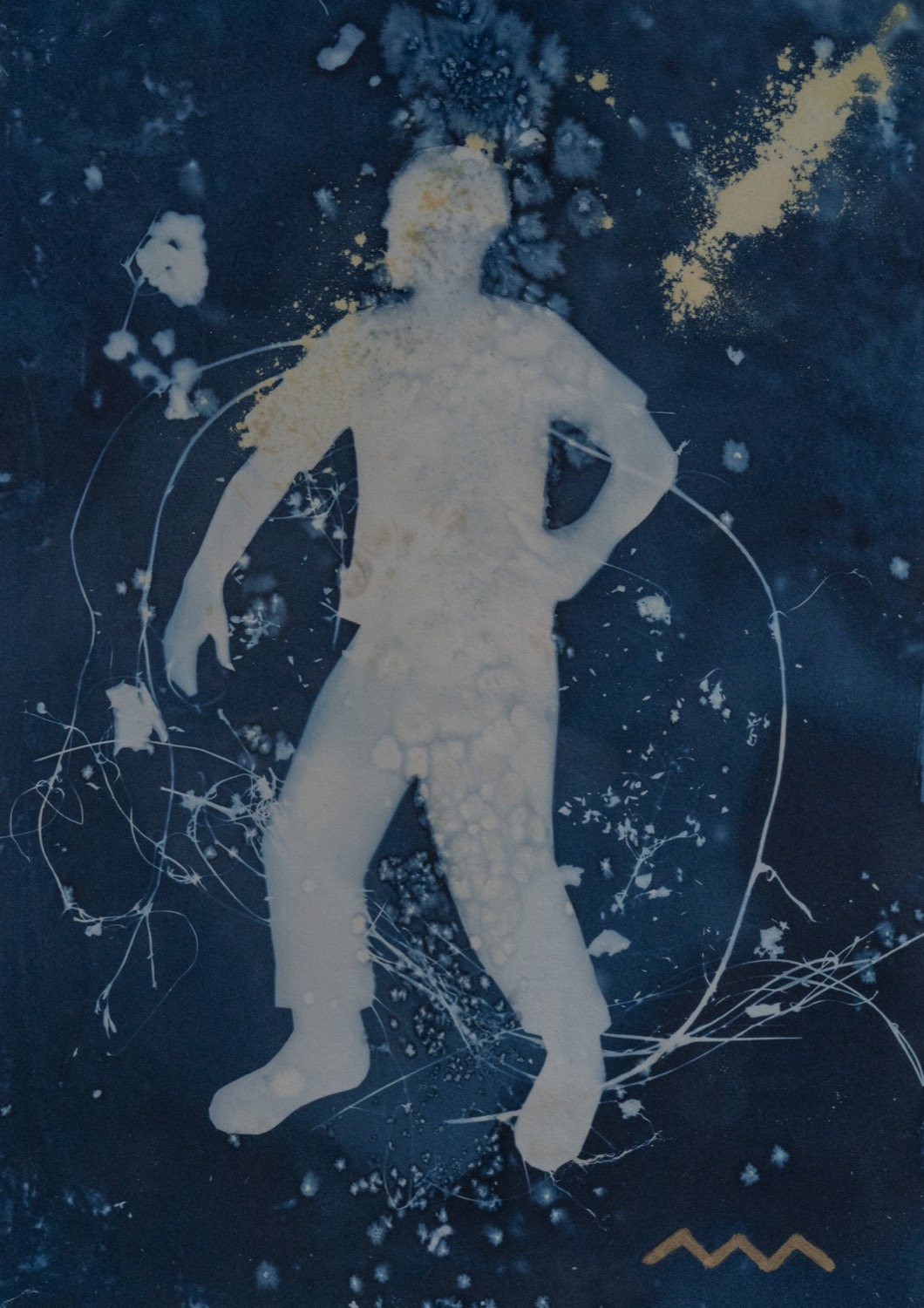
In The 544, we see anonymous yet recognisable figures photographed in a flat, empty space. Some images depict the figures—representing the hospital's inmates—in blue against a white background, while others show them in white on a blue background. This creates a balanced rhythm in the artwork and prevents the figures from appearing as mere numbers, emphasising their humanity. “I used living models, trying to bring individuality back into each image. Initially, I used magazine photos, but that didn't work. I then recruited models—friends, family, neighbours, even strangers, including the postman—to pose for me. They struck good poses. Afterwards, I printed the images and placed them on cyanotype paper. I believe, although the installation would have been beautiful, this method adds more personal character to each piece.”

Memorial of living beings
In her project statement, Sarah Ketelaars describes the work as mainly a memorial to honour the lives people led before entering the hospital and before they died. She visualised each person as a unique, valuable individual. “If you met these people, they'd be so different. Each would be different—some beautiful, some less so, some kind, and others intelligent, magical, or perhaps unlikable. They were all so distinct, yet history reduced them to mere numbers. While a number alone may not evoke much, looking at the 544 images allows us to see them as individuals. I wanted to highlight that before their tragic deaths, they all had lives—dreams, hopes, histories, families, parents, and maybe a lover or sibling—because I hoped this would help people relate more and realise it could be any of us. It could happen to us.”
They were all so distinct, yet history reduced them to mere numbers.

544 individuals
The project's charm lies in its semi-abstract portrayal of the figures, which appear in white, blue, or sometimes golden hues. Some figures are standing in introspective poses, others are dancing with joy, and some are walking and waving their hands. Sarah initially photographed each person, printed the images, and layered them onto the final cyanotype. “I mainly use the wet cyanotype process, allowing me to work fluidly. The shapes of the figures are created by using negatives and positives of each photo. I would cut them out from the print and use those cutouts. This produces the positive shape, but I also kept the cutout itself, made another from it, and then selected my favourite. I made many versions of each person.”
Each picture was a record of an encounter Ketelaars had with a living human. “Some people cried, some shared stories—about their Polish father or Jewish aunt. These diverse stories emerged, inspiring some to craft beautiful shapes, while others were visibly moved. I aimed to capture 544 individuals, and that's precisely what I achieved."
Protective quality
Surrounding the human figures are details of plants and leaves. “The plants reference the history of cyanotypes, which initially featured botanical specimens. I used plants from my garden and also included some dried flowers from Latvia. A Latvian woman contacted me, and said how happy she was I had used these natural elements. She explained that nature is an integral part of their culture.”
Another intriguing detail is formed by the Rune-like symbols written in golden ink on the images. “In Latvian culture, these signs are known as Zime. They are ancient pre-Christian symbols that Latvians still use everywhere, from keyrings to clothing and jewellery for good luck. These symbols are believed to have protective and magical powers. Using these symbols introduced a spiritual dimension to the work.”
Different readings
The project, The 544, weaves a personal narrative with intergenerational trauma, enabling the artist to process their family history and helping viewers understand it. “Probably, many people have intergenerational trauma from wars and conflicts. If someone in the family addresses it, it can prevent the trauma from continuing. For me, voicing it and confronting it has been crucial.”
Due to the abstraction of the images, printing individual figures on cyanotype paper in a single basic colour allows viewers to interpret the artwork personally and hold on to their emotions, thereby enhancing the overall impact of the project. “The photos are semi-abstract, though they're figurative. Often, you can't see someone's face clearly. They are all anonymous. I want people to be able to project their individual meanings onto the work. The process and the final images have a lot of space for different readings.”
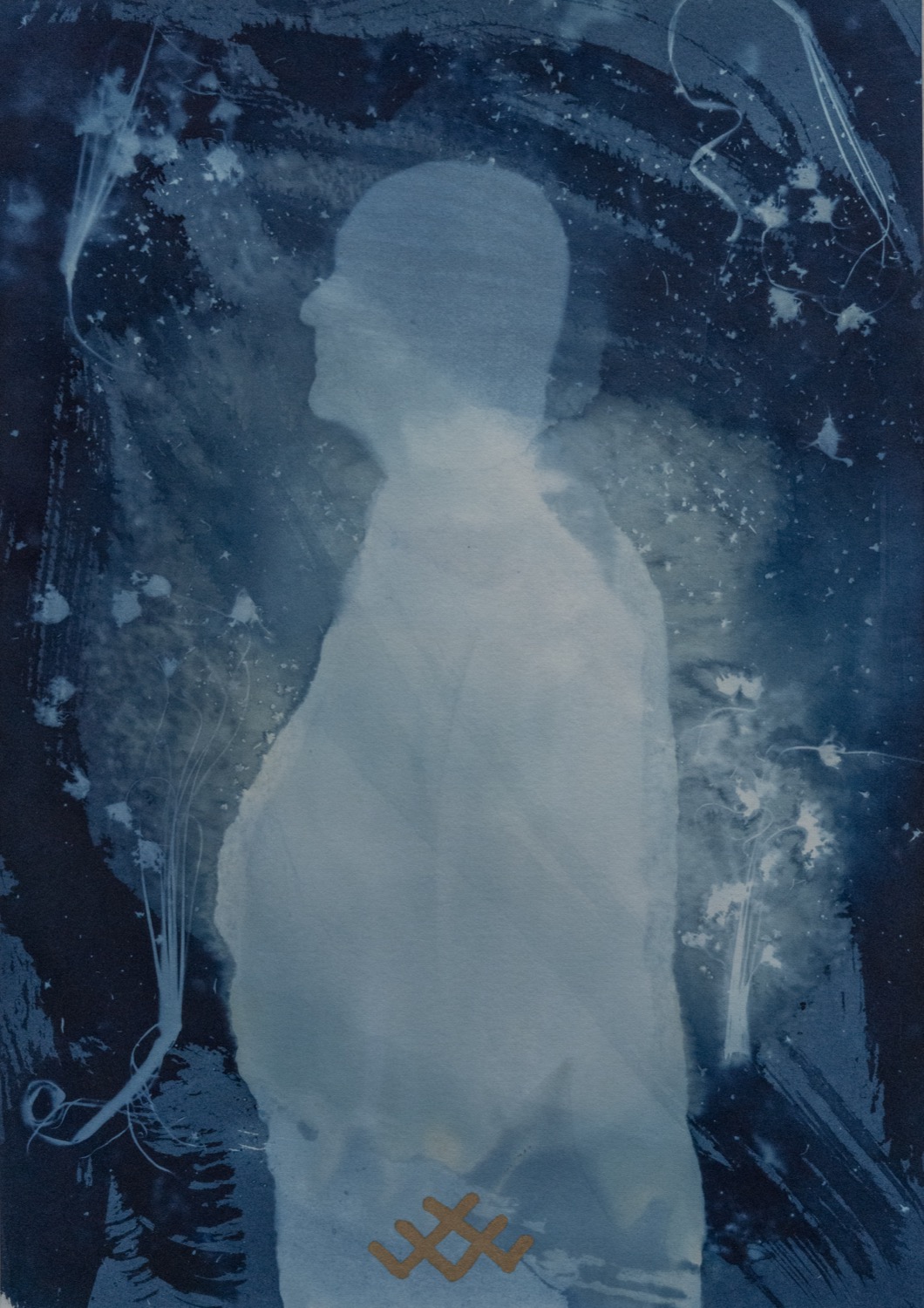
While a number alone may not evoke much, looking at the 544 images allows us to see them as individuals.
.svg)


.svg)
.svg)

In her early twenties, Sarah Ketelaars learned from her Latvian grandmother about the tragic killing of 544 psychiatric patients by the Nazis in 1941. The story's profound impact took years for her years to process and eventually inspired an artwork. Initially, Ketelaars considered becoming a novelist, aiming to write her grandmother’s life story. “My grandmother bought me a typewriter when I was a child,” she recalls, “and said, ‘Darling, you can write my life story, and you must use your imagination.’ I knew the basic facts, but she envisioned a fictionalised novel about her life and escape from Latvia. I studied English literature and hoped to be a writer. It wasn’t until my early 20s that she revealed the second part of her story—about the massacre. As a psychiatrist at the hospital, she described the day the Nazis arrived, took all the patients, and murdered them. She also mentioned how the hospital director felt regretful for not being able to protect his patients.”
No memorials
Sarah Ketelaars was deeply affected by hearing this distressing story. Knowing the story of her grandmother, who had to leave her homeland and never see her parents again, was already tragic, but learning about the massacre was even more shocking. The older generation generally avoided discussing it, likely due to PTSD. “Years later, when I returned to Latvia with my mum, I began asking around, and it turned out many people didn't know about it. In 2013, I visited the hospital, and locals confirmed it definitely happened. Since then, I've conducted more research and discovered it occurred throughout Latvia and across Europe. However, there are only a few memorials, and it is hard to find them in official records.”
Cyanotypes
The horrifying story wasn't depicted in a novel, but Ketelaars, now a photographer-artist, created a cyanotype artwork honouring the 544 patients, rather than just mourning their deaths. “Once I realised I wouldn't become a novelist, I shifted to visual art in my 40s. My initial concept was quite different. I wanted to craft 544 nightgowns—like the shirts people wore in the hospital—and suspend them in a forest near the hospital, believing that was where they had been murdered. I later discovered they weren't murdered in a forest. So, I envisioned it as an installation piece,” she explained.
This idea faded over time, and in 2023, Sarah decided to create A4 cyanotypes. “This process was doable on a domestic scale and relatively inexpensive. And when I made the first few, I thought, this is it, this is what I've been looking for.”
Restoring individuality
In The 544, we see anonymous yet recognisable figures photographed in a flat, empty space. Some images depict the figures—representing the hospital's inmates—in blue against a white background, while others show them in white on a blue background. This creates a balanced rhythm in the artwork and prevents the figures from appearing as mere numbers, emphasising their humanity. “I used living models, trying to bring individuality back into each image. Initially, I used magazine photos, but that didn't work. I then recruited models—friends, family, neighbours, even strangers, including the postman—to pose for me. They struck good poses. Afterwards, I printed the images and placed them on cyanotype paper. I believe, although the installation would have been beautiful, this method adds more personal character to each piece.”
Memorial of living beings
In her project statement, Sarah Ketelaars describes the work as mainly a memorial to honour the lives people led before entering the hospital and before they died. She visualised each person as a unique, valuable individual. “If you met these people, they'd be so different. Each would be different—some beautiful, some less so, some kind, and others intelligent, magical, or perhaps unlikable. They were all so distinct, yet history reduced them to mere numbers. While a number alone may not evoke much, looking at the 544 images allows us to see them as individuals. I wanted to highlight that before their tragic deaths, they all had lives—dreams, hopes, histories, families, parents, and maybe a lover or sibling—because I hoped this would help people relate more and realise it could be any of us. It could happen to us.”
They were all so distinct, yet history reduced them to mere numbers.
544 individuals
The project's charm lies in its semi-abstract portrayal of the figures, which appear in white, blue, or sometimes golden hues. Some figures are standing in introspective poses, others are dancing with joy, and some are walking and waving their hands. Sarah initially photographed each person, printed the images, and layered them onto the final cyanotype. “I mainly use the wet cyanotype process, allowing me to work fluidly. The shapes of the figures are created by using negatives and positives of each photo. I would cut them out from the print and use those cutouts. This produces the positive shape, but I also kept the cutout itself, made another from it, and then selected my favourite. I made many versions of each person.”
Each picture was a record of an encounter Ketelaars had with a living human. “Some people cried, some shared stories—about their Polish father or Jewish aunt. These diverse stories emerged, inspiring some to craft beautiful shapes, while others were visibly moved. I aimed to capture 544 individuals, and that's precisely what I achieved."
Protective quality
Surrounding the human figures are details of plants and leaves. “The plants reference the history of cyanotypes, which initially featured botanical specimens. I used plants from my garden and also included some dried flowers from Latvia. A Latvian woman contacted me, and said how happy she was I had used these natural elements. She explained that nature is an integral part of their culture.”
Another intriguing detail is formed by the Rune-like symbols written in golden ink on the images. “In Latvian culture, these signs are known as Zime. They are ancient pre-Christian symbols that Latvians still use everywhere, from keyrings to clothing and jewellery for good luck. These symbols are believed to have protective and magical powers. Using these symbols introduced a spiritual dimension to the work.”
Different readings
The project, The 544, weaves a personal narrative with intergenerational trauma, enabling the artist to process their family history and helping viewers understand it. “Probably, many people have intergenerational trauma from wars and conflicts. If someone in the family addresses it, it can prevent the trauma from continuing. For me, voicing it and confronting it has been crucial.”
Due to the abstraction of the images, printing individual figures on cyanotype paper in a single basic colour allows viewers to interpret the artwork personally and hold on to their emotions, thereby enhancing the overall impact of the project. “The photos are semi-abstract, though they're figurative. Often, you can't see someone's face clearly. They are all anonymous. I want people to be able to project their individual meanings onto the work. The process and the final images have a lot of space for different readings.”
While a number alone may not evoke much, looking at the 544 images allows us to see them as individuals.
In her early twenties, Sarah Ketelaars learned from her Latvian grandmother about the tragic killing of 544 psychiatric patients by the Nazis in 1941. The story's profound impact took years for her years to process and eventually inspired an artwork. Initially, Ketelaars considered becoming a novelist, aiming to write her grandmother’s life story. “My grandmother bought me a typewriter when I was a child,” she recalls, “and said, ‘Darling, you can write my life story, and you must use your imagination.’ I knew the basic facts, but she envisioned a fictionalised novel about her life and escape from Latvia. I studied English literature and hoped to be a writer. It wasn’t until my early 20s that she revealed the second part of her story—about the massacre. As a psychiatrist at the hospital, she described the day the Nazis arrived, took all the patients, and murdered them. She also mentioned how the hospital director felt regretful for not being able to protect his patients.”
No memorials
Sarah Ketelaars was deeply affected by hearing this distressing story. Knowing the story of her grandmother, who had to leave her homeland and never see her parents again, was already tragic, but learning about the massacre was even more shocking. The older generation generally avoided discussing it, likely due to PTSD. “Years later, when I returned to Latvia with my mum, I began asking around, and it turned out many people didn't know about it. In 2013, I visited the hospital, and locals confirmed it definitely happened. Since then, I've conducted more research and discovered it occurred throughout Latvia and across Europe. However, there are only a few memorials, and it is hard to find them in official records.”
Cyanotypes
The horrifying story wasn't depicted in a novel, but Ketelaars, now a photographer-artist, created a cyanotype artwork honouring the 544 patients, rather than just mourning their deaths. “Once I realised I wouldn't become a novelist, I shifted to visual art in my 40s. My initial concept was quite different. I wanted to craft 544 nightgowns—like the shirts people wore in the hospital—and suspend them in a forest near the hospital, believing that was where they had been murdered. I later discovered they weren't murdered in a forest. So, I envisioned it as an installation piece,” she explained.
This idea faded over time, and in 2023, Sarah decided to create A4 cyanotypes. “This process was doable on a domestic scale and relatively inexpensive. And when I made the first few, I thought, this is it, this is what I've been looking for.”
Restoring individuality
In The 544, we see anonymous yet recognisable figures photographed in a flat, empty space. Some images depict the figures—representing the hospital's inmates—in blue against a white background, while others show them in white on a blue background. This creates a balanced rhythm in the artwork and prevents the figures from appearing as mere numbers, emphasising their humanity. “I used living models, trying to bring individuality back into each image. Initially, I used magazine photos, but that didn't work. I then recruited models—friends, family, neighbours, even strangers, including the postman—to pose for me. They struck good poses. Afterwards, I printed the images and placed them on cyanotype paper. I believe, although the installation would have been beautiful, this method adds more personal character to each piece.”
Memorial of living beings
In her project statement, Sarah Ketelaars describes the work as mainly a memorial to honour the lives people led before entering the hospital and before they died. She visualised each person as a unique, valuable individual. “If you met these people, they'd be so different. Each would be different—some beautiful, some less so, some kind, and others intelligent, magical, or perhaps unlikable. They were all so distinct, yet history reduced them to mere numbers. While a number alone may not evoke much, looking at the 544 images allows us to see them as individuals. I wanted to highlight that before their tragic deaths, they all had lives—dreams, hopes, histories, families, parents, and maybe a lover or sibling—because I hoped this would help people relate more and realise it could be any of us. It could happen to us.”
They were all so distinct, yet history reduced them to mere numbers.
544 individuals
The project's charm lies in its semi-abstract portrayal of the figures, which appear in white, blue, or sometimes golden hues. Some figures are standing in introspective poses, others are dancing with joy, and some are walking and waving their hands. Sarah initially photographed each person, printed the images, and layered them onto the final cyanotype. “I mainly use the wet cyanotype process, allowing me to work fluidly. The shapes of the figures are created by using negatives and positives of each photo. I would cut them out from the print and use those cutouts. This produces the positive shape, but I also kept the cutout itself, made another from it, and then selected my favourite. I made many versions of each person.”
Each picture was a record of an encounter Ketelaars had with a living human. “Some people cried, some shared stories—about their Polish father or Jewish aunt. These diverse stories emerged, inspiring some to craft beautiful shapes, while others were visibly moved. I aimed to capture 544 individuals, and that's precisely what I achieved."
Protective quality
Surrounding the human figures are details of plants and leaves. “The plants reference the history of cyanotypes, which initially featured botanical specimens. I used plants from my garden and also included some dried flowers from Latvia. A Latvian woman contacted me, and said how happy she was I had used these natural elements. She explained that nature is an integral part of their culture.”
Another intriguing detail is formed by the Rune-like symbols written in golden ink on the images. “In Latvian culture, these signs are known as Zime. They are ancient pre-Christian symbols that Latvians still use everywhere, from keyrings to clothing and jewellery for good luck. These symbols are believed to have protective and magical powers. Using these symbols introduced a spiritual dimension to the work.”
Different readings
The project, The 544, weaves a personal narrative with intergenerational trauma, enabling the artist to process their family history and helping viewers understand it. “Probably, many people have intergenerational trauma from wars and conflicts. If someone in the family addresses it, it can prevent the trauma from continuing. For me, voicing it and confronting it has been crucial.”
Due to the abstraction of the images, printing individual figures on cyanotype paper in a single basic colour allows viewers to interpret the artwork personally and hold on to their emotions, thereby enhancing the overall impact of the project. “The photos are semi-abstract, though they're figurative. Often, you can't see someone's face clearly. They are all anonymous. I want people to be able to project their individual meanings onto the work. The process and the final images have a lot of space for different readings.”
While a number alone may not evoke much, looking at the 544 images allows us to see them as individuals.