© Linda Rutenberg | On Thin Ice
Initially drawn to their distinctive forms and the changing winter landscape, Rutenberg now approaches these structures as symbols of a disappearing seasonal tradition. As rising temperatures shorten the ice-fishing season, her photographs reveal the growing vulnerability of communities whose livelihoods and cultural practices depend on frozen waterways. The series connects vernacular architecture with broader questions of climate change, cultural continuity and environmental loss.
Linda Rutenberg: The fishing huts of the Gaspé Peninsula and the Saguenay region of northern Quebec have captivated me since I began photographing them in the winter of 2012. At first, I was drawn to the altered winter landscape and its tenuous balance between land and sea. Today, the project carries a more urgent meaning, symbolising the accelerating effects of climate change.
Today, the project carries a more urgent meaning, symbolising the accelerating effects of climate change.

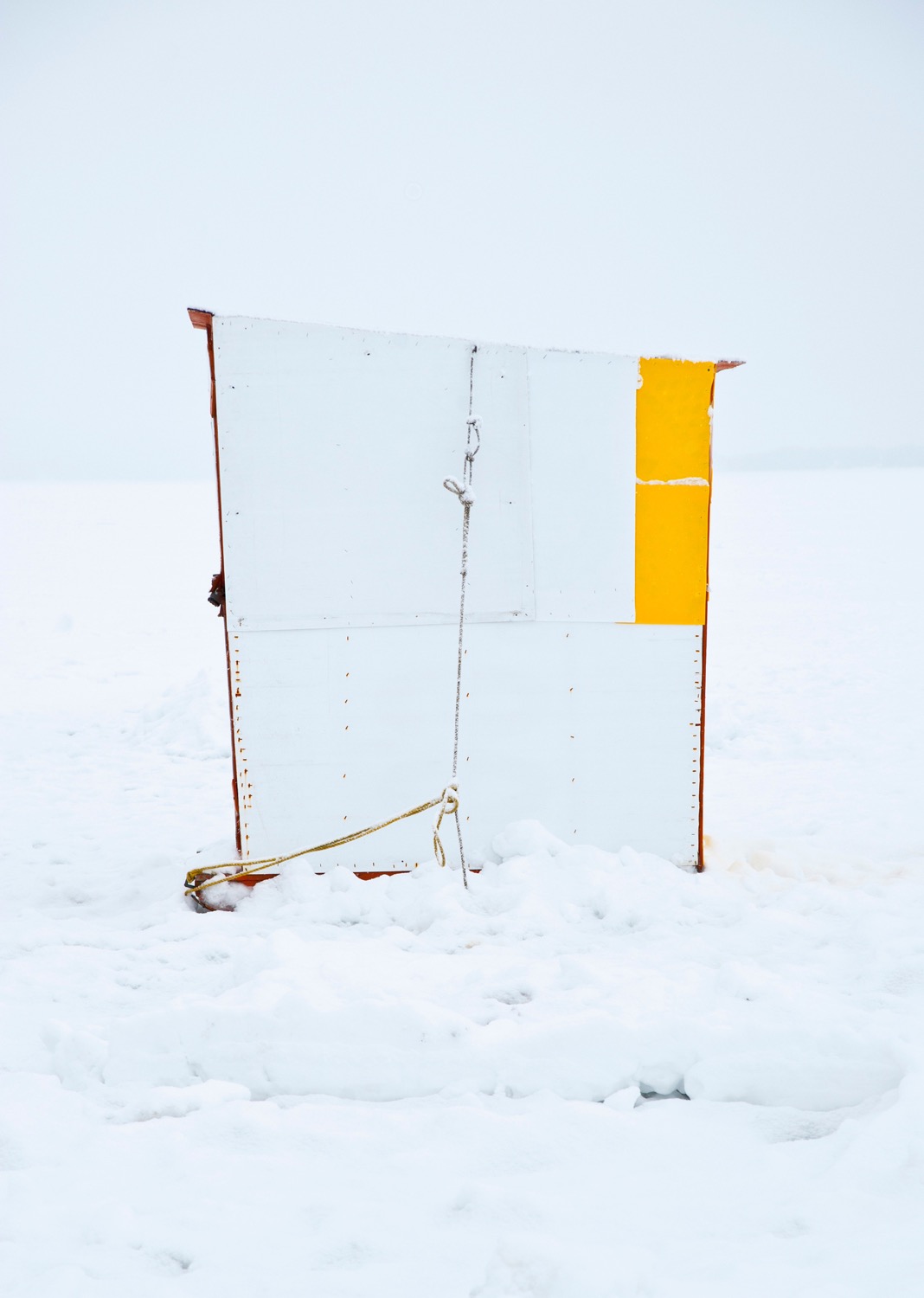
On Thin Ice interweaves vernacular photography with environmental witness. It documents the handmade ice huts, shelters often built from salvaged materials, set out on frozen waterways. In both Gaspé and Saguenay, ice fishing has long been a seasonal tradition, deeply rooted in the lives of settlers and Indigenous peoples alike.

But the season is vanishing. Once supported by ice 12 inches thick, this winter tradition has been destabilised. What was once a four-month season has been reduced to one month or has disappeared altogether. The huts now teeter on a literal and metaphorical edge, standing as symbols of cultural and ecological loss.

Local communities that have practised ice fishing since the 1950s now see their seasonal ritual slipping away. For Indigenous and Métis peoples, the impact is even more profound: thinning ice threatens mobility, food security and cultural continuity. Traditional practices such as trapping, fishing and ceremonial crossings, which are markers of identity and resilience, are increasingly at risk.
These humble, handcrafted ice huts speak to cultural resilience and adaptation. At the same time, they act as quiet sentinels of a vanishing season.


Initially drawn to their distinctive forms and the changing winter landscape, Rutenberg now approaches these structures as symbols of a disappearing seasonal tradition. As rising temperatures shorten the ice-fishing season, her photographs reveal the growing vulnerability of communities whose livelihoods and cultural practices depend on frozen waterways. The series connects vernacular architecture with broader questions of climate change, cultural continuity and environmental loss.
Linda Rutenberg: The fishing huts of the Gaspé Peninsula and the Saguenay region of northern Quebec have captivated me since I began photographing them in the winter of 2012. At first, I was drawn to the altered winter landscape and its tenuous balance between land and sea. Today, the project carries a more urgent meaning, symbolising the accelerating effects of climate change.
Today, the project carries a more urgent meaning, symbolising the accelerating effects of climate change.
On Thin Ice interweaves vernacular photography with environmental witness. It documents the handmade ice huts, shelters often built from salvaged materials, set out on frozen waterways. In both Gaspé and Saguenay, ice fishing has long been a seasonal tradition, deeply rooted in the lives of settlers and Indigenous peoples alike.
But the season is vanishing. Once supported by ice 12 inches thick, this winter tradition has been destabilised. What was once a four-month season has been reduced to one month or has disappeared altogether. The huts now teeter on a literal and metaphorical edge, standing as symbols of cultural and ecological loss.
Local communities that have practised ice fishing since the 1950s now see their seasonal ritual slipping away. For Indigenous and Métis peoples, the impact is even more profound: thinning ice threatens mobility, food security and cultural continuity. Traditional practices such as trapping, fishing and ceremonial crossings, which are markers of identity and resilience, are increasingly at risk.
These humble, handcrafted ice huts speak to cultural resilience and adaptation. At the same time, they act as quiet sentinels of a vanishing season.