© Michael Naify | Aerial
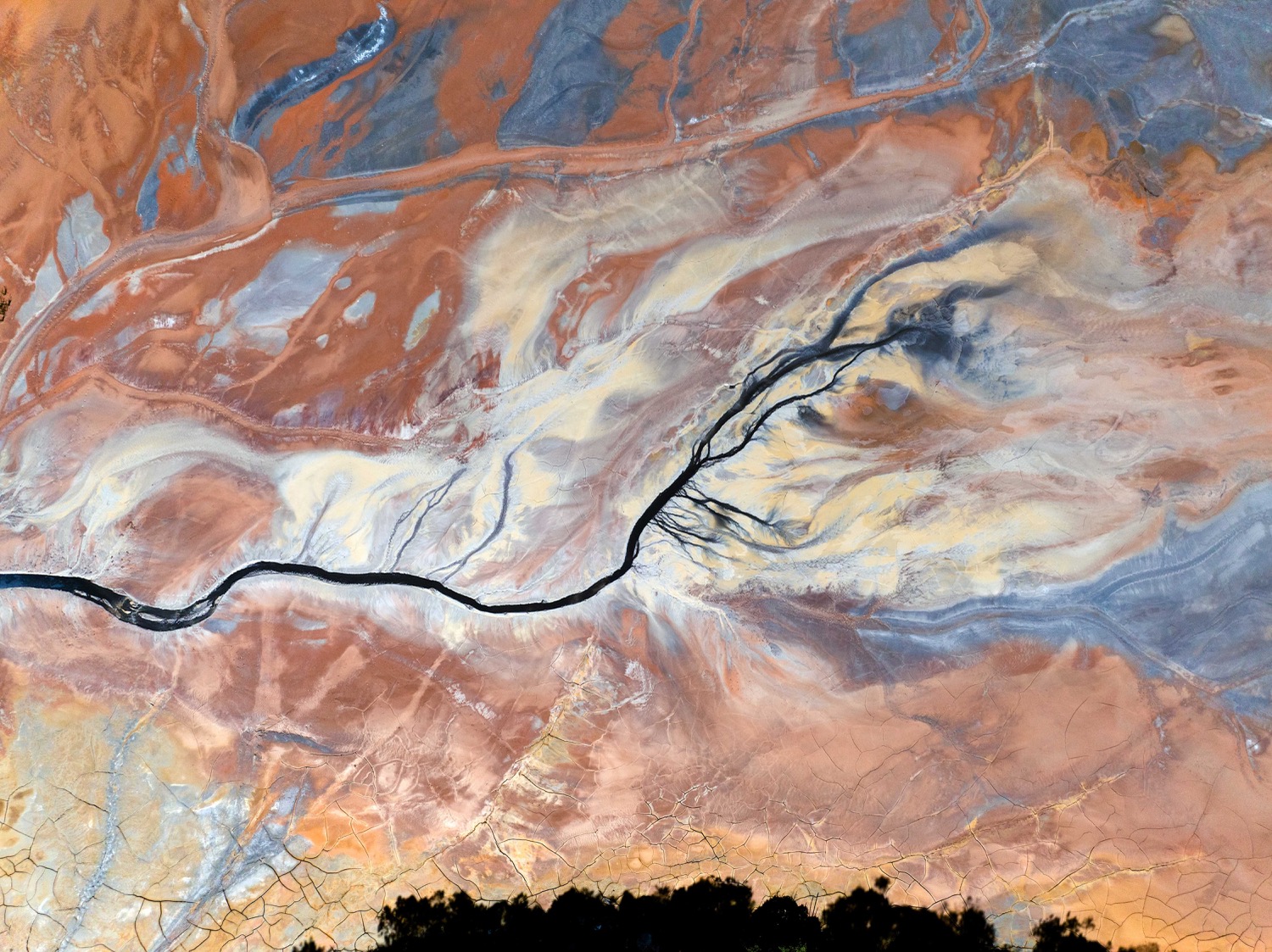
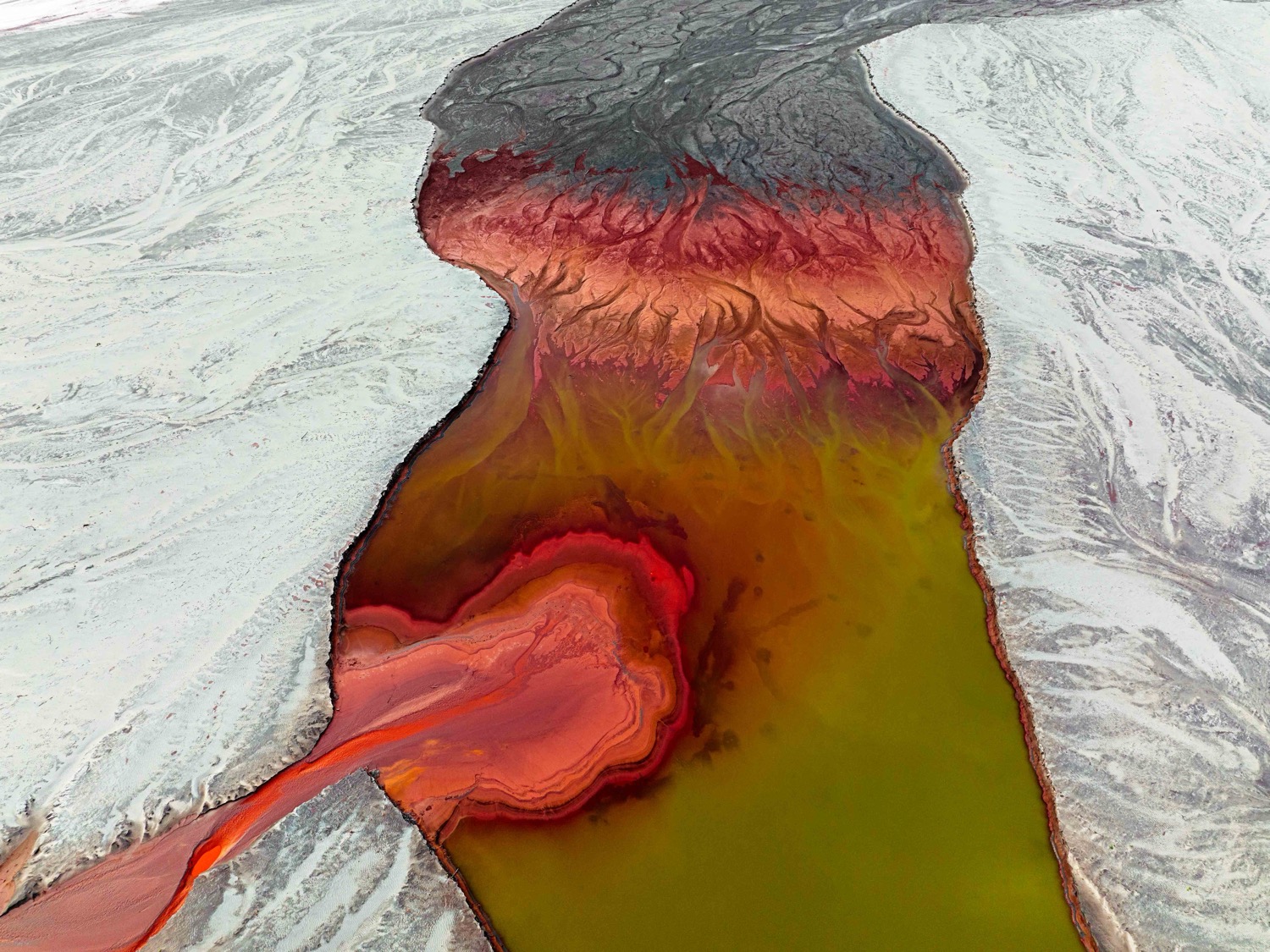
Terraced pit walls resemble geological layers, pools of toxic runoff are as vivid as pigments, and pipe networks reduce to geometric shapes reminiscent of circuit boards or ancient city layouts. The work supports a clear conceptual stance: the aerial view mirrors the perceptual distance that enables resource extraction at this scale, inviting viewers into the logic it depicts. Grounded in a region shaped by mining since the Portuguese colonial period, Aerial presents the landscape as both a visual attraction and a material reality.
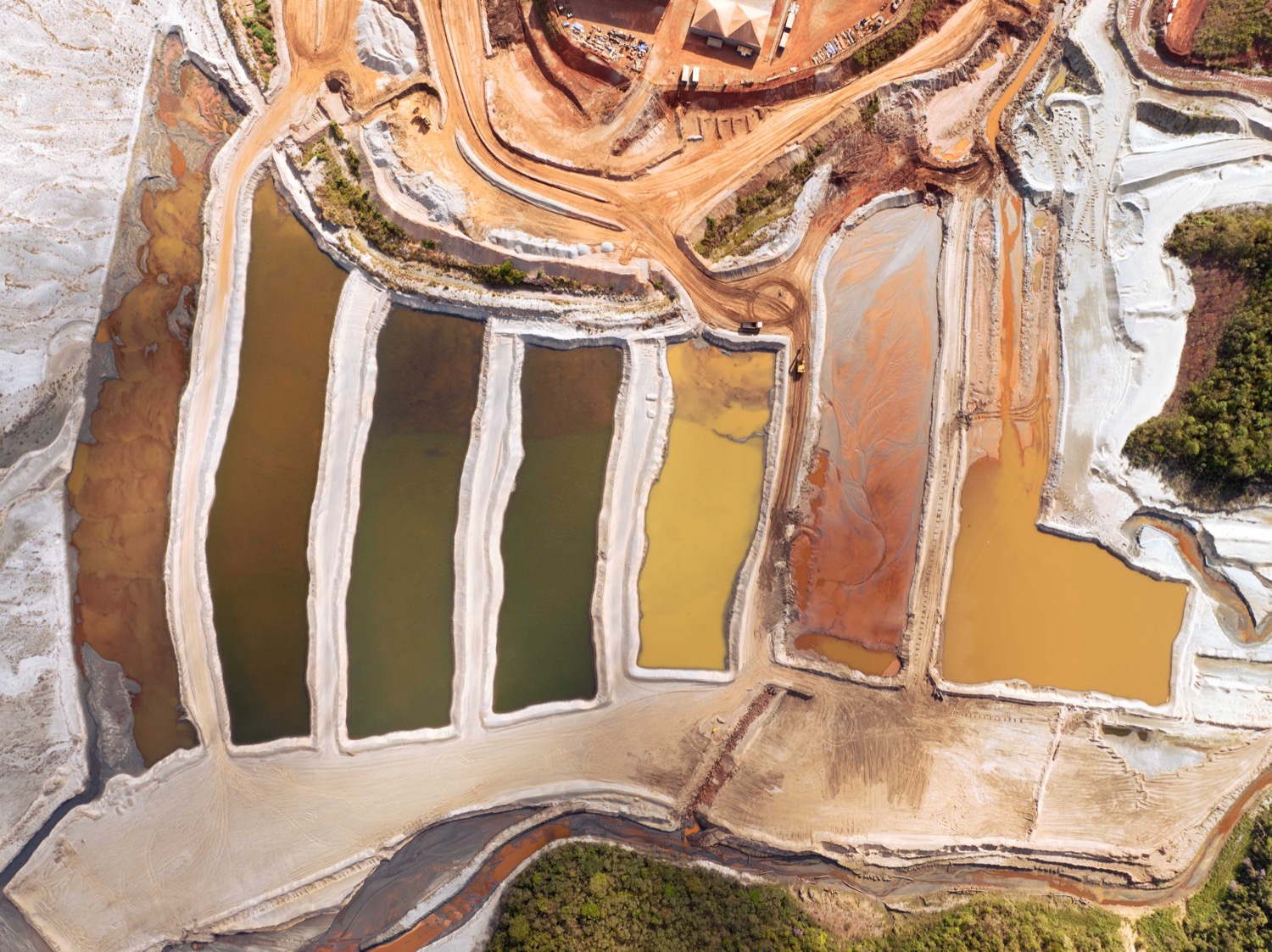
Michael Naify: I photograph iron mines and steel plants in Minas Gerais, Brazil, from the air. At this altitude, industrial landscapes shed their familiar scale and become abstract fields of colour, texture, and form, simultaneously beautiful and catastrophic.
At this altitude, industrial landscapes shed their familiar scale and become abstract fields of colour, texture, and form, simultaneously beautiful and catastrophic.
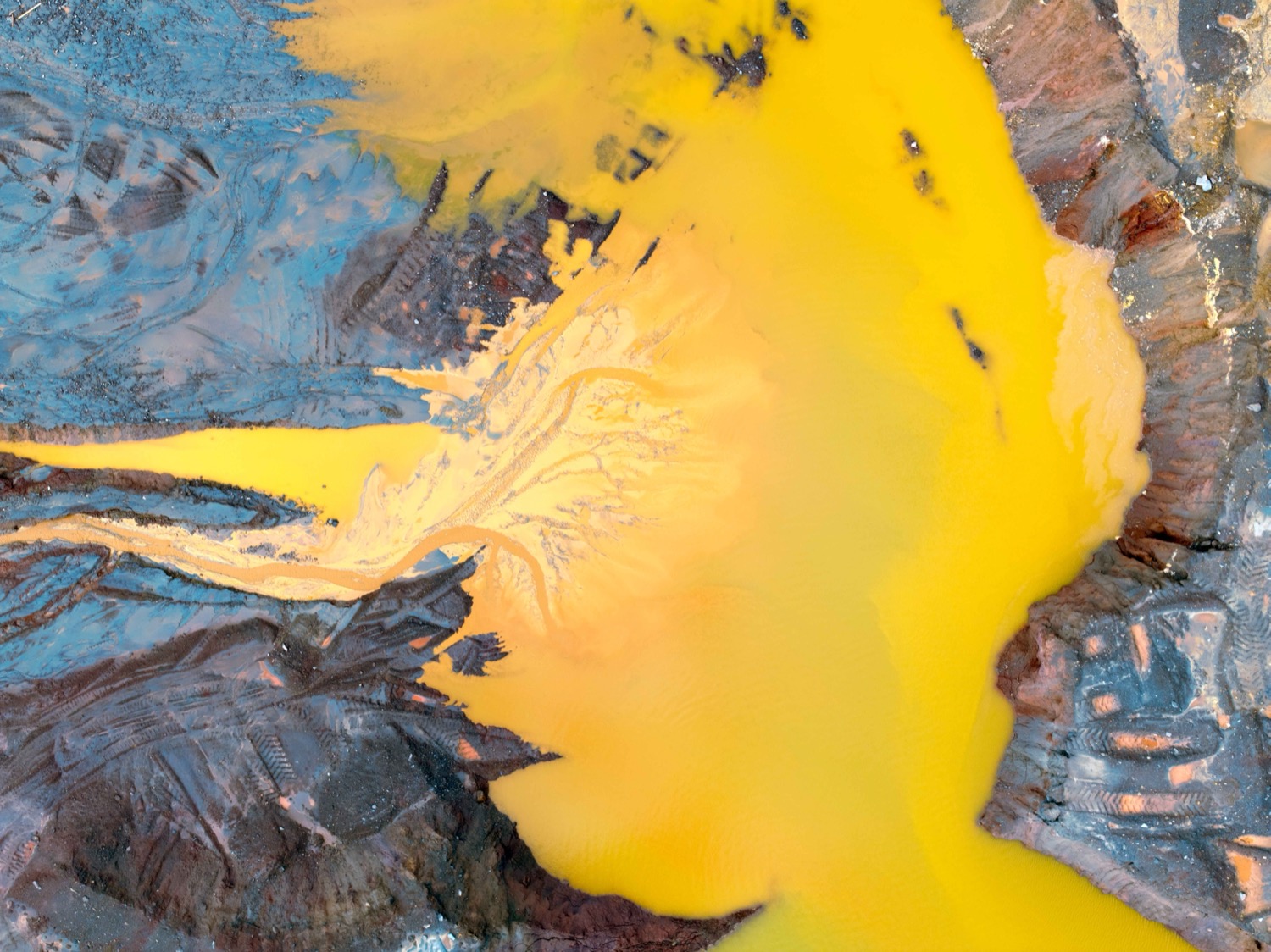
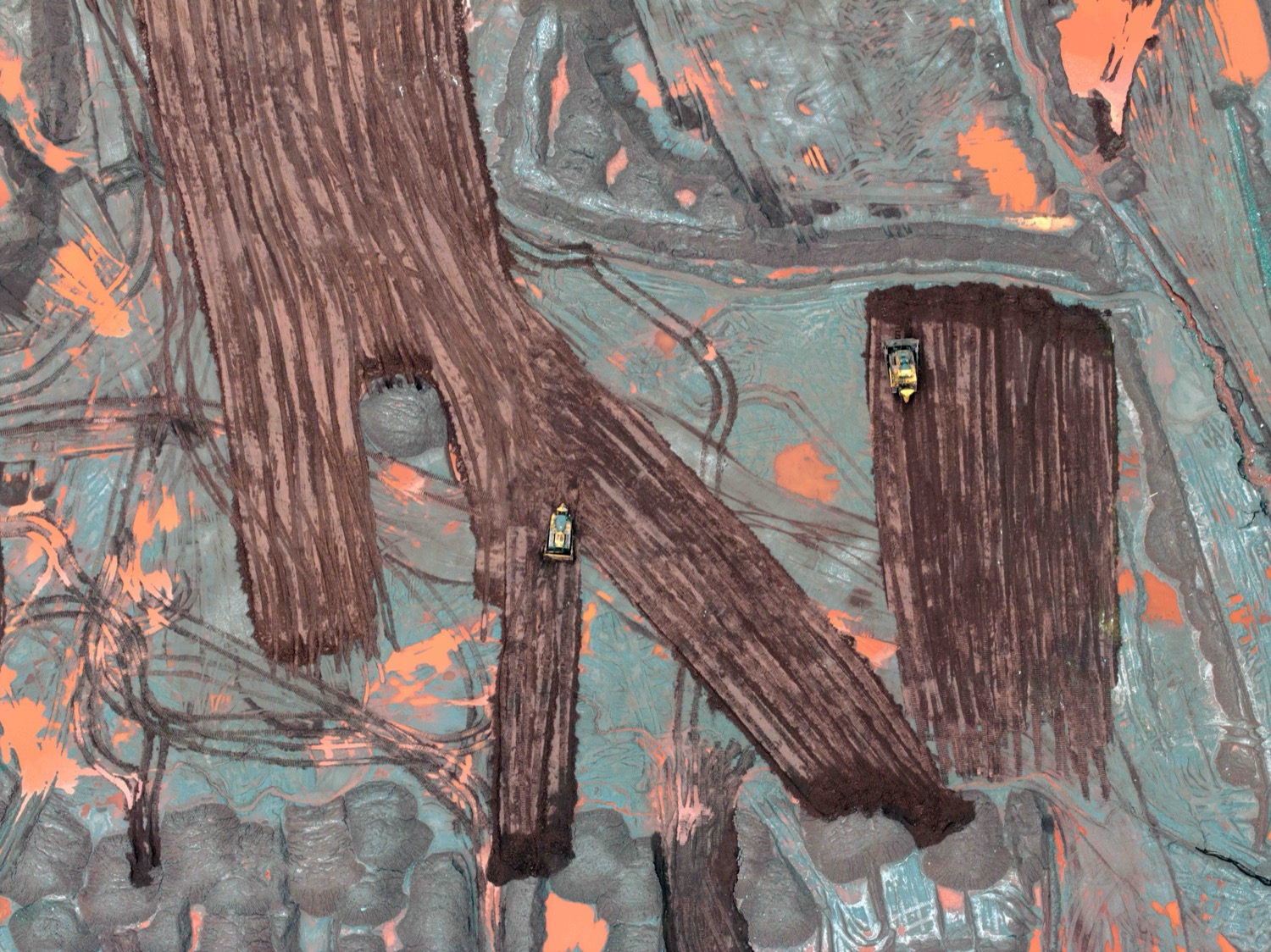
Terraced pit walls read as geological striations, layered bands of ochre, slate, and crimson that resemble cross-sections of deep time. Toxic orange water pools in excavated craters, its intensity like pigment on canvas. Green erosion netting drapes across exposed rock faces, evoking marbled paper or veined mineral specimens. Conveyor systems bisect the frame like ruled lines on a drawing. From above, blast furnaces, settling pools, and pipe networks flatten into dense geometry, indistinguishable from circuit boards or ancient city plans.

This abstraction is not incidental. The aerial view achieves the same perceptual distancing that allows extraction to continue at this scale. What appears as a painterly sweep of colour is contaminated runoff. What resembles elegant contour lines are roads carved into mountains that no longer exist. The seduction of these compositions implicates the viewer in the very logic they document: the conversion of living landscape into raw material, rendered visually consumable.

Minas Gerais, whose name means General Mines, has been defined by extraction since the Portuguese colonial era. These photographs trace their contemporary chapter: open-pit iron mining and steelmaking reshaping the region's terrain, waterways, and atmosphere. The camera looks down at what we have done to the earth, and the earth looks back — unrecognisable, territory suspended between landscape and wound, geology and ruin.
.svg)


.svg)
.svg)

Terraced pit walls resemble geological layers, pools of toxic runoff are as vivid as pigments, and pipe networks reduce to geometric shapes reminiscent of circuit boards or ancient city layouts. The work supports a clear conceptual stance: the aerial view mirrors the perceptual distance that enables resource extraction at this scale, inviting viewers into the logic it depicts. Grounded in a region shaped by mining since the Portuguese colonial period, Aerial presents the landscape as both a visual attraction and a material reality.
Michael Naify: I photograph iron mines and steel plants in Minas Gerais, Brazil, from the air. At this altitude, industrial landscapes shed their familiar scale and become abstract fields of colour, texture, and form, simultaneously beautiful and catastrophic.
At this altitude, industrial landscapes shed their familiar scale and become abstract fields of colour, texture, and form, simultaneously beautiful and catastrophic.
Terraced pit walls read as geological striations, layered bands of ochre, slate, and crimson that resemble cross-sections of deep time. Toxic orange water pools in excavated craters, its intensity like pigment on canvas. Green erosion netting drapes across exposed rock faces, evoking marbled paper or veined mineral specimens. Conveyor systems bisect the frame like ruled lines on a drawing. From above, blast furnaces, settling pools, and pipe networks flatten into dense geometry, indistinguishable from circuit boards or ancient city plans.
This abstraction is not incidental. The aerial view achieves the same perceptual distancing that allows extraction to continue at this scale. What appears as a painterly sweep of colour is contaminated runoff. What resembles elegant contour lines are roads carved into mountains that no longer exist. The seduction of these compositions implicates the viewer in the very logic they document: the conversion of living landscape into raw material, rendered visually consumable.
Minas Gerais, whose name means General Mines, has been defined by extraction since the Portuguese colonial era. These photographs trace their contemporary chapter: open-pit iron mining and steelmaking reshaping the region's terrain, waterways, and atmosphere. The camera looks down at what we have done to the earth, and the earth looks back — unrecognisable, territory suspended between landscape and wound, geology and ruin.
Terraced pit walls resemble geological layers, pools of toxic runoff are as vivid as pigments, and pipe networks reduce to geometric shapes reminiscent of circuit boards or ancient city layouts. The work supports a clear conceptual stance: the aerial view mirrors the perceptual distance that enables resource extraction at this scale, inviting viewers into the logic it depicts. Grounded in a region shaped by mining since the Portuguese colonial period, Aerial presents the landscape as both a visual attraction and a material reality.
Michael Naify: I photograph iron mines and steel plants in Minas Gerais, Brazil, from the air. At this altitude, industrial landscapes shed their familiar scale and become abstract fields of colour, texture, and form, simultaneously beautiful and catastrophic.
At this altitude, industrial landscapes shed their familiar scale and become abstract fields of colour, texture, and form, simultaneously beautiful and catastrophic.
Terraced pit walls read as geological striations, layered bands of ochre, slate, and crimson that resemble cross-sections of deep time. Toxic orange water pools in excavated craters, its intensity like pigment on canvas. Green erosion netting drapes across exposed rock faces, evoking marbled paper or veined mineral specimens. Conveyor systems bisect the frame like ruled lines on a drawing. From above, blast furnaces, settling pools, and pipe networks flatten into dense geometry, indistinguishable from circuit boards or ancient city plans.
This abstraction is not incidental. The aerial view achieves the same perceptual distancing that allows extraction to continue at this scale. What appears as a painterly sweep of colour is contaminated runoff. What resembles elegant contour lines are roads carved into mountains that no longer exist. The seduction of these compositions implicates the viewer in the very logic they document: the conversion of living landscape into raw material, rendered visually consumable.
Minas Gerais, whose name means General Mines, has been defined by extraction since the Portuguese colonial era. These photographs trace their contemporary chapter: open-pit iron mining and steelmaking reshaping the region's terrain, waterways, and atmosphere. The camera looks down at what we have done to the earth, and the earth looks back — unrecognisable, territory suspended between landscape and wound, geology and ruin.