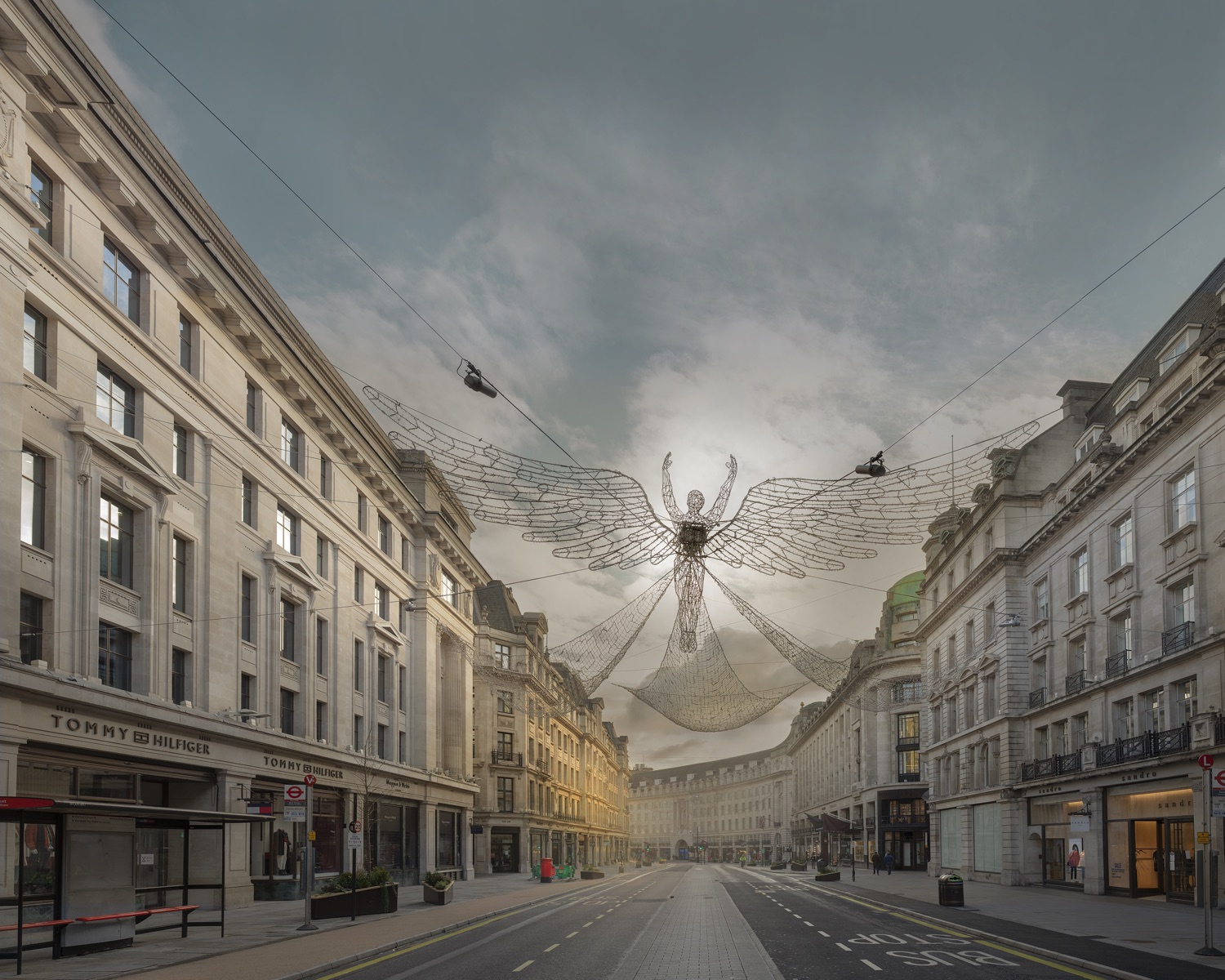
© Chris Dorley-Brown | Regent st 2021
Although Dorley-Brown's work maintains a consistent and thoughtfully crafted style and atmosphere, he views it as an organic evolution driven by an instinctive, deeply felt gut feeling that is not verbally expressed. Near Dark developed naturally from his prior project, Empty London, created during the COVID period. “This work allowed me to explore additional ideas not directly related to the pandemic or lockdown, but they naturally became part of it. Like most of my projects, I create the images without a preset plan or theme. I don't work toward a specific brief or concept. I often realise what the project is about only when about 80% of the images are completed."
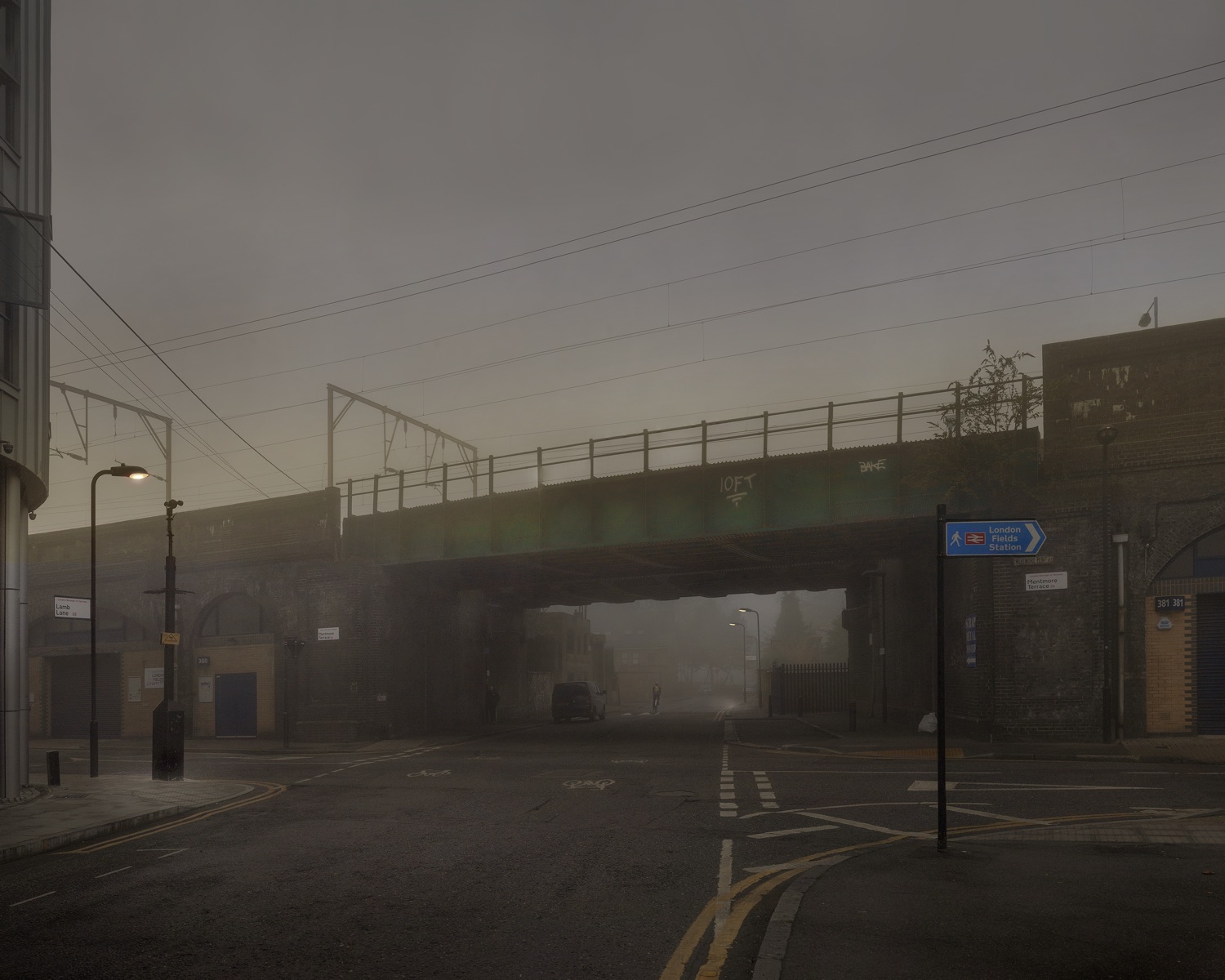
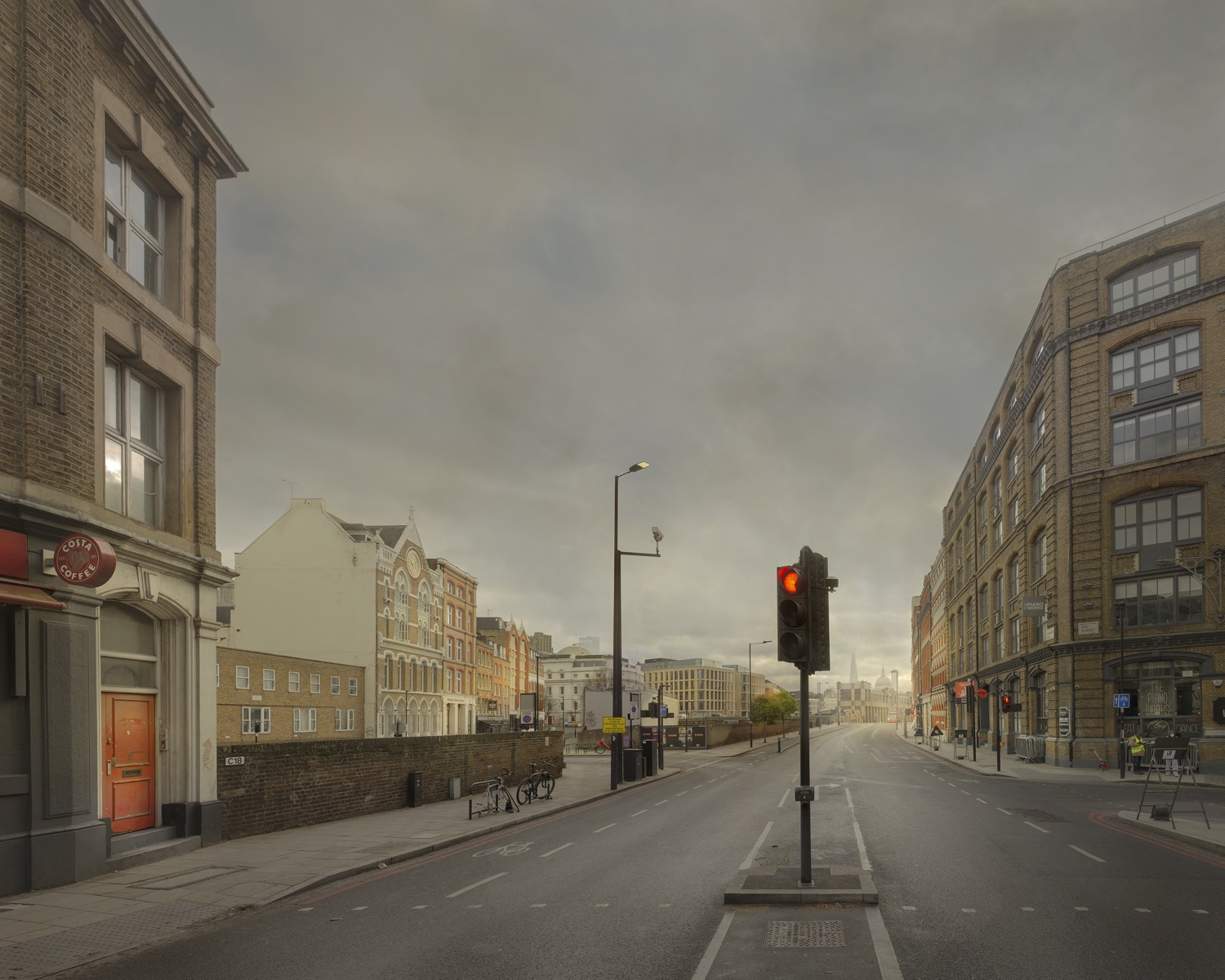
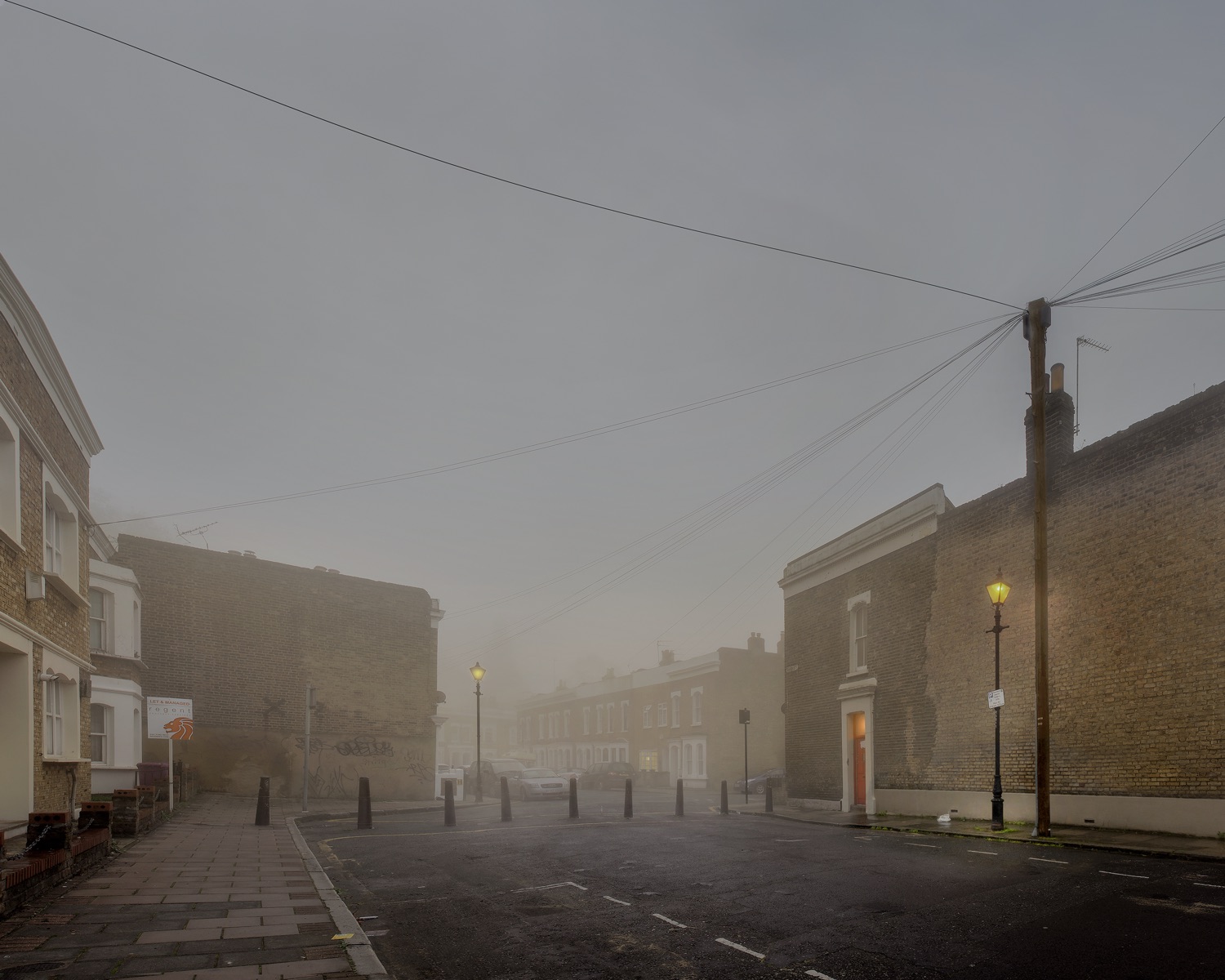
All photographs of Near Dark, as the title indicates, were taken during twilight around dusk or sunrise. This brief timeframe created an atmosphere that perfectly expressed the essence of the gloomy era we live in. “The photographs are a response with a camera to what I'm going through and what I'm feeling. I believe Near Dark captures the essence of these unusual times we're living through, even though the title was taken from Kathryn Bigelow's 1987 horror film. Many say we're in strange times, but what does that really mean? How can I define it? How should I, as a photographer, respond? I appreciated the title and felt it suited this moment.”
The photographs are a response with a camera to what I'm going through and what I'm feeling.
Brexit
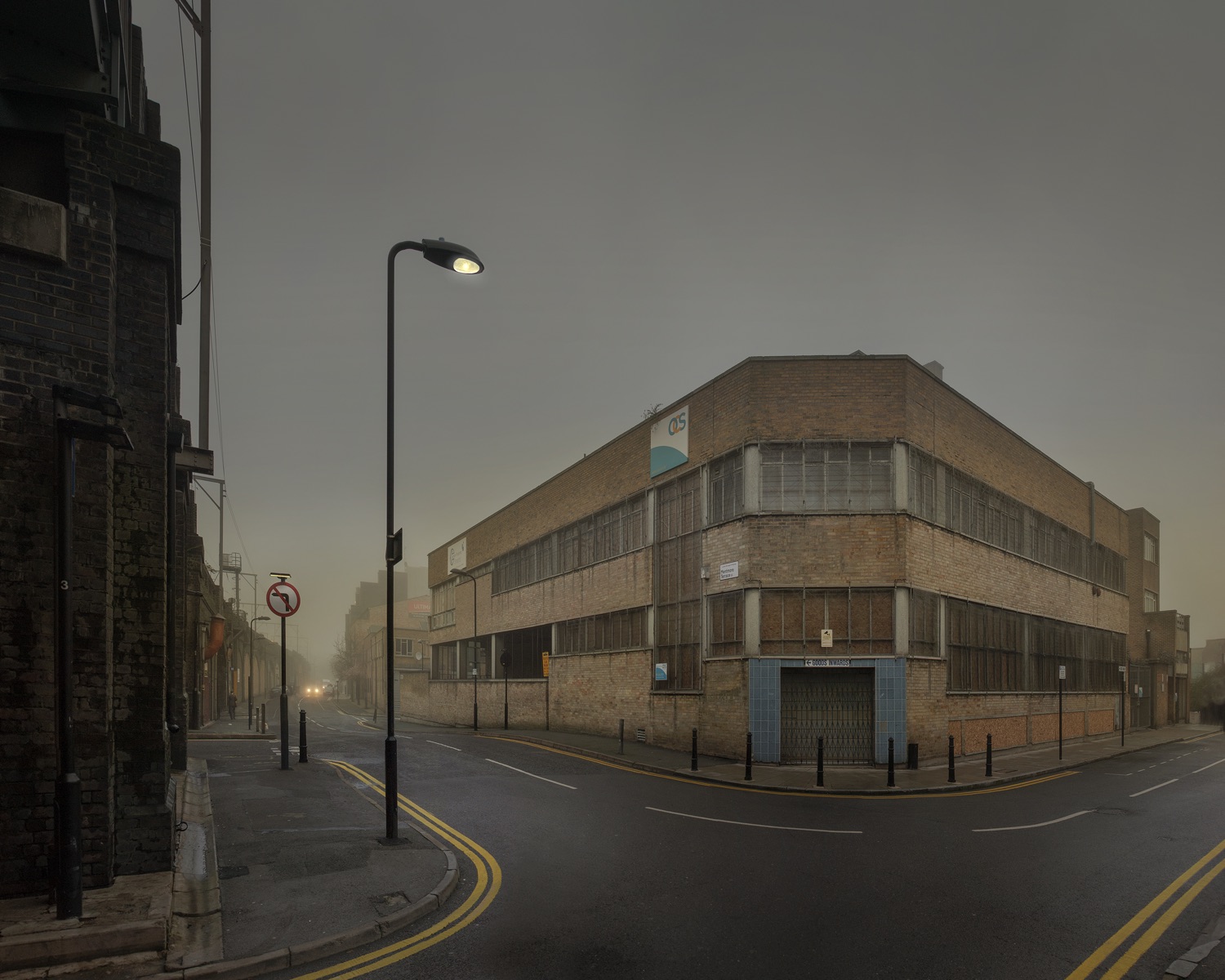
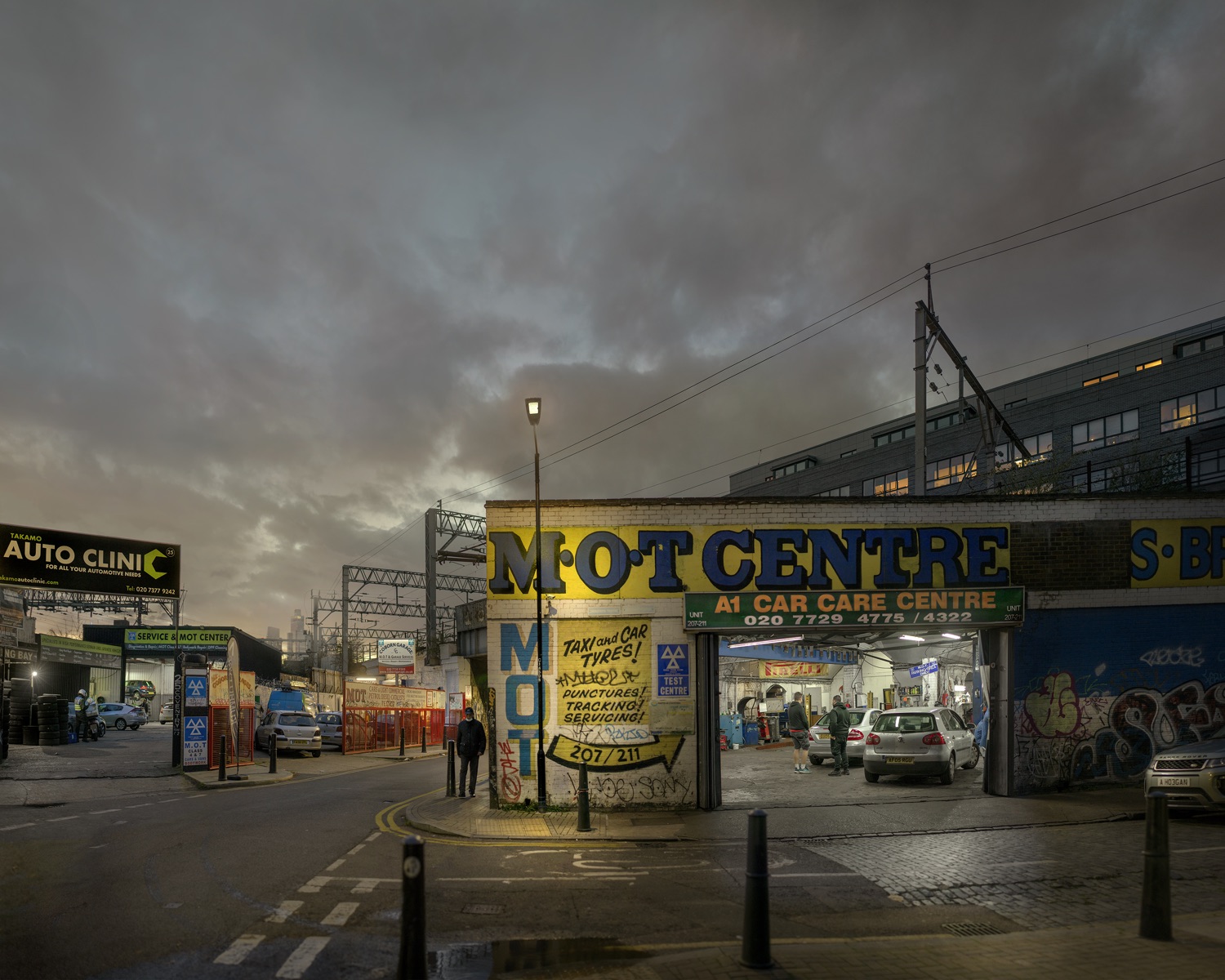
In the images of Near Dark, we see seemingly random spots in London, like the photo Three Colts Lane, 2020, with a brightly illuminated MOT centre in a typically urban industrial area. The darkness in the photograph seems to cast a shadow over a perfectly ordinary scene. But there is more to sense in the twilight. A key political context for this series was the disaster called Brexit, the United Kingdom’s 2020 exit from the European Union, which deeply divided the country and caused ongoing economic and political instability. Initial promises of increased sovereignty and prosperity were disappointingly replaced by trade barriers, labour shortages, and rising national disillusionment. Dorley-Brown: “At the start of Brexit I suspected that things were going to get worse, and they did. We entered a period of prevarication and a lack of confidence. I felt people were being divided, even within families, about what it meant to be outside of Europe. And we started questioning our own identity, and nearly all of it harkened back to the British Empire, the war, and Winston Churchill. Even though we have prime ministers who have been sympathetic to staying in the European Union, they haven't had the courage, or the knowledge, to reverse the decision. I like the challenge of thinking: how do I photograph this underlying theme? How do I photograph something that’s a vague feeling in the air? The theme is not a concrete object, nor a place. How do I make pictures that respond to my emotional condition?”
Composites of many shots
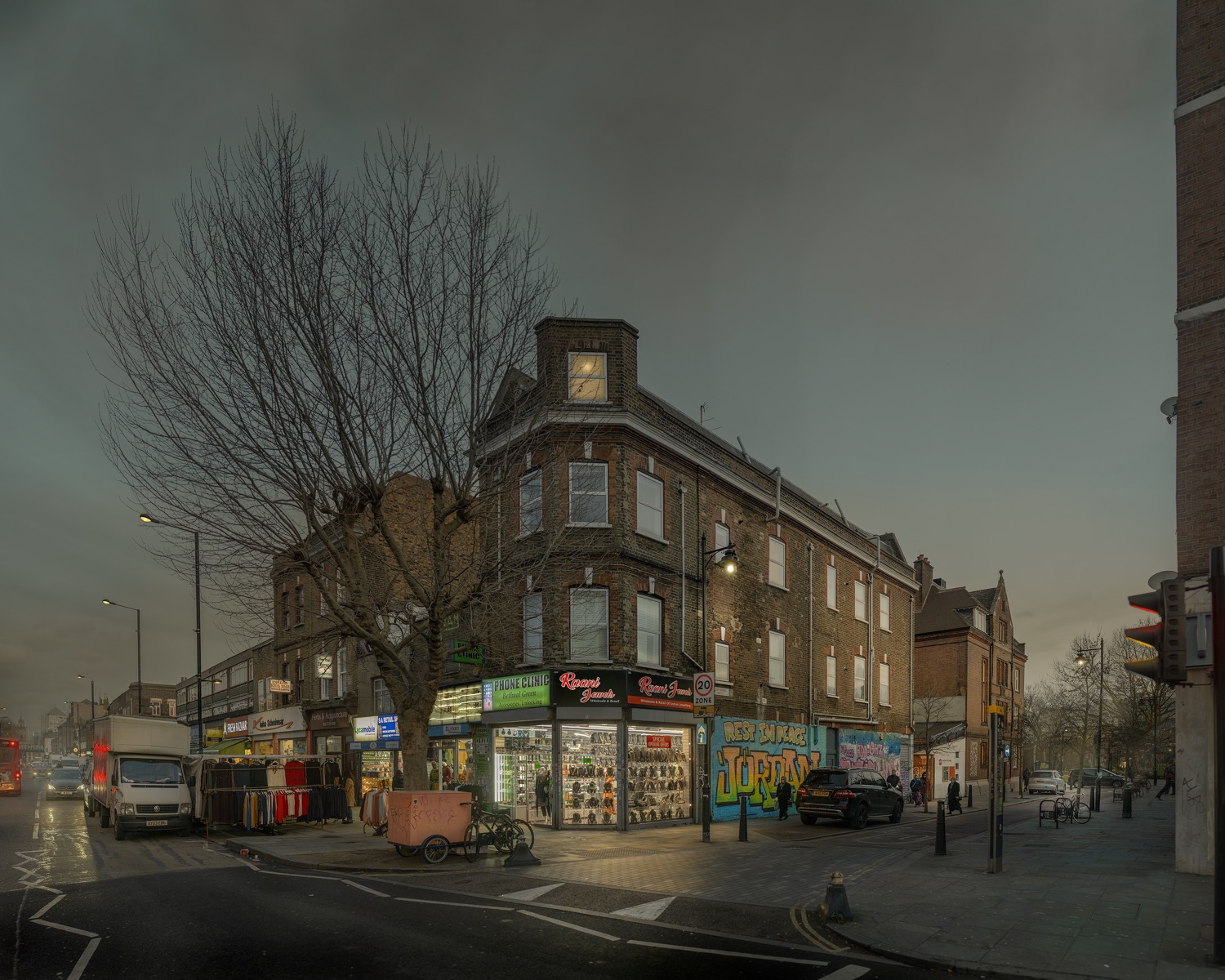
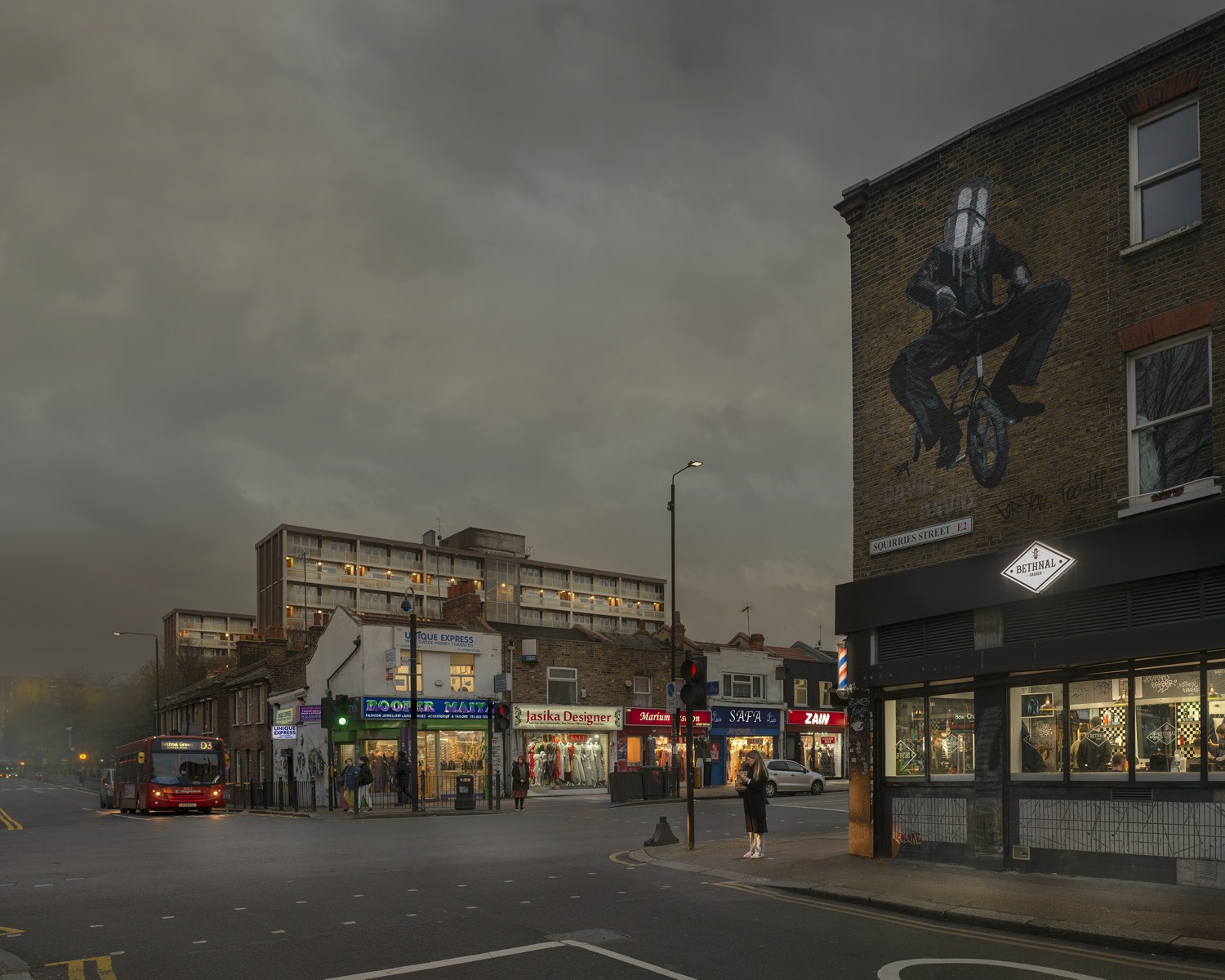
In the photo Squirries Street, 2022, we see the illuminated shop windows of a jeweller shop, fashion shops, and a barber, while people on the street wait for the traffic light or look at their phones. A dark, cloudy sky, which could have been borrowed from a 19th-century painting, dominates the urban scene. As with his other works, Chris Dorley-Brown does not create his images with a single point-and-shoot camera. Instead, he carefully composes his final photo-canvas in Photoshop, using a multitude of details from the scene. There is no decisive moment but a construction of many moments within the short time span. “I still regard myself as a documentary photographer, but not in the strict sense of the word. I meet many people who I like and respect, who still believe in a purity in the form of photography, which is a Cartier-Bresson idea that photos should not be cropped, and should be shot in a 1/60th of a second. But my pictures are composites; they're taken over many minutes, sometimes an hour. Each part of the image is photographed at a different moment, and then I stitch them together to make a completely fabricated image, as I did with my earlier book The Corners.”
The people we see in the picture were actually in that spot, but not all at the same time. They are carefully put in the frame like in a puzzle. Even the light in the photos is a combination of many single shots with subtle differences. This approach suggests that single-shot photography is no longer the holy grail. We live in a time when photography is expanded by a wider vision, in which the image can be the outcome of multifaceted moments and perspectives, blended into one frame. David Hockney, who experimented extensively with photography, criticised the conventional photograph for freezing reality into a fraction of a second. Human vision, he argued, unfolds through time: viewpoints change, and memory connects successive moments into our experience of the world. This view forms the background of Dorley-Brown: “I photograph all details separately, then I join them together. What I end up with is more like a painting. I've always been interested in approaching the idea of putting time into an image and, along with it, considering all the elements like light and moments to make a final image. I don’t say I show reality; I'm saying it's the truth. They're very distinct, different things.”
Light of Glory and Gloom
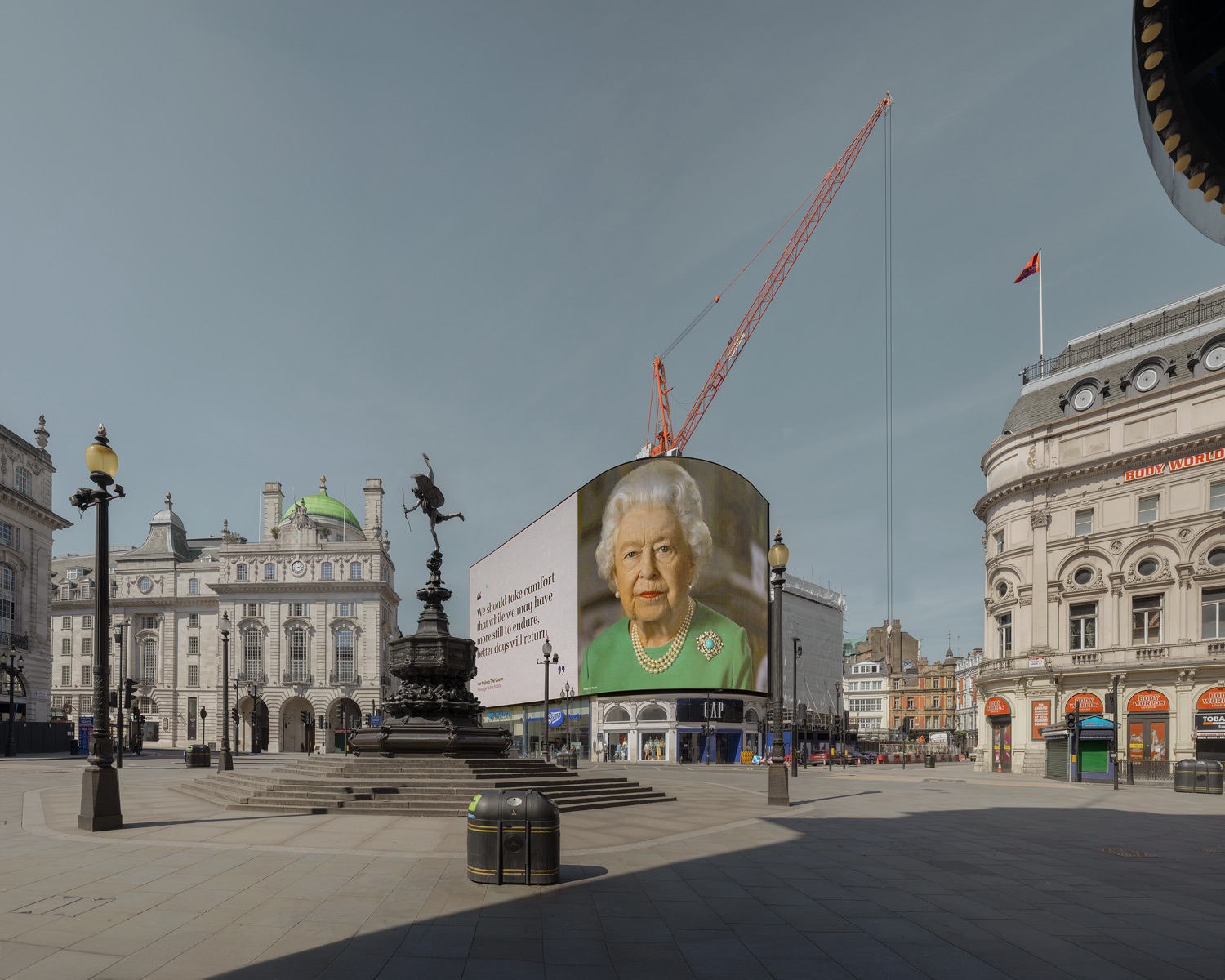
One remarkable photograph is the one shot during COVID at the famous Piccadilly Circus, where normally the big screens of Coca-Cola dominate the square. Here we see (now late, but at the time alive) Queen Elizabeth, visually with a construction crane above her head and, to the left of her, a quote saying: “We should take comfort that while we may have more still to endure, better days will return.” It is a comforting statement, made to an absent audience, leaving doubt as to the extent to which the better days will arrive. “It was a very interesting visual idea that this space, which normally is full of people, was empty. On the day I was there when the Queen was in the space, everyone was told to stay indoors. I was the only person there. The same evening, it was Coca-Cola again.”
Chris Dorley-Brown premeditated his pictures beforehand, scouting the right spots on his bicycle. “I normally only make one or two pictures per day because they take a long time. When I've made one picture, I look for the location for the next one. So I will cycle around; I try to predict what the light will be doing. I imagine what a suitable time would be at sundown, considering the sun's direction. I often looked at numerous paintings by Canaletto and Turner, and painters who depicted London in a kind of certain light. Those were my influences at the time, mostly paintings made in the 17th and 18th centuries, when the British Empire was expanding, and there was a desire for pictures that reflected its growing power. There was a symbiosis between a certain kind of light and a certain kind of glory.”
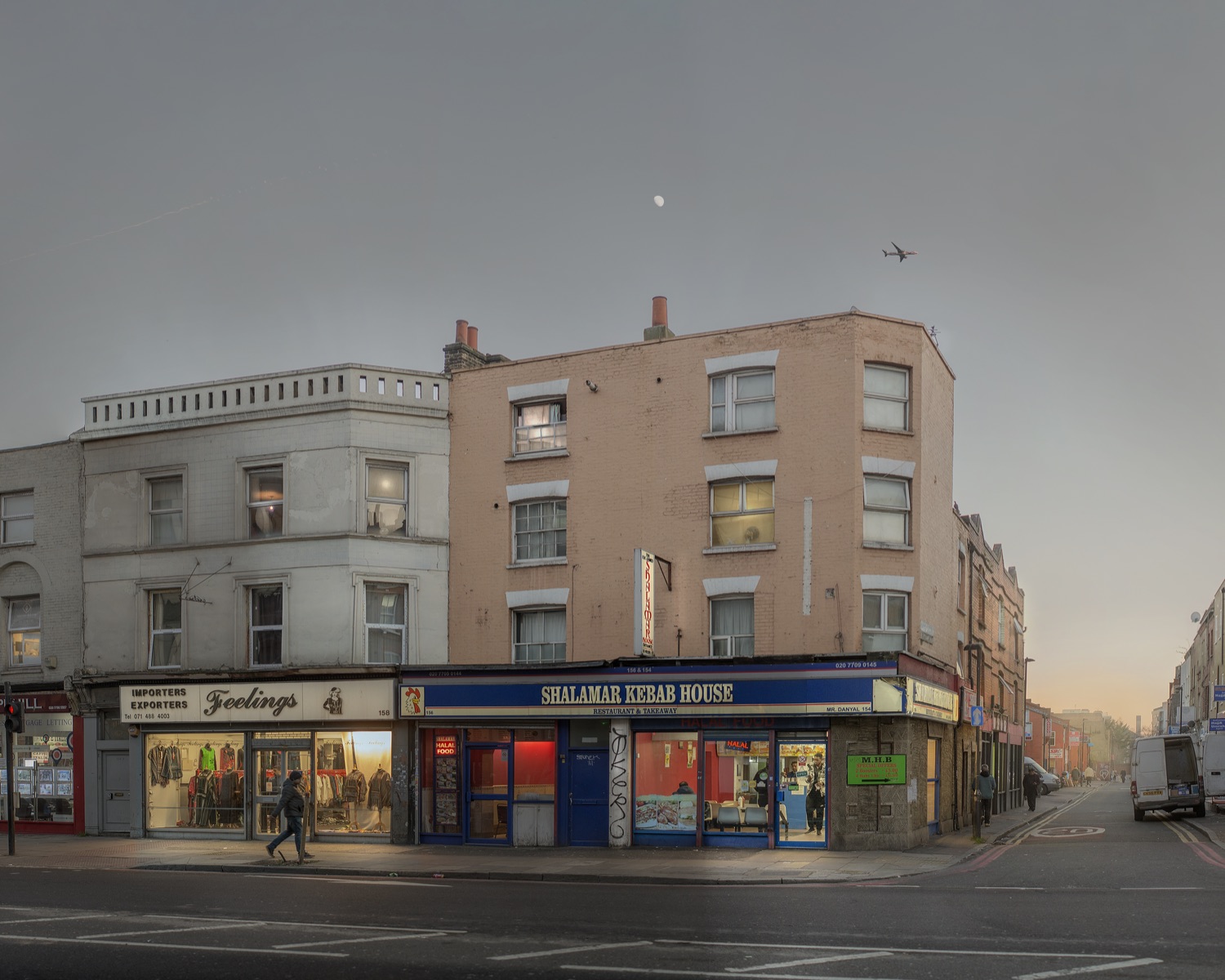
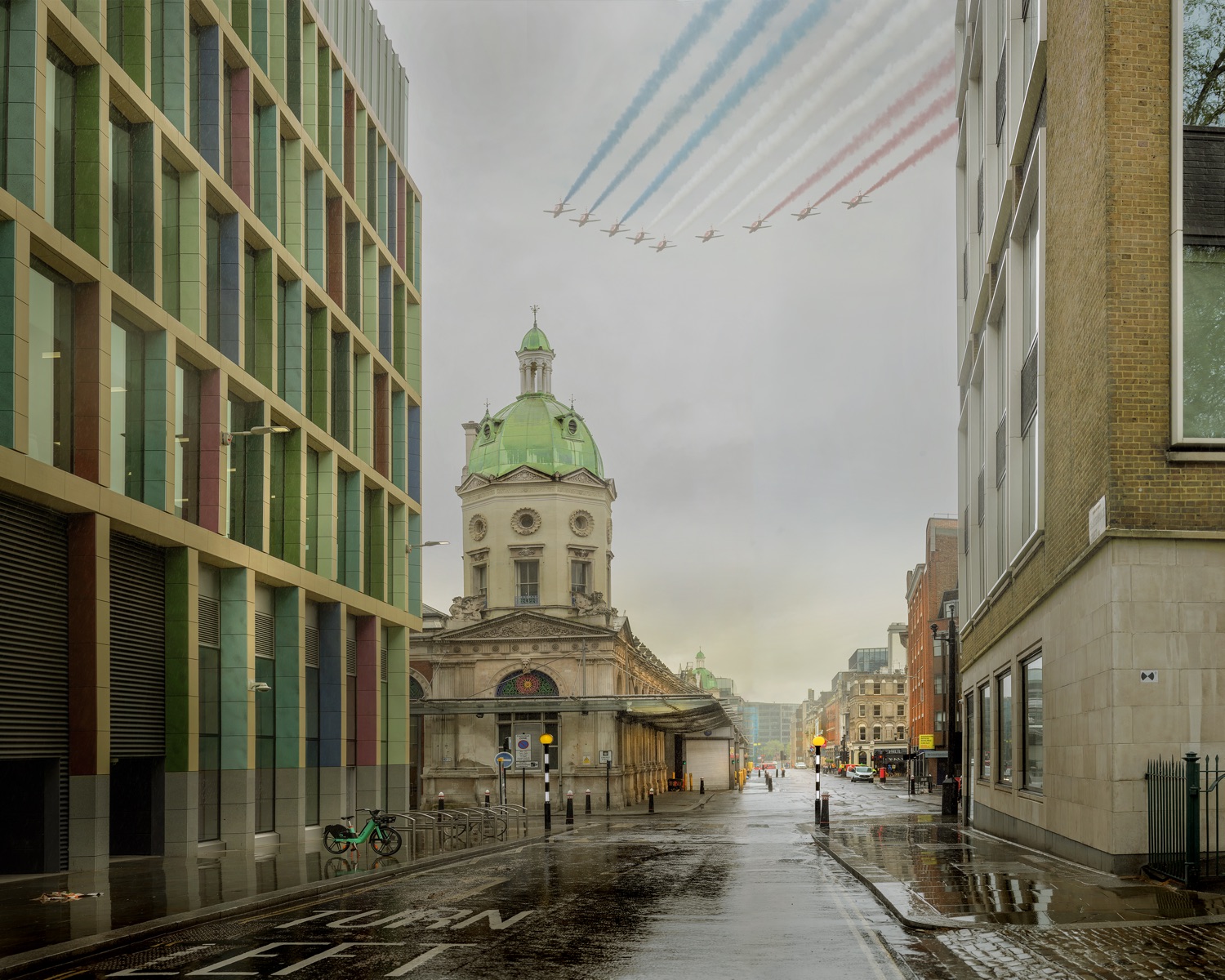
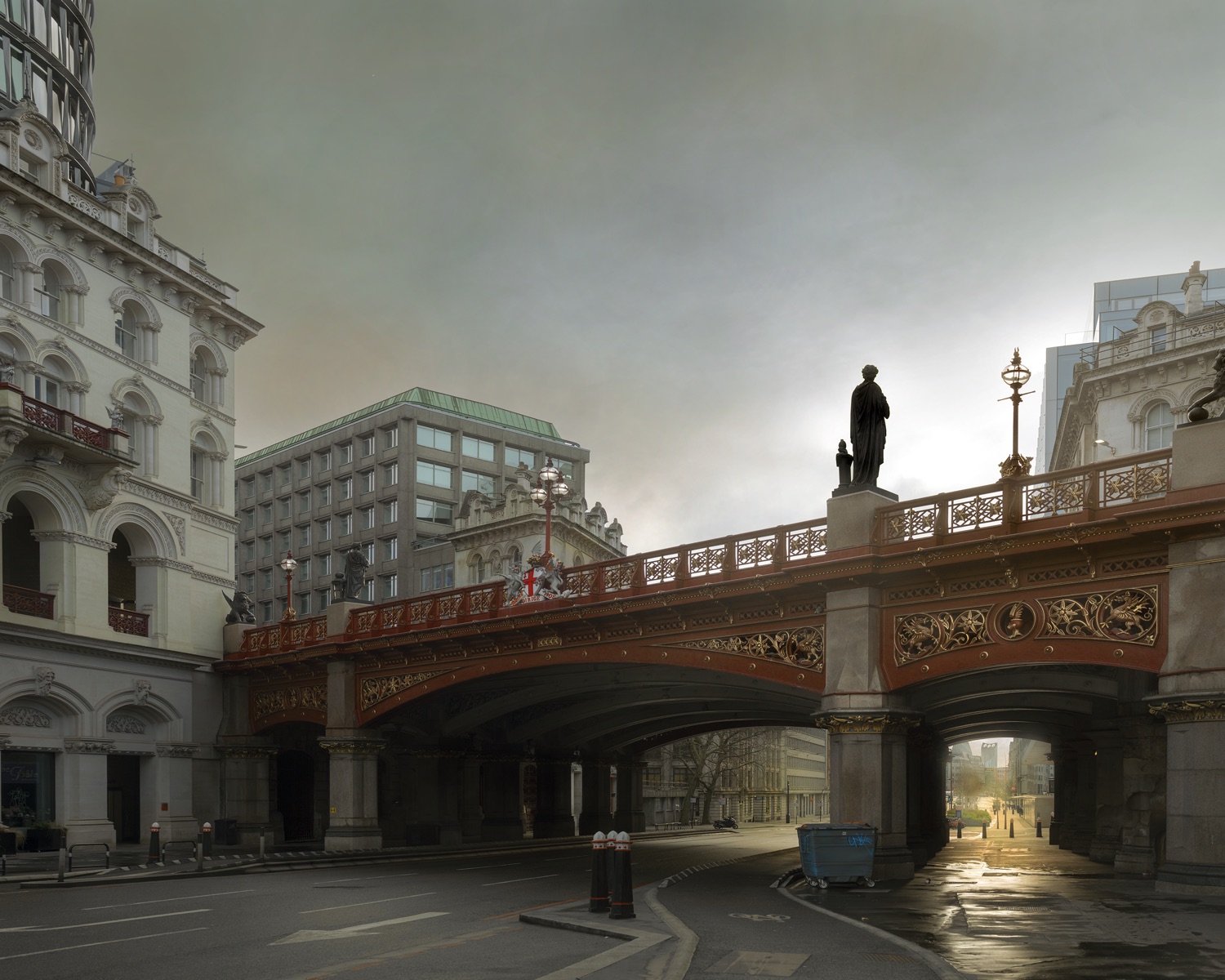
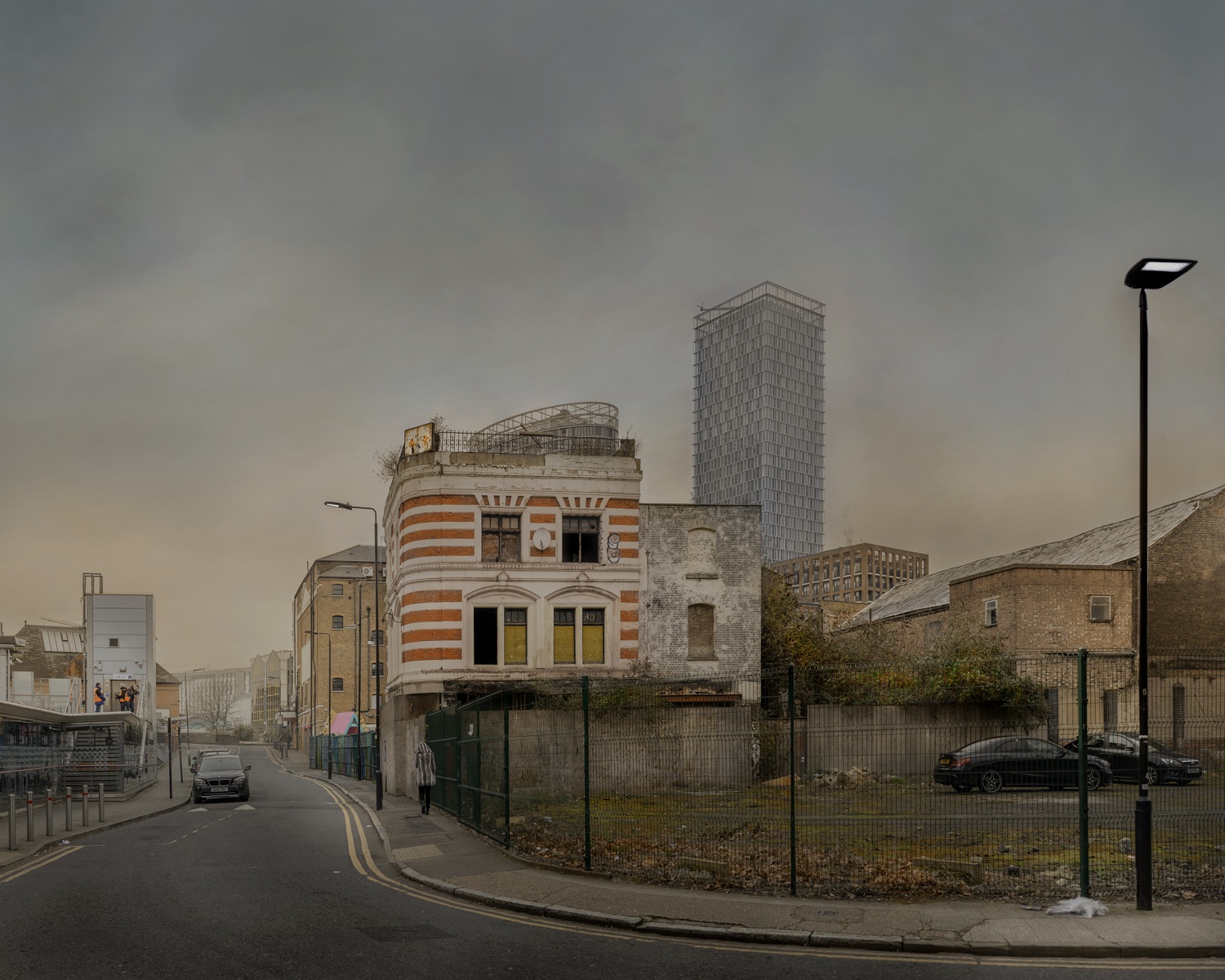
Dorley Brown turned this glory upside down and sought the light of gloom, blending it with darker tones. The images – or perhaps we could call them photographic paintings or constructed tableaux – feature subdued, unsaturated colours that reflect the transience and decay of modern London, alongside a sense of ominous anxiety and dread. This work offers a 21st-century take on the romantic sublime, no longer evoking fear of overpowering nature but highlighting mankind's destructive potential. “My colours are a sort of thick soup. I don't change colours that much, but I do process them very flat, with very low contrast. So the shadows emerge in a very interesting way. And the highlights don't get burnt out.” The combination of light, colour, subject matter, and underlying narrative makes Near Dark a thought-provoking series where locations and spaces reach beyond what they immediately show, evoking a wider story about the times we live in.
Many say we're in strange times, but what does that really mean? How can I define it? How should I, as a photographer, respond?
.svg)


.svg)
.svg)

Although Dorley-Brown's work maintains a consistent and thoughtfully crafted style and atmosphere, he views it as an organic evolution driven by an instinctive, deeply felt gut feeling that is not verbally expressed. Near Dark developed naturally from his prior project, Empty London, created during the COVID period. “This work allowed me to explore additional ideas not directly related to the pandemic or lockdown, but they naturally became part of it. Like most of my projects, I create the images without a preset plan or theme. I don't work toward a specific brief or concept. I often realise what the project is about only when about 80% of the images are completed."
All photographs of Near Dark, as the title indicates, were taken during twilight around dusk or sunrise. This brief timeframe created an atmosphere that perfectly expressed the essence of the gloomy era we live in. “The photographs are a response with a camera to what I'm going through and what I'm feeling. I believe Near Dark captures the essence of these unusual times we're living through, even though the title was taken from Kathryn Bigelow's 1987 horror film. Many say we're in strange times, but what does that really mean? How can I define it? How should I, as a photographer, respond? I appreciated the title and felt it suited this moment.”
The photographs are a response with a camera to what I'm going through and what I'm feeling.
Brexit
In the images of Near Dark, we see seemingly random spots in London, like the photo Three Colts Lane, 2020, with a brightly illuminated MOT centre in a typically urban industrial area. The darkness in the photograph seems to cast a shadow over a perfectly ordinary scene. But there is more to sense in the twilight. A key political context for this series was the disaster called Brexit, the United Kingdom’s 2020 exit from the European Union, which deeply divided the country and caused ongoing economic and political instability. Initial promises of increased sovereignty and prosperity were disappointingly replaced by trade barriers, labour shortages, and rising national disillusionment. Dorley-Brown: “At the start of Brexit I suspected that things were going to get worse, and they did. We entered a period of prevarication and a lack of confidence. I felt people were being divided, even within families, about what it meant to be outside of Europe. And we started questioning our own identity, and nearly all of it harkened back to the British Empire, the war, and Winston Churchill. Even though we have prime ministers who have been sympathetic to staying in the European Union, they haven't had the courage, or the knowledge, to reverse the decision. I like the challenge of thinking: how do I photograph this underlying theme? How do I photograph something that’s a vague feeling in the air? The theme is not a concrete object, nor a place. How do I make pictures that respond to my emotional condition?”
Composites of many shots
In the photo Squirries Street, 2022, we see the illuminated shop windows of a jeweller shop, fashion shops, and a barber, while people on the street wait for the traffic light or look at their phones. A dark, cloudy sky, which could have been borrowed from a 19th-century painting, dominates the urban scene. As with his other works, Chris Dorley-Brown does not create his images with a single point-and-shoot camera. Instead, he carefully composes his final photo-canvas in Photoshop, using a multitude of details from the scene. There is no decisive moment but a construction of many moments within the short time span. “I still regard myself as a documentary photographer, but not in the strict sense of the word. I meet many people who I like and respect, who still believe in a purity in the form of photography, which is a Cartier-Bresson idea that photos should not be cropped, and should be shot in a 1/60th of a second. But my pictures are composites; they're taken over many minutes, sometimes an hour. Each part of the image is photographed at a different moment, and then I stitch them together to make a completely fabricated image, as I did with my earlier book The Corners.”
The people we see in the picture were actually in that spot, but not all at the same time. They are carefully put in the frame like in a puzzle. Even the light in the photos is a combination of many single shots with subtle differences. This approach suggests that single-shot photography is no longer the holy grail. We live in a time when photography is expanded by a wider vision, in which the image can be the outcome of multifaceted moments and perspectives, blended into one frame. David Hockney, who experimented extensively with photography, criticised the conventional photograph for freezing reality into a fraction of a second. Human vision, he argued, unfolds through time: viewpoints change, and memory connects successive moments into our experience of the world. This view forms the background of Dorley-Brown: “I photograph all details separately, then I join them together. What I end up with is more like a painting. I've always been interested in approaching the idea of putting time into an image and, along with it, considering all the elements like light and moments to make a final image. I don’t say I show reality; I'm saying it's the truth. They're very distinct, different things.”
Light of Glory and Gloom
One remarkable photograph is the one shot during COVID at the famous Piccadilly Circus, where normally the big screens of Coca-Cola dominate the square. Here we see (now late, but at the time alive) Queen Elizabeth, visually with a construction crane above her head and, to the left of her, a quote saying: “We should take comfort that while we may have more still to endure, better days will return.” It is a comforting statement, made to an absent audience, leaving doubt as to the extent to which the better days will arrive. “It was a very interesting visual idea that this space, which normally is full of people, was empty. On the day I was there when the Queen was in the space, everyone was told to stay indoors. I was the only person there. The same evening, it was Coca-Cola again.”
Chris Dorley-Brown premeditated his pictures beforehand, scouting the right spots on his bicycle. “I normally only make one or two pictures per day because they take a long time. When I've made one picture, I look for the location for the next one. So I will cycle around; I try to predict what the light will be doing. I imagine what a suitable time would be at sundown, considering the sun's direction. I often looked at numerous paintings by Canaletto and Turner, and painters who depicted London in a kind of certain light. Those were my influences at the time, mostly paintings made in the 17th and 18th centuries, when the British Empire was expanding, and there was a desire for pictures that reflected its growing power. There was a symbiosis between a certain kind of light and a certain kind of glory.”
Dorley Brown turned this glory upside down and sought the light of gloom, blending it with darker tones. The images – or perhaps we could call them photographic paintings or constructed tableaux – feature subdued, unsaturated colours that reflect the transience and decay of modern London, alongside a sense of ominous anxiety and dread. This work offers a 21st-century take on the romantic sublime, no longer evoking fear of overpowering nature but highlighting mankind's destructive potential. “My colours are a sort of thick soup. I don't change colours that much, but I do process them very flat, with very low contrast. So the shadows emerge in a very interesting way. And the highlights don't get burnt out.” The combination of light, colour, subject matter, and underlying narrative makes Near Dark a thought-provoking series where locations and spaces reach beyond what they immediately show, evoking a wider story about the times we live in.
Many say we're in strange times, but what does that really mean? How can I define it? How should I, as a photographer, respond?
Although Dorley-Brown's work maintains a consistent and thoughtfully crafted style and atmosphere, he views it as an organic evolution driven by an instinctive, deeply felt gut feeling that is not verbally expressed. Near Dark developed naturally from his prior project, Empty London, created during the COVID period. “This work allowed me to explore additional ideas not directly related to the pandemic or lockdown, but they naturally became part of it. Like most of my projects, I create the images without a preset plan or theme. I don't work toward a specific brief or concept. I often realise what the project is about only when about 80% of the images are completed."
All photographs of Near Dark, as the title indicates, were taken during twilight around dusk or sunrise. This brief timeframe created an atmosphere that perfectly expressed the essence of the gloomy era we live in. “The photographs are a response with a camera to what I'm going through and what I'm feeling. I believe Near Dark captures the essence of these unusual times we're living through, even though the title was taken from Kathryn Bigelow's 1987 horror film. Many say we're in strange times, but what does that really mean? How can I define it? How should I, as a photographer, respond? I appreciated the title and felt it suited this moment.”
The photographs are a response with a camera to what I'm going through and what I'm feeling.
Brexit
In the images of Near Dark, we see seemingly random spots in London, like the photo Three Colts Lane, 2020, with a brightly illuminated MOT centre in a typically urban industrial area. The darkness in the photograph seems to cast a shadow over a perfectly ordinary scene. But there is more to sense in the twilight. A key political context for this series was the disaster called Brexit, the United Kingdom’s 2020 exit from the European Union, which deeply divided the country and caused ongoing economic and political instability. Initial promises of increased sovereignty and prosperity were disappointingly replaced by trade barriers, labour shortages, and rising national disillusionment. Dorley-Brown: “At the start of Brexit I suspected that things were going to get worse, and they did. We entered a period of prevarication and a lack of confidence. I felt people were being divided, even within families, about what it meant to be outside of Europe. And we started questioning our own identity, and nearly all of it harkened back to the British Empire, the war, and Winston Churchill. Even though we have prime ministers who have been sympathetic to staying in the European Union, they haven't had the courage, or the knowledge, to reverse the decision. I like the challenge of thinking: how do I photograph this underlying theme? How do I photograph something that’s a vague feeling in the air? The theme is not a concrete object, nor a place. How do I make pictures that respond to my emotional condition?”
Composites of many shots
In the photo Squirries Street, 2022, we see the illuminated shop windows of a jeweller shop, fashion shops, and a barber, while people on the street wait for the traffic light or look at their phones. A dark, cloudy sky, which could have been borrowed from a 19th-century painting, dominates the urban scene. As with his other works, Chris Dorley-Brown does not create his images with a single point-and-shoot camera. Instead, he carefully composes his final photo-canvas in Photoshop, using a multitude of details from the scene. There is no decisive moment but a construction of many moments within the short time span. “I still regard myself as a documentary photographer, but not in the strict sense of the word. I meet many people who I like and respect, who still believe in a purity in the form of photography, which is a Cartier-Bresson idea that photos should not be cropped, and should be shot in a 1/60th of a second. But my pictures are composites; they're taken over many minutes, sometimes an hour. Each part of the image is photographed at a different moment, and then I stitch them together to make a completely fabricated image, as I did with my earlier book The Corners.”
The people we see in the picture were actually in that spot, but not all at the same time. They are carefully put in the frame like in a puzzle. Even the light in the photos is a combination of many single shots with subtle differences. This approach suggests that single-shot photography is no longer the holy grail. We live in a time when photography is expanded by a wider vision, in which the image can be the outcome of multifaceted moments and perspectives, blended into one frame. David Hockney, who experimented extensively with photography, criticised the conventional photograph for freezing reality into a fraction of a second. Human vision, he argued, unfolds through time: viewpoints change, and memory connects successive moments into our experience of the world. This view forms the background of Dorley-Brown: “I photograph all details separately, then I join them together. What I end up with is more like a painting. I've always been interested in approaching the idea of putting time into an image and, along with it, considering all the elements like light and moments to make a final image. I don’t say I show reality; I'm saying it's the truth. They're very distinct, different things.”
Light of Glory and Gloom
One remarkable photograph is the one shot during COVID at the famous Piccadilly Circus, where normally the big screens of Coca-Cola dominate the square. Here we see (now late, but at the time alive) Queen Elizabeth, visually with a construction crane above her head and, to the left of her, a quote saying: “We should take comfort that while we may have more still to endure, better days will return.” It is a comforting statement, made to an absent audience, leaving doubt as to the extent to which the better days will arrive. “It was a very interesting visual idea that this space, which normally is full of people, was empty. On the day I was there when the Queen was in the space, everyone was told to stay indoors. I was the only person there. The same evening, it was Coca-Cola again.”
Chris Dorley-Brown premeditated his pictures beforehand, scouting the right spots on his bicycle. “I normally only make one or two pictures per day because they take a long time. When I've made one picture, I look for the location for the next one. So I will cycle around; I try to predict what the light will be doing. I imagine what a suitable time would be at sundown, considering the sun's direction. I often looked at numerous paintings by Canaletto and Turner, and painters who depicted London in a kind of certain light. Those were my influences at the time, mostly paintings made in the 17th and 18th centuries, when the British Empire was expanding, and there was a desire for pictures that reflected its growing power. There was a symbiosis between a certain kind of light and a certain kind of glory.”
Dorley Brown turned this glory upside down and sought the light of gloom, blending it with darker tones. The images – or perhaps we could call them photographic paintings or constructed tableaux – feature subdued, unsaturated colours that reflect the transience and decay of modern London, alongside a sense of ominous anxiety and dread. This work offers a 21st-century take on the romantic sublime, no longer evoking fear of overpowering nature but highlighting mankind's destructive potential. “My colours are a sort of thick soup. I don't change colours that much, but I do process them very flat, with very low contrast. So the shadows emerge in a very interesting way. And the highlights don't get burnt out.” The combination of light, colour, subject matter, and underlying narrative makes Near Dark a thought-provoking series where locations and spaces reach beyond what they immediately show, evoking a wider story about the times we live in.
Many say we're in strange times, but what does that really mean? How can I define it? How should I, as a photographer, respond?