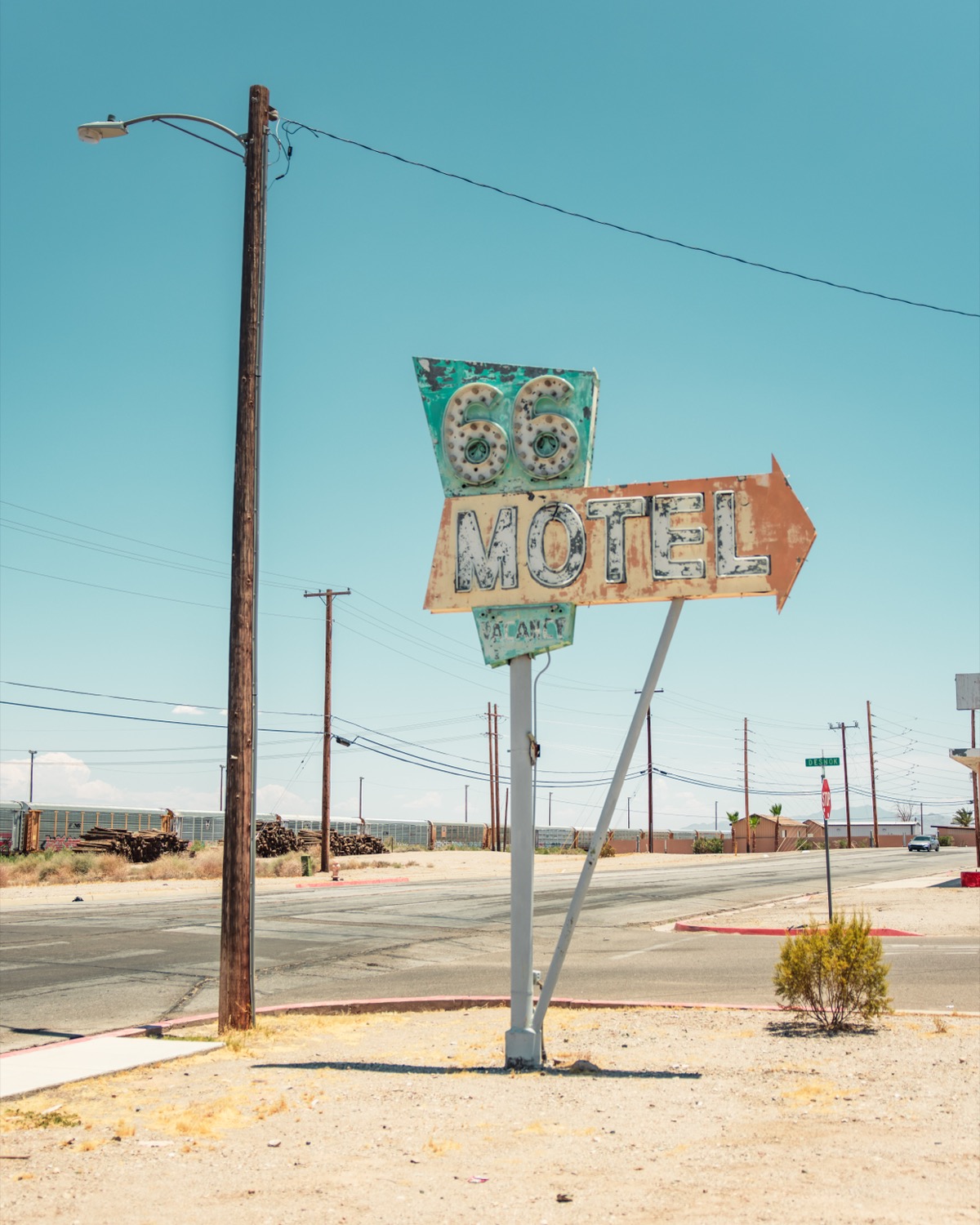
© Ben Geier | 66 Motel in Needles 01
Ben Geier didn’t initially pursue photography as his main career. Instead, he entered the field indirectly through various side paths. In his teenage years, he focused on design and music. Later, he became a graphic designer with a particular appreciation for vintage aesthetics, such as old buildings and neon signs. “As a graphic designer, I've always loved photography, and it's been something I've pursued on the side.”
This background explains the graphic quality of his photographs of typical American architecture and roadside design, characterised by straight lines, vibrant colours, and rectangular forms. “My work is more influenced by design than by photography or film. When I photograph these places, I am drawn to the overall scene, primarily because of the design and colours,” he explains. He mostly captures his photographs on sunny days, which creates vivid, saturated colours. “I enjoy shooting during sunny daylight because I see the sky as an extra colour in my scene. It brightens all the hues as the sun does. I particularly love working in intense sunlight because it makes all the colours stand out more.”
Retro style
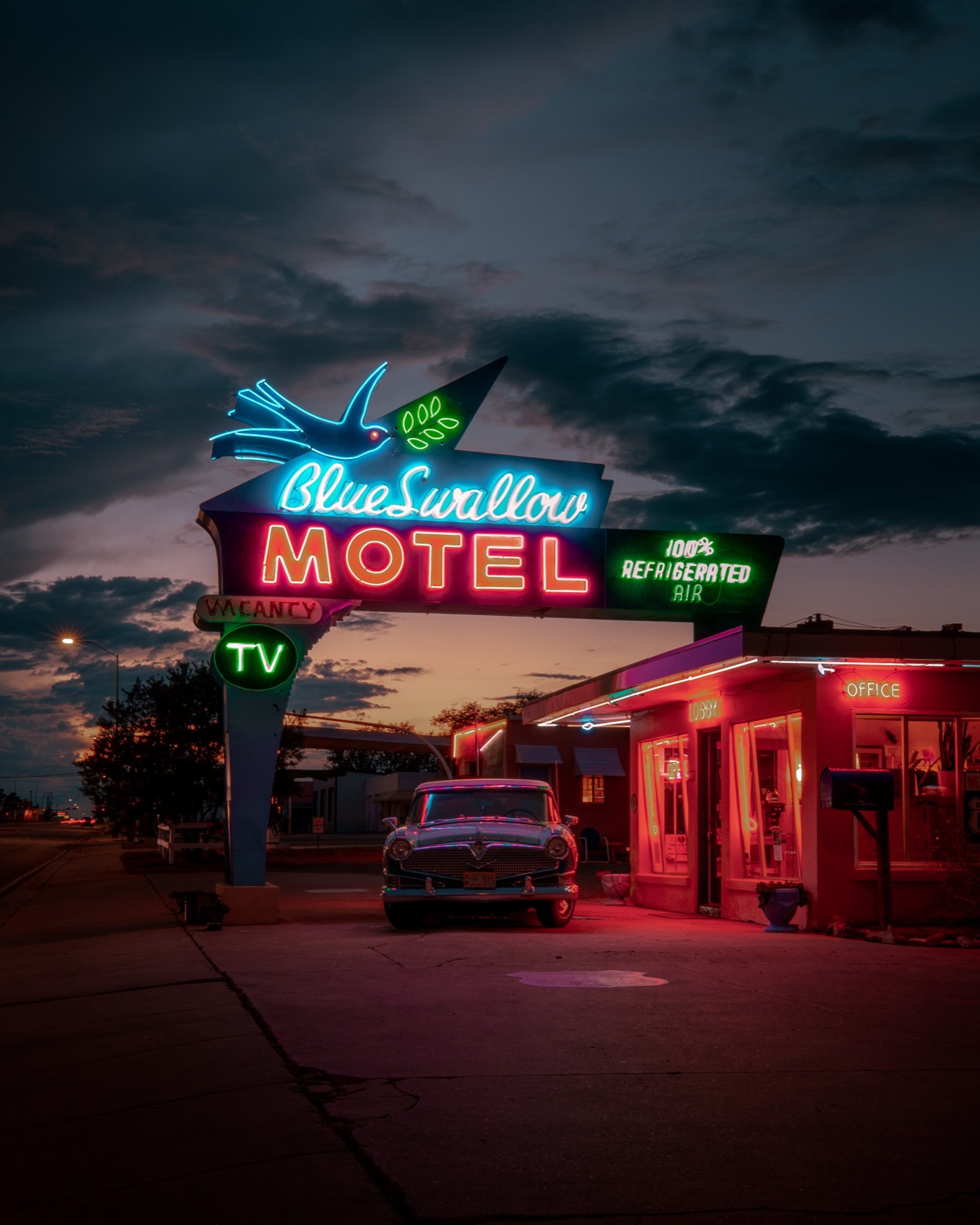
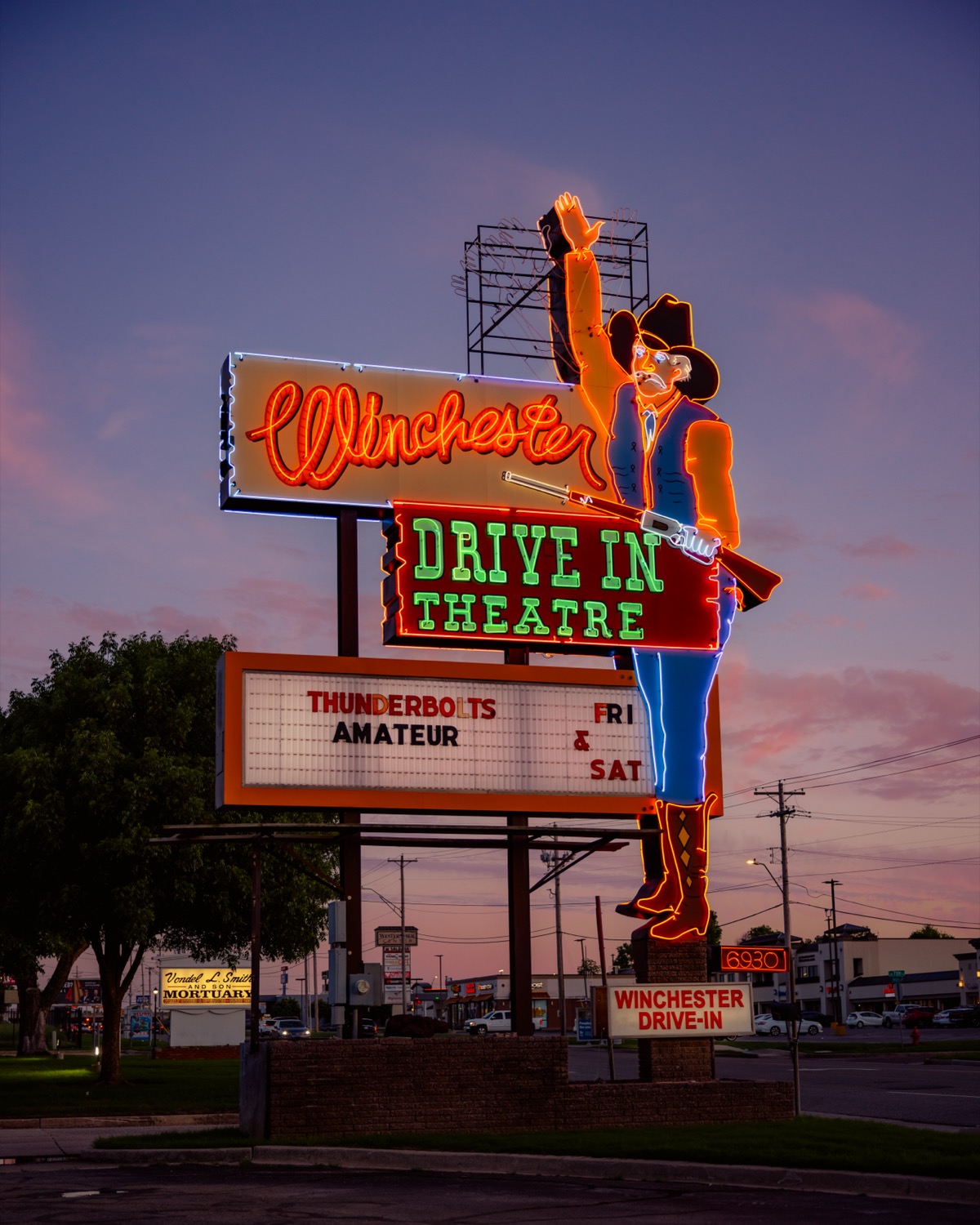
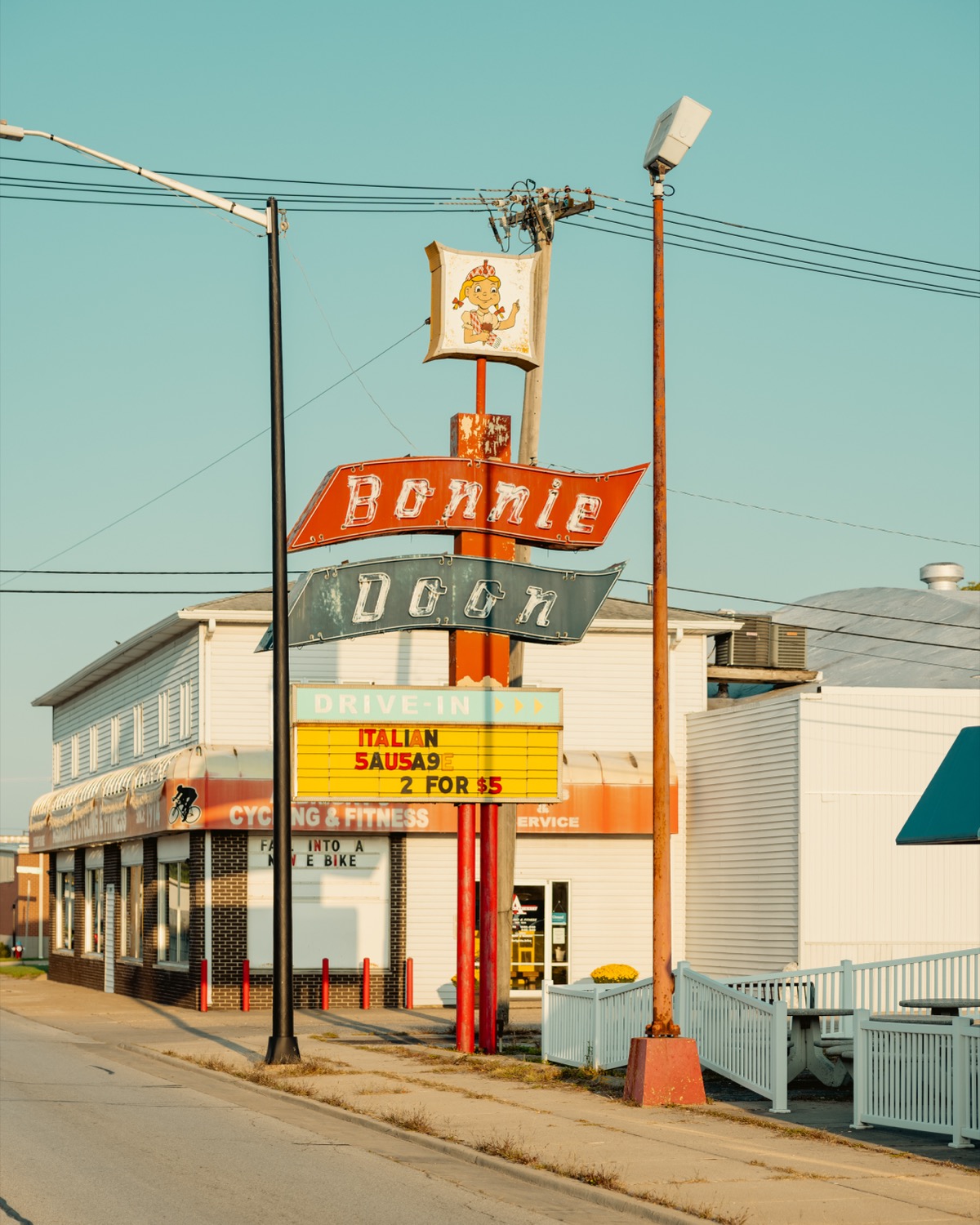
Many drive-ins, motels, diners, restaurants, bars, ice cream shops, gas stations, roadside attractions, neon signs, and storefronts originate from a bygone era of America's golden age of roadside Americana. The photos highlight the often-overlooked architecture of a past era of optimistic modernism. Ben Geier has a deep appreciation for vintage styles that are quickly fading. “I collect old magazines, prints, and scraps of paper with typography. I'm genuinely interested in vintage and retro design, which fuels my passion for photographing these places. Last year, I published my photobook, Viewing Hours, and a handful of the locations featured are now gone. Consequently, many of these sites are disappearing rapidly. My main goal is to document these places—to show that they once existed. In America, a lot of these places aren’t being restored; they’re simply torn down and forgotten.”
In America, a lot of these places aren’t being restored; they’re simply torn down and forgotten.
Status quo of the states
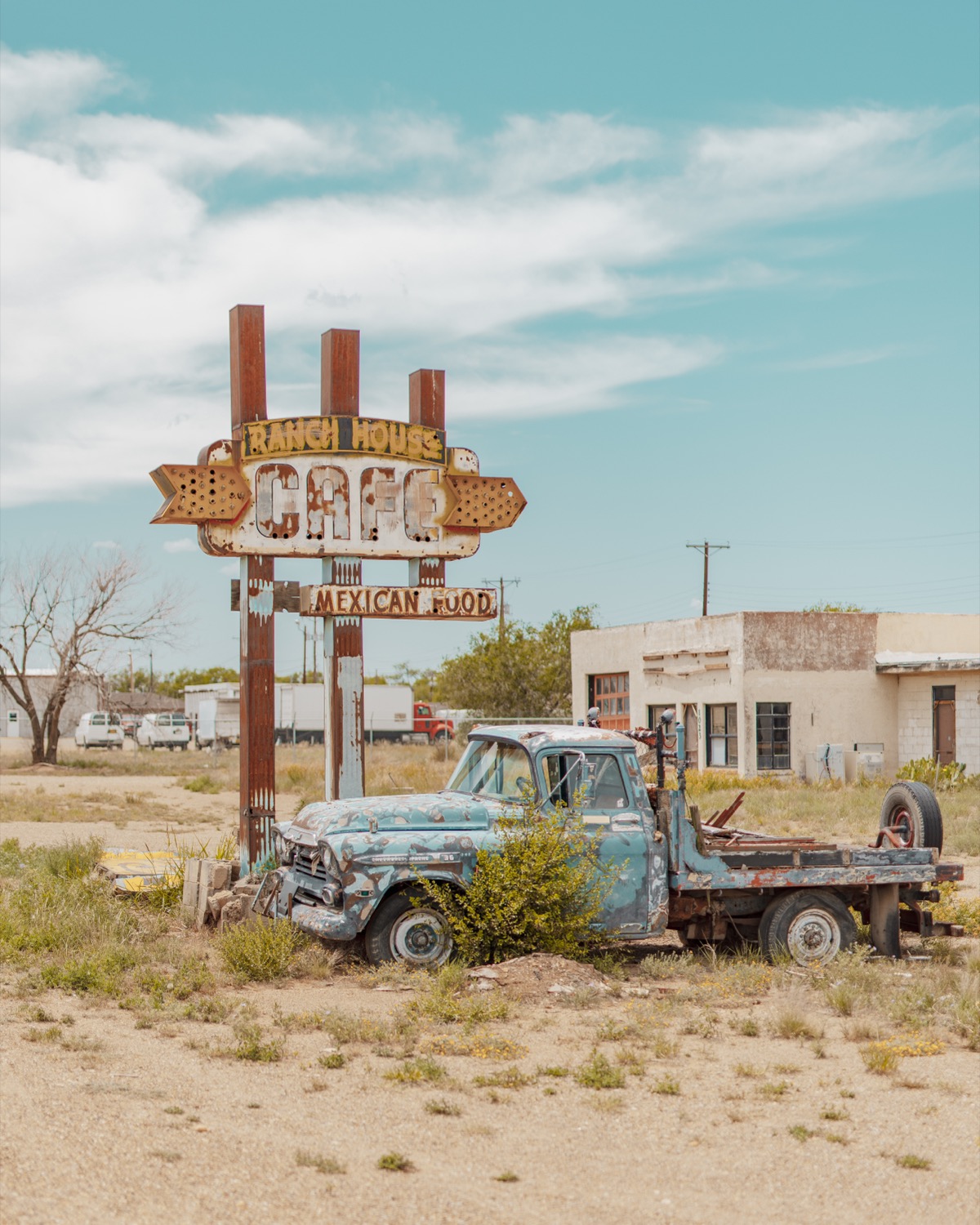
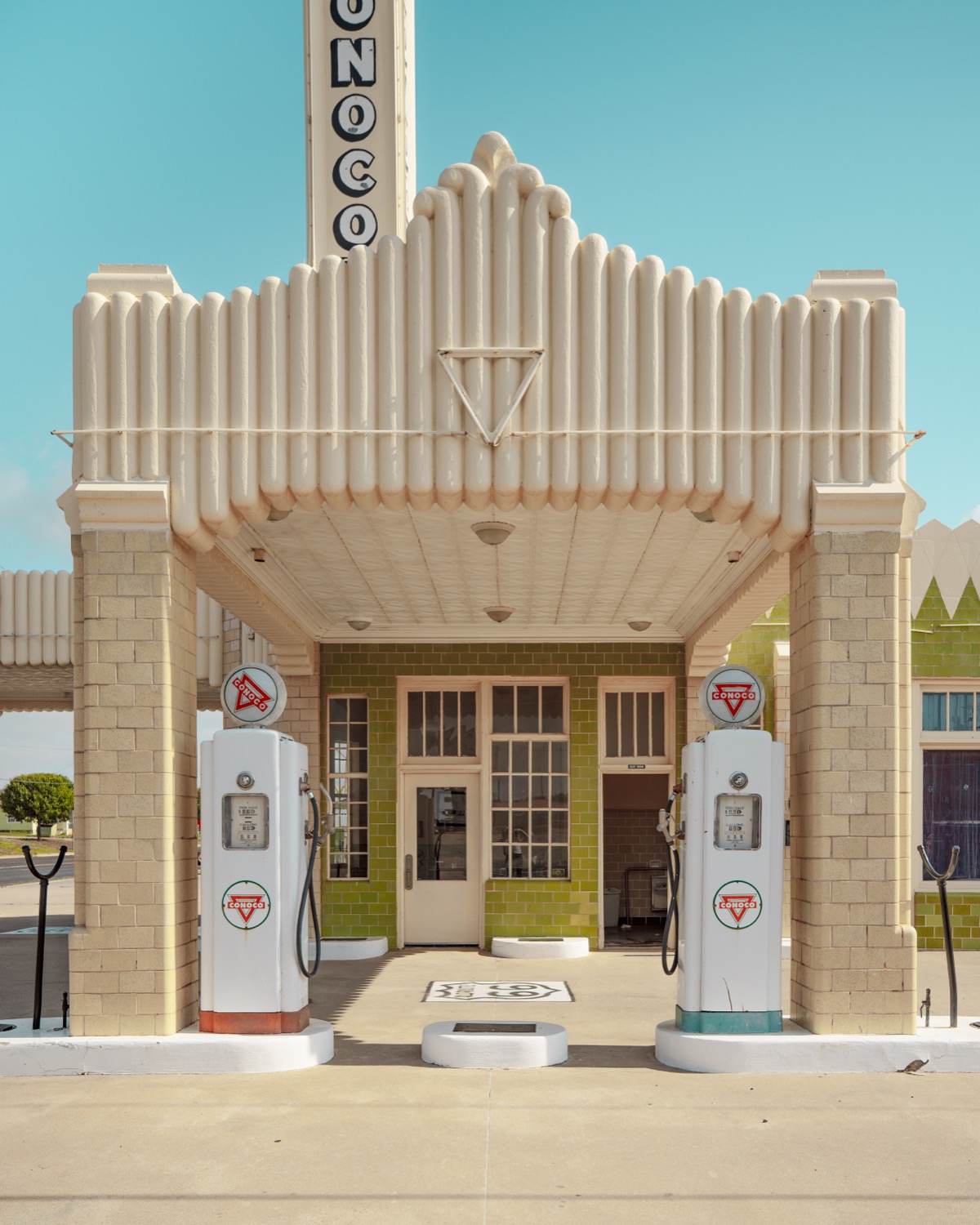
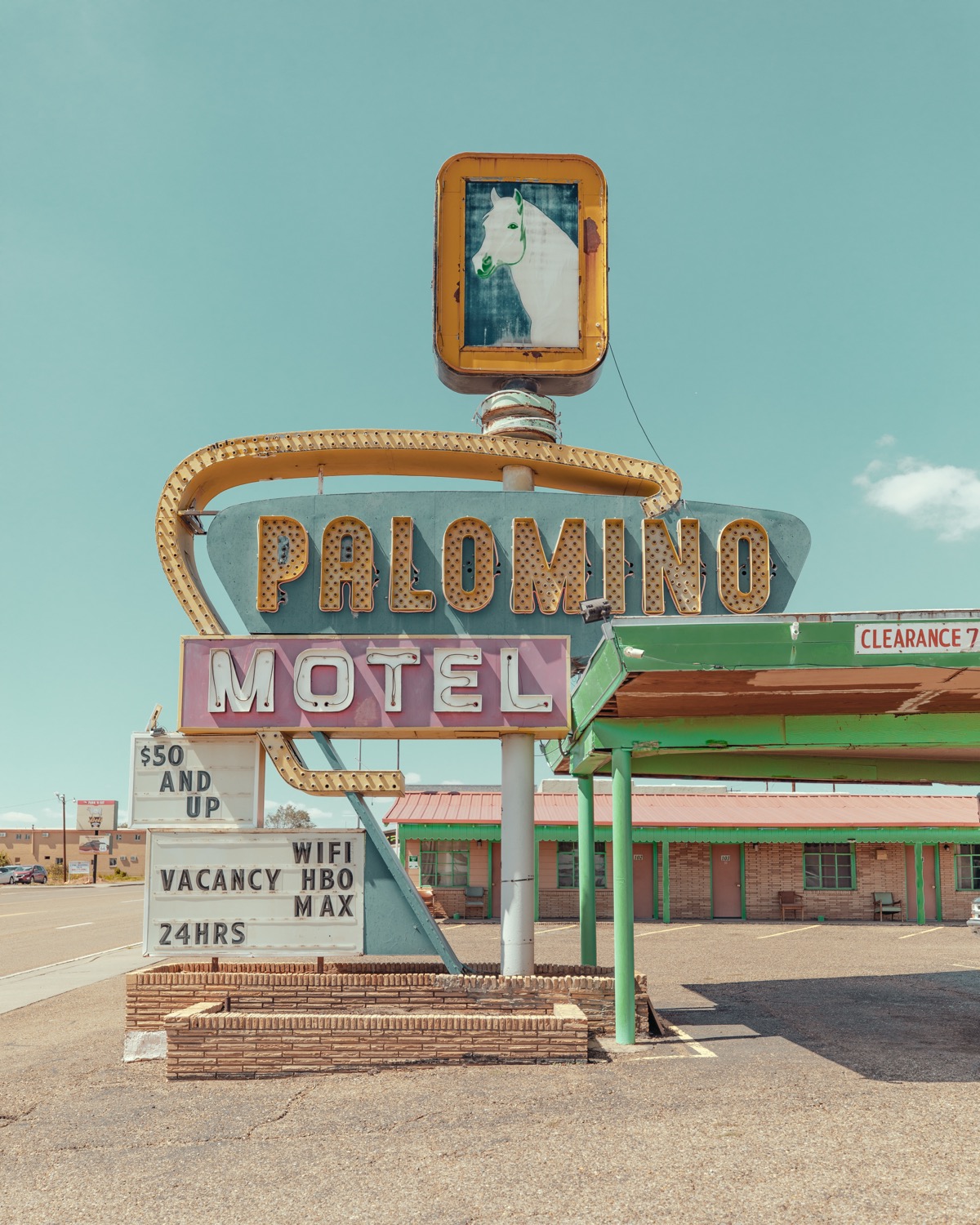
The vibrant architecture and roadside attractions of the 1950s and 1960s once represented an optimistic America—marked by growing prosperity, widespread car ownership, and a near-unshakeable faith in progress. Today, many of these structures stand as relics of that American Dream. Outside prosperous urban centres, they are often abandoned, poorly maintained, or demolished. Their decline reflects long-term economic shifts: small independent businesses have vanished, retail has merged into large chains, industries have moved out of smaller towns, and investment has favoured thriving metropolitan areas. Consequently, the buildings remaining along old highways and in declining town centres tell a broader story: the physical decay of mid-century America mirrors the fading of a once-shared sense of prosperity and confidence in the future. Geier captured the last well-preserved remnants of this prosperous era, many along the legendary Route 66. However, economic factors are not the primary reason for photographing these buildings. “I wouldn't say that my work is a commentary on the United States just not caring. But the US specifically prefers to tear down historic buildings because it's cheaper to demolish and rebuild with low-quality materials, which is disappointing. The state of design in America can be really disappointing for that reason. But many of these places mean a lot to people who grew up with them. It's sad for them to see something torn down instead of celebrated and restored. Neon signs are especially costly—it's like a dying art. Few people still bend glass and restore them. I like to think I preserve history by photographing these places.”
My main goal is to document these places—to show that they once existed.
Route 66
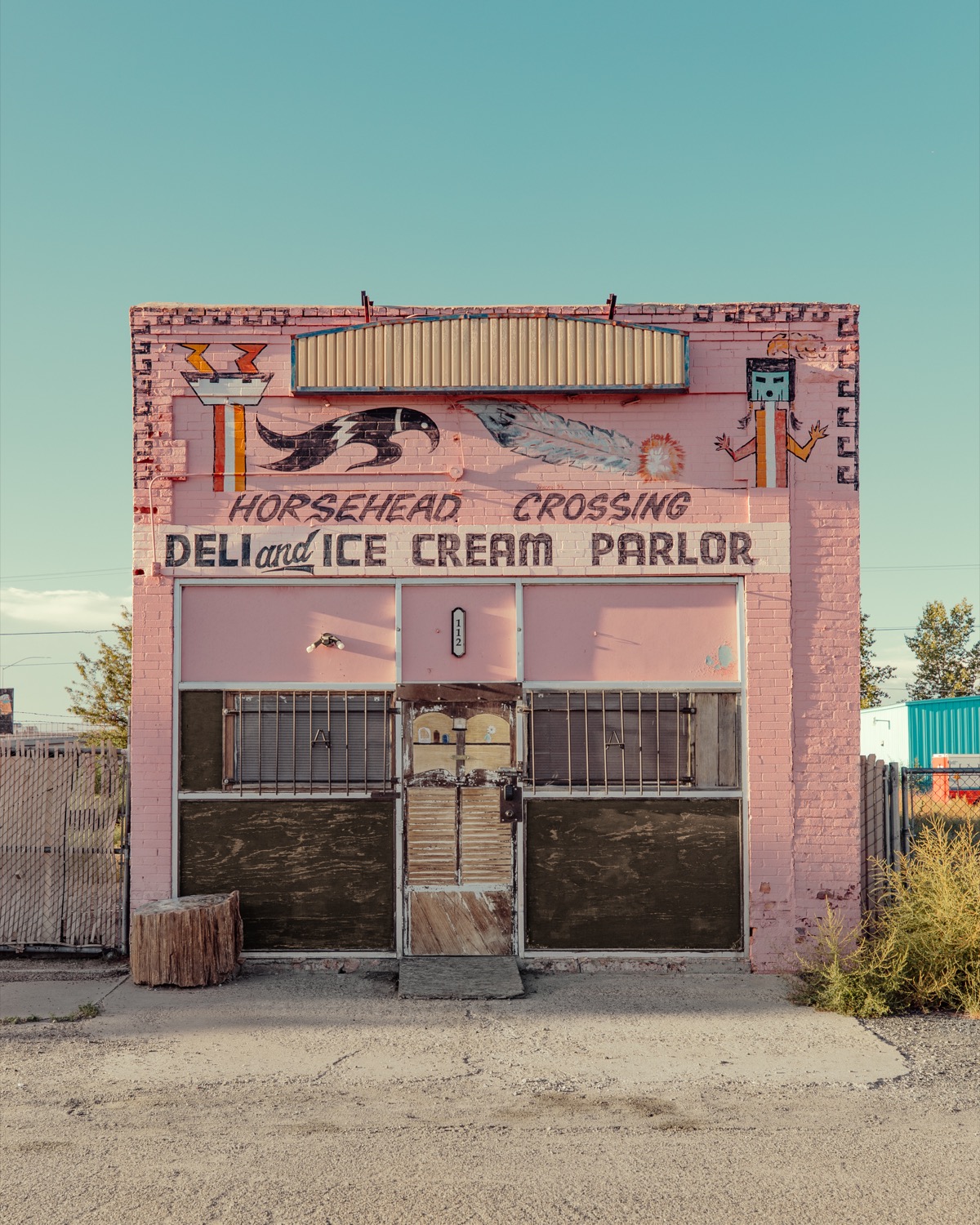
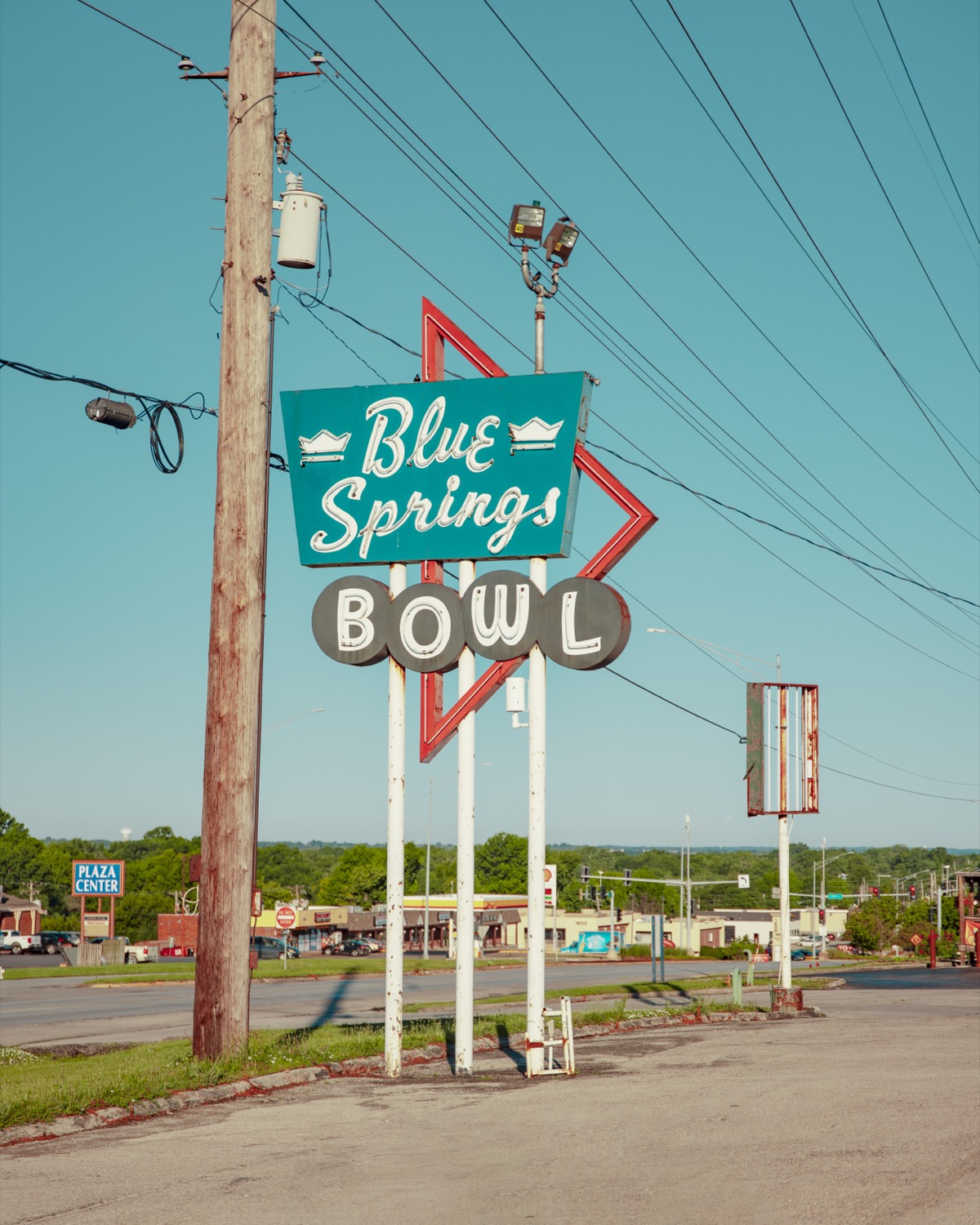
Viewing Hours is structured as a road trip across the mid-United States. One of the opening photographs features a pink ice cream parlour, a nostalgic relic from the last century. Next to it, a green-and-yellow tobacco and Souvenirs shop showcases South American style. “I've taken numerous photographs over the years; I narrowed it down to about 150 for the book. I wanted the book to evoke a road trip around America. Each chapter reflects that experience, focusing on roadside scenes and small rural towns with theatres, restaurants, and motels. This made it easy to organise into six chapters with corresponding photos. Driving Route 66 is a burst of colour everywhere—sometimes almost overwhelming, but you have to embrace it because it's so distinctly American or uniquely Route 66. The route is saturated with vibrant hues. Other cities, like Vegas and Wildwood, New Jersey, are also renowned for their neon signs and mid-century architecture, packed with colour.”
Extraterrestrial highway
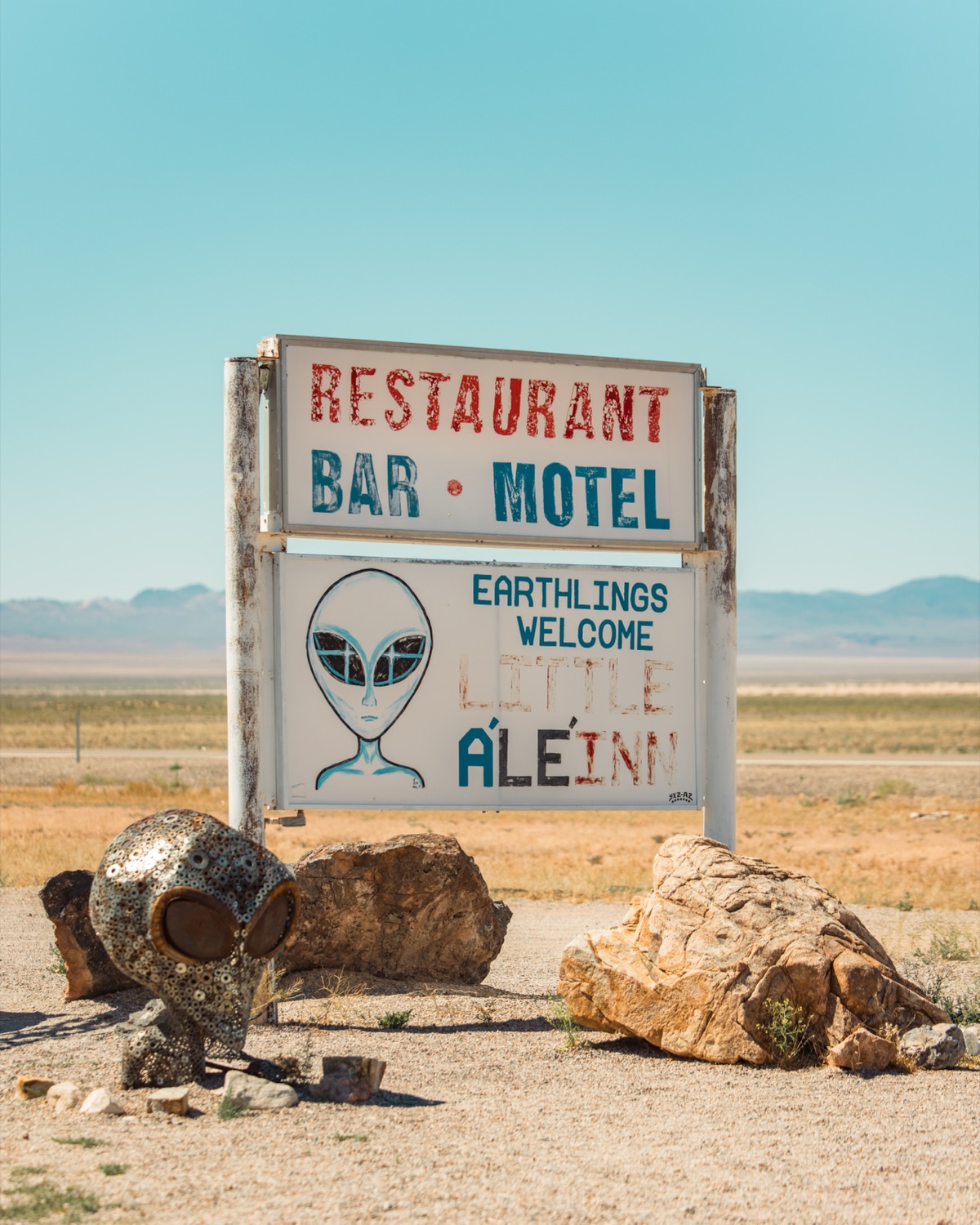
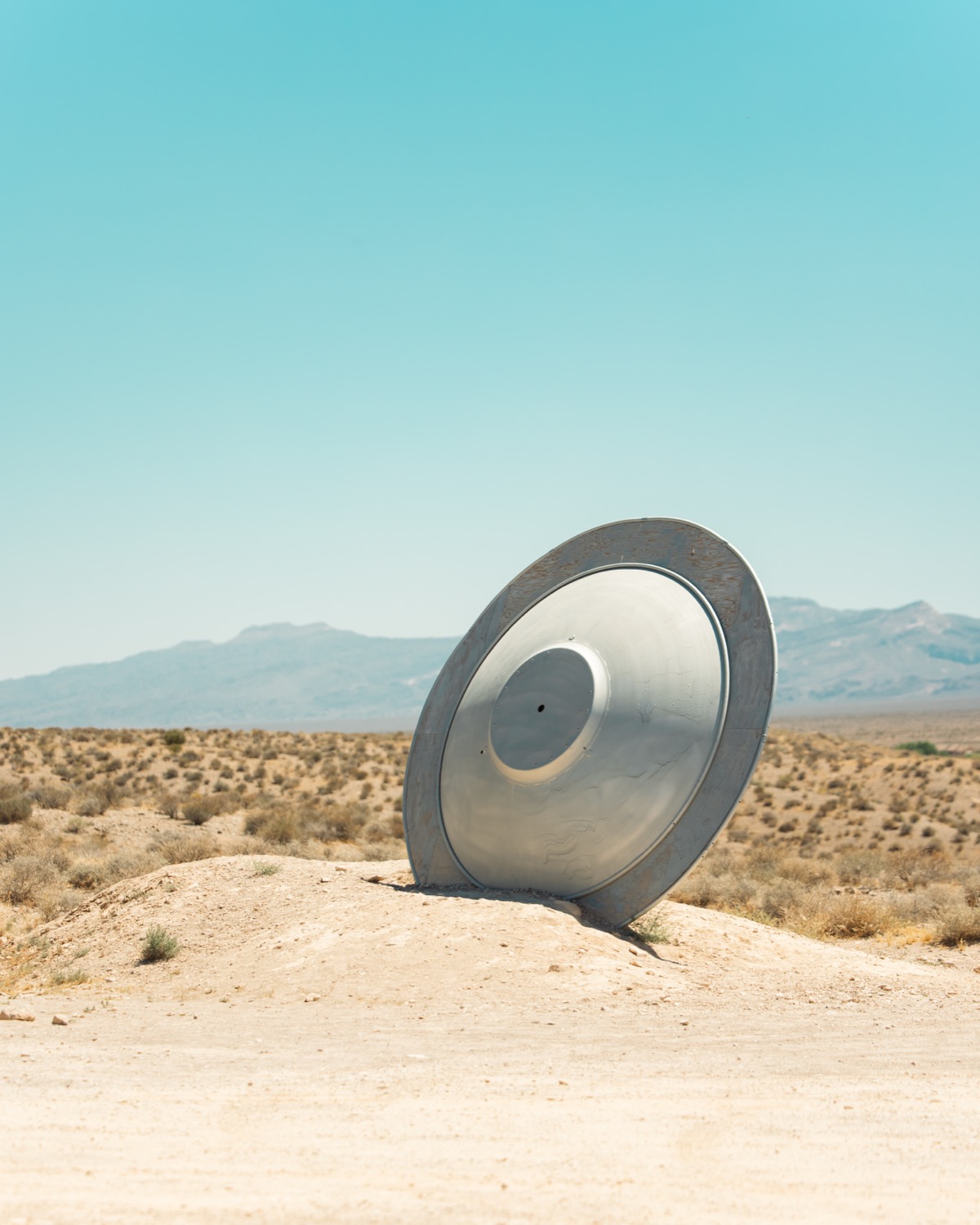
One miniseries in the collection is called Extraterrestrial Highway. Area 51, located in the Nevada desert, is a top-secret U.S. military testing site established in the 1950s for experimental aircraft. Its secrecy and unusual test flights led to numerous stories about flying saucers and even alien sightings. Along the road named Extraterrestrial Highway, Ben Geier captured fake flying saucers as if they had recently landed in the desert sand. “Within the famous Area 51 is a two-hour-long stretch of mostly desert highway. There's hardly anything there—just a single gas station and many quirky roadside attractions.”
Influence
Ben Geier's background in graphics explains his intuitive use of colour and straight lines. He acknowledges the influence of two prominent American photographers, Walker Evans and William Eggleston. “I see the similarities between my work and Walker Evans,” he says. Eggleston is probably one of the few photographers who genuinely inspire him. Coming from a design background, Geier admits he didn't initially have photographers to look up to and preferred to draw inspiration from designers he admired.
.svg)


.svg)
.svg)

Ben Geier didn’t initially pursue photography as his main career. Instead, he entered the field indirectly through various side paths. In his teenage years, he focused on design and music. Later, he became a graphic designer with a particular appreciation for vintage aesthetics, such as old buildings and neon signs. “As a graphic designer, I've always loved photography, and it's been something I've pursued on the side.”
This background explains the graphic quality of his photographs of typical American architecture and roadside design, characterised by straight lines, vibrant colours, and rectangular forms. “My work is more influenced by design than by photography or film. When I photograph these places, I am drawn to the overall scene, primarily because of the design and colours,” he explains. He mostly captures his photographs on sunny days, which creates vivid, saturated colours. “I enjoy shooting during sunny daylight because I see the sky as an extra colour in my scene. It brightens all the hues as the sun does. I particularly love working in intense sunlight because it makes all the colours stand out more.”
Retro style
Many drive-ins, motels, diners, restaurants, bars, ice cream shops, gas stations, roadside attractions, neon signs, and storefronts originate from a bygone era of America's golden age of roadside Americana. The photos highlight the often-overlooked architecture of a past era of optimistic modernism. Ben Geier has a deep appreciation for vintage styles that are quickly fading. “I collect old magazines, prints, and scraps of paper with typography. I'm genuinely interested in vintage and retro design, which fuels my passion for photographing these places. Last year, I published my photobook, Viewing Hours, and a handful of the locations featured are now gone. Consequently, many of these sites are disappearing rapidly. My main goal is to document these places—to show that they once existed. In America, a lot of these places aren’t being restored; they’re simply torn down and forgotten.”
In America, a lot of these places aren’t being restored; they’re simply torn down and forgotten.
Status quo of the states
The vibrant architecture and roadside attractions of the 1950s and 1960s once represented an optimistic America—marked by growing prosperity, widespread car ownership, and a near-unshakeable faith in progress. Today, many of these structures stand as relics of that American Dream. Outside prosperous urban centres, they are often abandoned, poorly maintained, or demolished. Their decline reflects long-term economic shifts: small independent businesses have vanished, retail has merged into large chains, industries have moved out of smaller towns, and investment has favoured thriving metropolitan areas. Consequently, the buildings remaining along old highways and in declining town centres tell a broader story: the physical decay of mid-century America mirrors the fading of a once-shared sense of prosperity and confidence in the future. Geier captured the last well-preserved remnants of this prosperous era, many along the legendary Route 66. However, economic factors are not the primary reason for photographing these buildings. “I wouldn't say that my work is a commentary on the United States just not caring. But the US specifically prefers to tear down historic buildings because it's cheaper to demolish and rebuild with low-quality materials, which is disappointing. The state of design in America can be really disappointing for that reason. But many of these places mean a lot to people who grew up with them. It's sad for them to see something torn down instead of celebrated and restored. Neon signs are especially costly—it's like a dying art. Few people still bend glass and restore them. I like to think I preserve history by photographing these places.”
My main goal is to document these places—to show that they once existed.
Route 66
Viewing Hours is structured as a road trip across the mid-United States. One of the opening photographs features a pink ice cream parlour, a nostalgic relic from the last century. Next to it, a green-and-yellow tobacco and Souvenirs shop showcases South American style. “I've taken numerous photographs over the years; I narrowed it down to about 150 for the book. I wanted the book to evoke a road trip around America. Each chapter reflects that experience, focusing on roadside scenes and small rural towns with theatres, restaurants, and motels. This made it easy to organise into six chapters with corresponding photos. Driving Route 66 is a burst of colour everywhere—sometimes almost overwhelming, but you have to embrace it because it's so distinctly American or uniquely Route 66. The route is saturated with vibrant hues. Other cities, like Vegas and Wildwood, New Jersey, are also renowned for their neon signs and mid-century architecture, packed with colour.”
Extraterrestrial highway
One miniseries in the collection is called Extraterrestrial Highway. Area 51, located in the Nevada desert, is a top-secret U.S. military testing site established in the 1950s for experimental aircraft. Its secrecy and unusual test flights led to numerous stories about flying saucers and even alien sightings. Along the road named Extraterrestrial Highway, Ben Geier captured fake flying saucers as if they had recently landed in the desert sand. “Within the famous Area 51 is a two-hour-long stretch of mostly desert highway. There's hardly anything there—just a single gas station and many quirky roadside attractions.”
Influence
Ben Geier's background in graphics explains his intuitive use of colour and straight lines. He acknowledges the influence of two prominent American photographers, Walker Evans and William Eggleston. “I see the similarities between my work and Walker Evans,” he says. Eggleston is probably one of the few photographers who genuinely inspire him. Coming from a design background, Geier admits he didn't initially have photographers to look up to and preferred to draw inspiration from designers he admired.
Ben Geier didn’t initially pursue photography as his main career. Instead, he entered the field indirectly through various side paths. In his teenage years, he focused on design and music. Later, he became a graphic designer with a particular appreciation for vintage aesthetics, such as old buildings and neon signs. “As a graphic designer, I've always loved photography, and it's been something I've pursued on the side.”
This background explains the graphic quality of his photographs of typical American architecture and roadside design, characterised by straight lines, vibrant colours, and rectangular forms. “My work is more influenced by design than by photography or film. When I photograph these places, I am drawn to the overall scene, primarily because of the design and colours,” he explains. He mostly captures his photographs on sunny days, which creates vivid, saturated colours. “I enjoy shooting during sunny daylight because I see the sky as an extra colour in my scene. It brightens all the hues as the sun does. I particularly love working in intense sunlight because it makes all the colours stand out more.”
Retro style
Many drive-ins, motels, diners, restaurants, bars, ice cream shops, gas stations, roadside attractions, neon signs, and storefronts originate from a bygone era of America's golden age of roadside Americana. The photos highlight the often-overlooked architecture of a past era of optimistic modernism. Ben Geier has a deep appreciation for vintage styles that are quickly fading. “I collect old magazines, prints, and scraps of paper with typography. I'm genuinely interested in vintage and retro design, which fuels my passion for photographing these places. Last year, I published my photobook, Viewing Hours, and a handful of the locations featured are now gone. Consequently, many of these sites are disappearing rapidly. My main goal is to document these places—to show that they once existed. In America, a lot of these places aren’t being restored; they’re simply torn down and forgotten.”
In America, a lot of these places aren’t being restored; they’re simply torn down and forgotten.
Status quo of the states
The vibrant architecture and roadside attractions of the 1950s and 1960s once represented an optimistic America—marked by growing prosperity, widespread car ownership, and a near-unshakeable faith in progress. Today, many of these structures stand as relics of that American Dream. Outside prosperous urban centres, they are often abandoned, poorly maintained, or demolished. Their decline reflects long-term economic shifts: small independent businesses have vanished, retail has merged into large chains, industries have moved out of smaller towns, and investment has favoured thriving metropolitan areas. Consequently, the buildings remaining along old highways and in declining town centres tell a broader story: the physical decay of mid-century America mirrors the fading of a once-shared sense of prosperity and confidence in the future. Geier captured the last well-preserved remnants of this prosperous era, many along the legendary Route 66. However, economic factors are not the primary reason for photographing these buildings. “I wouldn't say that my work is a commentary on the United States just not caring. But the US specifically prefers to tear down historic buildings because it's cheaper to demolish and rebuild with low-quality materials, which is disappointing. The state of design in America can be really disappointing for that reason. But many of these places mean a lot to people who grew up with them. It's sad for them to see something torn down instead of celebrated and restored. Neon signs are especially costly—it's like a dying art. Few people still bend glass and restore them. I like to think I preserve history by photographing these places.”
My main goal is to document these places—to show that they once existed.
Route 66
Viewing Hours is structured as a road trip across the mid-United States. One of the opening photographs features a pink ice cream parlour, a nostalgic relic from the last century. Next to it, a green-and-yellow tobacco and Souvenirs shop showcases South American style. “I've taken numerous photographs over the years; I narrowed it down to about 150 for the book. I wanted the book to evoke a road trip around America. Each chapter reflects that experience, focusing on roadside scenes and small rural towns with theatres, restaurants, and motels. This made it easy to organise into six chapters with corresponding photos. Driving Route 66 is a burst of colour everywhere—sometimes almost overwhelming, but you have to embrace it because it's so distinctly American or uniquely Route 66. The route is saturated with vibrant hues. Other cities, like Vegas and Wildwood, New Jersey, are also renowned for their neon signs and mid-century architecture, packed with colour.”
Extraterrestrial highway
One miniseries in the collection is called Extraterrestrial Highway. Area 51, located in the Nevada desert, is a top-secret U.S. military testing site established in the 1950s for experimental aircraft. Its secrecy and unusual test flights led to numerous stories about flying saucers and even alien sightings. Along the road named Extraterrestrial Highway, Ben Geier captured fake flying saucers as if they had recently landed in the desert sand. “Within the famous Area 51 is a two-hour-long stretch of mostly desert highway. There's hardly anything there—just a single gas station and many quirky roadside attractions.”
Influence
Ben Geier's background in graphics explains his intuitive use of colour and straight lines. He acknowledges the influence of two prominent American photographers, Walker Evans and William Eggleston. “I see the similarities between my work and Walker Evans,” he says. Eggleston is probably one of the few photographers who genuinely inspire him. Coming from a design background, Geier admits he didn't initially have photographers to look up to and preferred to draw inspiration from designers he admired.